Investing in Crypto: Tips for Beginners and Seasoned Traders Alike
Investing in cryptocurrency has become increasingly popular, attracting both novice and experienced traders. With the rapid growth of digital currencies, it is essential to be well-informed and strategic in your investment approach. This article provides essential tips for investors at all levels.
Understanding the Basics
Before diving into the world of cryptocurrencies, it’s crucial to grasp some fundamental concepts:
Blockchain Technology: The backbone of cryptocurrency, a decentralized ledger that records all transactions across a network of computers.
Types of Cryptocurrencies: Bitcoin, Ethereum, Litecoin, and thousands of altcoins, each with its unique features and use-cases.
Wallets: Digital wallets are used to store your cryptocurrencies securely. They can be hardware-based or software-based.
Tips for Beginners
1. Conduct Thorough Research
Before making any investment, take the time to study different cryptocurrencies, market trends, and potential risks. Utilize resources like whitepapers and forums to deepen your understanding.
2. Start Small
Investing less initially allows you to learn the ropes without taking on too much risk. Consider starting with a small amount you can afford to lose.
3. Diversify Your Portfolio
A diversified portfolio can help reduce risk. Consider investing in a mix of established cryptocurrencies and promising altcoins.
Tips for Seasoned Traders
1. Stay Informed
The crypto market is highly volatile and constantly evolving. Regularly follow news, updates, and market analysis to stay ahead of trends.
2. Use Technical Analysis
Advanced traders should learn to read charts and indicators to make informed decisions. Tools like RSI, MACD, and moving averages can provide valuable insights.
3. Implement Risk Management Strategies
Set predefined stop-loss and take-profit levels to minimize losses and secure gains. Never invest more than you can afford to lose.
General Tips for All Investors
1. Beware of Scams
Be cautious and skeptical of offers that seem too good to be true. Always conduct due diligence before investing in new projects.
2. Consider Long-Term Investments
While day trading can be lucrative, it can also be risky. Many successful investors advocate for a long-term approach, holding assets for several years.
3. Keep Your Emotions in Check
Fear and greed can drive impulsive decisions. Stick to your strategy and avoid making emotional trades.
Guwahati: Mumbai Indians’ Raghu Sharma, right (PTI Photo)
Punjab cricketer Raghu Sharma found himself in the spotlight during the high-profile IPL clash between Mumbai Indians and Chennai Super Kings at the MA Chidambaram Stadium on May 2. While he did not start in the XI, MI captain Hardik Pandya confirmed at the toss that the 33-year-old leg-spinner would feature as an Impact Player in the second innings. Earlier, Sharma was handed his maiden IPL cap, marking a significant moment in his long domestic journey.Mumbai Indians made another change to their lineup, bringing in Krish Bhagat in place of Ashwani Kumar. Struggling this season with just two wins from eight matches, MI entered the contest placed ninth on the table with four points and a net run rate of -0.784. The fixture also carried added motivation, with MI looking to respond after a heavy 103-run defeat to CSK earlier in the tournament.
Watch
Shikhar Dhawan on Vaibhav Sooryavanshi, life after retirement and more
Sharma’s rise has been built on persistence. Born in Jalandhar, the leg-break bowler has represented Punjab and Puducherry in domestic cricket. Since making his first-class debut in the 2017–18 Ranji Trophy, he has picked up 57 wickets in 12 matches, including five five-wicket hauls and three ten-wicket hauls.He further impressed in the 2024–25 Vijay Hazare Trophy with 14 wickets in eight matches. In T20s, he has taken four wickets in four games at an economy rate of eight since debuting in 2021. His association with MI began as a net bowler before being signed as a mid-season replacement in 2025, with the franchise retaining him as part of their long-term plans.At the toss, Hardik Pandya opted to bat first. For CSK, Ruturaj Gaikwad made two changes, bringing in Ramakrishna Ghosh for Gurjapneet Singh and Prashant Veer in place of Akeal Hosein.
Nach Paris ist vor Paris! Für die Bayern geht es heute in der Bundesliga weiter. Schlusslicht Heidenheim ist in der Allianz Arena zu Gast (15.30 Uhr, Einzelspiel bei Sky, Konferenz auf DAZN und im BILD-Liveticker). Für den designierten Deutschen Meister ist es das Spiel zwischen den Paris-Krachern in der Champions League.
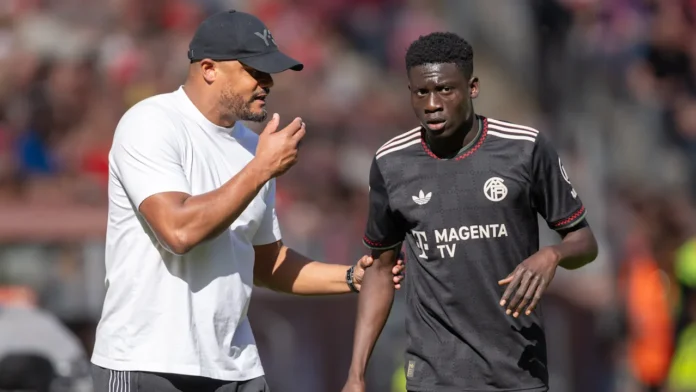
Daher wirft Bayern-Trainer Vincent Kompany erneut die Rotationsmaschine an. Im Vergleich zum 4:5 bei PSG ändert Kompany die Startelf auf sieben Positionen: Jonas Urbig, Minjae Kim, Leon Goretzka, Nicolas Jackson, Hiroki Ito, Konrad Laimer und Bara Sapoko Ndiaye beginnen für Manuel Neuer, Dayot Upamecano, Joshua Kimmich, Harry Kane, Luis Díaz, Michael Olise und Alphonso Davies.
Für Talent Ndiaye (18) ist es der zweite Startelf-Einsatz in der Bundesliga hintereinander.
So spielen die Bayern: Urbig – Stanisic, Kim, Tah, Ito – Pavlovic, Ndiaye – Laimer, Goretzka, Musiala – Jackson.
An dieser Stelle findest du Inhalte aus Twitter
Um mit Inhalten aus Twitter und anderen sozialen Netzwerken zu interagieren oder diese darzustellen, brauchen wir deine Zustimmung.
Um eingebettete Inhalte anzuzeigen, ist Ihre jederzeit widerrufliche Einwilligung (über den Schalter oder über ” Widerruf Tracking und Cookies ” am Seitenende) zur Verarbeitung personenbezogener Daten nötig. Dabei können Daten in Drittländer wie die USA übermittelt werden (Art. 49 Abs. 1 lit. a DSGVO). Mit dem Aktivieren des Inhalts stimmen Sie zu. Weitere Infos finden Sie hier.
Auf der Bank sitzen damit: Neuer – Upamecano, Kimmich, Kane, Díaz, Olise, Davies, Bischof, Pavic.
Und so spielt Heidenheim: Ramaj – Schöppner, Mainka, Föhrenbach – Busch, Dorsch, Dinkci, Behrens – Pieringer, Zivzivadze, Ibrahimovic.
Regulating the Wild West: How Governments Are Responding to Cryptocurrency
Published on October 10, 2023
The Rise of Cryptocurrency
Over the past decade, cryptocurrency has surged in popularity, introducing new opportunities and challenges for economies around the world. Initially hailed as a revolutionary technology, many proponents believe that cryptocurrencies like Bitcoin and Ethereum can redefine financial systems, empower individuals, and enhance transaction efficiency.
The Need for Regulation
However, the rapid growth of cryptocurrencies has raised significant regulatory concerns. Issues such as fraud, money laundering, and market manipulation are rampant in this largely unregulated space, prompting governments to explore ways to create frameworks that protect consumers and ensure financial stability.
Global Regulatory Approaches
Different nations are taking varied approaches towards cryptocurrency regulation:
United States: The U.S. has adopted a piecemeal approach, with agencies like the SEC and CFTC taking the lead on different aspects of cryptocurrency regulation. The intent is to classify cryptocurrencies either as commodities or securities, which influences how they will be regulated.
European Union: The EU has proposed more comprehensive regulations with the Markets in Crypto-Assets (MiCA) framework, aiming to create a harmonized regulatory environment across member states.
China: In stark contrast, China has enacted strict regulations against cryptocurrencies, banning trading and initial coin offerings (ICOs), as part of efforts to maintain control over its financial system.
El Salvador: On the other side, El Salvador has made headlines by adopting Bitcoin as legal tender, highlighting an alternative approach to encouraging cryptocurrency use.
The Future of Government Regulation
As cryptocurrency continues to evolve, the landscape of regulation will likely change as well. Governments will need to strike a balance between fostering innovation and safeguarding against risks. Collaboration between regulatory authorities internationally may be necessary to create cohesive policies that can adapt to the fast-changing crypto landscape.
Conclusion
The journey to regulate cryptocurrency presents both challenges and opportunities. As governments come to terms with this ‘Wild West’ scenario, the framework they choose to implement will not only shape the future of cryptocurrency but also influence global economies and digital innovation.
For more information on how different countries regulate crypto assets, check out Investopedia.
A wide smile, dimples on his cheeks, and those slightly squinting eyes. If we close our eyes, that’s how Alex Zanardi comes to mind. And of course, wearing a racing suit – whether it was a Formula 1 suit, a Ganassi one, or the Italian handbike suit didn’t really matter.
Whether he had four wheels or three beneath him mattered even less. Because people like him – paraphrasing a famous songwriter from New Jersey – are, for better or worse, born to race.
Alex Zanardi is no longer with us. It feels strange to say it. He passed away on a spring day, when colours, scents, and the promise of an approaching summer burst forth in all their inevitability. Not just any day, because since 1994, May 1 has never been an ordinary date for motorsport. Even less so now.
But what was truly extraordinary was the story of a boy from Bologna, born in 1966 and raised in Castel Maggiore, in the Emilia plain. Close to a regional capital, yes, but still a modest town – provincial in every sense. Yet, in places like this, great things often occur.
His first laps in karts came at age 14, followed by a rapid climb to single-seaters. In 1988, he raced in Italian Formula 3; in 1991, Formula 3000; and that same year, his first taste of Formula 1 with Jordan.
Alessandro Zanardi, Jordan 191 Ford
Photo by: Motorsport Images
Zanardi made his debut at the Spanish Grand Prix, finishing ninth, and repeated the result in Australia. The following year, he raced briefly with Minardi, then with Lotus in 1993–1994.
“America is far away, on the other side of the moon,” sang Lucio Dalla, another son of Bologna. But the American dream is what crowned Alex. In 1995, Zanardi signed with Ganassi, beginning his epic run in the United States, winning two CART titles (now IndyCar). It was also the category that put him at the first great crossroads of his life.
On September 15, 2001, at the Lausitzring, with 13 laps to go, Zanardi lost control of his car exiting the pits due to fluids on the track. His car spun across the circuit and was struck by Alex Tagliani. In the impact, the Bologna driver lost both legs. His condition immediately appeared desperate, and despite the enormous blood loss and coming close to death, he survived.
At the Berlin hospital where he was admitted in critical condition, he was given last rites by the IndyCar chaplain – but Alex held on. After six weeks in hospital and 15 operations: Zanardi returned home to begin rehabilitation. A miracle, or perhaps simply his refusal to give up – his determination not to surrender.
Traits that had always defined the boy from Castel Maggiore, along with his sense of humour. The same humour he showed at the Autosprint Golden Helmets awards, when, just weeks after the Lausitzring accident, he stood up from his wheelchair and said on stage: “It’s been a long time since I’ve been this emotional. I’m so emotional my legs are shaking.”
There were tears, laughter, applause – for a young man in a sober grey suit, whose eyes said everything words could not.
Alex Zanardi, BMW Team RMR
Photo by: Alexander Trienitz
From that moment on, a new life, a new career. Still, of course, with wheels to turn. He returned to racing cars in the World Touring Car Championship, but handcycling took centre stage.
The New York Marathon, then World Championships, and the London Paralympics in 2012, where he won two gold medals and one silver. Another triumph. When Alex decided something was for him, no one could match him.
Then life presented another turning point. On June 19, 2020, while taking part in a stage of the Obiettivo 3 relay – an event involving Paralympic handbike athletes – Zanardi lost control of his vehicle and veered into the opposite lane just as a truck approached. The inevitable collision caused extremely serious injuries.
His hospitalisation at the Santa Maria alle Scotte hospital was crucial in treating his injuries. Several delicate operations followed, then a transfer to a hospital in Padua. At the end of December 2021, he returned home, though not permanently.
After a further round of treatment in Ravenna, he returned home for good in late September 2022. From then on, there was a long and understandable silence about his condition – until today, when the terrible news of his passing at the age of 59 was shared.
Alex Zanardi
Photo by: BMW AG
“It is with deep sorrow that the family announces the passing of Alessandro Zanardi, which occurred suddenly on the evening of yesterday, May 1,” read a statement released by his family on social media.
“Alex passed away peacefully, surrounded by the love of his family. The family sincerely thanks everyone who has shown support in these hours and asks for respect for their grief and privacy at this time of mourning. Information regarding the funeral will be shared at a later date.”
They say that reading many books lets you live thousands of lives in one. But if there is a man who embodied this idea without needing to lose himself in countless pages, it was Alessandro Zanardi. He did it with strength, courage, and yes, also with pain – but always showing that smile we loved so much. And all those who followed his achievements and drew strength from his story will continue to remember it. Sometimes small gestures change a day. Sometimes they change a life.
And we are certain that Alex, through his courage and his actions, changed many.
The Motorsport.com editorial team shares in the grief of the Zanardi family – his wife Daniela and his son Niccolo – and extends its sincere condolences to them.
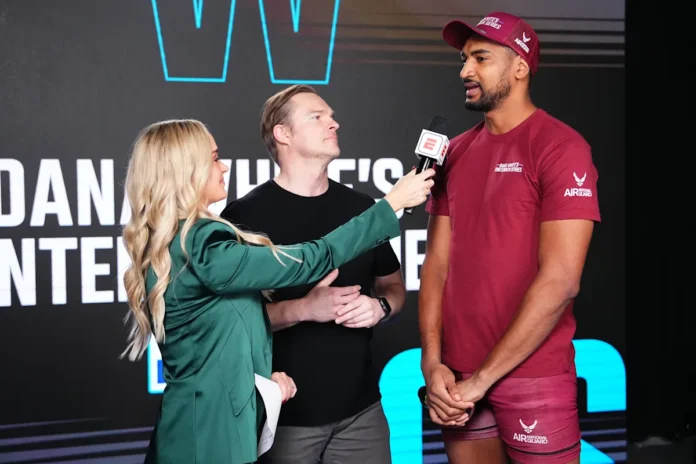
Australia’s own Junior Tafa enters UFC Perth this Saturday on a two-fight losing skid as a light heavyweight and an overall UFC record of 2-5, and his opponent Kevin Christian wants to make his life even more miserable.
Christian won via submission on Dana White’s Contender Series in 2024 and came up short in his UFC debut 14 months later, which led to some career changes. Christian travelled 2,500 miles to leave his hometown Rio Preto do Eva and join CM System in Curitiba, and now feels more “adapted to UFC level.”
Advertisement
Even though he’s 0-1 in the UFC and 9-3 as a professional, Christian feels it’s Tafa who has all the weight on his shoulders.
“He’s coming in under twice more pressure,” Christian told MMA Fighting. “He’s on a two-fight losing streak since moving down a weight class. He’ll be fighting at home, which adds even more pressure, especially with contract implications, so he’s carrying a huge burden. I lost my first fight but I’ve already made improvements, and I’m confident I’ll come out with the win.”
Tafa has only gone the distance once in 11 professional MMA bouts, and Christian is confident that the longer the fight goes, the better he will do. Tafa’s losses at 205 pounds came in submissions against Tuco Tokkos and Billy Elekana, and his heavyweight run in the UFC featured knockouts over Parker Porter and Sean Sharaf separated by defeats to Valter Walker, Marcos Rogerio de Lima and Mohammed Usman.
“Junior Tafa is an explosive guy with heavy hands who can manage distance well, but he tends to gas out faster,” Christian said. “He explodes early in the rounds but can’t maintain that consistency. I focus a lot on isometric work and ground game, but I also have the tools to engage with him in striking and grappling. It’s a very favorable matchup for me.”
Advertisement
Christian turned 31 in January and believes he’s finally fulfilling his true potential training under the wing of Cristiano Marcello in the south of Brazil, especially considering he’s now a full-time fighter after spending most of his MMA career juggling between training and engineering school.
“I had to balance both,” Christian said. “There was a period when I had to stop [fighting] and focus more on studies, then the pandemic hit and I stayed inactive for a while. I came back after that, already graduated, and left my engineering career behind, and went to war.”
Christian said, “engineering was my Plan A” because he felt “the sport isn’t really taken seriously” in the Amazon region, and it would be nearly impossible for him to make it to the UFC.
“I had the dream, but not the full belief that it would happen, so I had to study,” Christian said. “But it worked out in the end.”
Advertisement
“And now I can say I’m ready,” he added. “I’m going in well-prepared, physically strong, and mentally calm. I’ll be fighting in his hometown, but that doesn’t bother me at all. What matters is being good with myself. I made my debut at the APEX, a smaller card, but there’s no such thing in the UFC. It will be a different experience with a crowd now.”
The New York Mets (10-21) travel across the continent to face the Los Angeles Angels (12-20) for the start of (another) western swing. At this very moment, the Mets are having one of the three worst starts to a season in franchise history, being even more inept at baseball than the famously inept 1962 Mets, the owners (until very recently) of the worst record in baseball history. The big difference between 1962 and 2026, vibes wise, is that the ‘62 Mets weren’t expected to do much as an expansion club, and had a ‘lovable losers’ vibe that people accepted and embraced. The 2026 Mets are not that; this team was supposed to be a playoff contender. This fanbase was told not to worry as cornerstone players were sent elsewhere or spurned by lack of a offer. This team was supposed to be the first true vision of a still new front office.
Well, that’s not what we got. What we have is a collection of players that look less like a baseball team and more like a quartet of toddlers standing on each other’s shoulders trying to pass off as a baseball player. Whatever can be going wrong seems to be.
Before I go any father, I want to acknowledge that things feel pretty terrible right now, and so that makes even the slightest issue seem magnified to epic proportions. For instance, the same crowd that was laughing at the signing of Carl Edwards Jr. in the offseason was lamenting his being designated for assignment yesterday. If the key to this season’s success was Carl Edwards Jr., then we’ve all been guilty of atrocious miscalculations.
But there are real issues at play here for this team. While Nolan McLean and Clay Holmes have been quite good and Freddy Peralta more or less pitching to his career norms, the other two spots in the rotation have been atrocious. With Kodai Senga on the Injured List and David Peterson having a truly dreadful start in his first start in weeks, the Mets need to figure out the band end of their rotation. Help is on the way in the form of Christian Scott, who will start the first game of the series, but his first outing of the season saw him walk five batters in one and a third innings. Scott is better than that, and has been quite good in Triple-A this season, so perhaps he will stabilize one of those open spots.
But then there’s the bullpen. Aside from Brooks Raely, Huascar Brazobán, and Tobias Myers, everyone has been a mess. Sean Manaea and Craig Kimbrel are shells of their former selves, and both Luke Weaver and Devin Williams have looked shaky at best since coming over from the Yankees. Austin Warren has been very good in limited time, and hopefully he can stick with the club this time.
But the biggest issue remains the offense. It’s nice that MJ Melendez had a big day on Thursday, but that can’t be the strategy going forward. Players like Bo Bichette and Francisco Alvarez need to be consistently driving the ball, and that simply hasn’t happened yet. Brett Baty and/or Mark Vientos need to start producing on either side of the ball. Without Lindor, without Robert, and without Polanco, the lineup is thin already, but when everyone not named Soto is struggling, it is decimated.
The only good news for the Mets this weekend is that the Angels are a bad ball club. Losers of six straight and ten of their last 11, the Angels continue to be an even more extreme ‘little brother’ team to the Dodgers than the Mets are to the Yankees or White Sox to the Cubs. The Mets are also missing José Soriano, their best pitcher, and so that is a minor blessing as well.
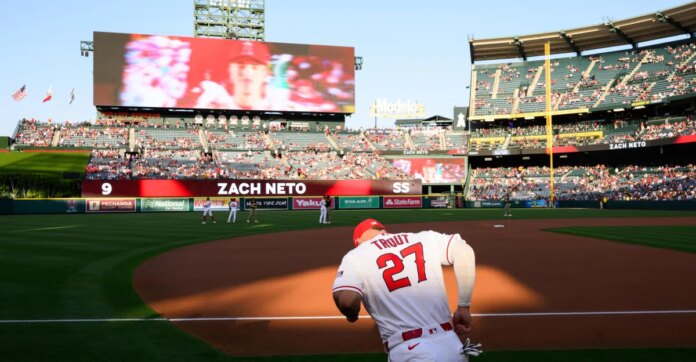
For the Mets fans, this is also an opportunity to watch Mike Trout, undeniably one of the best players of his generation, and one whose talents have been wasted on a less than spotlighted team.
Friday, May 1: Christian Scott vs. Walbert Ureña, 9:38pm on PIX11
Scott’s first 2026 Mets start was ugly: he faced ten batters and walked five of them. But there are reasons to see that as an isolated incident, the primary one being that it was his first start after Tommy John surgery on a big league mound. But in Triple-A, his strikeouts are there and his walk rate is nice and low. Without the first start nerves, far away from home, perhaps Scott will be able to settle in more tonight.
It is rare that you see a pitcher give up six unearned runs, let alone in one inning, but that is exactly what Ureña did against the Astros in late March. Since then, he’s started two games and given up six earned runs total across the two, including a three and two-thirds innings start against the Royals where he walked five and gave up six hits.
Saturday, May 2: Nolan McLean vs Reid Detmers, 9:38pm on SNY
Things are progressing nicely for McLean, even if the results have been a little more of a mixed bag than the Mets would like. Part of that is lack of run support; aside from the one start they won, the Mets have been outscored 21-9, and only nine of those runs were earned against McLean. But he’s doing the things he’s supposed to be doing as a young starter, and he hasn’t shown any regression or real issues just yet.
Detmers had two great starts against the Mariners on April 3 where he tossed six and two-thirds scoreless innings and against Yankees on April 14 where he went seven innings, striking out nine and giving up just one run. Aside from that, it’s been a struggle for Detmers, who has given up at least three earned runs in every other start.
Sunday, May 3: Clay Holmes vs Jack Kochanowicz, 4:07pm on SNY
Raise your hand if you thought Clay Holmes would be the most effective Mets’ starter and bWAR leader through April? If any of you have your hands up, you’re liars. But Holmes has been excellent so far this season, even if he’s never quite the most exciting or dominant pitcher to watch work.
The second best starter on the club, Jack Kochanowicz is walking too many folks but otherwise looking good for the Halos. After a rough first start, he’s only allowed more than two earned runs once, and has been consistently working into the sixth and seventh innings.
Stablecoins vs. Volatile Assets: Which Is Right for Your Portfolio?
In the dynamic world of cryptocurrency and investments, understanding the differences between stablecoins and volatile assets is crucial. Both serve unique purposes and can hold particular advantages based on your financial goals. This article explores the characteristics, benefits, and challenges associated with each to help you make an informed decision for your investment portfolio.
What Are Stablecoins?
Stablecoins are cryptocurrencies designed to maintain a steady value, often pegged to a stable asset such as the US dollar or gold. They aim to minimize the volatility often seen in traditional cryptocurrencies like Bitcoin or Ethereum.
Types of Stablecoins
Fiat-Collateralized Stablecoins: These are backed by physical fiat currency held in reserve.
Crypto-Collateralized Stablecoins: These use other cryptocurrencies as collateral, often over-collateralized to handle market fluctuations.
Algorithmic Stablecoins: These maintain their peg through algorithms that control supply and demand.
Advantages of Stablecoins
Stability: Prices remain relatively stable, making them less risky for transactions or savings.
Liquidity: Stablecoins often provide easy access to cash while trading on crypto exchanges.
Smart Contracts: Many stablecoins are compatible with decentralized finance (DeFi) systems, facilitating lending and borrowing.
Challenges of Stablecoins
Centralization Risks: Some stablecoins are issued by companies that maintain control over the reserves.
Regulatory Scrutiny: Increased regulation may impact their availability and usage.
What Are Volatile Assets?
Volatile assets, including stocks and certain cryptocurrencies, exhibit significant price fluctuations and can offer high returns, but they come with high risks. Understanding their behavior is essential for any investor.
Characteristics of Volatile Assets
Price Fluctuations: Values can change dramatically in short periods, influenced by market trends and investor sentiment.
High Potential Returns: Volatile assets can provide substantial gains during market rallies.
Risk Management Needed: Successful investment in volatile assets requires strategies to mitigate risk.
Advantages of Volatile Assets
Growth Opportunities: Potential for higher returns compared to traditional assets.
Diversification: Volatile assets can diversify a portfolio, offsetting risks from stable investments.
Market Influence: Investors can capitalize on market movements and trends.
Challenges of Volatile Assets
High Risk: The chance of significant financial loss is greater due to market unpredictability.
Emotional Decision-Making: Investors may make impulsive decisions during market swings.
Which Is Right for Your Portfolio?
Determining whether to invest in stablecoins or volatile assets depends on your financial goals, risk tolerance, and investment horizon.
Conservative Investors: If your focus is on preserving capital and earning modest returns, stablecoins may be more appropriate.
Aggressive Investors: If you’re aiming for rapid growth and can tolerate risks, incorporating volatile assets may be beneficial.
Diversified Portfolio: Many investors opt for a mix of both, balancing stability and growth potential.
Conclusion
In conclusion, both stablecoins and volatile assets have their place in investment portfolios. Understanding their characteristics, advantages, and challenges will help you tailor your investments to your financial objectives. Assess your portfolio regularly and consider your risk tolerance to determine the right mix for your unique situation.
The future of a lead doctor on “Grey’s Anatomy” is unclear after their firing before the Season 22 finale.
Dr. Richard Webber (James Pickens Jr.) fired Dr. Benson Kwan (Harry Shum Jr.) offscreen in the penultimate episode of the ABC series’ latest season, aired Thursday, April 30. Richard fired Kwan after discovering the Grey Sloan Memorial Hospital surgical resident had secretly given a patient an experimental, FDA-denied treatment earlier in the season. He confirmed the move to longtime Dr. Miranda Bailey (Chandra Wilson), who previously took the blame for the incident.
USA TODAY has reached out to the show and Shum’s reps for comment.
The shakeup is leading up to the Season 22 finale, in which the fate of two longtime core characters is a bit clearer.
Kevin McKidd‘s Dr. Owen Hunt and Kim Raver’s Dr. Teddy Altman are both set to exit the long-running ABC medical drama after the Season 22 finale, the actors confirmed in March. Their exits are due to creative decisions based on a storyline, but the door is open for their characters returning in the future, USA TODAY understands.
In Thursday’s episode, Owen finds out that Teddy is considering a job in Paris, causing an argument. The episode ends with Teddy getting a voicemail from Owen and overhearing a bridge collapse and car crash that may be fatal.
The show “has been a huge chapter of my life, creatively and personally, and I’m deeply grateful for everything the show has given me over the years,” McKidd said in a statement shared with USA TODAY.
McKidd has portrayed the trauma surgeon since the Season 5 premiere in 2008. Raver’s cardiothoracic surgeon, Dr. Teddy, made her “Grey’s Anatomy” debut in Season 6.
Websites store cookies to enhance functionality and personalise your experience. You can manage your preferences, but blocking some cookies may impact site performance and services.
Essential cookies enable basic functions and are necessary for the proper function of the website.
Name
Description
Duration
Cookie Preferences
This cookie is used to store the user's cookie consent preferences.
30 days
These cookies are needed for adding comments on this website.
Name
Description
Duration
comment_author
Used to track the user across multiple sessions.
Session
comment_author_email
Used to track the user across multiple sessions.
Session
comment_author_url
Used to track the user across multiple sessions.
Session
These cookies are used for managing login functionality on this website.
Name
Description
Duration
wordpress_logged_in
Used to store logged-in users.
Persistent
wordpress_sec
Used to track the user across multiple sessions.
15 days
wordpress_test_cookie
Used to determine if cookies are enabled.
Session
Statistics cookies collect information anonymously. This information helps us understand how visitors use our website.
Google Analytics is a powerful tool that tracks and analyzes website traffic for informed marketing decisions.
Contains information related to marketing campaigns of the user. These are shared with Google AdWords / Google Ads when the Google Ads and Google Analytics accounts are linked together.
90 days
__utma
ID used to identify users and sessions
2 years after last activity
__utmt
Used to monitor number of Google Analytics server requests
10 minutes
__utmb
Used to distinguish new sessions and visits. This cookie is set when the GA.js javascript library is loaded and there is no existing __utmb cookie. The cookie is updated every time data is sent to the Google Analytics server.
30 minutes after last activity
__utmc
Used only with old Urchin versions of Google Analytics and not with GA.js. Was used to distinguish between new sessions and visits at the end of a session.
End of session (browser)
__utmz
Contains information about the traffic source or campaign that directed user to the website. The cookie is set when the GA.js javascript is loaded and updated when data is sent to the Google Anaytics server
6 months after last activity
__utmv
Contains custom information set by the web developer via the _setCustomVar method in Google Analytics. This cookie is updated every time new data is sent to the Google Analytics server.
2 years after last activity
__utmx
Used to determine whether a user is included in an A / B or Multivariate test.
18 months
_ga
ID used to identify users
2 years
_gali
Used by Google Analytics to determine which links on a page are being clicked
30 seconds
_ga_
ID used to identify users
2 years
_gid
ID used to identify users for 24 hours after last activity
24 hours
_gat
Used to monitor number of Google Analytics server requests when using Google Tag Manager