Defense Secretary Pete Hegseth boasted last year that on his watch, the military would ignore the climate crisis, which the former Fox News host derided as “crap.” Unfortunately, he meant it: At Hegseth’s behest, the Pentagon scrapped several dozen research studies related to global warming and removed references to climate change from the 2025 National Security Strategy.
The trouble is, U.S. military officials can’t simply pretend that the effects of the climate crisis aren’t real simply to satisfy the secretary’s ideological crusade. To be effective, they have to deal with reality as it exists, not the one Hegseth imagines.
And so many military officials are, in fact, taking steps to prepare for the effects of the climate crisis, even as they avoid using the word “climate.”
Bloomberg reported, for example, on preparations underway at Florida’s Tyndall Air Force Base, which was severely damaged by a hurricane in 2018 and will soon be home to new facilities designed to anticipate sea-level rise as global temperatures continue to climb. It’s not the only effort of its kind. From the article:
[A]s Tyndall shows, the Defense Department is still engaged on one front of the climate fight: steeling its bases against the effects of a warming atmosphere, such as higher seas, fiercer storms and deadlier fires. A new flood wall is rising at the U.S. Naval Academy in Maryland; a low-lying Air Force runway is being elevated in Virginia; and projects are underway to reduce wildfire risk around various military sites in Hawaii.
Those involved in these projects can’t admit that they’re preparing for deteriorating climate conditions, so their official line is that they’re ensuring “resilience” and “readiness,” which are not words that trigger objections from the Republican administration.
John Conger, a past director of the nonprofit Center for Climate and Security and a senior Defense Department official during the Obama administration, told Bloomberg, “Ultimately, the military is a very pragmatic institution. It wants to maintain mission capability. Whether we’re going to call it ‘climate,’ not ‘climate,’ whatever — if I can’t get to the base because the road is flooded, that’s a problem.”
Political figures have the luxury of ignorance. Military leaders, however, tend to focus on solving problems, not scratching ideological itches.
Recommended
The Pentagon has recognized the underlying problem for a while. Bloomberg’s report noted, “The 2008 National Defense Strategy flagged climate change as an emerging risk, and two years later it was named a national security threat in the Pentagon’s Quadrennial Defense Review. After that, the Defense Department and the individual armed forces put out a stream of climate and sustainability plans. (Some have now been removed from government websites.)”
“Global environmental and ecological degradation, as well as climate change, are likely to fuel competition for resources, economic distress, and social discontent through 2019 and beyond,” Coats said in the U.S. Intelligence Community’s annual “Worldwide Threat Assessment” report. “Climate hazards such as extreme weather, higher temperatures, droughts, floods, wildfires, storms, sea level rise, soil degradation, and acidifying oceans are intensifying, threatening infrastructure, health, and water and food security.
Coats added, “Extreme weather events, many worsened by accelerating sea level rise, will particularly affect urban coastal areas in South Asia, Southeast Asia, and the Western Hemisphere. Damage to communication, energy, and transportation infrastructure could affect low-lying military bases, inflict economic costs, and cause human displacement and loss of life.”
The threats haven’t changed, but the politics in Republican circles have. U.S. officials have been forced to adapt accordingly.
Steve Benen is a producer for “The Rachel Maddow Show,” the editor of MaddowBlog and an MS NOW political contributor. He’s also the bestselling author of “Ministry of Truth: Democracy, Reality, and the Republicans’ War on the Recent Past.”
Crypto Scams on the Rise: How to Spot and Avoid Fraud
As the popularity of cryptocurrencies continues to soar, so do the scams that target unsuspecting investors. According to recent reports, losses due to crypto scams have increased significantly in the past year, leaving many people out of pocket and feeling betrayed. This article aims to help you understand how to recognize these scams and take preventive measures.
The Growing Problem of Crypto Scams
With the decentralized and often anonymous nature of cryptocurrencies, it has become attractive for fraudsters to exploit this space. Common types of crypto scams include:
Phishing Scams: Fraudulent emails or messages that mimic legitimate exchanges to steal your login information.
Ponzi Schemes: Investment opportunities promising high returns that rely on new investors’ money to pay earlier investors.
Fake Exchanges: Scams that mimic legitimate cryptocurrency exchanges but are designed to steal funds.
Impersonation Scams: Scammers pretending to be celebrities or well-known figures who claim to be giving away cryptocurrency.
How to Spot a Crypto Scam
Not all crypto investments are scams, but it is essential to be vigilant. Here are some signs that a project or investment opportunity might be fraudulent:
Too Good to Be True: If an investment promises guaranteed returns with little to no risk, it’s likely a scam.
Lack of Transparency: Check if the team behind the project is publicly identifiable. Legitimate projects will often have a clear outline of their team and objectives.
Poor Website Quality: Professional websites are a hallmark of legitimate companies. If a site looks poorly designed or contains numerous grammatical errors, it can be a red flag.
Pressure Tactics: Scammers often create a sense of urgency, urging you to invest quickly to avoid missing out on a “limited-time offer.”
Tips to Avoid Falling Victim to Crypto Scams
Here are several strategies to help protect yourself from crypto fraud:
Do Your Research: Investigate any crypto project before investing. Check for reviews, community feedback, and official communications.
Enable Two-Factor Authentication: Use 2FA for all your trading accounts to add an extra layer of security.
Use Trusted Exchanges: Stick with well-known trading platforms and wallets that have a good reputation in the crypto community.
Be Skeptical of Social Media Hype: Avoid making decisions based solely on social media influencers or extravagant claims from individuals on platforms like Twitter or Instagram.
Conclusion
While the world of cryptocurrency offers exciting opportunities, it also has its fair share of risks. By educating yourself on how to spot scams and taking proactive steps to protect your investments, you can significantly reduce the chances of falling victim to fraud. Stay informed, stay cautious, and happy investing!
Zach Kram is a national NBA writer for ESPN.com, specializing in short- and long-term trends across the league’s analytics landscape. He previously worked at The Ringer covering the NBA and MLB. You can follow Zach on X via @zachkram.
Multiple Authors
There haven’t been many surprises in the first week of the 2026 NBA postseason. The No. 7 and 8 teams in each conference advanced through the play-in tournament. In the first weekend of the true playoffs, home teams won seven of the eight Game 1s — and by an average of 17.7 points. Only one game all weekend was decided by single digits.
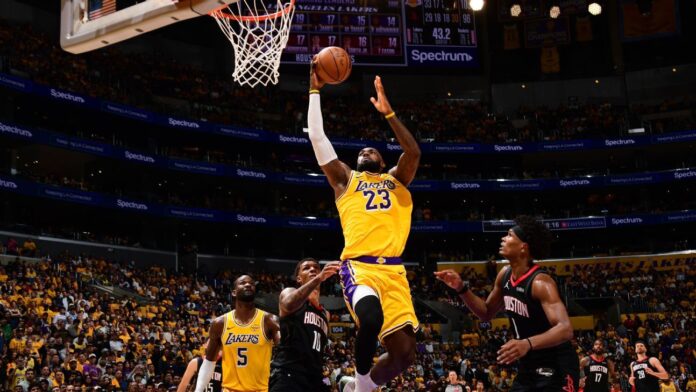
But that single-digit game was a semi-surprise, as the fourth-seeded Los Angeles Lakers defeated the fifth-seeded Houston Rockets. Even with Houston’s leading scorer, Kevin Durant, missing Game 1, the Lakers were underdogs at home because they were missing their top two scorers in Luka Doncic and Austin Reaves.
Out of 16 NBA experts from ESPN who picked a winner in the series, 15 chose Houston.
Yet behind 27 points from Luke Kennard and a near-triple-double from 41-year-old LeBron James, the Lakers outclassed the visiting Rockets. Houston never led by more than two points, while the Lakers built their advantage all the way up to 16 before winning by nine.
That result could shift the direction of the series. And it raised big questions about a Rockets team that could face turmoil and roster turnover this summer if it falls short against an injury-wracked Lakers squad.
But on closer examination, the Lakers’ Game 1 victory might have been a fluke, their apparent domination a mirage. Underlying stats and recent playoff history offer warning signs for the victorious Lakers — and a reason for calm and patience for the Rockets — as the squads prepare for a crucial Game 2 on Tuesday.
Let’s explore how the Lakers set a couple of shooting records in Game 1 — and why, counterintuitively, that might be good news for the Rockets.
Shotmaking versus shot quality
Despite the absence of Doncic and Reaves, the Lakers’ offense was unstoppable on Saturday. Their effective field goal percentage — which adjusts for the extra value of 3-pointers — was 68.2%. That’s a franchise record in the playoffs, which is saying something given that the Lakers have played the most postseason games of any team.
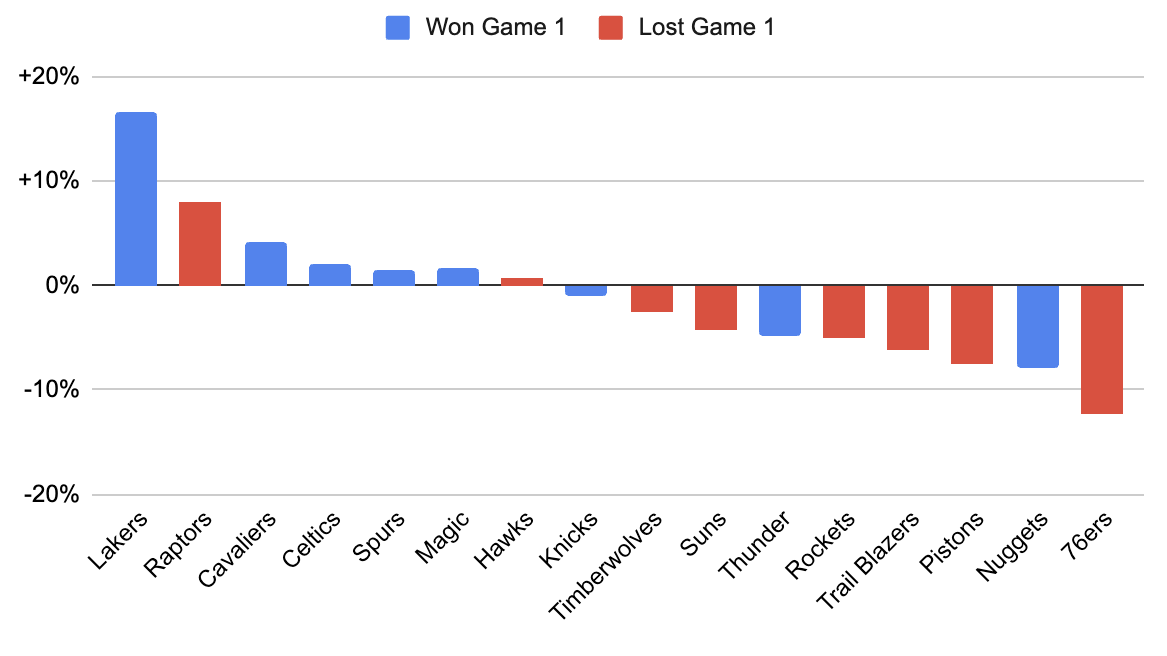
But according to GeniusIQ tracking, their quantified shot probability — which calculates expected eFG% based on factors such as shot location and the shooter’s ability — in Game 1 was only 51.5%. The gap between those two numbers is known as “shotmaking,” and the Lakers’ plus-16.7% mark is one of the highest on record.
For context, across the other Game 1s this postseason, no other team’s shotmaking was even half as good as the Lakers’.
Game 1 shotmaking
More broadly, the last time the Lakers had better shotmaking in any game — regular season or playoffs — was in 2018, which is so long ago that their leading scorers in that contest were Isaiah Thomas and Julius Randle. The last time the Rockets allowed such scorching shotmaking was 2019, in their memorable 159-158 shootout against the Washington Wizards.
And in the postseason specifically, the Lakers’ Game 1 shotmaking ranked ninth out of 2,086 single-game performances in the playoffs since 2013-14, the start of GeniusIQ’s database. It was the best mark for any Game 1 in that span.
Los Angeles benefited from extraordinary teamwide overperformance. Out of eight Lakers who attempted a shot in Game 1, seven exceeded their quantified shot probability, often by massive margins.
But that’s not necessarily a positive sign for the Lakers’ chances going forward.
A history lesson
At the same time that the Lakers were setting the nets aflame, Houston was struggling without Durant. Not only did the Rockets fail to generate many good looks on offense, they were less accurate than expected on their shots.
Houston underperformed its expected effective field goal percentage by 5.0%, meaning the gap between the two teams’ shotmaking was a whopping 21.7%. That’s the 13th-highest margin in a playoff game since 2013-14 and the second highest in a Game 1.
But the previous instances of a large shotmaking disparity should be encouraging for Houston.
The record for the largest shotmaking gap in a Game 1 belongs to the 2016 San Antonio Spurs, who used a 25.0% disparity to open the Western Conference semifinals with a 32-point blowout over Durant’s Oklahoma City Thunder. But the shotmaking evened out over the rest of the series, and the Thunder upset the 67-win Spurs in six games.
There are numerous other examples from the past decade in which a team enjoyed a huge shotmaking disparity in Game 1 but lost the series anyway. We can go year by year: In 2017, Houston beat San Antonio by 27 points in Game 1 thanks to a 17.4% shotmaking gap, but the Spurs advanced in six games; in 2018, the Boston Celtics held an 18.5% shotmaking advantage in Game 1 against Cleveland, winning by 25 points, but James’ Cavaliers triumphed in seven; and in 2019, Boston outshot the Bucks in Game 1 and won by 22 points, but Milwaukee won the series in five.
And in 2020, the top-seeded Lakers were on the other end of a shotmaking gap in their playoff opener, as they surprisingly dropped Game 1 in the bubble against the eighth-seeded Portland Trail Blazers. But their luck evened out, and James’ Lakers won the next four games to start their championship trek.
Teams know not to count on outlier shotmaking lasting for multiple games. Reflecting on the 2019 Bucks-Celtics series a couple of years later, a Milwaukee front office member told me he’d never been worried, even after his team’s Game 1 defeat, because he knew Boston’s single-game shotmaking advantage was unsustainable. Naturally, the Bucks won four straight by 16.3 points per game thereafter.
The Rockets might feel similarly after their Game 1 disappointment. Among all teams in all games this season, the Lakers’ shot quality in Game 1 ranked in the 16th percentile. The Rockets should be happy with that defensive effort — even if the Lakers’ actual eFG% ranked in the 97th percentile.
The Lakers’ historic overperformance meant they scored 22 more points than they “should” have, based on their shot quality. Without that boost, Houston likely would have won the game.
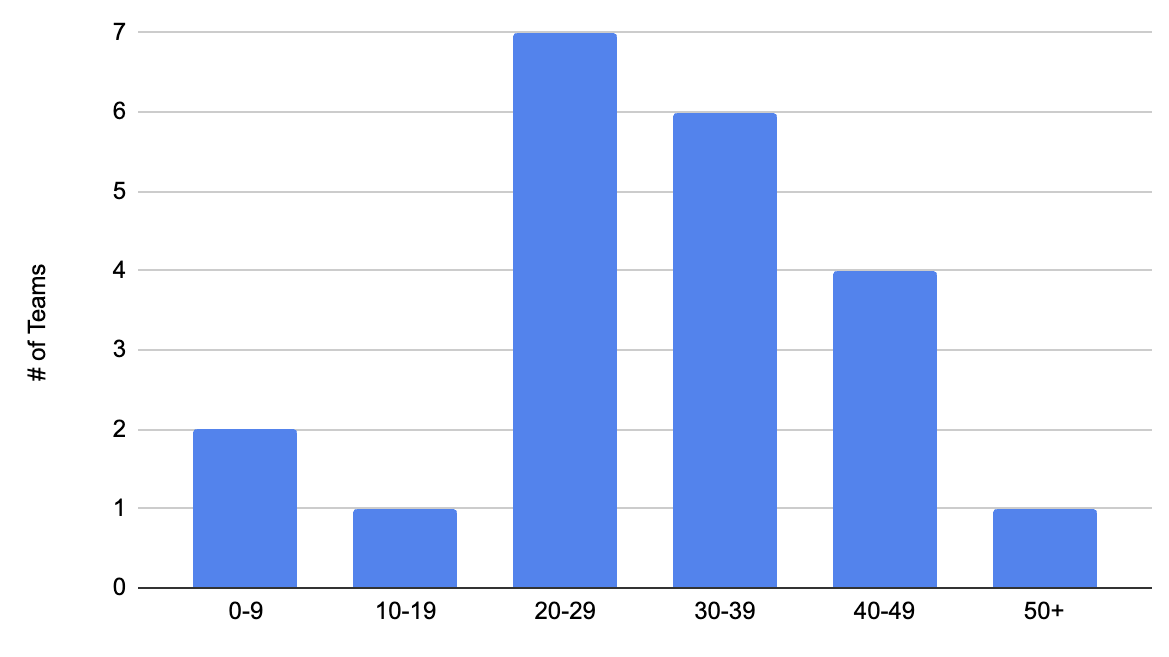
As it is, even with those 22 “extra” points, the Lakers’ final margin of victory was in single digits. That’s unusual in such a make-or-miss league: For teams with shotmaking gaps of at least 20% in the playoffs since 2013-14, the average margin of victory is 29.9 points. Those games are almost always blowouts.
But the Lakers won by just nine points in Game 1. A win is a win, but history suggests they should’ve won by a lot more given their outlier shotmaking advantage.
Margin of victory for teams with large shotmaking gaps
Improbable, but not impossible
To be fair, there can be some signal in the shotmaking noise. For instance, the New York Knicks snuck a Game 1 win against the Celtics last year thanks to a seemingly unsustainable shotmaking gap — and then did it again in Game 2 en route to an upset in capturing the series.
It’s not impossible that the Lakers will follow that path against the Rockets. But it is improbable.
Beyond the arc, the Lakers were 10-for-19 (53%) in Game 1, highlighted by a perfect 5-for-5 showing from Kennard. But while Kennard is an incredible shooter — his 44% career mark from deep is the best among active players — he’s still likely to miss some 3s as the series continues. He has now attempted at least five 3-pointers in 241 games in his career, and Saturday’s was only the second without a miss.
Similarly, the Lakers were an excellent midrange team this season, making 49% of their 2-pointers that weren’t in the restricted area, per GeniusIQ. Only the Denver Nuggets were more accurate. But in Game 1 against Houston, the Lakers made 65% of those 2-point shots away from the basket, which is unsustainable over a larger sample. The other 15 playoff teams were all at 50% or worse from those areas over the weekend.
Hot shooting in one playoff game is generally random, with no predictive carryover to the next. Teams that outperform their expected eFG% by at least 12% in a playoff game have an average shotmaking figure of plus-0.01% in their next game in the series, according to an analysis of data from GeniusIQ and ESPN Research.
Meanwhile, Houston controlled more replicable statistical categories in Game 1: Because the Rockets grabbed 21 offensive rebounds and nabbed 13 steals against Los Angeles’ point-guard-less rotation, they attempted 93 shots to the Lakers’ 66. (And it’s not as if the Lakers compensated with extra free throws; they were 17-for-26 at the line as compared with 17-for-25 for Houston.)
Winning the possession battle so thoroughly was the Rockets’ formula for success during the regular season, and they seem set up to continue that strategy against L.A.
Losing Game 1 is still a concern for Houston, of course, particularly because of the strange timing around this series due to all the stars’ injuries. Every Lakers win means more time for Doncic and Reaves to return. And if Durant misses more time after his surprise Game 1 absence, the Rockets could be in trouble regardless of L.A.’s shooting; their average shot quality was even worse than the Lakers’ in Game 1 (though the Rockets rebounded so many of their own misses that they still should have scored more).
Before the series, I predicted the Lakers would be surprisingly competitive against Houston in spite of their injuries, as James-plus-shooters lineups were successful in the regular season. But I don’t expect those shooters to remain historical outliers for many more games, and Houston’s defense, which tied for fifth in efficiency in the regular season, remains solid.
It might not seem that way after Game 1’s mismatch, but the Rockets have a clear path forward. That starts with the Lakers’ shooting falling back to earth on Tuesday night.
Ciara spoke with Glamourin an interview published on April 17, where she revealed that she is nervous for the Summer House Season 10 reunion. “The reunions are always mental warfare,” she admitted. “Filming a reality TV show and then sitting at a reunion eight months later is not normal. It’s not real life; it’s having to remember everything you said or give a reason why you said everything you said. I’m a bit nervous.”
Jesse spoke with ABC News Live on April 18, where he admitted that he was “excited” to film the reunion. “I’m hoping there will be some resolution at the end of it,” he said in a clip posted to Instagram on April 19.
Ciara Miller teases her Summer House Season 10 reunion look
Although Ciara is nervous, she is also a little stressed about picking the perfect outfit for the Summer House Season 10 reunion. “It’s stressful,” she told Glamour. “I’ve had one fitting so far.”
“I think what I want to pick out is going to be a statement of where I stand,” she added. “I feel like it’s going to represent who I am and how I’m feeling on that particular day. People talk about a revenge dress. Even at the reunion two years ago, I wasn’t really preparing anything to be a revenge dress. I was genuinely just like, ‘Oh, what do I want to wear?’ And I was working with my stylist at the time and we came up with something together. Now, going into this reunion I have a different mindset. But I still don’t really think about a revenge look. I just think about what’s a proper representation of who I am right now.”
Ciara Miller reveals who she wants to sit next to at the Summer House Season 10 reunion
Ciara has also thought about who she wants to sit next to at the Summer House Season 10 reunion. “You get to sit next to your friends. In the past, I’ve sat next to Paige [DeSorbo]. There’s also something about the chapter of sitting by yourself and being able to hold your ground,” she admitted. “Not that I’m OK with sitting by myself, but I feel like I’m more comfortable with sitting by myself if I have to be.”
“I would love to sit next to Mia [Calabrese] or Carl [Radke] or KJ [Dillard],” she added. “But at the same time, I’m not really thinking too much about the seating arrangement because I know that this is a moment for me to stand my own ground wherever I’m sitting.”
The Future of Money: How Cryptocurrency is Revolutionizing Financial Transactions
As we navigate through the 21st century, the world of finance is undergoing a seismic shift. Traditional money and banking systems are being challenged by innovative technologies, notably cryptocurrency. This digital form of currency is not only reshaping how transactions are conducted but also rethinking the very concept of money itself.
Understanding Cryptocurrency
Cryptocurrency is a form of digital or virtual currency that uses cryptography for security. Unlike traditional currencies issued by governments, cryptocurrencies operate on decentralized networks based on blockchain technology. This decentralization offers several advantages:
Security: Cryptocurrencies are secured through cryptographic techniques, making them highly resistant to fraud and hacking.
Anonymity: Users can make transactions without revealing their identities, offering greater privacy compared to conventional banking.
Accessibility: Anyone with internet access can participate in the cryptocurrency market, democratizing finance.
The Impact on Financial Transactions
Cryptocurrency is changing the way we handle financial transactions in several significant ways:
1. Lower Transaction Fees
Cryptocurrency transactions often come with lower fees compared to traditional banking and credit card systems, making them more appealing for both consumers and businesses.
2. Instant Transactions
Unlike traditional banks, which may take days to process international transactions, cryptocurrencies can facilitate instant transfers across borders, significantly speeding up the process.
3. Financial Inclusion
Over 1.7 billion people worldwide remain unbanked. Cryptocurrency opens up financial services to these individuals, allowing them to save, invest, and transact without the need for a traditional banking infrastructure.
The Challenges Ahead
While the benefits of cryptocurrency are clear, challenges remain:
Regulatory Hurdles: Governments worldwide are grappling with how to regulate cryptocurrencies, which could affect their usability and acceptance.
Volatility: The value of cryptocurrencies can fluctuate widely in short periods, posing risks for investors and users alike.
Security Concerns: While transactions are secure, cryptocurrency exchanges have been the target of hacks and thefts.
The Road Ahead
Despite the challenges, the future of money appears to be leaning heavily towards cryptocurrency. Major companies are beginning to adopt cryptocurrencies as a form of payment, and countries like El Salvador have already made Bitcoin legal tender.
Additionally, the rise of decentralized finance (DeFi) platforms is further pushing the envelope, allowing users to lend, borrow, and earn interest on their cryptocurrency holdings without traditional banking institutions.
Conclusion
The revolution that cryptocurrency represents is only just beginning. As technology continues to evolve, so too will the landscape of financial transactions. Embracing this change could lead to a more efficient, inclusive, and innovative financial future.
The Milan prosecutor’s office has opened an investigation into an agency suspected of organizing luxury parties fueled by prostitution and the use of nitrous oxide (known as “laughing gas,” used recreationally by young people).
According to the newspaper La Gazzetta dello Sport, the scandal involves around 50 Serie A players from the Italian Championship, including athletes from rivals Inter Milan and AC Milan.
Advertisement
The operation was run by the couple Emanuele Buttini and Deborah Ronchi in the province of Cinisello Balsamo.
The agency sold post-match party “packages” held at high-end hotels and nightclubs, both in Italy and in Mykonos, Greece.
The scheme is believed to have been operating since 2019, even keeping an illegal nightclub active during the Covid-19 pandemic lockdown.
The investigation indicates that more than 100 women of various nationalities were victims of the agency.
They were forced to live at the company’s headquarters, paid for their own accommodation, and had to hand over half of the money they received to the organizers.
Advertisement
In wiretaps leaked by the authorities, negotiations involving a Brazilian woman were also caught.
Use of substances
According to La Gazzetta dello Sport, the investigation found that the players used nitrous oxide during the events.
The substance acts as a mild sedative that causes euphoria, but its appeal is that it leaves no traces in the body, which prevented them from being caught in anti-doping tests.
Arrests and developments
The couple Buttini and Ronchi, along with two accomplices, are already under house arrest.
They will face charges for organizing sexual services and money laundering. It is worth noting that, as in Brazil, voluntary prostitution is not considered a crime in Italy; the violation of the law lies in organizing, brokering, and exploiting the work of others.
Advertisement
Police discovered the athletes’ involvement after analyzing the agency’s Instagram account, which was followed by several players.
In addition, bank transfers were identified between those under investigation and various famous personalities, a group that includes major businessmen and even Formula 1 drivers.
The Psychology Behind Cryptocurrency: Why Investors are Drawn to Digital Gold
In recent years, cryptocurrency has become a buzzword that captivates investors and tech enthusiasts alike. Often dubbed “digital gold,” cryptocurrencies like Bitcoin have garnered massive attention for their potential as investment vehicles. But what drives this fascination? This article delves into the psychological factors that make investors flock to these digital assets.
The Allure of Scarcity
One of the key psychological appeals of cryptocurrencies is their limited supply. Bitcoin, for instance, has a capped supply of 21 million coins. This scarcity taps into the fundamental economic principle of supply and demand, creating a sense of urgency among investors who fear missing out on potential profits. This “fear of missing out” (FOMO) can significantly increase investors’ emotional reactions, leading them to invest impulsively.
The Search for Stability in an Unstable World
Many investors turn to cryptocurrencies in times of economic turbulence or instability. During periods of financial crisis or inflation, traditional currencies can lose value, pushing individuals to seek alternative assets. The idea of digital gold emerges as a hedge against inflation and economic decline, offering a sense of security.
Community and Belonging
The cryptocurrency space boasts a vibrant community of enthusiasts, developers, and investors. Platforms like forums and social media groups foster a sense of belonging and shared purpose. This community-driven aspect encourages investors to learn, share knowledge, and engage in discussions about potential investments, further solidifying their commitment to cryptocurrencies.
Influence of Media and Celebrity Endorsements
The media plays a significant role in shaping perceptions of cryptocurrencies. Stories highlighting massive gains or celebrity endorsements can create a bandwagon effect, where individuals rush to invest in cryptocurrencies simply because others are doing so. This herd mentality often drives hype cycles, surging prices and investor interest.
The Psychological Appeal of Innovation
Investors are often drawn to the idea of being part of something revolutionary. Cryptocurrency represents a shift in how we view money, making it an exciting frontier for tech-savvy investors. The desire to be part of this digital transformation adds a layer of motivation that traditional investments may lack.
Conclusion
Understanding the psychology behind cryptocurrency investment reveals why many are drawn to these digital assets. Factors like scarcity, community, influence, and the promise of innovation create an intricate tapestry of motivation. As the market continues to evolve, investors will likely remain captivated by the idea of digital gold, despite the inherent risks involved.
Ultimately, while cryptocurrency offers potential rewards, it also demands a cautious approach. Awareness of the psychological influences at play can equip investors with a better understanding of their own motivations, guiding them towards more informed decision-making.
Amerykanka to obecnie dopiero 339. zawodniczka rankingu WTA. W zeszłym tygodniu 21-latka dotarła do półfinału turnieju w Oeiras. W tej fazie musiała uznać wyższość… Mai Chwalińskiej, z którą przegrała 2:6, 0:6. Polka wygrała zmagania w Portugalii.
Natomiast Linette plasuje się na 57. miejscu w rankingu, a w swoim ostatnim turnieju, a więc w Miami, osiągnęła 1/16 finału. Lepsza okazała się Alexandra Eala.
Kto zagra dalej? Zapraszamy na relację na żywo we wtorek, 21 kwietnia. Początek meczu około godz. 16:15.
Drawing from her own childhood in the Smoky Mountains of East Tennessee, Dolly Parton has built an empire. Celebrating her 80th birthday earlier this year, the buoyant blonde singer-songwriter has won numerous awards for both music and acting, built an estimated net worth of $500 million, and spearheaded many philanthropic efforts. And that illustrious career officially kicked off 67 years ago (April 20), when a record label based in Lake Charles, Louisiana, released her first single, “Puppy Love”.
Dolly Parton Released Her First Song at 13 Years Old
A sweet homage to the complexities of young love, Dolly Parton co-wrote “Puppy Love” with her uncle, Bill Owens, when she was just 11 years old.
In March 1959, a 13-year-old Parton headed to southwestern Louisiana with her grandmother, Rena Owens, to record the song at Goldband Records. Of the 30-hour bus ride, she later recalled, “I don’t think I’ll ever forget the way the inside of that bus smelled. It was a combination of diesel fuel, Naugahyde, and people who were going places.”
You can see glimpses of Parton’s storytelling acumen even then. Sometimes you won’t even carry my books / The next time you see me, rag on my looks / You’re meaner to me than a mean ol’ crook / But I must confess I’m really hooked.
Despite receiving minor airplay, “Puppy Love” did not reach the charts.
Still, for a teenager growing up in a one-room log cabin, nothing beats your first time hearing your own voice coming over the airwaves. In her 2020 book Songteller, Dolly Parton wrote she “about killed myself.”
“I was sitting up on the counter, and the radio was on,” she recalled. “I jumped off the counter and slid and fell trying to get to the radio to turn it up.”
However, Donny Osmond would later record a version that hit No. 1 on the UK charts in July 1972.
The 10-time CMA Award winner would perform “Puppy Love” live during her canine fashion show, Dolly Parton’s Pet Gala, in February 2024. She later uploaded a new version of the song—dubbed “Billy’s Version” in honor of her god dog—to her official YouTube.
Featured image by Michael Ochs Archives/Getty Images
In today’s fast-paced world, effective communication is more important than ever. Suggestions can be a powerful tool to influence decisions, inspire change, and encourage collaboration. However, simply presenting suggestions isn’t always enough; they must be tailored to fit the specific context and audience. Here are some strategies to help you adjust your suggestions for a greater impact.
Understand Your Audience
Before making any suggestions, take the time to understand who you are speaking to. Consider their interests, values, and motivations. This will help you frame your suggestions in a way that resonates with them.
Tips:
Conduct surveys or feedback sessions to learn more about your audience.
Identify their pain points and tailor your suggestions as solutions.
Use language that reflects their preferences and communication style.
Provide Context
Suggestions without context can often fall flat. Providing a background or rationale behind your suggestions can help your audience understand their significance.
Strategies:
Use storytelling to illustrate why your suggestions matter.
Incorporate relevant data or case studies to build credibility.
Address potential objections and provide counterarguments.
Be Flexible and Open-Minded
One of the key aspects of making effective suggestions is the willingness to adapt. Don’t be afraid to modify your suggestions based on feedback or new information.
Ways to Stay Flexible:
Encourage dialogue and invite others to share their perspectives.
Be prepared to pivot your suggestions if necessary.
Remain open to alternative ideas that may emerge from discussions.
Follow-Up and Iterate
Your suggestions may not always be accepted right away. It’s important to follow up and revisit your ideas, allowing for adjustments based on how they were received.
Action Steps:
Schedule regular check-ins to assess the progress of your suggestions.
Be proactive in seeking feedback and making improvements.
Document the outcomes and share success stories with your audience.
Conclusion
Adjusting your suggestions to better fit your article’s focus and your audience’s needs can make a significant difference in how they are received. By understanding your audience, providing context, being flexible, and following up, you enhance the likelihood of your suggestions having a lasting impact. Feel empowered to modify your approach and watch your suggestions inspire action!
Websites store cookies to enhance functionality and personalise your experience. You can manage your preferences, but blocking some cookies may impact site performance and services.
Essential cookies enable basic functions and are necessary for the proper function of the website.
Name
Description
Duration
Cookie Preferences
This cookie is used to store the user's cookie consent preferences.
30 days
These cookies are needed for adding comments on this website.
Name
Description
Duration
comment_author
Used to track the user across multiple sessions.
Session
comment_author_email
Used to track the user across multiple sessions.
Session
comment_author_url
Used to track the user across multiple sessions.
Session
These cookies are used for managing login functionality on this website.
Name
Description
Duration
wordpress_logged_in
Used to store logged-in users.
Persistent
wordpress_sec
Used to track the user across multiple sessions.
15 days
wordpress_test_cookie
Used to determine if cookies are enabled.
Session
Statistics cookies collect information anonymously. This information helps us understand how visitors use our website.
Google Analytics is a powerful tool that tracks and analyzes website traffic for informed marketing decisions.
Contains information related to marketing campaigns of the user. These are shared with Google AdWords / Google Ads when the Google Ads and Google Analytics accounts are linked together.
90 days
__utma
ID used to identify users and sessions
2 years after last activity
__utmt
Used to monitor number of Google Analytics server requests
10 minutes
__utmb
Used to distinguish new sessions and visits. This cookie is set when the GA.js javascript library is loaded and there is no existing __utmb cookie. The cookie is updated every time data is sent to the Google Analytics server.
30 minutes after last activity
__utmc
Used only with old Urchin versions of Google Analytics and not with GA.js. Was used to distinguish between new sessions and visits at the end of a session.
End of session (browser)
__utmz
Contains information about the traffic source or campaign that directed user to the website. The cookie is set when the GA.js javascript is loaded and updated when data is sent to the Google Anaytics server
6 months after last activity
__utmv
Contains custom information set by the web developer via the _setCustomVar method in Google Analytics. This cookie is updated every time new data is sent to the Google Analytics server.
2 years after last activity
__utmx
Used to determine whether a user is included in an A / B or Multivariate test.
18 months
_ga
ID used to identify users
2 years
_gali
Used by Google Analytics to determine which links on a page are being clicked
30 seconds
_ga_
ID used to identify users
2 years
_gid
ID used to identify users for 24 hours after last activity
24 hours
_gat
Used to monitor number of Google Analytics server requests when using Google Tag Manager