
Home Blog Page 121

‘The people stood up’: how war turned Iran towards ‘everyday nationalism’ | Iran

Amid the ruins of the building that was once the Tehran home of the Iranian nuclear scientist Ahmadreza Zolfaghari, workmen are underway demolishing the remains, damaged beyond repair by Israel’s surprise attempt to assassinate Iran’s political, military and nuclear elite.

Zolfaghari had worked at the Faculty of Nuclear Engineering at Shahid Beheshti University, and was editor-in-chief of a nuclear energy journal, all of which was sufficient to make him an Israeli target. He was found dead in the rubble of his home, along with his wife and grownup son. The three adjoining buildings had also been blown apart, killing at least five others, including an 11-year-old child. A blue banner, draped down one of the damaged buildings, reads: “A piece of the body of Iran.”

The group of workmen wielding sledgehammers are clambering across the remaining unstable floor struts to demolish what remains of the building. Loose masonry crashes to the ground, sending dust into the air. Their perilous task – the beams on which they stand creak as they hammer – seems a metaphor for a country still in shock, neither at peace nor at war, but in need of reconstruction.

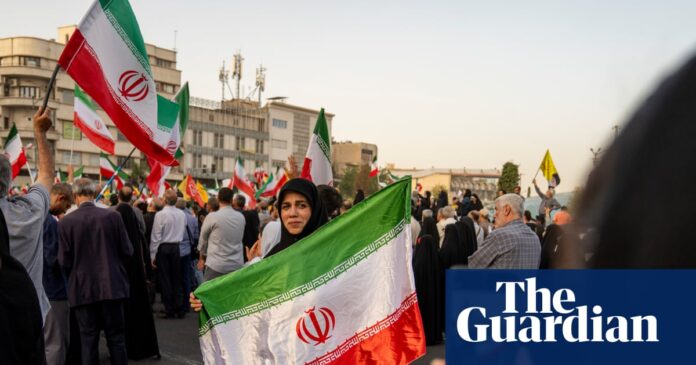
More than 1,000 Iranians died in the Israeli attack, and some professional sociologists – a broad term in Iran – argue a new nationalism has emerged into public view.

People mourn over the flag-draped coffin of a member of the paramilitary who was killed in Israeli attacks in Tehran, Iran. Photograph: Vahid Salemi/AP

There is no doubt that, outwardly, Tehran is changing fast – and socially it is light years from western perceptions. The number of women not wearing the hijab in Tehran’s streets is about a third and it is not just young women, but sometimes whole families. A new punitive chastity law passed by the religious conservatives – still dominant inside parliament – was rejected by the consensual, but reformist president Masoud Pezeshkian on the pragmatic grounds that it would cause an uprising if it was enforced.

The burial of the measure has emboldened women. The police, once keen to bundle the “unchaste” into the back of a van, now leave unscarfed women to their individual choice. The vibrant, albeit polluted, evening streets resemble Beirut as much as Kabul. The next step is to allow women to ride motorcycles. Observers say that Mahsa Amini, the young Kurdish woman who collapsed in a police station in 2022, sparking the “women life freedom” protests, did not entirely die in vain.

The cultural sociologist and Soas alumni Nematollah Fazeli claims a deep change may be afoot. What he describes as the emergence of an “everyday nationalism” is reflected in a return to epic poetry, popular podcasts about Iranian history, and thousands of ordinary conversations across the country about Iranian identity.

People on a street in Tehran, Iran. Photograph: Abedin Taherkenareh/EPA

Fazeli explained: “Before the war, we loved Iran, but it was not a very conscious feeling. After the war, it became a central point of our discourse. Everywhere in cities and villages you observe that people are talking about their nation, their identity, their geography and their history. We just want to remind one another we are Iranian. The sense of oppression of Iran, our nation, our land, our culture, our feelings, by a world system and by foreigners was very important. It led to a desire to be together and to express the commonality of being Iranian.”

But he adds: “The Islamic Republic ideology is not a nationalist ideology. The official ideology of the revolution is not keen or interested to represent ancient Iranian culture, and that culture cannot be seen in official education, TV or radio. The people’s reaction to the war was a shock and a kind of negative cohesion. Despite their frustration with the government, the people stood up against foreign aggression; not to defend the Islamic Republic, but to defend Iran. We believe we have been an organic nation for more than 5,000 years.”

Mohammad Faze, a teacher, described how his students had put the Iranian flag on their social media profiles. Others point to the flourishing of podcasts about Iranian history and the declarations of love for Iran by popular singers including previous regime critics such as Homayoun Shajarian.

A young Iranian woman holds a country’s flag as she stands at Azadi Square to watch a live concert in western Tehran, Iran. Photograph: NurPhoto/Getty Images

Some in government have acknowledged the challenge posed by this outpouring for the homeland. Abdolkarim Hosseinzadeh, the vice-president for rural affairs, told a gathering of journalists: “Iran is beautiful with all of us together, my closest friends are not Kurds, they are Persians, Turks, Kurds and Baloch. We have lived together, loved each other and cherished one another. We may not think alike, we may not share the same beliefs, but in Iran, there is no doubt about our friendship, patriotism and love for our homeland.”

The issue under debate in Iran now is whether, and how, the government responds to the display of resilience shown by a population under fire, or what the foreign affairs spokesperson, Esmaeil Baghaee, described as the blitz spirit.

The experience of war, even short wars, can change nations. Aliakbar Velayati, an adviser to Iran’s supreme leader, argued: “the people have proven themselves, and now it is the turn of the officials. Outdated methods will no longer suffice for a society after the war.”

A fast-food stand in northern Tehran, Iran. Photograph: NurPhoto/Getty Images

But turning these generalities into reality in a deeply polarised and political society is proving hard. Even Shajarian’s plan to hold a mass free open air concert in Tehran’s Azadi Square this weekend collapsed as a political row broke out as to whether the event was an innocent moment of relief or propaganda.

The conservatives believe the social cohesion inadvertently forged by Benjamin Netanyahu’s misconceived attempt at regime change from 30,000ft confirms the popularity of the supreme leader and its ideological foreign policy.

But for many reformists, it would be a mistake to read this everyday patriotism as an endorsement for the Islamic Republic, or the status quo. One reformist said: “How can we be so complacent when the currency has fallen 25% in the past week, poverty is everywhere, the official media is a lie and no one knows if another war is around the corner?”

The reformists indeed hope there could be a breakthrough; what the former foreign minister, Mohammad Javad Zarif, has described as a paradigm shift. In recent weeks, former prime minister Mir-Hossein Mousavi, who has been under house arrest for 15 years and is now in hospital, issued an open letter demanding a new constitution, while the Reform Front – an umbrella group of moderate and reformist figures – called for the government to take the stepthe US had been demanding and voluntarily suspend domestic enrichment of uranium, in return for the lifting of sanctions.

The former two-term president Hassan Rouhani has also weighed in, advocating for a “national strategy based on the will of the people. This crisis must create an agenda to correct the course and rebuild the foundations of governance.”

He called for the creation of a grassroots intelligence agency, giving scientists a platform and opportunity to modernise Iran’s defences, diversification of the media by launching more private television channels and ending Iran’s abrasive relationship with the world, including reducing the hostility towards the US.

Beyond politicians, 180 economists urged a reordering of “Iran’s economic and political paradigms”, including the removal of the army from business, while 78 former diplomats pressed for a foreign policy that “does not allow delay” in taking the steps necessary to lift sanctions.

‘Give diplomacy a chance’

But there is still resistance to change. The power held by the Iranian security apparatus has led to a crackdown involving road checks and as many as 20,000 arrests, according to Amnesty International.

The conservatives rushed to pass a draconian law giving the authorities power to block online content. The head of the judiciary, Gholam-Hossein Mohseni-Eje’i, condemned the Reform Group’s statement criticising the move as “in line with the enemy’s wishes”, adding “it would be natural for the Tehran prosecutor to take an interest in such statements”, a remark designed to send a chill through the reformists.

Faced by these perennial conflicting tides, Pezeshkian’s instinct is to avoid confrontation, sometimes to the frustration of the reformists thatgot him elected in a surprise result only a year ago. Pezeshkian is deeply aware of the limits of his power: that conservative forces are out to crush him, his dependence on the supreme leader and the ubiquity of a deep state protective of its privileges. The polarised tone of Iranian politics worries him as much as sanctions, he admitted last week.

He has made consensus his watchword, so much so that Mohsen Asgari, the editor of the innovative multimedia outlet Haft Sobh, argues: “The risk is that he turns a method of government – the search for consensus – into an objective.”

Fatemeh Mohajerani, a government spokesperson, educated at Heriott-Watt University, defends Pezeshkian’s commitment to persuasion and problem solving.

Consensus building on complex social issues in a polarised society takes time, and separation of powers prevents him from calling for political prisoners to be released. She insists progress is underway, for instance to remove the filters placed on external social media sites such as Telegram, X and even Instagram. Only the intervention of the war prevented Telegram executives from visiting Iran to discuss the terms of their launch, she said. Asked if she thought the government needed to apologise for the deaths and injuries caused to women fighting for their freedom, she responded by saying the government will always apologise if necessary.

Pezeshkian’s space to undertake the necessary economic reforms is restricted by the universal political anger caused by the 12-day war and now the threat of reimposed UN sanctions. For many Iranians, reformist or otherwise, the widespread view is that Europe is in effect endorsing Israel’s illegal bombing campaign by its move toward snapback sanctions.

Iran’s president, Masoud Pezeshkian. Photograph: Iranian Presidency/ZUMA Press Wire/REX/Shutterstock

Anger that the US allowed or connived in the bombing while negotiations were underway, and Europe could not bring itself to condemn this, has left a deep distrust that plays into the hands of the anti-western factions.

Reza Nasri, an international lawyer close to the reformist camp, said: “Before the war, there was concern that Trump might withdraw from any signed agreement, but now the worry is that he will bomb us. It is very difficult to make the case within domestic Iranian politics that negotiations are beneficial or will lead to a lifting of sanctions.

“The perception is Trump has outsourced his Iran policy to Israel. People feel ‘we went to negotiate and we got bombs so why should we do that again?’ It would be so costly for any government to go back to negotiations. And if Europe wants that to happen, they have gone about it absolutely the wrong way. The most likely outcome of imposing snapback [sanctions] is that Iran will exclude Europe from all future negotiations altogether, and will exclude the UN weapons inspectors. The logical thing for Europe to do is to delay snapback and give diplomacy a chance.”

Nasri added: “The issue of Iran’s right to enrich uranium domestically – supposedly the cause of the conflict – is not about building a bomb, deterrence or even about nuclear energy, it is all about retaining a symbol of dignity.”

Speaking inside the courtyard of the Hemmat Tajrish mosque by the graves of some of those killed in the 12-day war, Mohammad Faze admits Iranian society has been living on the edge, but insists: “My nature is not to be 100% certain about anything, but if this war comes again we will be ready. We have learned from the 12-day war, and we are prepared. It is deep in the Iranian heart we will not surrender, and we will not be humiliated.”

More Related articles, check here

3 phases of Gen X and why it’s ‘forgotten’

Every generation has collective experiences in its youth that help define it. Baby Boomers (1946 to 1964) had the Kennedy assassination, the Vietnam War, and the Moon landing. Millennials (1981 to 1996) lived through 9/11, the Great Recession, and the social media revolution. What about Gen X (1965 to 1980)? In their youth, they experienced the fall of the Soviet Union, the rise of pop culture in the ‘80s, and Kurt Cobain’s suicide.

Gen Xers were also born in an in-between era after women entered the workforce and before the advent of helicopter parenting. They fell through the cracks and were often left on their own. That’s a big reason why they have a reputation for being resourceful and independent. They are also known to be a bit cynical and sarcastic, a trait that comes from the economic and social tumult they experienced as children.

The generation also occupies an interesting point in history where many Gen Xers had analog childhoods and digital adulthoods. This gives them an interesting perspective on the role that technology should have in our lives and a nostalgia for long summer days riding bikes without a phone in sight and staying outside until the street lights came on.

But what were some other Gen X experiences that other generations may not understand? A Reddit user asked the Gen X forum, “What’s THE most Gen X thing?” and over 5,000 people responded with memories of their childhoods that helped to define them.

15 of the ‘most Gen X’ things people have ever experienced

1. Whatever

“Whatever.”

“I’m 46 and will take my jaded apathy to the grave, thank you very much. Now everybody leave alone cause everything sucks.”

2. Taping songs off the radio

“I’m just on that border between Gen X and the oldest Millennials, but my sister is 8 years older than me. We would call the local rock station to request a song, then sit there with a tape at the ready to hit record as soon as they played our song. Repeat that about 10x and you’ve got a nice mixtape.”

“I spent months making a tape that had ‘I Will Always Love You’ by Whitney Houston on repeat (both sides) and gave it to my stepsister as a gift. She listened to the whole thing, hoping for a different song. Cause she hated that one.”

3. Arcades

“Video arcade. Before Gen-X, graphics weren’t good enough, and after Gen X, you’d play the games on your own home console. No other generation claimed them like we did.”

“I remember being indignant when the first 50-cent games came out. What, you think I’m MADE OF MONEY?”

4. Being forgotten

“Never getting mentioned in the news. It always goes from Gen Z to millennials to boomers.”

“My sister watched a video that was supposed to be about every generation from the greatest generation through Gen Z, and they left out Gen X. Just skipped right over that time period.”

This is in reference to a news story that CBS News ran in 2019 about Millennials being the “burnout generation,” where they put up a graphic of every generation from Silent to post-Millennials, now known as Gen Z, but they forgot to include Gen X. It was a perfect example of how Gen Xers have been ignored for years.

5. Music videos

“Watching MTV Headbangers Ball Saturday morning, ready to record on the VHS when my favourite bands came on.”

“Yes, 120 Minutes- but also, Yo! MTV Raps.”

6. Swatch watches

“With the rubber guard on the face.”

“Swatch Guard, to keep you from telling time on the face with no numbers, of course. Yes, I had both at 14 in 1985.”

7. CD cases

“Massive CD collections neatly stored in binders for easy access.”

“Claiming shotgun in the car so you had access to the binder and could play DJ for the night.”

8. Last generation to live without the internet

“Being old enough to remember (and appreciate) life before the Internet and cellphones but being young enough to transition into that world without a hitch.”

“Old enough to remember life before the ubiquity of the internet (and computers to a lesser extent), yet young enough to still be able to understand newer tech like modern smartphones and computers.”

9. The Young Ones

The Young Ones was a British comedy TV show that ran from 1982 to 1984, about four very different university students who each represented a different clique. There was Vyvyan the punk rocker, Neil the hippie, Mike the “cool guy,” and Rick, the Mod-socialist. The show mixed gross-out comedy, surrealism, and political satire, and was a cultural phenomenon in England that became a cult classic in 1985 when it debuted on MTV.

10. Being unreachable

“Being the last unreachable generation. There were hours where no one knew where we were and our parents had zero way to contact us.”

“Be home before the street lights are on.”

11. Garbage Pail Kids

“I bought a pack once, and my mom thought they were Cabbage Patch Kid cards. When she saw them, she made me return them to the store!”

12. Blockbuster on a Friday night

“Hanging by the door to see if any good movies were just returned.”

“Checking your answering machine messages to see if the video store called to say the movie you wanted was in.”

13. Trapper Keepers

“I loved my Trapper Keeper. Everything fit in there, didn’t need a bookbag.”

14. Hypercolor shirts

“I sell the sh*t out of hypercolor shirts in my vintage store. I’m the only one who actually knows to look for them. The younger set is completely amazed by vintage hyper color.”

15. Payphone scams

“Using a payphone to make a collect call with the intent of the call being declined. It’s a messaging system that notifies your ride that you’re ready to be picked up from the movies, where you watched Back to the Future. Or from the arcade where you just blew a roll of quarters on Super Mario Bros.

“Calling your out-of-town friend collect from a payphone to another payphone to avoid long-distance charges. Successfully did this with an overseas boyfriend, too.”

Get more information, on our website

Israeli carries out strike against Hamas leadership in Qatar

Israel carried out an attack targeting Hamas leadership in Qatar on Tuesday, two Israeli sources told CNN, in what appeared to be the first known Israeli military strike against the militant group in the Gulf nation.

One of the sources, a senior Israeli official, said among those targeted was Hamas’ chief negotiator Khalil Al-Hayya.

“We are awaiting the results of the strike,” the official said.

The Qatari foreign ministry’s spokesperson Majed Al Ansari called the attack “cowardly” and “criminal assault” that constitutes a “blatant violation of international laws and norms.”

“While strongly condemning this attack, the State of Qatar emphasizes that it will not tolerate this reckless and irresponsible Israeli behavior,” Al Ansari said on X.

A senior Hamas official confirmed to CNN that the group’s negotiators were targeted in Doha.

 A Dramatic Escalation

September 9, 2025 — In a dramatic and unprecedented move, Israel launched an airstrike on Hamas political leadership in Doha, Qatar, during a critical meeting to discuss a U.S.-backed ceasefire proposal for the Gaza conflict AP NewsReutersWikipedia.

The Strike and Its Targets

The attack targeted a closed residential compound in the Leqtaifiya/West Bay Lagoon district—where several senior Hamas figures had convened. Among those present were Khalil al-Hayya (Gaza chief and top negotiator), Khaled Mashal (former overall leader and head of the group’s international branch), Muhammad Ismail Darwish, Zaher Jabarin, and others WikipediaWikipedia.

Casualties included five lower-ranking Hamas members, notably the son of Khalil al-Hayya, the head of his office, three bodyguards, and one Qatari security officer AP News+1WikipediaThe Washington Post. Hamas asserts that its top leadership survived the strike AP News+1Wikipedia.

Shortly after the explosion, the Israel Defense Forces (IDF) issued a statement saying it had targeted “senior leadership” of Hamas with “a precise strike” in a joint operation with the Shin Bet security agency. The statement didn’t specify where the operation was carried out, but suggested that it was outside Gaza.

“For years, these members of the Hamas leadership have led the terrorist organization’s operations, are directly responsible for the brutal October 7th massacre, and have been orchestrating and managing the war against the State of Israel.”

On Monday, Khalil Al-Hayya met with Qatari Prime Minister Sheikh Mohammed bin Abdulrahman Al-Thani in Doha.

International Repercussions

The strike was met with a wave of global condemnation:

  • Qatar denounced it as a “flagrant violation” of international law and its sovereignty AP News+1Reuters.

  • The United States, informed about the strike beforehand, described it as “unfortunate” and emphasized it did not contribute to progressing peace efforts AP News+1The Washington PostReuters.

  • Donald Trump, who had been notified shortly before the operation, said he was “very unhappy” and stated the strike didn’t serve U.S. or Israeli interests The Washington PostReutersAP News.

  • UK Prime Minister Keir Starmer condemned the action as a breach of Qatar’s sovereignty and a threat to regional stability, calling for renewed push for a ceasefire and humanitarian efforts The Guardian.

  • Additional condemnation came from Saudi Arabia, the UAE, Egypt, the EU, UN Secretary-General Guterres, and others, warning of damage to ongoing diplomatic efforts AP NewsReutersThe Guardian.

Diplomatic Fallout & Ceasefire Prospects

The strike badly undermines the fragile ceasefire negotiations. Qatar’s prime minister remarked that current talks likely hold no validity following the attack, though Qatar stopped short of withdrawing its mediation role AP News+2AP News+2The Washington Post. The United Nations promptly called an emergency Security Council meeting in response AP News+2AP News+2.

Within Israel, hostage families expressed deep concern that the strike could jeopardize efforts to free captives. Critics warn it may derail any remaining diplomatic pathways OmniAP News.

Conclusion

This Israeli operation marks a historic turning point—it’s the first known Israeli strike on Qatari soil and represents a stark escalation in the Middle East conflict. While it was intended to disrupt Hamas’s leadership and negotiation capabilities, the refusal to dismantle the ceasefire discussions may cost Israel dearly in diplomatic capital. With key international actors rallying in condemnation and ceasefire prospects now hanging by a thread, the aftermath of this strike could reshape regional alliances and the broader trajectory of the Gaza conflict.

Stay tuned for more updates

Auslio: The Pioneer in Blockchain-Powered Educational Security

Auslio Foundation announces Auslio, a Web3-powered Future Safe ID protocol designed to eliminate fraud in global education and immigration by securing documents and payments on blockchain.

1. The Auslio Foundation today announced the launch of Auslio, a blockchain-powered verification protocol designed to eliminate fraud in global education and immigration systems — a multibillion-dollar problem impacting students, families, and institutions worldwide.

From fake offer letters and forged degrees to counterfeit fee receipts and fraudulent financial accounts, document fraud has eroded trust in international education for decades. Auslio introduces the Future Safe ID — a decentralized identity wallet that secures academic records, financial transactions, and embassy documents with tamper-proof, cryptographic verification.

🔑 A Web3 Protocol for Real-World Trust

Built on a hybrid permissioned-public blockchain, Auslio provides:

– Tamper-Proof Credentials: Universities and banks issue degrees, transcripts, offer letters, Bank Statement and receipts as verifiable digital certificates on-chain.

– Escrow-Backed Payments: Tuition fees and GIC deposits are safeguarded through smart contracts, eliminating the risk of fake receipts.

– Validator Nodes for Embassies & Institutions: Immigration authorities and universities secure the network, eliminating forgery at its source.

Future Safe ID Wallet: Each student carries a lifetime decentralized digital identity linked to their academic, financial, and visa journey.

🌍 From Web3 Tech to Global Adoption

“Ethereum transformed finance, Solana transformed speed, and XRP transformed payments. Auslio is designed to transform global trust in education and immigration systems,” said a spokesperson for the Auslio Foundation.

Unlike purely experimental blockchain projects, Auslio focuses on immediate real-world applications. Early pilots with universities, financial institutions, and visa authorities in the Australia, Usa ,Uk ,UAE, and Canada are expected to demonstrate proof of concept by early 2026.


💠 The $AUSL Token

The ecosystem is powered by the $AUSL Token, which underpins document issuance, verification, and escrow transactions.

– Students use $AUSL for instant verification and discounted payment options.

– Universities & Embassies earn tokens by running validator nodes and securing the network.

– Scholarships & Student Loan programs operate transparently via programmable smart contracts.

Designed for sustainability and adoption, $AUSL incentivizes participation across all stakeholders in the ecosystem.


✨ The Vision

The Auslio Foundation envisions a world where every student holds a Future Safe ID — a portable, tamper-proof identity ledger of academic achievements, financial transactions, and immigration records. Accessible worldwide, it creates a trusted, transparent credentialing system for universities, embassies, and employers alike.

Auslio is not just another blockchain project — it is the trust layer for global education and immigration.

About the Auslio Foundation

The Auslio Foundation is a non-profit dedicated to building open, decentralized, and tamper-proof verification systems for students, universities, embassies, and employers worldwide. With a mission to restore trust in cross-border education and immigration, the Foundation drives research, partnerships, and adoption of the Auslio protocol and $AUSL token.

Media Contact:
press@auslio.com
www.auslio.com

Top 5 Emerging Cryptocurrencies to Watch in 2025


<h1>Top 5 Emerging Cryptocurrencies to Watch in 2025</h1>
<p>As the cryptocurrency market continues to evolve, new players are emerging that could offer exciting investment opportunities. Here are five cryptocurrencies to watch in 2023 as they gain traction and promise potential growth.</p>
<h2>1. Algorand (ALGO)</h2>
<p>Algorand is designed for speed and efficiency, making it a strong contender in the blockchain space. With its unique consensus algorithm, it allows for quick transactions and scalability, which can attract enterprise adoption in the coming years.</p>
<h2>2. Avalanche (AVAX)</h2>
<p>Avalanche is a platform designed for launching decentralized applications and enterprise blockchain deployments. It boasts high throughput and low latency, which makes it appealing for developers looking for a robust blockchain solution.</p>
<h2>3. Polkadot (DOT)</h2>
<p>Polkadot is an innovative multi-chain framework that enables different blockchains to interoperate with each other. Its unique architecture promotes decentralization and flexibility, encouraging the creation of custom blockchains tailored to specific needs.</p>
<h2>4. Chainlink (LINK)</h2>
<p>Chainlink provides tamper-proof data for complex smart contracts on any blockchain. As the demand for reliable data feeds grows, Chainlink's role in connecting blockchains with real-world data is becoming increasingly important.</p>
<h2>5. Near Protocol (NEAR)</h2>
<p>Near Protocol is known for its user-friendly interface and seamless onboarding experience. With fast transaction speeds and low fees, it is designed to be accessible for mass adoption, making it a project to watch this year.</p>
<p>As always, while these cryptocurrencies show promise, potential investors should conduct thorough research and consider their own risk tolerance before investing.</p>
<footer>
<p>© 2025 Cryptocurrency Insights. All rights reserved.</p>
</footer>

The cryptocurrency landscape is constantly evolving, with new projects emerging to challenge established players like Bitcoin and Ethereum. As technology advances and adoption grows, investors and enthusiasts are always on the lookout for the next big opportunity. In 2025, several rising cryptocurrencies are gaining traction due to their unique use cases, innovative technology, and strong communities. Here are the top five emerging cryptocurrencies to watch this year.


1. Aptos (APT)

Dubbed as the “Solana Killer,” Aptos has been making headlines for its scalability and lightning-fast transaction speeds. Built by former Meta engineers, Aptos uses the Move programming language, which was originally developed for Facebook’s Diem project. Its ability to handle thousands of transactions per second, coupled with strong venture capital backing, positions it as a serious contender in the smart contract ecosystem.


2. Optimism (OP)

With Ethereum’s continued dominance in decentralized applications (dApps), scalability remains a critical challenge. Optimism addresses this issue with its Layer-2 scaling solution, which dramatically reduces gas fees and speeds up transactions. As Ethereum transitions to proof-of-stake and focuses on long-term sustainability, Optimism is set to play a crucial role in enabling mass adoption of Web3.


3. Arbitrum (ARB)

Another Ethereum Layer-2 solution gaining momentum is Arbitrum. It leverages optimistic rollups to scale Ethereum transactions while maintaining strong security guarantees. Arbitrum’s growing ecosystem of dApps and DeFi platforms has positioned it as a top choice for developers. With increasing adoption and partnerships, ARB has the potential to grow significantly in 2025.


4. Immutable X (IMX)

NFTs and blockchain gaming continue to dominate the conversation, and Immutable X is at the center of this revolution. Designed specifically for NFTs, Immutable X offers zero gas fees and instant transactions, making it one of the most efficient platforms for creators and gamers. With partnerships with major gaming studios and marketplaces, IMX could see explosive growth this year.


5. Near Protocol (NEAR)

Near Protocol has gained attention for its developer-friendly design and focus on usability. Its sharding technology allows for high scalability, while its emphasis on user experience makes it appealing to both developers and everyday users. NEAR’s growing ecosystem, combined with partnerships in DeFi, NFTs, and the metaverse, makes it a strong contender in 2025.


Final Thoughts

The cryptocurrency market is still in its early stages, with countless opportunities for growth and innovation. While established players like Bitcoin and Ethereum continue to dominate, emerging projects like Aptos, Optimism, Arbitrum, Immutable X, and Near Protocol are carving out unique niches. As always, investors should do thorough research and consider the risks before diving into any cryptocurrency.

2025 is shaping up to be an exciting year for the crypto world—and these five projects are certainly worth keeping on your radar.


For more relevant updates, visit our website

AI and Healthcare: Improving Diagnosis and Patient Care Through Technology

AI and Healthcare: Improving Diagnosis and Patient Care Through Technology

The advent of Artificial Intelligence (AI) has revolutionized numerous sectors, and healthcare is among the most significantly impacted. The integration of AI into healthcare systems is enhancing diagnostic accuracy, personalizing patient care, and streamlining operations, ultimately leading to better patient outcomes.

Enhancing Diagnostics

AI algorithms, especially those based on machine learning, are capable of analyzing vast amounts of data quickly and efficiently. Here are some key ways AI is improving diagnostics:

    • Image Analysis: AI-powered tools can accurately analyze medical imaging, such as X-rays, MRIs, and CT scans, helping radiologists identify abnormalities like tumors or fractures faster and with fewer errors.
    • Predictive Analytics: AI systems can evaluate patient data, including medical history and genetic information, to predict conditions before they develop, enabling preventive care.
    • Natural Language Processing (NLP): NLP algorithms can sift through unstructured clinical text, extracting relevant information to support diagnosis and treatment plans.

Personalizing Patient Care

AI technologies are enabling a shift towards personalized healthcare, allowing providers to tailor treatments to individual patient needs:

    • Personalized Treatment Plans: AI can analyze patient data and suggest treatment plans that are most likely to be effective based on similar cases.
    • Wearable Health Devices: Devices that monitor health metrics in real time use AI to alert patients and providers about abnormalities, facilitating timely interventions.
    • Patient Engagement: AI chatbots and virtual assistants can provide patients with timely information about their health, improving engagement and adherence to treatment plans.

Streamlining Operations

In addition to improving diagnostics and patient care, AI is also making healthcare systems more efficient:

    • Administrative Efficiencies: AI tools automate administrative tasks like scheduling appointments and processing insurance claims, reducing the burden on healthcare staff.
    • Supply Chain Management: AI is optimizing inventory management and forecasting needs, ensuring that healthcare providers have the necessary supplies on hand without overstocking.
    • Telemedicine: AI enhances telehealth platforms, improving virtual consultations by providing real-time data analysis and recommendations to clinicians.

Challenges and Considerations

While AI holds significant promise, its adoption in healthcare isn’t without challenges. Concerns regarding data privacy and security, the need for comprehensive regulatory frameworks, and potential biases in AI algorithms necessitate careful consideration.

Conclusion

The integration of AI in healthcare is an exciting frontier that promises to transform the way medical professionals diagnose and treat patients. As technology continues to evolve, embracing AI will enable healthcare providers to deliver more accurate, personalized, and efficient care, ultimately benefiting patients and healthcare systems alike.

Further relevant updates

© 2025 AI Healthcare Innovations. All Rights Reserved.

AI Startups to Watch: Innovators Leading the Charge in Machine Intelligence

AI Startups to Watch

Innovators Leading the Charge in Machine Intelligence

Introduction

Artificial Intelligence (AI) is transforming industries and redefining the way businesses operate. With rapid advancements in machine learning, natural language processing, and computer vision, a new wave of startups is emerging, pushing the boundaries of what is possible. This article highlights some of the most promising AI startups that are set to lead the charge in machine intelligence.

1. OpenAI

Founded in 2015, Open AI has become synonymous with groundbreaking AI research. With initiatives like GPT-4 and DALL-E, OpenAI is at the forefront of conversational AI and creative machine learning. Their mission to ensure that artificial general intelligence (AGI) benefits all of humanity positions them as a critical player in the AI landscape.

2. DataRobot

DataRobot has revolutionized the machine learning space by providing a platform that automates the building and deployment of predictive models. Their focus on democratizing AI enables businesses to harness data-driven insights without requiring extensive machine learning expertise.

3. UIPath

As a pioneer in robotic process automation (RPA), UIPath empowers organizations to automate repetitive tasks using AI. By streamlining workflows and improving efficiency, UIPath is helping businesses across sectors unlock significant productivity gains.

4. Snyk

Snyk focuses on securing open source code and software through AI-driven vulnerability detection and management. As cyber threats evolve, Snyk’s innovative approach stands out, ensuring developers can build secure applications seamlessly.

5. Scale AI

Scale AI is transforming the way companies train their AI models by providing high-quality training data at scale. They enable businesses to accelerate their data labeling processes, making machine learning initiatives more efficient and effective.

Conclusion

The AI landscape is brimming with innovative startups challenging the status quo and driving significant advancements in technology. These companies are not just solving current problems but are also paving the way for the future of machine intelligence. As AI continues to evolve, watching these startups will provide valuable insights into the direction of technological progress.

© 2025 AI Innovations. All rights reserved.

Watch this for more updates

Cryptocurrency and Cybersecurity: How to Protect Your Digital Assets

Cryptocurrency and Cybersecurity: How to Protect Your Digital Assets

As the world increasingly embraces cryptocurrencies, the need for robust cybersecurity measures has never been more critical. With substantial investments in digital currencies, understanding how to safeguard these assets from cyber threats is essential for every investor or user.

The Growing Threat Landscape

The rise of cryptocurrencies has led to a corresponding increase in cybercrime. Cybercriminals are targeting cryptocurrency exchanges, wallets, and individual users to steal funds. In 2021 alone, it was reported that over $4 billion was lost to crypto scams and hacks.

Common Cybersecurity Threats

As an investor or user of cryptocurrencies, it is vital to be aware of the common threats that could compromise your digital assets:

    • Phishing Attacks: Cybercriminals often use deceptive emails or messages to trick users into providing personal information or credentials.
    • Malware: Malicious software can be used to gain unauthorized access to your devices or wallets.
    • Exchange Hacks: Centralized exchanges are frequent targets for hackers due to the large amounts of cryptocurrency they hold.
    • Social Engineering: Attackers manipulate individuals into revealing sensitive information through deceptive tactics.

Best Practices for Protecting Your Cryptocurrency

To mitigate the risks associated with these threats, consider the following best practices:

    • Use Hardware Wallets: Storing your cryptocurrency in hardware wallets minimizes the risk of online attacks. These devices keep your private keys offline and secure.
    • Enable Two-Factor Authentication (2FA): Always use 2FA for your accounts, providing an additional layer of security.
    • Be Wary of Phishing Scams: Always verify the legitimacy of emails, links, and websites before entering any sensitive information.
    • Keep Software Updated: Regularly update your wallets and devices to patch vulnerabilities.
    • Educate Yourself: Stay informed about the latest cybersecurity threats and learn how to recognize suspicious activity.

Conclusion

Cryptocurrency presents immense opportunities, but it comes with its share of risks. By adopting strong cybersecurity measures, you can significantly enhance your protection against the ever-evolving threats in the digital landscape. Remember, the security of your digital assets is ultimately in your hands.

© 2025 Cryptocurrency Insights. All rights reserved.

Watch this for more updates

Navigating Legal Pathways: What Every Immigrant Needs to Know

Immigration can be a complex and overwhelming process. Understanding the legal pathways available to you is crucial for a successful transition to a new country. This article outlines essential information that every immigrant should know, regardless of their visa status or country of origin.

Types of Immigration Visas

There are several types of visas available for immigrants, depending on their circumstances. Here are the most common categories:

    • Family-sponsored Visas: These visas allow U.S. citizens or lawful permanent residents to sponsor family members for immigration.
    • Employment-based Visas: For individuals with specific skills or job offers from U.S. employers, these visas can lead to permanent residency.
    • Student Visas: International students can apply for F-1 or M-1 visas to study in the U.S.
    • Refugee and Asylee Status: These options are available for individuals fleeing persecution in their home countries.
    • Diversity Visa Lottery: This program provides a limited number of visas to individuals from countries with low immigration rates to the U.S.

Understanding the Application Process

The immigration process can be lengthy and requires careful attention to detail. Here are some steps to follow:

    1. Research: Understand what type of visa you need and the specific requirements for that category.
    1. Gather Documents: Collect necessary documents such as identification, financial support evidence, and background checks.
    1. Complete the Application: Fill out the required forms accurately. Consider consulting an immigration attorney for assistance.
    1. Submit Application: Follow the proper procedures for submission, whether it’s online or by mail.
    1. Prepare for an Interview: If required, be ready to attend an interview and answer questions about your background and intentions.

Legal Resources and Support

Legal support can make navigating immigration much more manageable. Here are some resources to consider:

    • Immigration Attorneys: Professional legal advice can help in understanding complex regulations.
    • Non-profit Organizations: Many organizations offer free or low-cost assistance for immigrants.
    • Community Groups: Local immigrant communities can provide support and share experiences that may help you.
    • Government Websites: Official resources, such as the U.S. Citizenship and Immigration Services (USCIS) website, provide up-to-date information on immigration processes.

Staying Informed and Safe

After arriving in a new country, staying informed about your legal status is vital. Ensure that you:

    • Keep your documents updated and renew your visa as necessary.
    • Stay aware of changes in immigration laws that may affect your status.
    • Understand your rights as an immigrant to protect yourself against potential exploitation or discrimination.
By staying informed and seeking support, immigrants can navigate the legal pathways to build a successful life in their new country. Ensure you take the necessary steps to secure your future and embrace the opportunities that await.

Get latest updates, click here

© 2025 Immigration Insights. All rights reserved.

Feel free to mix and match ideas or modify them to better suit your needs!

Feel Free to Mix and Match Ideas

In today’s fast-paced world, creativity and flexibility are key to success. Whether you’re planning a project, creating a new recipe, or styling a room, the ability to mix and match ideas is invaluable. Here’s why you should embrace this approach.

The Power of Remixing

When you mix and match ideas, you harness the collective creativity of different influences. This can lead to innovation and unique solutions that you may not have arrived at by sticking to a single concept.

Benefits of Mixing and Matching

    • Enhanced Creativity: Combining different ideas allows you to see things from new perspectives.
    • Customization: Modify concepts to better suit your personal style or specific needs.
    • Improved Problem Solving: Mixing ideas can help you tackle challenges with a fresh approach.
    • Increased Engagement: Unique combinations can capture attention and make projects more interesting.

How to Get Started

Here are some simple steps to effectively mix and match ideas:

    • Gather Inspiration: Look for ideas everywhere—books, social media, nature, and more.
    • Brainstorm: Write down all your thoughts and don’t be afraid to think outside the box.
    • Experiment: Combine different elements and see what works. Don’t be afraid to try and fail.
    • Refine: Narrow down your options to the combinations that resonate most with you.

Examples of Mixing and Matching

Here are some areas where you can creatively mix and match ideas:

    • Culinary Arts: Combine flavors from different cuisines to create fusion dishes.
    • Interior Design: Use different design styles to create a unique aesthetic in your space.
    • Fashion: Pair clothing items in new ways to express your individuality.
    • Technology: Integrate features from various apps or tools to enhance functionality.
Remember, creativity knows no boundaries. Feel free to mix, match, and modify ideas to create something uniquely yours!

Keep in mind that creativity has no bounds. Feel free to combine and alter concepts to make something that is exclusively yours!