

Home Blog Page 4

The Future of Finance: How Cryptocurrency is Transforming Economies Worldwide


The Future of Finance: How Cryptocurrency is Transforming Economies Worldwide

As we advance deeper into the 21st century, the financial landscape is undergoing dramatic changes fueled by the rise of cryptocurrencies. Digital currencies are not just a speculative asset; they are becoming a staple of modern economies, reshaping the traditional systems of finance and commerce.

    <h2>The Rise of Cryptocurrency</h2>
<p>Since the inception of Bitcoin in 2009, cryptocurrencies have gained considerable attention from investors, technologists, and the general public. With thousands of cryptocurrencies now in circulation, the market has evolved from a niche community to a global phenomenon.</p>
<h3>Decentralization and Transparency</h3>
<p>The fundamental principle behind cryptocurrencies is decentralization, which means that they operate on a network of computers rather than relying on a central authority like a bank or government. This feature not only provides greater transparency but also reduces fraud and offers individuals more control over their financial assets.</p>
<h2>Transforming Payment Systems</h2>
<p>One of the most significant impacts of cryptocurrency is on payment systems. Transactions that once took days and incurred hefty fees can now be completed within minutes at a fraction of the cost. This efficiency is especially beneficial for remittances and cross-border transactions, making financial inclusion more accessible to millions of people around the globe.</p>
<h3>Smart Contracts and DeFi</h3>
<p>Beyond simple transactions, cryptocurrencies have introduced innovations such as smart contracts and decentralized finance (DeFi). Smart contracts automatically execute agreements coded on the blockchain, removing the need for intermediaries. Meanwhile, DeFi platforms allow users to lend, borrow, and trade without traditional banks, thereby democratizing finance.</p>
<h2>Impact on Global Economies</h2>
<p>Countries around the world are beginning to recognize the economic potential of cryptocurrencies. Nations like El Salvador have adopted Bitcoin as legal tender, while others are exploring central bank digital currencies (CBDCs) to modernize their monetary systems. These moves signal a shift that could redefine fiscal policies and monetary transactions for years to come.</p>
<h3>Risks and Challenges</h3>
<p>Despite the numerous advantages, the journey toward widespread cryptocurrency adoption is fraught with challenges. Volatility, regulatory uncertainty, and security vulnerabilities remain significant concerns. Governments are grappling with how to regulate cryptocurrencies without stifling innovation, indicating that the road ahead will require careful navigation.</p>
<h2>The Road Ahead</h2>
<p>The future of finance is undeniably linked to the evolution of cryptocurrency. As blockchain technology matures and regulatory frameworks develop, we can expect an increase in the legitimacy and adoption of digital currencies. Financial institutions will likely integrate these innovations, offering a hybrid model that combines traditional banking with the benefits of cryptocurrencies.</p>
<p>Ultimately, cryptocurrency has the potential to revolutionize economies worldwide, empowering individuals, improving payment systems, and fostering financial inclusion. As we look ahead, one thing is certain: the financial landscape as we know it is only just beginning to transform.</p>
</article>
<footer>
<p>&copy; 2023 The Future of Finance. All rights reserved.</p>
</footer>


MarketPulse: Insights and Tools for Investors


SMS is currently available in Australia, Belgium, Canada, France, Germany, Ireland, Italy, New Zealand, the Netherlands, Singapore, South Africa, Spain, Switzerland, the United Kingdom, and the United States. By entering your phone number and clicking the sign-up button, you agree to receive periodic text messages from MarketBeat at the phone number you submitted, including texts that may be sent using an automatic telephone dialing system. Message and data rates may apply. Message frequency will vary. Messages will consist of stock alerts, news stories, and partner advertisements/offers. Consent is not a condition of the purchase of any goods or services. Text HELP for help/customer support. Unsubscribe at any time by replying “STOP” to any text message that you receive from MarketBeat or by visiting our mailing preferences page. Read our full terms of service and privacy policy.


Source link

Women in Crypto: Breaking Barriers in a Traditionally Male-Dominated Space


Women in Crypto: Breaking Barriers in a Traditionally Male-Dominated Space

The cryptocurrency industry has evolved at a lightning pace, revolutionizing how we view finance, commerce, and technology. However, it remains a space overwhelmingly defined by male perspectives and participation. Despite this, women in crypto are making significant strides, challenging the status quo, and paving the way for future generations of female leaders in technology and finance.

The Landscape of Women in Crypto

According to various studies, women represent only a fraction of the crypto community. However, the tide is slowly turning as more women are entering this field, and their contributions are becoming increasingly recognized. Initiatives like Women in Blockchain and events that highlight female voices in tech are empowering women to step into roles that were once inaccessible.

Challenges Faced by Women in the Cryptocurrency Sector

Despite encouraging growth, women in crypto face multiple challenges, including:

  • Gender Bias: Stereotypes and biases can affect women’s opportunities in the industry.
  • Networking Gaps: A historically male-dominated network can make it difficult for women to find mentorship and support.
  • Recognition: Women often receive less visibility in media portrayals related to technology and finance.

Notable Women Breaking Barriers

Numerous women are making headlines with their achievements in the crypto space. Some notable figures include:

  • Meltem Demirors: A leading voice for crypto investment and education.
  • Elizabeth Stark: Co-founder of Lightning Labs, which is working to scale Bitcoin.
  • Galia Benartzi: Co-founder of Bancor, focusing on decentralized finance.

These women, among many others, are not only contributing to the growth of the sector but also inspiring the next generation of female leaders in technology.

The Future is Female in Crypto

The future of the cryptocurrency industry looks promising as more women continue to enter, innovate, and influence. By advocating for diversity, equality, and inclusion, women in crypto are proving that diverse teams drive better innovation and solutions. Efforts are being made not only to increase representation but also to create a more welcoming environment for women, which can lead to a more balanced industry.

As we move forward, it’s crucial for both men and women to work together to dismantle barriers and create an equitable space in the world of cryptocurrency. By amplifying women’s voices and contributions, we can build a more inclusive future that reflects the diverse world we live in.

For more information on women in cryptocurrency, check out resources and organizations dedicated to building a supportive community.

Putin Claims Ukraine Conflict Is Approaching Conclusion


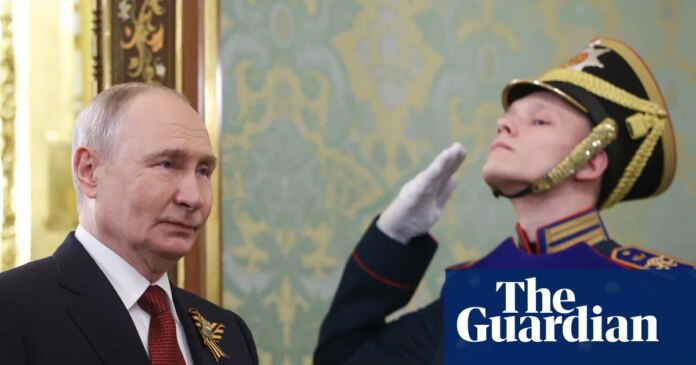
Vladimir Putin has said he thinks the Ukraine war is winding down – remarks that came a few hours after he had vowed to defeat Ukraine at Moscow’s most scaled-back Victory Day parade in years.

“I think that the matter is coming to an end,” Putin told reporters of the Russia-Ukraine war, Europe’s deadliest conflict since the second world war. He said he would be willing to negotiate new security arrangements for Europe, and that his preferred negotiating partner would be Germany’s former chancellor Gerhard Schröder.

Putin, who has ruled Russia as president or prime minister since the last day of 1999, faces a wave of anxiety in Moscow about the war in Ukraine, which has killed hundreds of thousands of people, left swathes of Ukraine in ruins, and drained Russia’s economy. Russia’s relations with Europe are worse than at any time since the depths of the cold war.

Russian forces have so far been unable to take the whole of the Donbas region of eastern Ukraine where Kyiv’s forces have been pushed back to a line of fortress cities. Russian advances have slowed this year, though Moscow controls just under one-fifth of Ukrainian territory.

Speaking on Saturday, Putin slammed western support for Kyiv, as the first day of a Russia-Ukraine ceasefire was marked by mutual accusations of violations.

“They [the west] started ratcheting up the confrontation with Russia, which continues to this day.

“I think it [the war] is heading to an end but it’s still a serious matter.

“They spent months waiting for Russia to suffer a crushing defeat, for its statehood to collapse. It didn’t work out.

“And then they got stuck in that groove and now they can’t get out of it.”

Putin added that he was ready to meet Volodymyr Zelenskyy, in a third country only once all conditions for a potential peace agreement were settled – holding to his usual position on a meeting with his Ukrainian counterpart.

“This should be the final point, not the negotiations themselves,” he said.

Asked if he was willing to engage in talks with the Europeans, Putin said: “For me personally, the former chancellor of the Federal Republic of Germany, Mr Schröder, is preferable.”

Many in Ukraine and Europe will be sceptical of involving Schröder given his background as a close friend of Putin and history of ties to Russian business and projects, such as the Nord Stream gas pipelines. In 2022, after the war broke out, Volodymyr Zelenskyy, Ukraine’s president, called Schröder “disgusting” for meeting with Putin and speaking in the Russian ruler’s favour.

Russia, Ukraine and Donald Trump on Friday announced that a three-day ceasefire between both sides would come into effect from Saturday. Moscow and Kyiv traded accusations of violations amid continued drone activity and civilian casualties on both sides.

The Kremlin said there were no plans to prolong the truce. The warring sides also agreed to swap 1,000 prisoners each during the truce. Putin said on Saturday that Russia had not yet received any proposals from Ukraine on the exchange.

Russian servicemen fire artillery pieces during Victory Day in St Petersburg. Photograph: Anatoly Maltsev/EPA

The Victory Day parade was vastly smaller compared to previous years, with no military hardware on display for the first time in nearly two decades and only a handful of foreign dignitaries in attendance – most of them leaders of Russia’s close allies.

In the week prior there had been clear notes of desperation from the Russian side that the parade not be disturbed by Ukrainian attacks. Moscow threatened to bomb the centre of Kyiv including foreign embassies, warning overseas missions to evacuate their staff.

For his part, Zelenskyy – after earlier issuing a “decree” allowing the Moscow parade to go ahead – observed Saturday as Europe Day, which is celebrated as a foundational day of the EU. He said Ukraine was an “inseparable part of the European family”.

“From the first days of the full-scale war until today, Europe has stood with Ukraine,” Zelenskyy said. “And this is not charity – it is a choice made by Europeans: to stand on the same side as the brave and the strong.”

Only the leaders of Belarus, Malaysia, Laos, Uzbekistan and Kazakhstan were listed as attending Putin’s parade, in contrast to high-profile visitors including China’s Xi Jinping during last year’s event.

Now in its fifth year, the war has killed hundreds of thousands of people and spiralled into Europe’s deadliest since the second world war.

The European Council president, António Costa, said last week that he believed there was “potential” for the EU to negotiate with Russia, and to discuss the future of the security architecture of Europe.

With Reuters and Agence France-Presse


Source link

Thomas Gerbasi Inducted into UFC Hall of Fame 2026


But arguably his biggest journalistic contribution was to UFC’s website, a place where week after week, month after month, and year after year, he told the stories of the men and women who stepped into the Octagon. He was guided by the mantra “tell the stories that only we can tell,” and demanded that his team do the same. Giving as much credence to a young new fighter on the early prelims as he did the most decorated of champions, Gerbasi’s words introduced the world to thousands of MMA athletes. He spent his days talking to each and every member of the UFC roster, who implicitly trusted him to tell their diverse and inspiring stories. 

Beyond the printed and digital media domains, Gerbasi’s contributions extended to the entire UFC organization, making his impact in departments as varied as public relations, creative, live production, and broadcast. In short, anytime strong, credible copy about UFC was needed, Tom was the guy.

In addition to his own books and his invaluable contributions to UFC, Gerbasi’s work appeared in myriad publications, including The Ring Magazine, The Village Voice, The Independent, The Boston Herald, King, Uppercut, Women’s Boxing World, Boxing News, ESPN.com, and countless others.

Outside of combat sports, Gerbasi was an avowed family man, caring for his wife, daughter, and two young granddaughters daily. He played goalie in an organized soccer league on Sundays and ran numerous marathons in his spare time. He loved music and celebrated great cuisine.

To see a complete list of UFC athletes and fights enshrined in the UFC Hall of Fame, as well as details regarding the UFC Hall of Fame format, please visit UFCHOFFAQ. For additional information, please visit UFC.com.


Source link

The Role of Cryptocurrency in the Global Economy: A 2024 Outlook


The Role of Cryptocurrency in the Global Economy: A 2024 Outlook

Introduction

As we approach 2024, the influence of cryptocurrency on the global economic landscape continues to evolve. Initially perceived as a niche asset for tech enthusiasts, digital currencies are now capturing the attention of businesses, investors, and governments alike. This article examines the current state of cryptocurrencies, their implications for the global economy, and potential future trends that could reshape our financial systems.

The Current Landscape of Cryptocurrency

In 2024, cryptocurrency has solidified its status as a legitimate financial instrument. Major advancements in blockchain technology have not only enhanced transaction speeds and security but have also made cryptocurrencies more accessible to the general public. Institutions and retail investors have begun to diversify portfolios with digital assets, making them a staple in economic dialogues.

Key Players and Developments

Several cryptocurrencies have emerged as frontrunners, including Bitcoin, Ethereum, and newer entrants like Solana and Cardano. Notably, stablecoins have gained traction, allowing for less volatility and serving as a bridge between traditional finance and the crypto world.

Regulatory Advancements

Governments across various jurisdictions are increasingly recognizing the need for regulatory frameworks. In 2024, many countries have established clearer regulations, which have increased investor confidence and facilitated greater institutional participation.

Impacts on the Global Economy

The integration of cryptocurrency into the global economy carries significant implications:

  • Financial Inclusion: Cryptocurrencies provide unbanked populations with access to financial services.
  • Investment Opportunities: Broadened access to global markets allows individuals to invest in a diverse array of assets.
  • Remittances: Digital currencies offer cheaper and faster alternatives for cross-border transactions.
  • Decentralization: Traditional financial systems may be disrupted by decentralized finance (DeFi) platforms, challenging the status quo.

Future Trends to Watch

As we look ahead, several trends are poised to shape the cryptocurrency landscape:

  • Increased Institutional Adoption: More institutions will likely adopt cryptocurrencies as part of their asset management strategies.
  • Technological Innovations: Developments in blockchain technology could lead to enhanced interoperability between different networks.
  • Environmental Concerns: The push for sustainable mining practices may reshape how cryptocurrencies are produced.
  • Central Bank Digital Currencies (CBDCs): Several governments are exploring CBDCs, which may influence the regulatory environment for private cryptocurrencies.

Conclusion

The role of cryptocurrency in the global economy is becoming increasingly significant as we move towards 2024. With advancements in technology and growing acceptance among institutions and governments, digital currencies are poised to become an integral part of our financial ecosystem. As we continue to navigate this evolving landscape, staying informed and adaptive will be key for investors, businesses, and policymakers alike.

© 2024 Cryptocurrency Insights – All Rights Reserved

Cade Cunningham Leads Pistons to Victory Over Cavaliers


Updated May 8, 2026, 10:15 a.m. ET

Detroit — There’s a to-do list in every stall in the Pistons’ locker room at Little Caesars Arena, with bullet points for each player to focus on when they take the court.

And for Cade Cunningham, it’s a half-dozen items that you’d expect to see. Reminders to be a leader and an aggressive playmaker, to defend and rebound, to push the pace and limit his turnovers.


Source link

Spotting the Next Big Thing: Emerging Trends in Cryptocurrency


Spotting the Next Big Thing: Emerging Trends in Cryptocurrency

The cryptocurrency landscape is ever-evolving, making it essential for investors and enthusiasts to stay updated on emerging trends. Understanding these trends could help you spot the next big opportunity in this volatile market.

1. Decentralized Finance (DeFi)

Decentralized Finance has gained significant traction over the past few years. DeFi platforms allow users to borrow, lend, and trade cryptocurrencies without intermediaries, making financial services more accessible.

  • Yield Farming: Investors earn rewards by providing liquidity to DeFi protocols.
  • Decentralized Exchanges (DEXs): Platforms like Uniswap are enabling peer-to-peer trading without a central authority.

2. Non-Fungible Tokens (NFTs)

NFTs have changed the game for digital ownership, allowing creators to tokenize their work. These unique digital assets have applications in art, music, gaming, and even real estate.

  • Digital Art: Artists can sell their work directly to collectors.
  • Virtual Real Estate: Virtual worlds like Decentraland are creating marketplaces for NFT-based properties.

3. Central Bank Digital Currencies (CBDCs)

Many countries are exploring the idea of Central Bank Digital Currencies as a state-backed alternative to cryptocurrencies. CBDCs could offer stability, lower transaction fees, and greater financial inclusion.

4. Environmental Sustainability

With concerns over the environmental impact of cryptocurrency mining, there’s a growing trend towards more eco-friendly cryptocurrencies. Projects are being developed to minimize energy consumption and utilize renewable energy sources.

5. Institutional Adoption

More institutional investors are entering the cryptocurrency space, which has provided significant liquidity and legitimacy to the market. Increased participation from hedge funds, corporations, and even pension funds indicates a broader acceptance of digital assets.

Conclusion

As the cryptocurrency sector continues to mature, these emerging trends offer exciting opportunities for investors and innovators alike. By keeping an eye on developments in DeFi, NFTs, CBDCs, environmental initiatives, and institutional participation, you might spot the next big thing in cryptocurrency before it hits mainstream awareness.

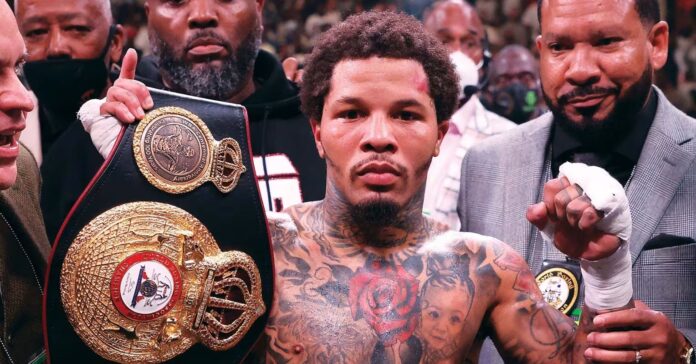
Awaited Rematch: Gervonta Davis Poised for Return This Year


After over a year of inactivity and uncertainty, Gervonta Davis looks set for a ring return this year, with plans in place for a fight later in the calendar against a man that he called out in late 2025.

Davis has not won a contest since June 2024, and the lightweight is now champion-in-recess with the WBA, but the sanctioning body is showing nothing to suggest that they will order a fight between the Baltimore-born bruiser and #1 contender, Floyd Schofield.

Instead, Davis called for a rematch with Isaac ‘Pitbull’ Cruz back in December, with the Mexican being one of just two men to have been defeated by Davis but not knocked out, after their closely fought 2021 battle.

Now, it seems as though PBC are planning to stage that clash and that early autumn is the target, with one close source naming ‘Pitbull’ as the ‘most likely opponent’, as per BoxingScene.

“While exercising caution on the timing, PBC is aiming for the legally troubled three-division champion Davis, 30-0-1 (28 KOs), to return to the ring by the early fall.

“It would be the Baltimore fighter’s first bout since his WBA lightweight title fight draw at New York’s Barclays Center versus Roach, who was deprived of a knockdown (and victory) by referee Steve Willis.

“Although De La Hoya on Friday strongly proposed unbeaten and WBA top-ranked contender Floyd Schofield for a Davis bout, another official more connected to the PBC situation said Mexico’s former 140lbs champion Isaac “Pitbull” Cruz is the most likely opponent at this hour.”

Should Davis-Cruz II take place, it could pave the way for Schofield to finally meet Lucas Bahdi for the vacant WBA lightweight title.


Source link

IPL 2026: Match Preview – 52nd Clash Between RR and GT


Big picture – 4 vs 5 with a chance to go higher

How quickly the fortunes change in the IPL. Not long ago, the top four for the IPL 2026 playoffs seemed like a done deal. Royal Challengers Bengaluru, Punjab Kings, Sunrisers Hyderabad and Rajasthan Royals had separated themselves so much from the rest of the pack that catching up seemed tough. But caught up they have, and are climbing up the table quick enough to make the current top four very nervous.

One of the prime contenders are fifth-placed Gujarat Titans, who are peaking at the right time. The top order has been consistent, Washington Sundar and Rashid Khan have found form and the fast bowling battery has been relentless. They will be facing fourth-placed RR, whose four in four at the start of the season seems like a distant memory.

Both GT and RR are coming into this game with an identical record: six wins and four losses after ten games. But the trajectories have been different. GT are on an upswing, having scored three straight wins; RR have lost three of their last five games. While the match is crucial for both teams, it holds much more significance for RR. They last played a game on May 1, where they failed to defend 225 against Delhi Capitals. After the GT clash on May 9, RR next play only on May 16. The points table would have changed a lot by then, and if they drop points against GT, they could potentially end up facing the pressure of must-win games at the back-end of the tournament.

At the heart of GT’s growth and RR’s patchy form has been their respective bowling. The GT quicks, Kagiso Rabada and Mohammed Siraj are breathing fire. The two have bowled unchanged through the powerplay in the last few games and that’s provided the cushion for Rashid to do his thing in the middle-overs. Jason Holder’s addition, too, has worked wonders for GT. If Rabada and Siraj can break the Jai-Soorya partnership early and get into the wobbly middle order, things could unravel for RR quickly.

On the other hand, RR have been overly reliant on Jofra Archer. While he’s been consistent in the powerplay – he’s the joint second-highest wicket-taker in this phase – he’s lacked support from the rest. Nandre Burger has blown hot and cold, so have Brijesh Sharma and Tushar Deshpande. While Ravindra Jadeja has kept the runs in check, he only has seven wickets in ten games. RR have conceded 220-plus runs in three consecutive innings now and worryingly, two of those have come in Jaipur.

RR did, however, defeat GT when these two teams met earlier in the season. GT, needing 15 off 12 with three wickets in hand, failed to cross the line with Archer and Deshpande acing the last two overs.

A win for GT will catapult them from five to two on the points table; a win for RR will take them to two and a big win can also give them top spot.

Form guide

Rajasthan Royals LWLWL (last five matches, most recent first)
Gujarat Titans WWWLL

Key question

Team news – GT unlikely to change

RR have a Burger problem and they could make a change on that front, bringing in one of Kwena Maphaka or Adam Milne. They could also replace him with Dasun Shanaka, who provides both batting and bowling options. There is also a chance that RR could bring back Shimron Hetmyer to bolster the batting depth.

Rajasthan Royals (probable XII): 1 Yashasvi Jaiswal, 2 Vaibhav Sooryavanshi, 3 Dhruv Jurel (wk), 4 Riyan Parag (capt), 5 Donovan Ferreira, 6 Ravindra Jadeja, 7 Shubham Dubey, 8 Jofra Archer, 9 Ravi Bishnoi, 10 Nandre Burger/Dasun Shanaka, 11 Brijesh Sharma, 12 Tushar Deshpande

GT handed Nishant Sindhu a debut in the last game and are unlikely to tinker with a winning combination. Manav Suthar did go for 27 in the only over he bowled against PBKS, but was effective in the earlier games. He also adds batting depth, which means R Sai Kishore might have to wait his turn.

Gujarat Titans (probable XII): 1 Shubman Gill (capt), 2 Sai Sudharsan, 3 Jos Buttler (wk), 4 Nishant Sindhu, 5 Washington Sundar, 6 Jason Holder, 7 Rahul Tewatia, 8 Rashid Khan, 9 Manav Suthar, 10 Arshad Khan, 11 Kagiso Rabada, 12 Mohammed Siraj

In the spotlight: Dhruv Jurel and Kagiso Rabada

RR have backed Dhruv Jurel since the start of his IPL career, and he’s repaid the faith with consistent numbers. While he is among the runs again in IPL 2026, the consistency is lacking. Jurel has scored three fifties so far this season, but also has four single-digit scores in ten innings. Against Punjab Kings, in a 223-run chase, he got stuck and managed just 16 off 20, with Donovan Ferreira and Shubham Dubey having to play blinders to get RR over the line. Even against Delhi Capitals, on a belter of a surface where 225 played 226, Jurel struck at only 140, during his 30-ball 42. Jurel has been given the No. 3 role this season but needs to get better with his consistency and strike rate in the remaining games.

Kagiso Rabada has cranked up his pace in IPL 2026 and the rewards are for everyone to see. He has consistently breached the 145kph barrier and is GT’s leading wicket-taker with 16 wickets in ten games. Rabada’s powerplay bowling has stood out; he’s relentlessly bowled good length and back-of-the-length deliveries in that phase, and the wickets have come. No other bowler has picked up more wickets than him in the powerplay: 11, while maintaining an economy rate of 8.96. But there is a caveat. Almost 69% of Rabada’s 16 wickets have come in the home conditions of Ahmedabad, where the pitches have suited fast bowling. That is one record that he will want to change when GT travel to Jaipur.

Stats and trivia

  • Donovan Ferreira’s strike-rate of 264.86 is the third-highest for any batter who has faced more than 30 balls in the death overs in IPL 2026. He has also struck 11 sixes during this phase, the second-highest after Tim David’s 12
  • Mohammed Siraj’s powerplay economy rate of 6.92 is the second-best in the season after Akeal Hosein’s 6.44 (minimum 30 balls bowled)
  • Shubman Gill will have to be careful against Jofra Archer, who has been on song in the powerplay. Archer has dismissed Gill three times in six innings in the IPL
  • Riyan Parag has fallen to Holder twice in two innings in the IPL and twice in six innings against Rashid Khan. His strike rate against Rashid is only 90
  • Vaibhav Sooryavanshi struck his maiden IPL century one year back against GT. He has since added another ton to his name this season
  • GT have won six out of nine games against RR in the IPL

Pitch and conditions

Pitch No. 6 will be used for the RR-GT clash, the first time this surface will come into play this season. Jaipur has been a high-scoring venue this year. RR scored 228 against Sunrisers Hyderabad and 225 against DC and failed to defend the target both times. Another high-scoring game is expected in Jaipur. Dew should also come into play, and the teams winning the toss will likely bowl first. There is an excessive heat warning in place in Jaipur with temperatures touching close to 40 degrees during the day. While the temperatures will go down during the evening, heat will remain a factor.

Quotes

Siraj and Rabada are both highly performed players at the international level. You know what the pedigree both of them brings into it, especially with the new ball. They’ve been bowling really well, especially Rabada bowling 150[kph] consistently, and the way Siraj has been putting pressure, it’s great to see. From our point of view, we would just like to extend the good run which they’ve done.
GT assistant coach Parthiv Patel is ecstatic with Siraj and Rabada’s returns

“We’re completely satisfied with, with Dhruv Jurel’s performance. He’s been excellent for us, and the more he plays and the more he bats, he will play accordingly to the situation. And we have no doubt that they can deliver whatever the team needs.”
RR head coach Kumar Sangakkara isn’t concerned with Jurel’s strike rate

Ashish Pant is a sub-editor with ESPNcricinfo


Source link