


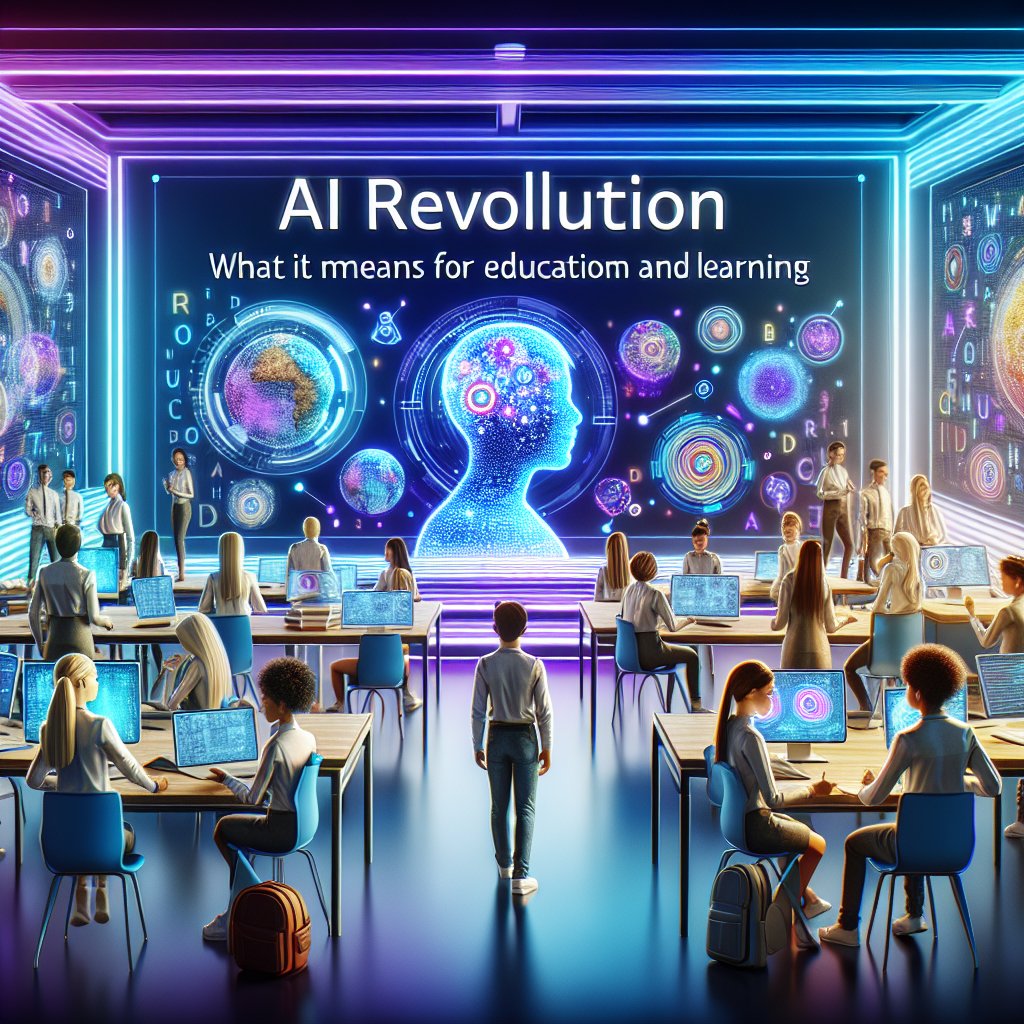
AI Revolution: What It Means for Education and Learning
The rapid advancements in artificial intelligence (AI) are transforming various sectors, and education is no exception. The integration of AI technologies into learning environments promises to reshape the ways students experience education, making the process more personalized and efficient.
The Personalized Learning Experience
One of the most significant impacts of AI in education is the capability to create personalized learning experiences. AI systems can analyze individual student performance, understand their strengths and weaknesses, and then adapt educational content accordingly. Tools like adaptive learning platforms enable students to learn at their own pace, ensuring that they receive the support they need.
Improving Administrative Efficiency
AI can also help streamline administrative tasks. Automation tools can take over repetitive tasks such as grading assignments, preparing reports, and managing schedules. This allows educators to focus more on teaching and less on paperwork, ultimately enhancing the learning experience for students.
Expanding Accessibility
AI technology is also breaking down barriers for students with disabilities. Tools powered by AI, such as speech-to-text and text-to-speech applications, assist learners in overcoming challenges they might face in traditional educational settings. This democratization of learning ensures that all students have access to educational resources tailored to their needs.
AI Tutors and Chatbots
AI-driven tutors and chatbots offer students support outside the classroom environment. These tools can answer questions, provide explanations, and offer tutorials on-demand. This kind of support can be especially beneficial in large classrooms where individualized attention may be limited.
The Future of Teaching
As AI continues to evolve, the role of educators will also change. Teachers will transition from being the primary source of information to facilitators of learning, guiding students in their educational journeys and helping them navigate the vast sea of information available online.
Challenges and Considerations
Despite the numerous benefits, the integration of AI in education also raises important ethical and practical concerns. Issues related to data privacy, the digital divide, and the potential for biased algorithms must be addressed to ensure that AI-enhanced education is equitable and just.
Conclusion
In summary, the AI revolution presents both exciting opportunities and significant challenges for the educational landscape. By embracing these technologies thoughtfully and responsibly, educators, learners, and policymakers can work together to create a more personalized, efficient, and accessible future for education.
Join our website for cool news and cool tips