


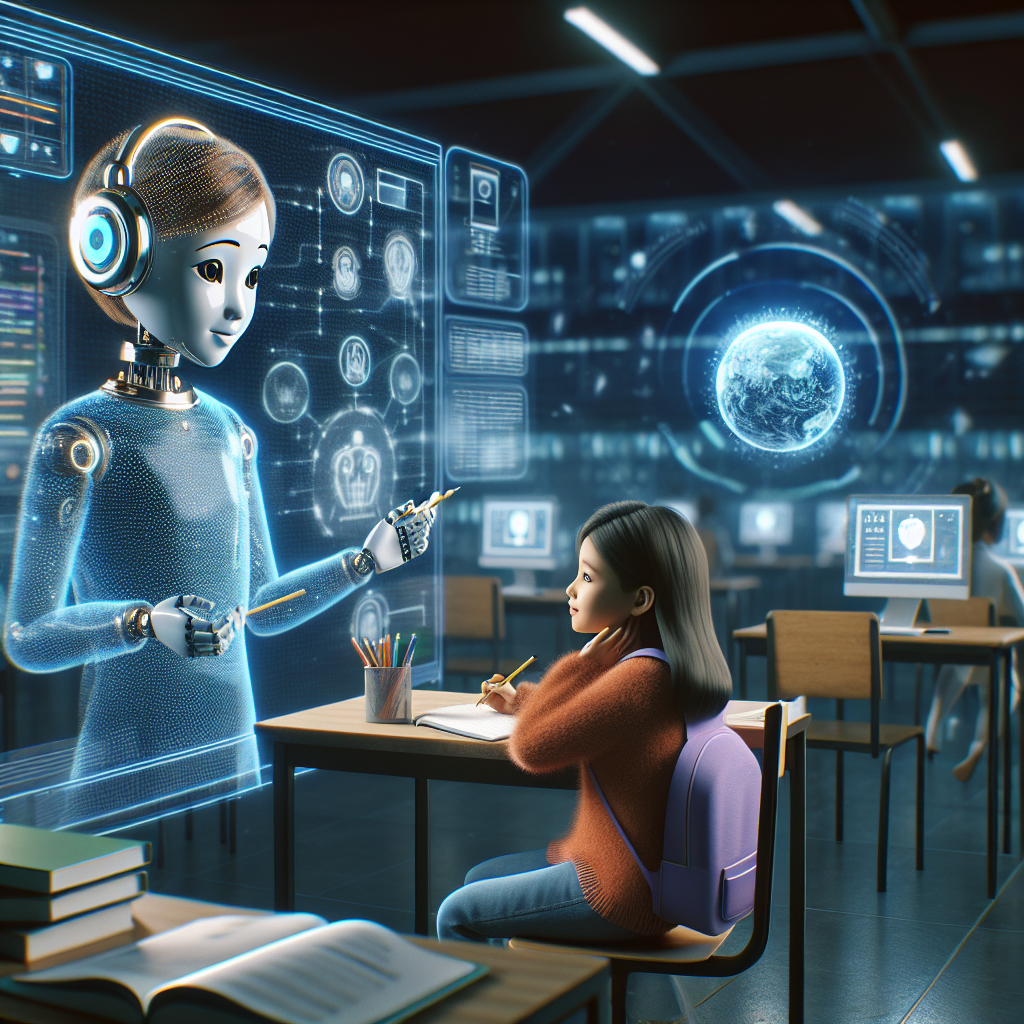
AI and Education: Transforming Learning for Future Generations
As we venture into the future, artificial intelligence (AI) is proving to be a revolutionary force across multiple sectors, with education standing out as one of its most transformative arenas. By integrating AI technologies into educational practices, we are witnessing a fundamental shift in the way learners engage, comprehend, and excel in their studies.
Personalized Learning Experiences
One of the prominent advancements AI offers to education is the capability to provide personalized learning experiences. By analyzing students’ learning patterns, preferences, and progress, AI systems can tailor educational content to meet individual needs. This adaptability allows learners to move at their own pace, enhancing understanding and retention of information.
Smart Tutoring Systems
AI-powered tutoring systems, such as intelligent virtual assistants, can provide students with on-demand help and resources. These systems are designed to answer questions, provide explanations, and assist with problem-solving, simulating a one-on-one interaction with a tutor. This accessibility to immediate support greatly reduces barriers to learning, especially in remote or underserved areas.
Data-Driven Insights for Educators
AI’s ability to process large volumes of data can also provide educators with critical insights into student performance and engagement. By leveraging analytics, teachers can identify trends, predict challenges, and fine-tune their teaching strategies effectively. This data-driven approach enables proactive intervention, ensuring that no student falls through the cracks.
Enhanced Engagement through Gamification
AI can gamify learning experiences, making education more engaging and enjoyable for students. By incorporating game elements into educational content, AI can motivate students, encouraging them to participate actively and persistently in their learning journeys. This strategy not only boosts retention but also fosters a positive attitude towards education.
Future Skills for a Changing World
As we prepare students for a rapidly changing workforce, AI integration into education emphasizes the development of essential skills such as critical thinking, creativity, and collaboration. AI tools can simulate real-world scenarios, allowing students to practice problem-solving in environments that mirror future career challenges.
Ethical Considerations and Challenges
Despite the promising benefits, the implementation of AI in education is not without its challenges. Ethical considerations surrounding data privacy, algorithmic bias, and the digital divide must be addressed to ensure equitable access to AI technologies. Stakeholders must collaborate to navigate these challenges thoughtfully, creating a balanced approach to AI in education.
Conclusion
The integration of AI in education is not merely enhancing traditional teaching methods; it is revolutionizing the entire learning experience. By providing personalized solutions, fostering engagement, and equipping learners with essential skills, AI is paving the way for future generations to thrive in a complex world. As we embrace these advancements, careful attention to ethical considerations will ensure that AI serves as a tool for empowerment and inclusivity in education.
More related updates, Click Here