
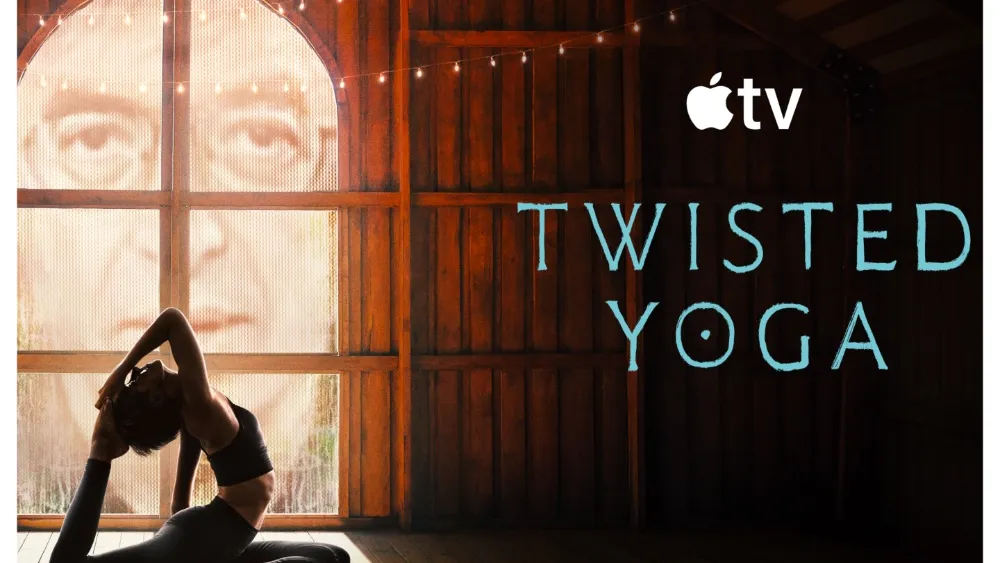
The twisted stories of several young women who have chosen to speak out against a multinational association of tantric yoga centers founded by a Romanian guru – where they were allegedly indoctrinated into sexual exploitation – form the core of new Apple TV docuseries “Twisted Yoga.”
The three-part investigative series directed by Rowan Deacon (“Jimmy Savile: A British Horror Story”), that launches globally on March 13, delves into the vicissitudes of these women who were gradually drawn into the influence of Romania’s Gregorian Bivolaru, founder and leader of the Movement for the Spiritual Integration into the Absolute, later known as the Atman Yoga Federation.
Bivolaru, 73, was arrested in Paris in 2023 and now faces charges in France, including human trafficking, kidnapping, and rape. He denied the allegations.
The women in the doc have been working with French authorities to convict him.
The Atman federation, in the doc, stated that it is not responsible for the private life of staff, students and teachers of affiliate schools, and that all current allegations remain under investigation and are unproven.
Gregorian Bivolaru was allegedly contacted by the producers of “Twisted Yoga” through his legal representatives but did not respond.
The Atman federation did not respond to Variety’s request for comment.
“Twisted Yoga” is produced for Apple TV by Lightbox, in association with Ladywell Films. Simon Chinn, Jonathan Chinn, Suzanne Lavery and Bernadette Higgins serve as executive producers.
Variety speaks to Rowan Deacon and executive producer Suzanne Lavery about their efforts to make the audience “understand” the material from a psychological perspective rather than sensationalize it.
How did the project originate?
Suzanne Lavery
This was quite unusual for us, because it was driven by some contributors who reached out and they were two very driven individuals who said they had a story to tell. We shared in Ash [Ashleigh] and Ziggy’s sort of enthusiasm to bring this story to a wider audience because there was a lot to say. There was a lot of relatable material. We are all looking for community and hope and somewhere to belong. And it’s terrifying to think that it can go so horribly wrong. But we wanted to go with them on that journey to see what sort of resolution they could find.
What kind of outreach did you do to find the other female voices in the piece?
Rowan Deacon
Yes, so we started with Ash and Ziggy, as Suzanne said. But it was clear to me from the outset that if we were going to explore this story, we needed to understand it psychologically, from the position of the women who were involved in the school. And, if possible, women who had gone quite far into the schools’ teachings and practices. It was clear that we needed to reach out and find out if there were any [other] women out there who were prepared to talk about their experiences. Who were either still in the school, leaving the school, or had left. So we basically travelled around speaking to people who then told us about other people.
Talk to me about the narrative approach you chose that seems to eschew sensationalism while delving into the sexual aspect
Deacon
The key thing that drew me to the project is: what were the mechanics? What was the system? What was the kind of boiling frog syndrome that meant that these worldly, educated, interesting people had got themselves involved in a set of ideologies and beliefs that ultimately, perhaps, didn’t serve them. I was interested primarily in the psychological journey. I realized that in doing that, we were jettisoning a more traditional True Crime format. We were just missing something that was perhaps more procedural and more traditional in terms of, like viewer engagement. But I thought: if we tell this story and we don’t get into their heads and really go on the journey with them, then I worry that it will be sort of sensationalized, because the nature of the nature of the activities that they take part in. And the kind of weirdness of this organization, and the fact that so much of it is about sexuality and sex as a road to spiritual enlightenment means that we that we couldn’t approach it in that sort of way.
What type of takeaway do you envision for the “Twisted Yoga” audience?
Deacon
I wanted to take audiences on a similar journey that the women had gone on and that at the beginning there’s hope. It isn’t framed as pure true crime evil because I wanted them to understand this slow process of enormous indoctrination.
Besides spiritual manipulation that we have seen in somewhat similar forms before – for example in Netflix series “Wild Wild Country” – here there is the added element of female followers of this tantric yoga cult becoming digital porn workers. Do you think this aspect makes the exploitation unique?
Deacon
Yes. It’s astonishing. And I agree with you that it’s something that we were determined to show that goes on in the documentary series.
Is it still going on?
Deacon
I can’t say for sure that it’s not. I mean Bivolaru is in custody, so I think that has put an end to the activities in Paris. But in terms of the webcams I genuinely don’t know if that’s still going on.
This interview has been edited and condensed for clarity. “Twisted Yoga” premieres on March 13 on Apple TV.