


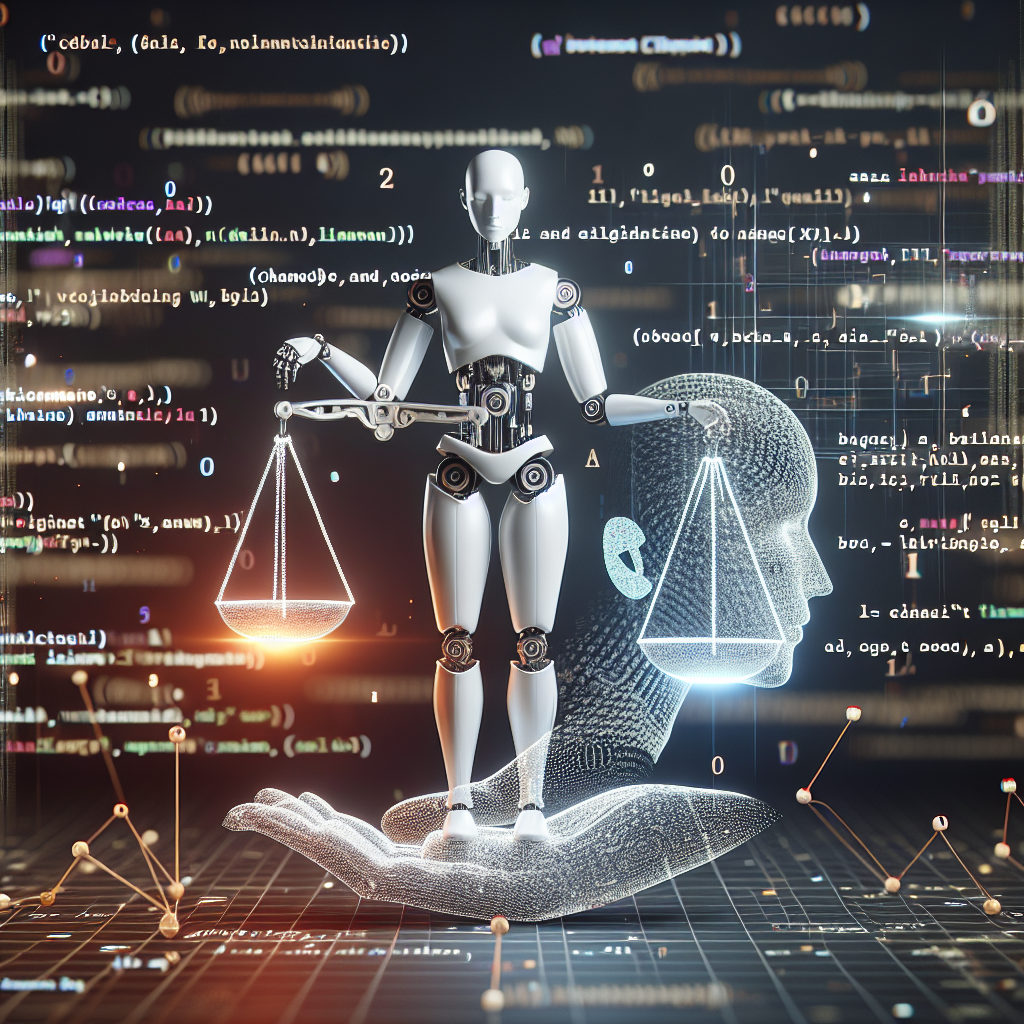
Understanding Bias in AI: Challenges and Solutions
Introduction
As artificial intelligence (AI) continues to integrate into various sectors, understanding bias in AI systems has become increasingly important. Bias in AI refers to the systematic favoritism or prejudice inherent in algorithms that can lead to unfair outcomes. Addressing AI bias is essential to ensure that technology serves all segments of society equitably.
What is AI Bias?
AI bias occurs when an algorithm produces results that are systematically prejudiced due to erroneous assumptions in the machine learning process. This can stem from:
-
- Data Bias: Biased training data can produce biased outcomes.
-
- Algorithmic Bias: The algorithms themselves may inherently favor certain outcomes.
-
- User Interaction: Feedback from users can reinforce biases over time.
Challenges of AI Bias
Addressing bias in AI poses numerous challenges:
1. Data Collection and Representation
The datasets used to train AI systems often lack diversity and may not accurately represent the population, leading to biased results.
2. Lack of Transparency
Many AI models operate as “black boxes,” meaning their decision-making processes are not easily understood, making it challenging to identify bias.
3. Societal Implications
The deployment of biased AI can have serious real-world consequences, including perpetuating stereotypes, discrimination, and exclusion of marginalized groups.
Solutions to Mitigate AI Bias
Despite the challenges, several strategies can help mitigate bias in AI systems:
1. Diverse Data Sets
Ensuring that training datasets are representative of diverse populations can significantly reduce bias. This may involve collecting more comprehensive data or using synthetic data.
2. Algorithm Audits
Regular audits of algorithms can help identify and rectify biased outputs. Third-party evaluations provide objective insights into algorithm performance.
3. Explainability and Transparency
Developing AI systems that are transparent and provide explainable outputs will allow users and developers to understand decision-making processes, helping to identify potential biases.
4. Continuous Monitoring and Feedback
Implementing mechanisms for continuous monitoring of AI systems and feedback loops can help in recognizing and correcting biases as they emerge over time.
Conclusion
Understanding and addressing bias in AI is critical to harnessing the technology’s potential while ensuring fairness and equity. By tackling the existing challenges with proactive solutions, we can build AI systems that are more just and representative of all individuals in society.