
NFTs Unveiled: The Intersection of Art, Culture, and Cryptocurrency
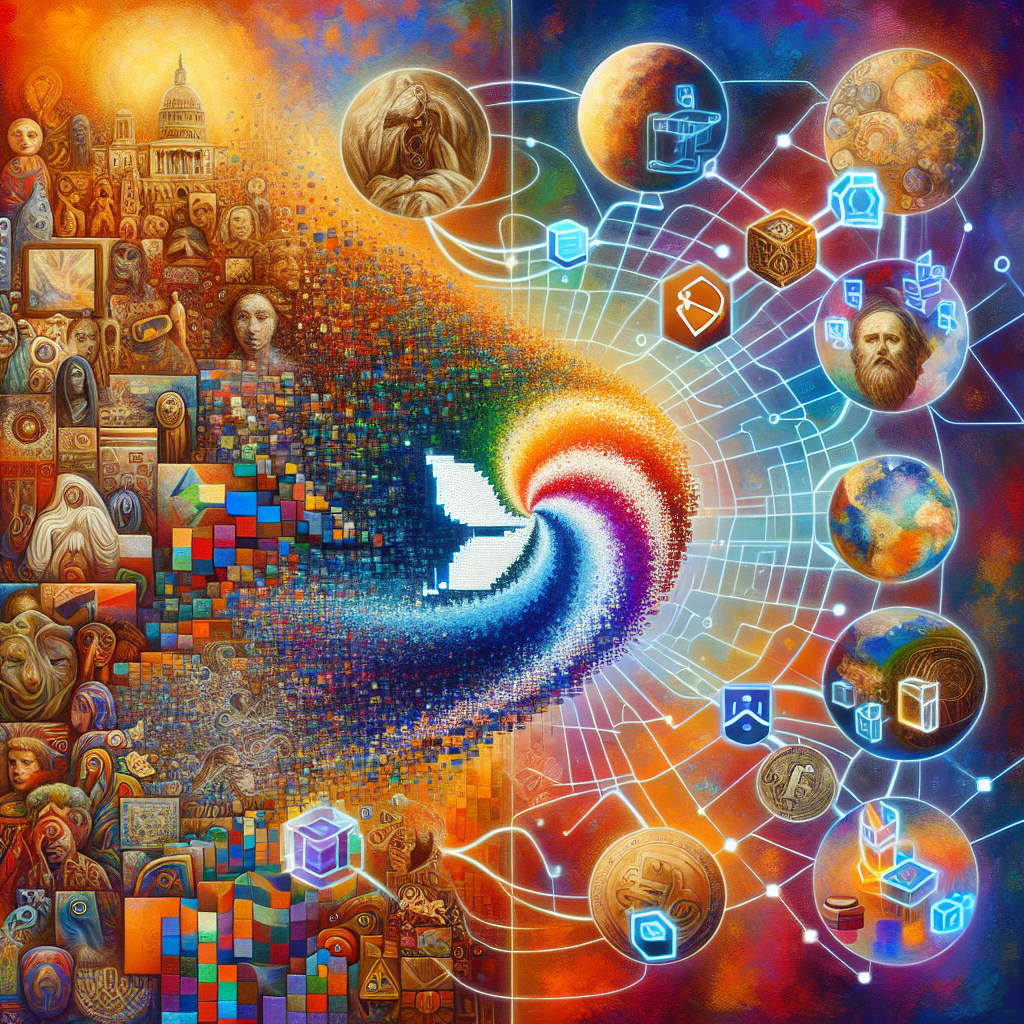
The rise of Non-Fungible Tokens (NFTs) has transformed the way we view and interact with art, culture, and digital assets. NFTs, unique digital certificates based on blockchain technology, have opened new avenues for creators and collectors, merging the realms of finance, culture, and art.
What are NFTs?
At their core, NFTs represent ownership of a distinct asset on the blockchain. Unlike traditional cryptocurrencies such as Bitcoin or Ethereum, which are fungible and can be exchanged for one another, NFTs are unique and cannot be divided or exchanged on a one-to-one basis. This uniqueness allows digital art, music, virtual real estate, and even tweets to be tokenized and sold as verifiable assets.
The Cultural Impact of NFTs
The cultural landscape has been significantly influenced by the emergence of NFTs. Artists can now reach global audiences without intermediaries, directly monetizing their work. Platforms like OpenSea and Foundation allow artists to showcase their work while retaining royalties on future sales, empowering them in ways traditional art markets never could.
Moreover, NFTs have democratized art ownership, allowing individuals to invest in and own high-value pieces previously inaccessible to the average collector. This shift has spurred discussions around originality, intellectual property, and the very nature of art itself.
Challenges and Controversies
Despite their potential, NFTs have faced criticism. Concerns regarding copyright issues, environmental impacts of blockchain technologies, and speculative market behaviors have sparked debates. Critics argue that the carbon footprint of minting NFTs is significant, with some blockchains requiring vast amounts of energy. This has led to calls for more sustainable approaches to the technology.
Moreover, the volatility of the NFT market raises questions about the future value of digital assets. As prices soar, some fear a bubble that will eventually burst, leaving many investors at a loss.
Future of NFTs
The future of NFTs appears promising yet uncertain. As technology advances, we might see greater integration of NFTs in everyday life, from digital identity verification to ticketing for events. Collaborations between artists and brands are increasing, enabling the blending of virtual and physical experiences.
Education around NFTs is also crucial. As the medium matures, artists, collectors, and consumers will need to navigate the complexities of the market, from understanding blockchain to protecting intellectual property.
Conclusion
NFTs represent more than just a trend; they signify a cultural shift in how we conceive ownership and value in the digital age. As the dialogue around art, culture, and cryptocurrency continues to evolve, one thing is clear: NFTs are reshaping our future in extraordinary ways.
For readers and art lovers, embracing this new frontier may lead to exciting possibilities and deeper engagement with the ever-evolving landscape of art and technology.