

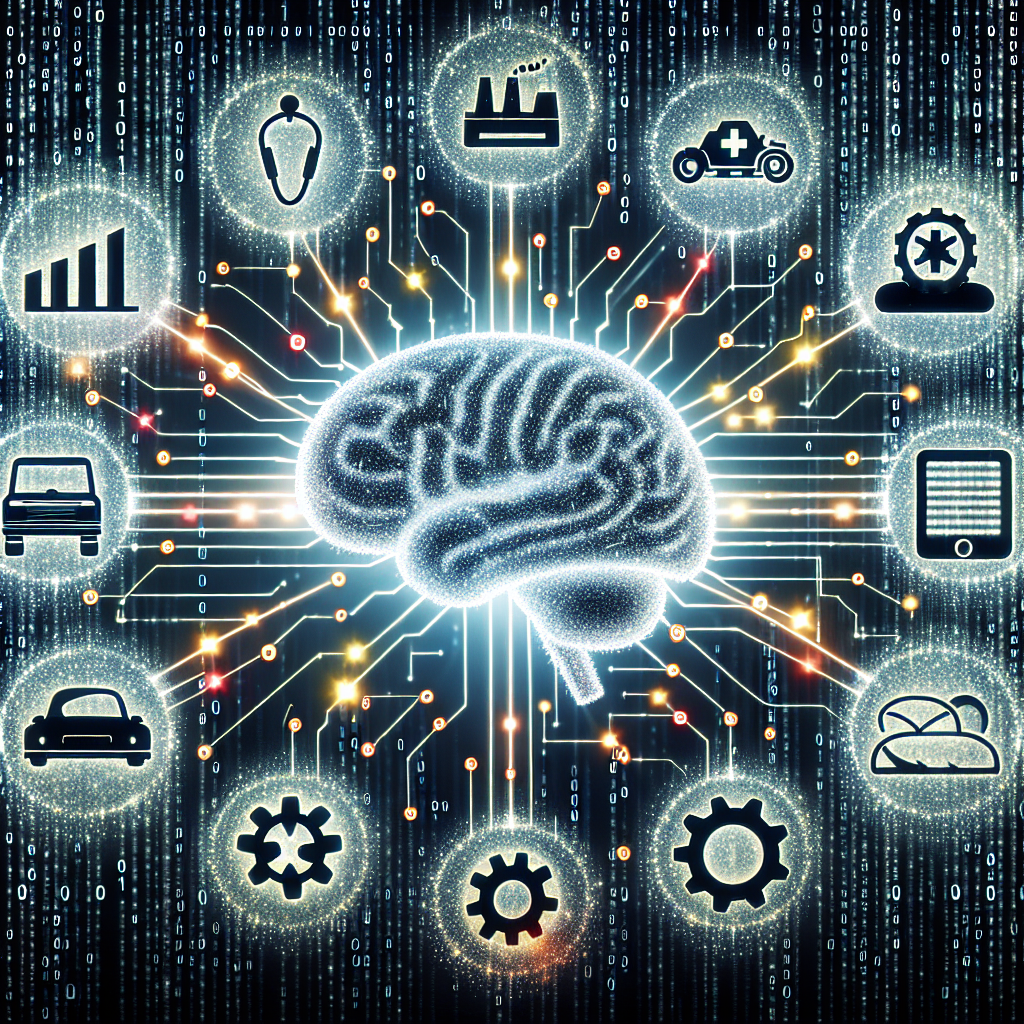
Decoding AI: How Machine Learning Works and Its Impact on Industries
Artificial Intelligence (AI) and machine learning (ML) are terms that have become synonymous with technological advancement in the 21st century. These technologies are driving innovation across various industries, making it necessary to understand their fundamentals and implications.
Understanding Machine Learning
Machine Learning is a subset of AI that allows systems to learn from data—recognizing patterns and making decisions with minimal human intervention. The process can be broadly categorized into three types:
- Supervised Learning: Algorithms are trained using labeled data to make predictions.
- Unsupervised Learning: The model identifies patterns in unlabeled data.
- Reinforcement Learning: The model learns by interacting with its environment and receiving feedback.
How It Works
The machine learning process involves several key steps:
- Data Collection: Gathering relevant data from various sources.
- Data Preparation: Cleaning and formatting the data to make it suitable for analysis.
- Model Selection: Choosing an appropriate algorithm based on the problem being solved.
- Training: Feeding the prepared data into the model and allowing it to learn.
- Evaluation: Testing the model’s performance on unseen data to ensure accuracy.
- Deployment: Implementing the model in real-world environments.
The Impact on Industries
Machine learning is reshaping industries in myriad ways. Let’s explore several sectors where ML is making significant strides:
Healthcare
In healthcare, ML algorithms are used for predictive analytics, improving diagnosis accuracy, and personalizing treatment plans. For instance, algorithms can analyze medical imaging to detect anomalies, leading to earlier interventions.
Finance
Financial institutions leverage machine learning for fraud detection, risk assessment, and algorithmic trading. ML models can analyze vast amounts of transaction data in real-time, identifying unusual patterns indicative of fraudulent activity.
Retail
In the retail sector, companies use machine learning for customer segmentation, inventory management, and personalized marketing strategies. By analyzing purchasing behavior, retailers can target consumers with tailored recommendations.
Transportation
Transportation industries are adopting ML for route optimization, predictive maintenance, and autonomous vehicles. Machine learning can analyze traffic patterns to enhance logistics and improve safety in self-driving technologies.
The Future of Machine Learning
As machine learning technology continues to evolve, its applications will only expand. However, it also raises important ethical questions around data privacy and job displacement. Industries must navigate these challenges while reaping the benefits of greater efficiency and innovation.
Conclusion
Decoding AI through machine learning unveils a world of possibilities across various sectors. As we harness this powerful tool, understanding its intricacies and implications is paramount for both industry leaders and consumers alike.