
Creative Machines: Can AI Truly Be Artistic?
Introduction
The intersection of art and technology has sparked a profound debate: can machines be genuinely creative? Artificial intelligence (AI) has made significant strides in recent years, and its ability to generate art, music, and literature raises important questions about the nature of creativity itself. This article delves into the capabilities of AI in artistic domains and explores the philosophical implications of machine creativity.
The Rise of AI in Art
From generating visual artworks to composing symphonies, AI systems have showcased remarkable abilities. Notable AI programs such as DeepArt, DALL-E, and OpenAI’s GPT series have amazed audiences with outputs that often rival human creations. These tools utilize neural networks and vast datasets to learn patterns, styles, and techniques, evolving from mere replicators to innovators in their own right.
Understanding Creativity
To assess the artistic potential of AI, it’s essential to define creativity. Traditionally, creativity is viewed as the ability to produce original ideas or artifacts that possess aesthetic or expressive value. However, AI’s process of creation is fundamentally different; it relies on algorithms and learned data rather than intuition or emotional depth. This raises the question: can AI truly be considered creative if it lacks the consciousness and subjective experience inherent in human artists?
The Human Element
One of the vital components of artistry is context—cultural, emotional, and experiential backgrounds influence an artist’s work. While AI can simulate certain styles or themes, it lacks the true human experience that nourishes creativity. For example, a painter may infuse their work with personal stories of love, loss, or joy—qualities that a machine, devoid of personal experiences, cannot replicate. This leads to the conclusion that AI, even if it creates stunning visuals or melodies, may not capture the essence of what we understand as artistic expression.
Collaboration Between AI and Humans
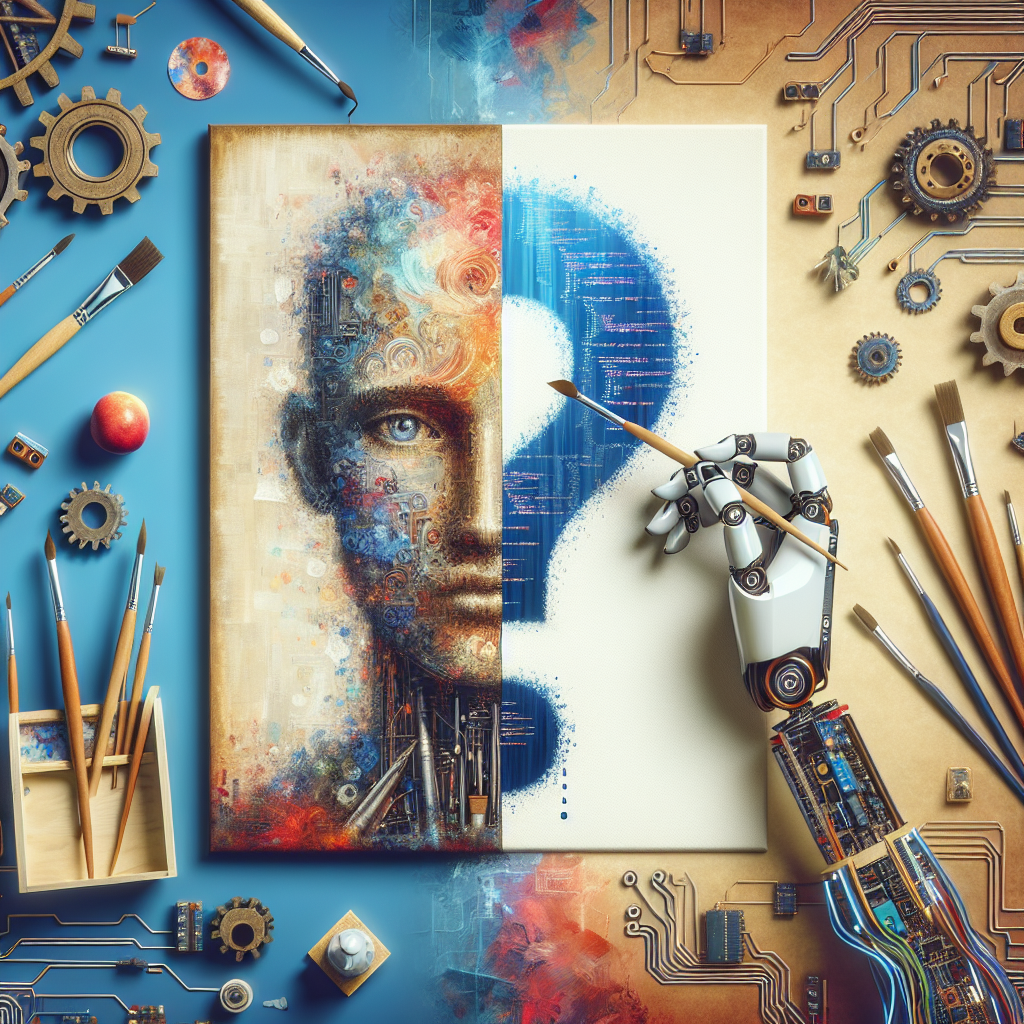
Rather than viewing AI as a replacement for human creativity, many suggest embracing it as a collaborative partner. AI can assist artists by providing new tools and perspectives. For instance, musicians can use AI to experiment with novel sounds, while visual artists might utilize AI-generated patterns to inspire their work. In this synergy, creativity can flourish, combining the strengths of both human intuition and machine precision.
Conclusion
The question of whether AI can be truly artistic does not have a definitive answer. While machines can produce impressive and aesthetically pleasing works, the absence of human experience and emotional depth limits their ability to create in the way we traditionally understand art. Instead, acknowledging the role of AI in augmenting human creativity may offer a more balanced perspective. The future of art may lie in the collaboration between human artists and sophisticated machines, creating a new frontier for artistic expression.