

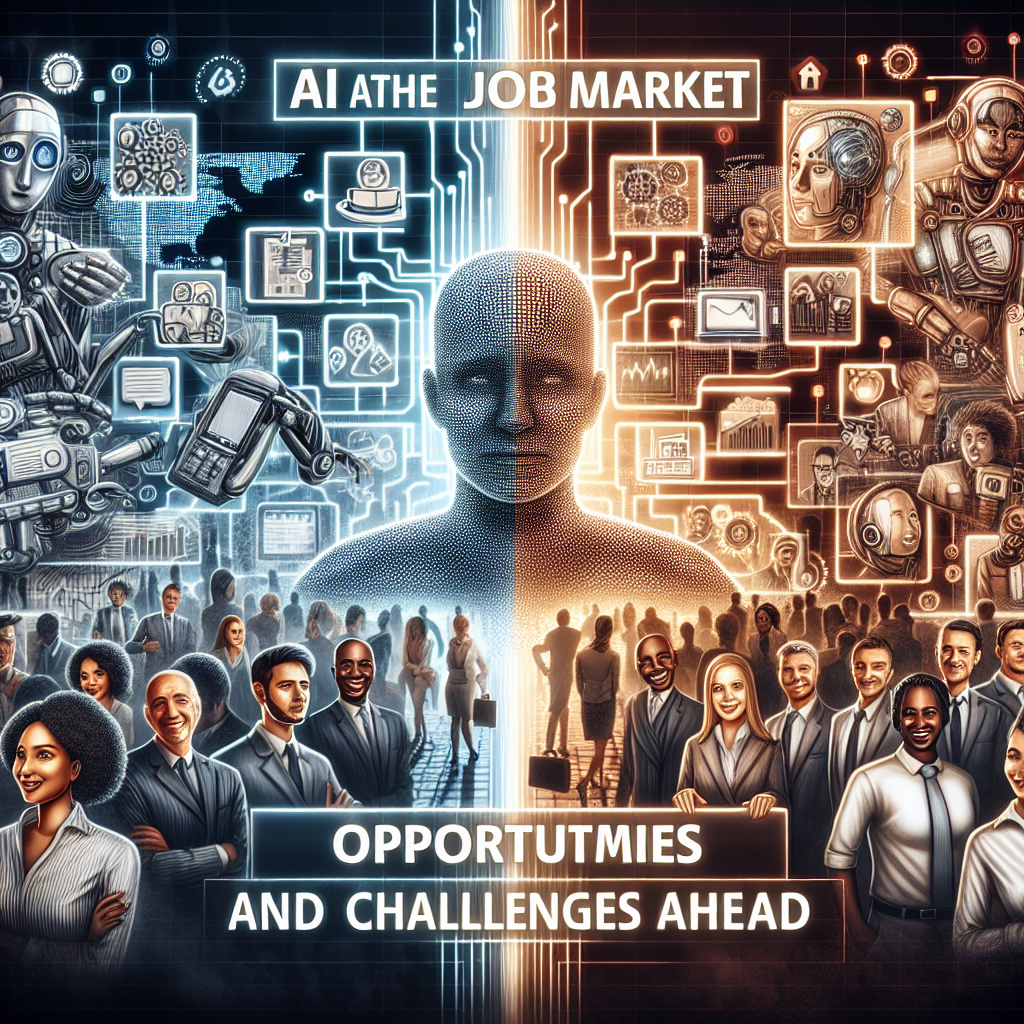
AI and the Job Market: Opportunities and Challenges Ahead
The advent of artificial intelligence (AI) is reshaping the landscape of the job market, creating a dynamic interplay between opportunities and challenges. As AI systems become more integrated into various industries, it is crucial to examine how they impact employment and workforce dynamics.
Opportunities Created by AI
AI has the potential to create new job opportunities in several domains:
- Job Creation in Tech: As businesses incorporate AI, there is a growing demand for skilled professionals who can develop, implement, and maintain AI systems. Roles such as data scientists, machine learning engineers, and AI ethicists are on the rise.
- Increased Efficiency: AI can lead to improved productivity by automating repetitive tasks. This allows employees to focus on higher-level functions, thus creating jobs that require more complex decision-making and problem-solving skills.
- New Business Models: AI is fostering innovation, leading to the emergence of entirely new sectors and job roles. For instance, market research and data analysis roles have evolved to utilize AI-driven insights for strategic decisions.
Challenges Posed by AI
Despite the opportunities, AI also presents significant challenges:
- Job Displacement: Automation threatens to replace jobs in sectors such as manufacturing and customer service. Workers in these industries may need to reskill or transition to new roles.
- Skill Gaps: The rapid advancement of AI technology creates a disparity between the skills available in the workforce and those needed for new job roles. Continuous learning and upskilling become imperative to keep pace with change.
- Ethical Concerns: As AI takes on more responsibilities, ethical issues surrounding bias, privacy, and decision-making arise, impacting the workforce and society at large.
Adapting to the Future
To navigate the challenges and seize the opportunities presented by AI, several strategies can be considered:
- Invest in Education and Training: Continuous education initiatives should emphasize skills that complement AI technologies, such as critical thinking and emotional intelligence.
- Encourage Lifelong Learning: Emphasizing the importance of lifelong learning can help individuals adapt to the evolving job market.
- Collaboration Between Industry and Education: Partnerships can facilitate curriculum development that meets the needs of the employers, ensuring that graduates are job-ready.
Conclusion
AI is undeniably transforming the job market, presenting both challenges and opportunities. By understanding and adapting to these changes, individuals and organizations can harness AI’s potential to create a more efficient and innovative workforce while mitigating the risks associated with it.