

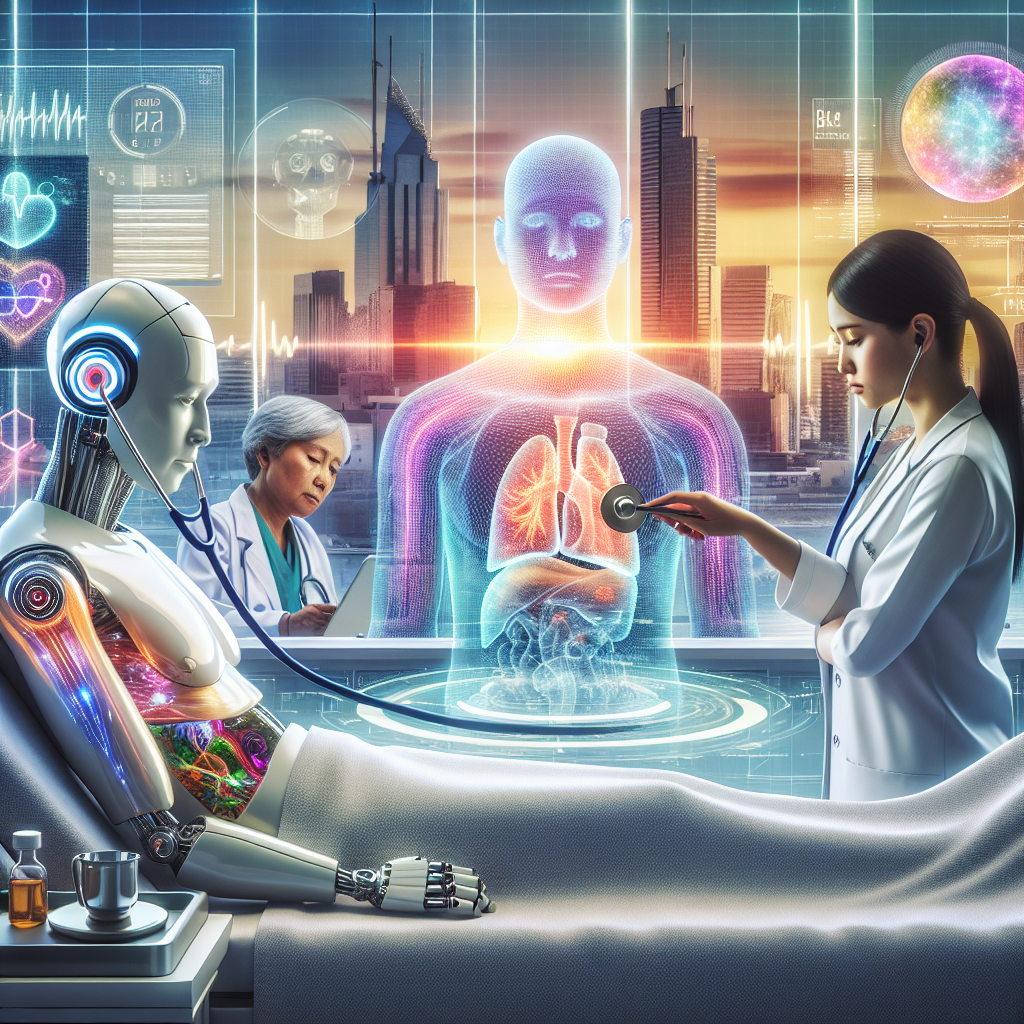
AI and Health: Revolutionizing Diagnostics and Patient Care
Artificial Intelligence (AI) is transforming almost every industry, and healthcare is no exception. The application of AI technologies in health is revolutionizing diagnostics and patient care, leading to improved outcomes and streamlined processes.
Understanding AI in Healthcare
AI in healthcare refers to the use of algorithms and software to approximate human cognition in the analysis, interpretation, and comprehension of complex medical data. This includes using AI for diagnostics, treatment planning, and patient monitoring.
Key Areas of Impact
- Diagnostics: AI systems can analyze imaging data faster and often more accurately than human radiologists. Tools like deep learning algorithms are being used to detect diseases such as cancer in X-rays and MRIs.
- Personalized Treatment: AI can tailor treatment plans for individual patients by analyzing vast amounts of data, including genetic information and past medical histories.
- Predictive Analytics: By assessing historical data, AI can predict patient outcomes, readmission risks, and overall prognosis, enabling healthcare providers to intervene proactively.
- Virtual Health Assistants: AI-powered chatbots and virtual health assistants can provide patients with instant access to health information and advice, thereby improving patient engagement and satisfaction.
The Benefits of AI in Healthcare
The integration of AI in healthcare offers various benefits:
- Increased Efficiency: AI systems can process and analyze data much faster than human beings, significantly speeding up the diagnostic process.
- Cost Reduction: By improving diagnostics and enabling preventive care, AI can help reduce healthcare costs in the long term.
- Enhanced Accuracy: AI algorithms can minimize errors in diagnosis and treatment recommendations, leading to better patient outcomes.
- Improved Accessibility: AI technologies can bridge gaps in healthcare delivery, especially in underserved regions where specialist physicians are scarce.
Challenges and Considerations
Despite its potential, the deployment of AI in healthcare comes with challenges:
- Data Privacy: Protecting patient data is crucial. Ensuring compliance with regulations like HIPAA is mandatory.
- Integration with Existing Systems: Merging AI technologies with traditional healthcare systems can be complex and resource-intensive.
- Ethical Concerns: There are concerns regarding decision-making transparency and accountability in AI-driven healthcare decisions.
Conclusion
AI is poised to revolutionize the healthcare sector, offering efficient, effective, and personalized patient care. As technology continues to evolve, the challenge will be to integrate these advancements responsibly and ethically, ensuring that all patients benefit from the transformative power of AI in health.