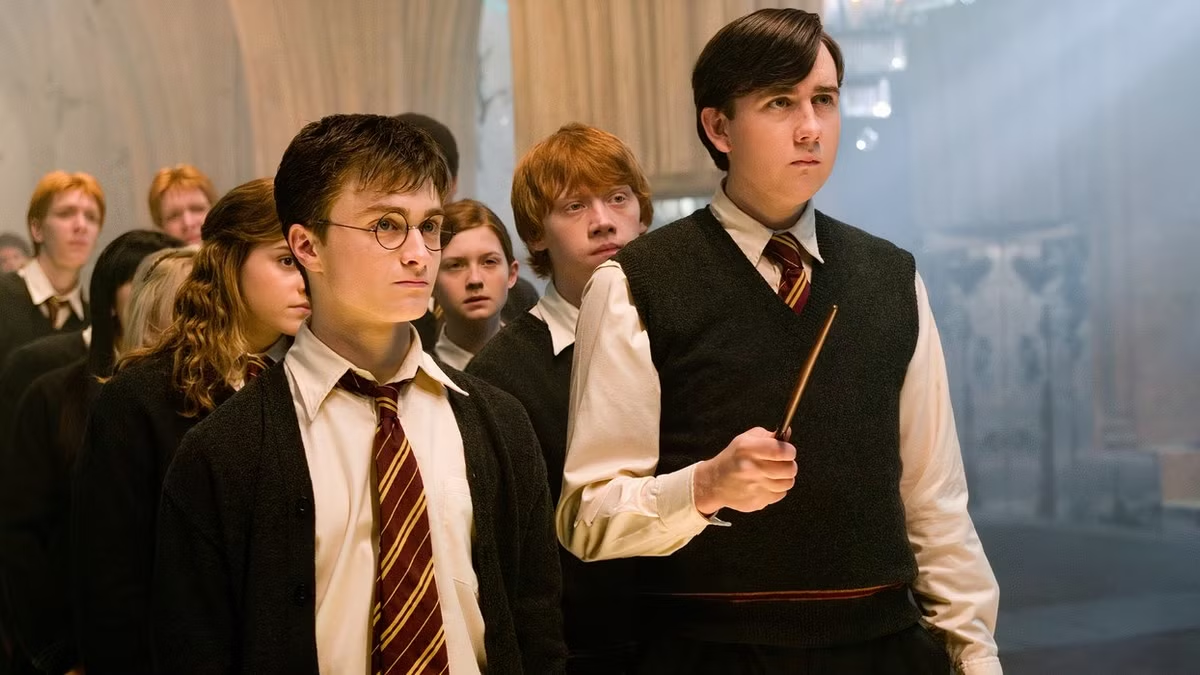
The Harry Potter film franchise was once the biggest movie series in the world. In fact, the premieres alone would be star-studded events, with thousands of fans flocking to London to witness the monumental moment firsthand. There really aren’t many premieres quite like that anymore, and very few film series boast such an intense following. It’s easy to be swept up in that momentum while it’s happening, but perhaps fans will see the Harry Potter films very differently today. They might be viewed through a nostalgic lens, but they are not perfect by any means, either.
For many, watching the main Harry Potter film today can be a challenge. Still, the series comprises eight iconic movies, featuring incredible performances and, notably, a legacy that has contributed to the evolution of the British film industry.
The Harry Potter Franchise Has Lost Several Beloved Cast Members
It might be a somber note to begin on, but it is nonetheless an impactful point to make, especially for those who grew up loving the Harry Potter films. Sadly, too many wonderful performers who starred in those original movies have passed away. Even as a fan of cinema as a whole, it’s devastating to watch these veteran actors weave their magic on screen for a final time. Many of these actors made such a profound impact on the film series and on the industry as a whole that it’s easy to see how much their presence is missed.
Alan Rickman, who played Severus Snape, was a terrible loss; a performer who seemingly had so much more to give. Television greats like Helen McCrory and Roger Lloyd Pack are sadly missed. And that’s not to mention the theatrical leads who brought so much talent and experience to their roles, such as Maggie Smith, Richard Harris, Robbie Coltrane, Michael Gambon, Richard Griffiths, and John Hurt. All in, it’s really tough to see so many British legends no longer able to practice the craft they loved so much, but there is a comfort in some way in watching these movies and seeing their work again.
The Harry Potter Movies Were Changing on the Fly

The huge and prosperous fantasy series Game of Thrones had a major issue going into its final seasons. There were no blueprints to follow. The series had gotten ahead of the books, and it was hard to know how to conclude the legendary run. Famously, Game of Thrones fumbled the finish, and Harry Potter almost ended up with the same fate. Because when the Harry Potter movies began to be filmed, the novels hadn’t been finalized yet. In fact, when Harry Potter and the Sorcerer’s Stone was first released in 2001, only the first four books were available to read.
Some information was available to the creative team on how to tackle those early films best, but there were still so many unknowns. That meant that as the movie series developed, it was always retconning and adjusting as it went along, to cater to the narrative arc of later books. Characters that no longer seemed that important suddenly had a lot more to do; objects like the Invisibility Cloak were suddenly involved in massive plot points, and seemingly obscure moments were given so much more meaning. Watching the films back now, there’s always a feeling that the movies had to shift things up just as much as Hogwarts’ moving staircase.
The Dated CGI Doesn’t Always Hold Up

One of the great joys of Harry Potter is its use of practical effects in its most fantastical and terrifying scenes. From amazing props to spectacular miniatures, a variety of classic techniques were employed to ensure that this magical world was grounded in physical reality. However, that approach can only take the movies so far. Eventually, CGI had to be used.
Those early movies are clearly marked by poor CGI, particularly in scenes featuring Fluffy the dog and the troll that invades the dungeons. Some moments go unnoticed, with the Golden Snitch effect particularly working. As the series progresses, there are vast improvements, but the films still show their age. The giants that appear later in the saga, for example, don’t quite live up to expectations. Credit has to be given to the Dementors, Hippogriffs, and House Elves, though, showing that even in some problem areas, the movies still shone when needed.
Fantastic Beasts Hurt the Franchise’s Legacy
The Harry Potter series, despite some of its faults, is considered to be one of the most well-made fantasy adaptations ever produced. Very few film sagas managed to maintain their quality from start to finish. That’s why when the Fantastic Beasts films were announced, audiences were intrigued to see what was next. After all, the legacy of the Harry Potter films would surely play into what these prequels would produce. The first film introduced some great new characters and an ambitious premise.
After that, though, the saga went downhill. By the third film, the Fantastic Beasts series was canceled completely. All those movies were in canon and changed the framing of the Harry Potter films. Some mystery was taken away from characters like Nicholas Flamel and Newt himself, while Hogwarts was revisited in the most underwhelming way possible. Fantastic Beasts was only supposed to add to the lore of the Wizarding World, but rewatching Harry Potter, it becomes clear that it accidentally took something away.
The First Two Harry Potter Films Feel Tonally Different

The beauty of the series lies in its being helmed by multiple directors, each of whom brings their own unique flavor to the proceedings. Yet, the first two films, Harry Potter and the Sorcerer’s Stone and Harry Potter and the Chamber of Secrets, feel totally different from the rest of the series. Hogwarts is altered dramatically, as are some other key locations, the color palette is shifted, and even key character designs are changed, like Professor Flitwick. Indeed, even some of the background characters, like the ghosts or Madam Hooch, are forgotten about as the saga progresses.
The Harry Potter series has a distinct identity in those first few films, which are warm and cozy. There’s a whimsicality to the designs, costumes, and many other elements. But all of those components shift as the series goes on, from the redesign of the uniforms to the new map for Hogwarts itself. It seems a great shame that the two films that started it all are essentially lost in the rest of the series, and while there is consistency after that, it’s definitely clear that the originals just don’t feel like they belong.
Some Hogwarts Students Kept Changing

Inconsistency makes the Harry Potter films somewhat difficult to watch. But the casting of the new Harry Potter TV show has brought a new issue to the attention of many. The series has seemingly decided to cast many of the key characters early, such as Lavender Brown, who was not featured in the movies until she became relevant. In the case of the Harry Potter films, it was evident that the movies never maintained a consistent cast of background students to populate the school.
Often, the extras changed frequently, and students who had been prominent earlier on would later disappear completely. Take Katie Bell, for instance. She is critical in Harry Potter and the Half-Blood Prince as the girl who is cursed by Draco Malfoy. But she isn’t really mentioned throughout the earlier films, and those who are speculated to be playing the character aren’t consistently used. She’s recast when important. It’s hard to see this as a living, breathing world when there are continuity issues like that.
Critical Harry Potter Book Elements Are Missing

As the HBO Harry Potter adaptation looms ever closer, comparisons are sure to be made. What’s clear is that the TV show is going to be sticking to the source material in a far firmer capacity compared to the movies. As fans are aware, there are numerous iconic moments from the books that aren’t featured in the films. For starters, Hermione’s campaign to save the House Elves is nowhere to be seen. Major characters, such as Peeves the Poltergeist, are also absent.
Some books, including Harry Potter and the Order of the Phoenix, were completely retooled so that they would work for a cinematic interpretation. The movies themselves are great, and there are always good reasons why the changes were needed. However, for those book fans out there, it is tough to watch the films, especially knowing that a slightly more faithful adaptation is on the way very soon.
The Wizarding Franchise Got Too Dark in the End

Previously, it was mentioned that the first two films feel totally different from the rest of the ensemble. However, there is another transition that must be considered, which also makes these movies difficult to watch. As the story progresses, the films get darker, both thematically and literally. It’s as if all the color has been pulled out of the picture by the final acts, as Warner Bros. sought a moody and grim look.
The charm and whimsicality of those earlier films are largely absent, and by the final movie, it’s not always easy to see what’s happening. The Wizarding World is always supposed to have a sense of fun and magic, but the thematic need to remove all of that took over. At most, Harry Potter and the Half-Blood Prince remembered to have fun where needed, but the later Harry Potter films lack this quality.

Harry Potter
- Showrunner
-
Francisca Gardiner
- Directors
-
Mark Mylod
- Writers
-
Francesca Gardiner
-

Dominic McLaughlin
Harry Potter
-

Janet McTeer
Minerva McGonagall
-
John Lithgow
Albus Dumbledore
-