

AI in Healthcare: Revolutionizing Diagnosis and Patient Care
Introduction
Artificial Intelligence (AI) is transforming various sectors, with healthcare being one of the most impacted. From improving diagnostic accuracy to enhancing patient care delivery, AI technologies are paving the way for a more efficient, patient-centered approach in medicine.
Enhanced Diagnostic Accuracy
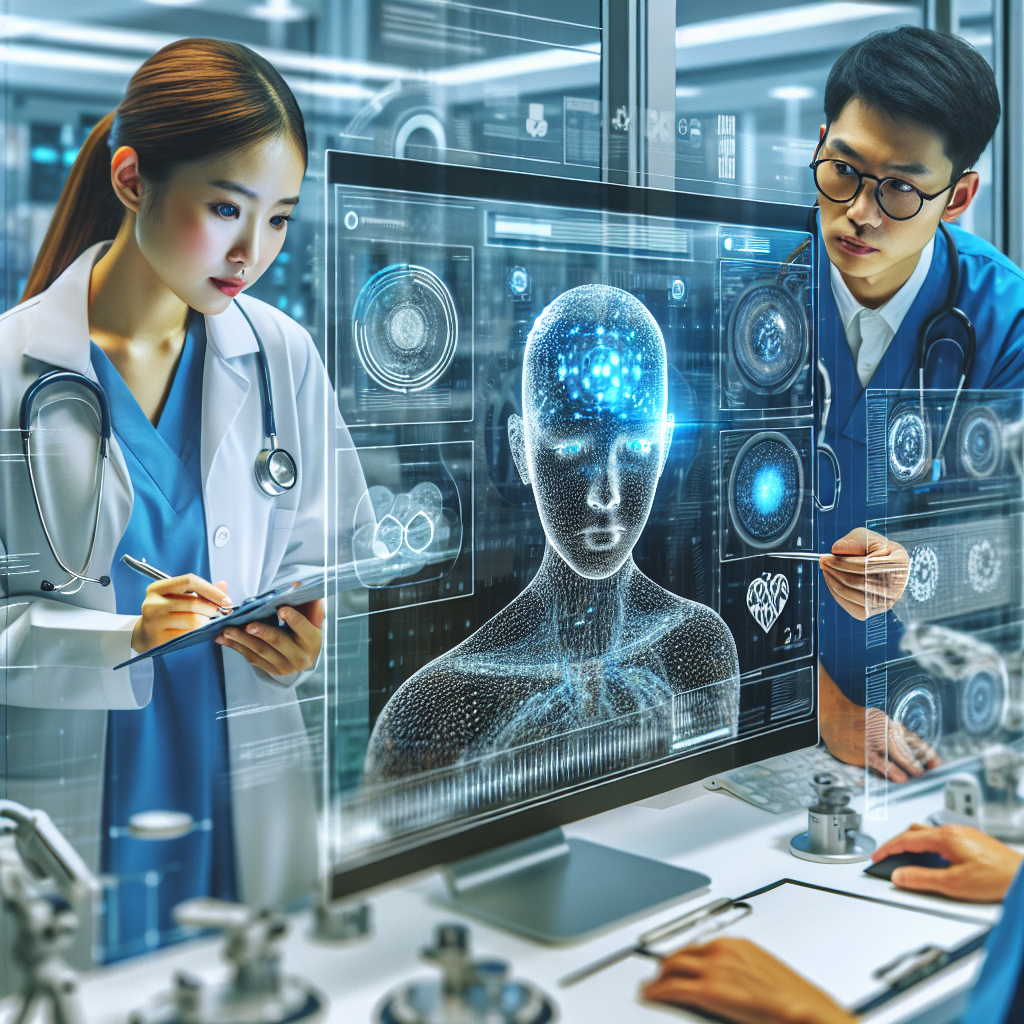
AI-powered tools are making remarkable strides in diagnosing conditions, often surpassing traditional methods. Machine learning algorithms can analyze medical images, such as X-rays and MRIs, with astounding precision. These tools learn from large datasets, allowing them to detect anomalies that may elude human specialists.
Transforming Diagnosis with AI
One of the most significant contributions of AI in healthcare is in medical diagnosis. AI algorithms, especially those using machine learning and deep learning, can analyze vast amounts of data—from medical imaging to patient records—at remarkable speed.
-
Medical Imaging: AI-powered tools can detect anomalies in X-rays, MRIs, and CT scans with accuracy comparable to, and sometimes exceeding, human radiologists. This helps in early detection of diseases such as cancer, allowing timely treatment.
-
Predictive Analytics: AI can identify patterns in patient data to predict the likelihood of diseases developing, enabling proactive healthcare interventions.
Personalized Patient Care
AI is not only aiding diagnosis but also personalizing treatment plans. By analyzing patient history, genetics, and lifestyle, AI can suggest customized treatment approaches that significantly improve outcomes. For example, AI systems can review vast amounts of clinical data to identify the most effective therapies for individual patients, ensuring a tailored healthcare experience.
Predictive Analytics for Proactive Care
Predictive analytics powered by AI is enabling healthcare providers to anticipate patient needs before they escalate. By analyzing trends in patient data, AI systems can identify high-risk patients and recommend preventive measures, reducing the incidence of severe health issues and hospitalizations.
Streamlining Administrative Tasks
Beyond clinical applications, AI has the potential to streamline administrative processes within healthcare organizations. From managing patient records to automating appointment scheduling, AI can alleviate the administrative burden on healthcare professionals, allowing them to focus more on patient care.
Future Outlook
As AI technology continues to evolve, its integration into the healthcare sector is expected to deepen. Ongoing developments in natural language processing and machine learning will likely improve communication and decision-making capabilities within healthcare systems. While challenges remain, such as data privacy and ethics, the potential benefits of AI in healthcare are vast and promising.