

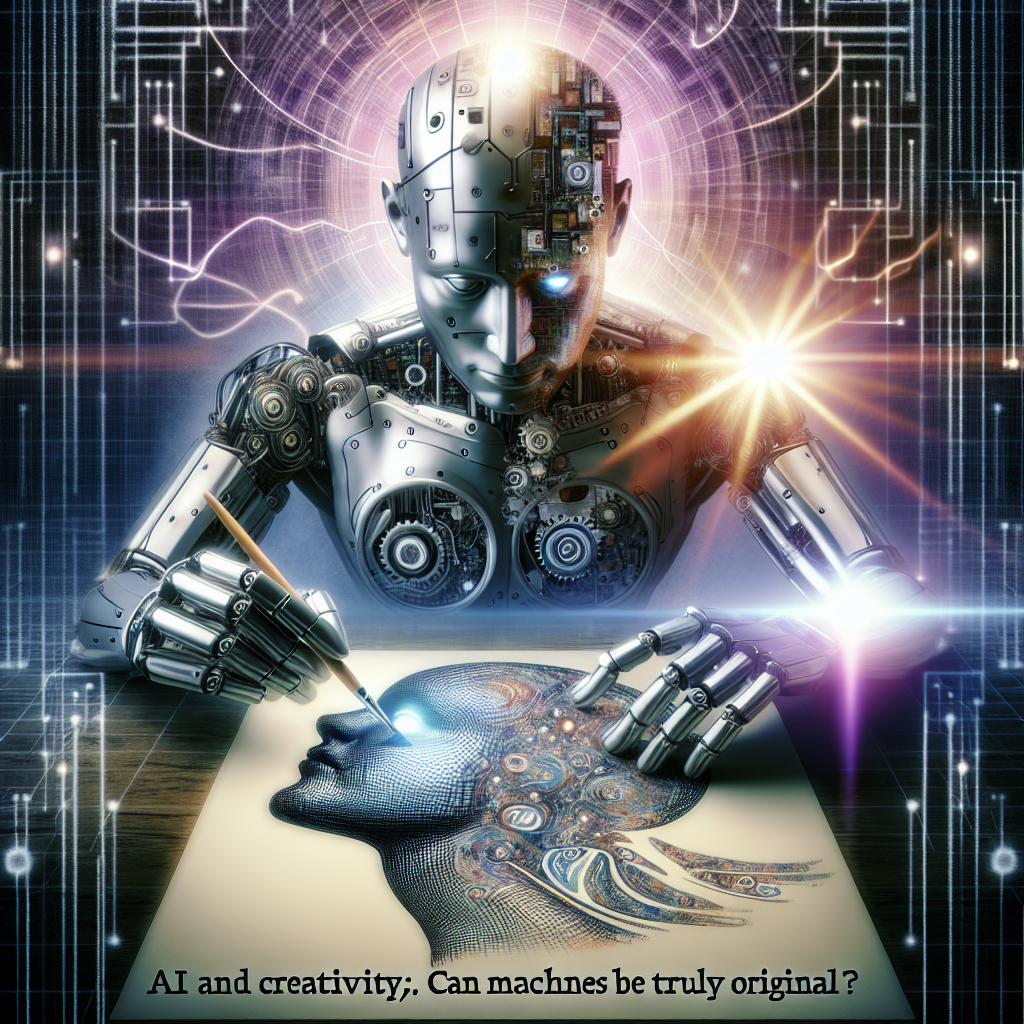
Artificial Intelligence (AI) has made significant strides in recent years, leading to intriguing questions about the nature of creativity and originality. Can machines, equipped with algorithms and vast datasets, produce creative works that rival those of human artists, musicians, and writers? This article explores the intersection of AI and creativity, shedding light on the nuances of machine-generated art.
Understanding Creativity
Traditionally, creativity has been seen as a uniquely human trait, characterized by an ability to generate novel ideas, solve problems, and express emotions. It involves intuition, experience, and a deep understanding of context. Creativity isn’t just about producing new works; it also encompasses originality, meaning, and cultural relevance.
How AI Approaches Creativity
AI systems employ algorithms to analyze vast amounts of data, allowing them to spot patterns and generate content. For example, AI can create paintings through neural networks like GANs (Generative Adversarial Networks) or compose music by learning from existing compositions. Although these outputs can be impressive, they often rely on existing work, raising questions of originality.
The Role of Data
AI’s creativity is typically derivative, grounded in the datasets used for training. By imitating existing styles and themes, AI can produce works that resemble human creations. However, critics argue that this imitation lacks true originality since AI does not possess consciousness or emotional experience.
Examples of AI-Generated Art
AI has already made waves in the art world. For instance, the painting “Portrait of Edmond de Belamy,” created by the Paris-based art collective Obvious, sold at auction for $432,500. Similarly, AI-generated music has garnered attention, with programs like OpenAI’s MuseNet able to compose in various styles. These examples show the potential of AI but also highlight the ongoing debate about the authenticity of such art.
Challenges and Limitations
Despite the advancements in AI, several challenges remain. Critics point out that AI lacks a genuine understanding of cultural significance, emotional depth, and the human experience. While AI can generate content that appears original, it cannot replicate the intent and emotion that often accompany human creativity.
The Future of AI and Creativity
As AI technology continues to evolve, collaboration between human artists and machines may redefine creativity. Instead of positioning AI as a replacement for human creators, it could serve as a tool to augment and inspire artistic endeavors. This partnership could lead to new forms of artistic expression that blend human intuition with machine learning capabilities.
Conclusion
The question of whether machines can be truly original remains open-ended. While AI can produce remarkable works that challenge our definitions of creativity, it is essential to recognize the unique qualities of human creativity that machines cannot fully replicate. Ultimately, AI might not achieve originality in the human sense, but it can still play a valuable role in the creative landscape.
For additional details, keep on visiting our website