Home Blog Page 97

How AI is Redefining Jobs and Skills

The landscape of work is undergoing a seismic shift, driven largely by advancements in artificial intelligence (AI). As we move into a new era, the integration of AI technologies is reimagining jobs and the skills required to succeed in them. This article delves into how AI is influencing the workplace and what it means for the future workforce.

AI and Job Transformation

AI is not merely reshaping existing roles but is also creating new job categories. As machines take over routine tasks, the demand for human roles that require complex decision-making, creativity, and interpersonal skills is on the rise.

Key Areas of Transformation:

  • Automation of Repetitive Tasks: AI excels in handling repetitive and mundane tasks, freeing up human employees to focus on more strategic work.
  • Augmentation of Decision-Making: AI tools provide data-driven insights that help employees make informed decisions faster.
  • Creation of New Industries: Entirely new fields, such as AI ethics and machine learning engineering, are emerging.

The Skills of Tomorrow

With the evolution of roles, the skills required are also changing. Traditional skill sets that once guaranteed job security are being replaced by a demand for digital proficiency, critical thinking, and emotional intelligence.

Essential Skills for the Future Workforce:

  • Technical Skills: Understanding AI technologies and digital platforms will be crucial.
  • Soft Skills: Communication, adaptability, and teamwork are increasingly important in collaborative AI-enhanced environments.
  • Continuous Learning: The ability to learn and adapt to new technologies and methodologies will define career success in the coming years.

Embracing Change

Organizations must embrace this transformation and invest in training programs that align with the changing skill landscape. By fostering a culture of continuous education and flexibility, companies can better prepare their workforce for the challenges ahead.

Conclusion

As AI continues to evolve, it will redefine job roles and the skills required. The future of work calls for a proactive approach to professional development, where employees and employers collaborate to prepare for an AI-driven world. Embracing this change will not only enhance productivity but also enable individuals to thrive in new and exciting career paths.

More related updates, Click Here

IRS Leaders Announce Major Changes for the 2026 Tax Season

WASHINGTON (AP) — Days before the 2026 tax filing season begins, the head of the IRS announced a shake-up Tuesday, saying the personnel and operational changes are intended to improve taxpayer service and modernize the agency.

The timing of the announcement coincides with a critical moment for the agency, as the IRS prepares to process millions of tax returns while simultaneously implementing major tax law changes under the tax and spending package President Donald Trump signed into law last summer. There are new tax relief provisions for tips and overtime, and new deductions for qualifying older Americans.

In a letter addressed to the agency’s 74,000 employees and viewed by The Associated Press, Chief Executive Officer Frank Bisignano announced new priorities and a reorganization of IRS executive leadership.

Notably, Gary Shapley, the whistleblower who testified publicly about investigations into Hunter Biden’s taxes and served just two days as IRS Commissioner last year, was named deputy chief of the Criminal Investigation division. Guy Ficco, the head of Criminal Investigation, is set to retire and will be replaced by Jarod Koopman, who will also serve as chief tax compliance officer alongside Bisignano.

Joseph Ziegler, another Hunter Biden whistleblower, was named chief of internal consulting, the letter said.

Bisignano said in the letter that he is “confident that with this new team in place, the IRS is well-prepared to deliver a successful tax filing season for the American public.”

The June National Taxpayer Advocate report to Congress warned that the 2026 season could be rocky after a series of mass layoffs last year brought on by the Department of Government Efficiency.

“With the IRS workforce reduced by 26% and significant tax law changes on the horizon, there are risks to next year’s filing season,” said Erin M. Collins, who leads the organization assigned to protect taxpayers’ rights.

Bisignano, who was named to his job in October, also serves as the commissioner of the Social Security Administration.

His main priorities for the IRS in 2026 include enhancing customer service, improving tax collections and safeguarding taxpayer privacy.

The IRS expects to receive roughly 164 million individual income tax returns this year, which is on par with what it received last year.

The average refund amount last year was $3,167, according to IRS data. Treasury Secretary Scott Bessent has said on several occasions that the effects of Republican tax law will result in bigger refunds in 2026.

Visit our website to get more updates

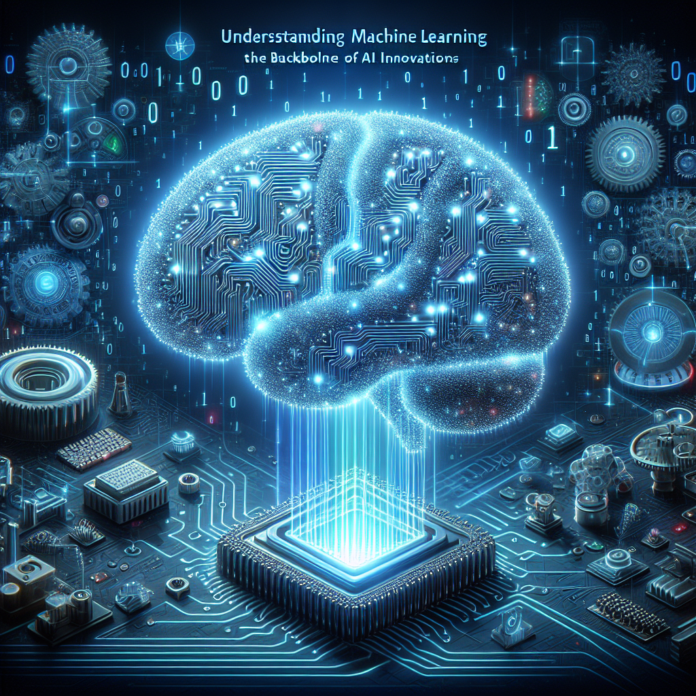
The Backbone of AI Innovations

In the ever-evolving landscape of technology, machine learning (ML) has emerged as a fundamental element of artificial intelligence (AI). From personalized recommendations on streaming platforms to advanced medical diagnostics, ML serves as the driving force behind numerous AI applications. This article aims to demystify the core concepts of machine learning and explain its pivotal role in innovation.

What is Machine Learning?

Machine learning is a subset of artificial intelligence that focuses on the development of algorithms that allow computers to learn from and make predictions based on data. Instead of relying on explicit programming, ML models improve their performance through experience.

Types of Machine Learning

  • Supervised Learning: In this approach, the model is trained on a labeled dataset, where the outcome is known. Common applications include classification and regression tasks.
  • Unsupervised Learning: This type does not rely on labeled data. Instead, it identifies patterns and relationships within the data itself, making it useful for clustering and anomaly detection.
  • Reinforcement Learning: This involves training models to make sequences of decisions by rewarding desirable actions and penalizing undesired ones, often used in robotics and game playing.

Why is Machine Learning Important?

Machine learning plays a crucial role in the modern data-driven world for several reasons:

Data Processing: ML algorithms can handle massive amounts of data and identify trends that are often imperceptible to human analysts.

Automation: Automation powered by ML can reduce human error and increase efficiency across various industries, from finance to healthcare.

Personalization: Businesses leverage ML to analyze customer behavior, leading to personalized experiences that enhance customer satisfaction and loyalty.

Applications of Machine Learning

The applications of machine learning are vast and varied. Here are a few notable examples:

  • Healthcare: ML algorithms assist in diagnosing diseases, predicting patient outcomes, and tailoring treatments
  • Finance: In the financial sector, ML helps in fraud detection, credit scoring, and algorithmic trading.
  • Retail: Retailers use ML for inventory management, price optimization, and enhancing customer experience through chatbots.

The Future of Machine Learning

As technology continues to advance, the future of machine learning looks promising. Innovations such as deep learning and natural language processing are pushing the boundaries of what is possible, opening new avenues for improving efficiency and creativity in a wide range of sectors.

Conclusion

Machine learning is more than just a buzzword; it is a transformative technology that is reshaping industries and improving lives. Understanding its principles and applications is essential for anyone looking to navigate the future landscape of technology and innovation.

Stay-tuned with us on our website

Must-Watch Documentaries to Watch This Year

The History of Concrete

Don’t let the title fool you, John Wilson’s The History of Concrete is no academic excursion into the origin of the world’s most widely used man-made material. Well, it is that, to an extent. But for anyone who enjoyed the essayistic forays into curiosity that made up HBO’s two-season series, How To With John Wilson, this feature-length extension of Wilson’s visual pun-laden nonfiction work (once more driven by the filmmaker’s playfully anxious voiceover) will feel warmly familiar. Concrete here is but the preamble to various ramblings about everything from infrastructure to Hallmark movies. Backed by the same team that brought How To to life from 2020 to 2023—including producers Clark Filio, Shirel Kozak, and Allie Viti, as well as camera operator Nellie Kluz—and newcomers to the Wilson team, including the Marty Supreme team of Josh Safdie and Ronald Bronstein (whose exec producer titles will make sense to those who catch the film at the fest), The History of Concrete delights precisely because it stretches Wilson’s man-armed-with-a-camera form to its very limits. The result is the closest Wilson might come to making a witty and ironic crowdpleaser.

Manuel Betancourt

Jaripeo

​​The rural rodeos in Penjamillo, Mexico, that give Jaripeo its title are rife for the heady, intellectual exploration around queerness, desire, and masculinity that Efraín Mojica and Rebecca Zweig are intent on dissecting in their debut feature, which is backed, it must be noted, by executive producers Juan Pablo González and Gerardo Guerra (who collaborated on Dos Estaciones and Caballerango). Billed as a hybrid documentary that artfully blends flirty Super 8 footage with grounded vérité scenes (not to mention stylized interludes dreamed up by Mojica, a conceptual artist), Jaripeo is ultimately a rather straightforward personal doc, cut together quite capably by editor Analía Goethals. In a year where the LGBTQ offerings at the fest feel decidedly muted (especially given Park City’s long history of supporting bold, queer filmmakers), Jaripeo, tucked away in the NEXT section, stands out precisely because it offers a welcome riff on the coming-out tale. Only this time, that well-worn trope is wrapped around cowboy hats, silver spurs, and a lustful vision of rodeos that complicate simple ideas of Mexican machismo.

Manuel Betancourt

Kikuyu Land

Produced, among others, by Moses Bwayo (a 2023 IDA Award winner for Bobi Wine: The People’s President), Kikuyu Land is a history lesson on Kenya’s colonial past and an examination of its effects in the country’s present. Co-directed by Andrew H. Brown and Nairobi-based journalist Bea Wangondu, who serves as the film’s guide, the documentary is structured as Bea’s investigation into the land repatriation of the indigenous Kikuyu people who were swindled out of their ancestral land. Yet the film also doubles as a personal archaeology of Wangondu’s own family’s involvement in such matters, upping the stakes in what would otherwise feel like a dry, didactic piece. Similarly, Brown’s cinematography (which earned him an IDA award nomination in 2023 for Between the Rains) gives this labyrinthine legal battle a sleek aesthetic, capturing the beauty of the land with polished authenticity. Telling a hyper-local story yet brimming with global topicality, Kikuyu Land could easily follow in the steps of Bwayo’s own well-received and well-traveled doc.

Manuel Betancourt

Once Upon a Time in Harlem

Billed as a co-directed effort between William Greaves, who passed away in 2014, and his son David Greaves, this doc resurrects nearly 30 hours of 16mm footage filmed over one magical evening at Duke Ellington’s house over 50 years ago. This gathering assembled the then-living luminaries of the Harlem Renaissance to explicate and debate the artistic and sociopolitical significance of this specific creative flourishing. On the 100-year anniversary of William Greaves’s birth, this finally-finished film is a family affair: alongside David, his daughter Liani Greaves produces with editor Anne de Mare. Lynn True, best known as a Maysles collaborator, also cuts. The finished film ably weaves together archival photos of the figures, their works, the magazines, and the politicians that were mentioned during the filming. But it’s really the second half of Once Upon a Time in Harlem that comes alive. The historical significance, financiers, mostly female salon organizers, Marcus Garvey’s Back to Africa movement, and more come under scrutiny from the spirited crowd. And in true winking Greaves fashion, the project itself is also a focal point.

Abby Sun

To find out more, Keep on visiting our website

AI and Creativity, Partners in Art, Music, and Writing?

In the ever-evolving landscape of technology, artificial intelligence (AI) has emerged as a transformative force across various industries. While its applications in healthcare, finance, and logistics are widely recognized, the realm of creativity is where AI’s potential truly captivates. This article explores the fascinating interplay between AI and creative expressions in art, music, and writing, raising the question: can AI be a partner in creativity?

AI and Art

AI-generated art has stirred a mix of admiration and skepticism. Algorithms like DeepArt and DALL-E use machine learning to create stunning visuals that mimic the styles of renowned artists. These tools analyze vast datasets of artistic works to generate unique images, challenging traditional notions of authorship and creativity.

The Role of the Artist

Artists are increasingly using AI as a collaborative tool rather than a competitor. Many contemporary artists incorporate AI-generated elements into their work, creating pieces that spark dialogue about the nature of creativity. The collaboration often lies in curating the AI’s output, allowing artists to infuse their personal vision and message.

AI in Music

Much like its impact on visual arts, AI is revolutionizing the music industry. Platforms such as OpenAI’s MuseNet and Amper Music allow users to compose original pieces by specifying genre, mood, or instruments. These technologies can analyze existing music trends, generating compositions that resonate with listeners.

Collaboration with Musicians

Musicians are embracing AI to enhance their creative processes. By leveraging AI to generate musical ideas or arrangements, artists can break free from creative blocks and explore new soundscapes. However, the human touch—emotion, connection, and experience—remains indispensable in music creation.

AI in Writing

The literary world is not immune to AI’s influence. Tools like OpenAI’s GPT-3 can generate poetry, stories, and articles, raising questions about originality and authenticity. Writers are now using AI for brainstorming, editing, and even drafting content, effectively blending machine efficiency with human creativity.

The Literary Landscape

While AI can produce text that mimics human style, the depth and nuance of human experience are difficult to replicate. Writers who utilize AI typically act as curators, refining the AI’s output to enrich their narratives. This collaboration showcases how technology can support and enhance the writing process.

Conclusion

The partnership between AI and creativity is a complex and evolving relationship. Rather than replacing human creativity, AI offers new tools and perspectives that can inspire artists, musicians, and writers. By embracing these technological advancements, creative individuals can redefine their art forms, inviting endless possibilities in expression. As we continue to explore this partnership, one thing is clear: AI is not merely a tool; it is a collaborative partner that challenges and expands the boundaries of creativity.

Keep checking our website for additional details

Percy Jackson Season 3: Renewal Status & Release Updates

Viewers are curious to know whether Percy Jackson Season 3 has been renewed or canceled by Disney+. Created by  Rick Riordan and Jonathan E. Steinberg, the fantasy series centers on a modern demigod with newly found powers who is accused of stealing the lightning bolt of Zeus. He is required to take a friend’s help to clear his name and restore peace in Olympus. With Season 2 having concluded recently, curiosity has piqued around another installment.

Is Percy Jackson canceled or renewed for Season 3?

Disney+ has renewed Percy Jackson Season 3, which is currently under production. The upcoming installment will be based on Rick Riordan’s third book, The Titan’s Curse. As of yet, there’s no official release date for Season 3.

In a conversation with The Direct, Walker Scobell, who plays Percy Jackson, shared some insights into what fans can expect from Season 3. He revealed that the upcoming season will be the “most book-accurate” version so far. He mentioned that the book also fits perfectly into eight episodes and said he’s “really been happy with it.” Moreover, he teased that Season 3 is going to be bigger and much more intense, alluding to how the series has continued to up its game across the two seasons.

Scobell further elaborated, “Season 3 is like all I’m thinking about right now… And I love Season 2, but Season 3 just—Like if Season 2 brings Season 1 to a different level, I mean, Season 3 just brings Season 2 to a completely different level.” He speculates that the upward progression might continue, “If we get a Season 4, I expect it to build in the same exact way.”

Additionally, Scobell described the upcoming version of his character as being ” locked onto that specific goal.” This time, his motivation is personal and related to Annabeth, who’s presumed dead, as the minor spoilers for the book suggest.

The post Has Percy Jackson Season 3 Been Canceled or Renewed? appeared first on ComingSoon.net – Movie Trailers, TV & Streaming News, and More.

Additional relevant updates

The Ongoing Debate Over AI’s Role in Society

The rapid advancement of artificial intelligence (AI) has sparked a profound discussion regarding its role in society. From healthcare to education, AI systems are becoming increasingly integrated into human activities. Simultaneously, this integration raises questions about the implications for employment, ethics, and the fundamental nature of human experience.

The Rise of AI

Artificial intelligence has evolved from theoretical concepts into practical applications facilitating tasks across various sectors. Some notable developments include:

  • Automation: Replacing repetitive tasks with machines to increase efficiency.
  • Machine Learning: Systems that learn from data to make predictions or decisions.
  • Natural Language Processing: Enabling machines to understand and respond to human language.

Concerns Surrounding AI

Despite the numerous benefits, the integration of AI comes with significant concerns:

  • Job Displacement: Many fear that automation will render human jobs obsolete.
  • Ethical Dilemmas: Issues arise regarding bias in AI algorithms and their decision-making processes.
  • Loss of Human Touch: As machines take over roles in sectors like healthcare and customer service, the human element may diminish.

Balancing Human and Machine Collaboration

Advocates for AI integration often emphasize the idea of collaboration rather than replacement. This collaboration can take various forms:

  • Augmented Intelligence: AI tools enhancing human decision-making, rather than replacing it.
  • Empowering Workers: Providing employees with advanced tools to improve productivity.
  • New Opportunities: Creating new job categories and roles that leverage AI technologies.

The Future of AI in Society

The debate surrounding AI is far from concluded. As technology continues to develop, society must grapple with numerous questions:

  • What regulations should govern AI use to protect human rights?
  • How can we ensure transparency and accountability in AI systems?
  • What role should humans play in decision-making processes influenced by AI?

Conclusion

The discourse on AI’s place in society is complex, merging technology, ethics, and human values. As AI technologies become more prevalent, it is essential to approach their integration thoughtfully, ensuring that they serve to enhance the human experience rather than detract from it. Balancing the capabilities of AI with human insight will be crucial as we navigate the future of our interconnected world.

Stay-tuned with us on our website

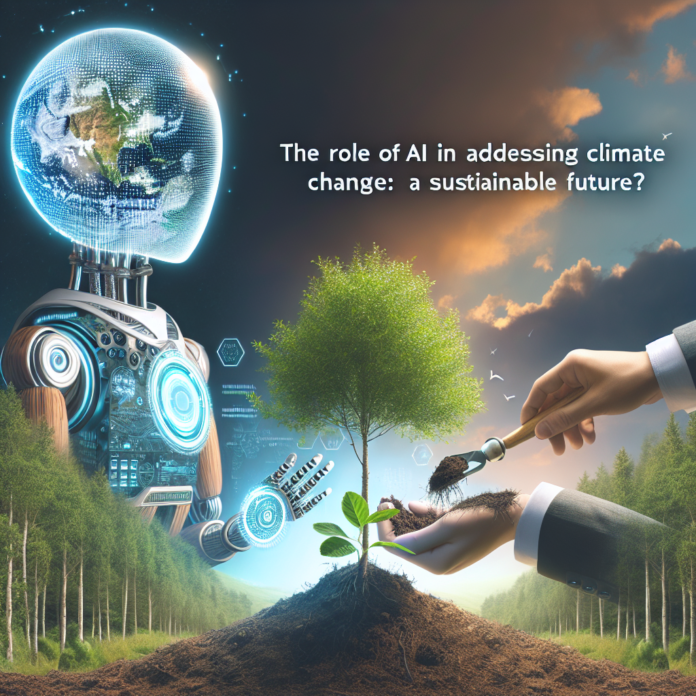
The Role of AI in Addressing Climate Change: A Sustainable Future?

The looming threat of climate change is one of the greatest challenges humanity faces today. As global temperatures rise, natural disasters become more frequent, and ecosystems face unprecedented stress. To combat these pressing issues, the integration of Artificial Intelligence (AI) into sustainability efforts is emerging as a powerful tool.

Understanding Climate Change

Climate change refers to the long-term alteration of temperature and typical weather patterns in a place. While natural events contribute to these changes, human actions—such as burning fossil fuels, deforestation, and industrial activities—have significantly accelerated the process. Addressing climate change requires innovative solutions that harness technology effectively.

The Potential of AI in Mitigating Climate Effects

AI technologies can play a pivotal role in combating climate change in several ways:

  • Data Analysis: AI excels at processing vast amounts of data, enabling scientists and policymakers to understand climate patterns and predict future changes accurately.
  • Resource Optimization: AI can optimize energy consumption in buildings and industries, leading to reduced carbon footprints. Smart grids can manage energy distribution more efficiently.
  • Sustainable Agriculture: Machine learning algorithms can provide farmers with insights on crop yields, pest control, and resource management, minimizing waste and maximizing output.
  • Climate Modeling: AI-driven models can simulate climate scenarios, helping governments and organizations prepare for extreme weather events and devise effective strategies.

Innovative Applications of AI

Several real-world applications demonstrate how AI is being utilized to address climate challenges:

  • Carbon Footprint Tracking: AI applications can track and analyze individuals’ and organizations’ carbon footprints, offering personalized insights to reduce emissions.
  • Smart Transportation: AI systems in public transport enhance efficiency, reduce traffic congestion, and lower greenhouse gas emissions.
  • Renewable Energy Forecasting: AI helps in predicting energy generation from renewable sources, improving the integration of solar and wind energy into power grids.

Challenges and Considerations

Despite its potential, the integration of AI in climate solutions is not without challenges. Key considerations include:

Energy Consumption of AI: Training AI models requires significant computational power, which can lead to increased energy consumption.

Data Privacy and Ethics: The use of personal and environmental data raises ethical concerns regarding privacy and consent.

Implementation Costs: The initial investment required to develop AI solutions can be substantial, posing a barrier for some organizations.

Conclusion

AI holds immense potential to drive solutions that mitigate the effects of climate change and promote a sustainable future. By embracing this technology thoughtfully and responsibly, we can reduce our ecological impact while paving the way for innovative strategies that yield lasting benefits for our planet. Ultimately, the collaboration between AI and human ingenuity may well define our success in the fight against climate change.

More related updates, Click Here

$1.2 Trillion Spending Bill Reached Despite DHS Funding Disputes

NEWYou can now listen to Fox News articles!

Congressional negotiators unveiled a massive $1.2 trillion spending package that includes funding for several key aspects of the federal government, but partisan tensions are still raging over money going toward Immigration and Customs Enforcement (ICE).

The legislation is aimed at funding the Department of War, Department of Homeland Security (DHS), Department of Labor, and Department of Health and Human Services (HHS), among others. But progressives have threatened a rebellion over funding for ICE, which is included in the DHS portion of the bill, if President Donald Trump’s immigration crackdown is not reined in.

The division was spurred by a deadly confrontation between an ICE agent and 37-year-old Renee Nicole Good in Minneapolis earlier this month. Responses to Good’s killing from Democrats and Republicans have been sharply divided along partisan lines.

If passed by the House and Senate, the legislation — which combines four separate spending bills into a package called a “minibus” — would be the final piece of the puzzle for Congress to avert another government shutdown come Jan. 30.

DEMOCRATS’ DILEMMA: PROGRESSIVE PUSH TO ‘ABOLISH ICE’ SPARKS FRESH DIVIDE IN PARTY

The U.S. Capitol in Washington, D.C., May 18, 2025. (Alex Wroblewski/Bloomberg via Getty Images)

Rep. Rosa DeLauro, D-Conn., the top Democrat on the House Appropriations Committee, acknowledged frustrations raised by progressives, but fell short of outright condemning the bill.

“I understand that many of my Democratic colleagues may be dissatisfied with any bill that funds ICE. I share their frustration with the out-of-control agency. I encourage my colleagues to review the bill and determine what is best for their constituents and communities,” DeLauro said in a statement Tuesday morning.

“The Homeland Security funding bill is more than just ICE. If we allow a lapse in funding, TSA agents will be forced to work without pay, FEMA assistance could be delayed and the U.S. Coast Guard will be adversely affected,” she said.

A significant number of far-left Democrats threatened to vote against funding for DHS days before the package was released.

“I am glad to announce that the Congressional Progressive Caucus has adopted an official position to hold ICE accountable. Our caucus members will oppose all funding for immigration enforcement in any appropriations bills until meaningful reforms are enacted to end militarized policing practices,” Rep. Ilhan Omar, D-Minn., said last week at a press event.

Omar is the deputy chair for the Congressional Progressive Caucus, a group of more than 70 lawmakers.

$174B SPENDING PACKAGE TO AVERT SHUTDOWN CLEARS KEY HURDLE IN SENATE

Ilhan Omar, left, pictured along an ICE agent, right.

Rep. Ilhan Omar, D-Minn., left, pictured alongside an ICE agent, right. (Nathan Posner/Anadolu via Getty Images; Victor J. Blue/Bloomberg via Getty Images)

The bill text keeps the $10 billion in funding for ICE appropriated in 2025, but it also comes with reductions in the agency’s budget for removal of illegal immigrants.

Among the guardrails on ICE, the bill includes $20 million for body cameras for Border Patrol officers and new training requirements on de-escalation and public engagement.

The move threatens to undo support among Republicans who may demand to see that funding restored or increased. House Speaker Mike Johnson, R-La., can afford to lose only two votes amid razor-thin margins in the House following the sudden death of Rep. Doug LaMalfa, R-Calif., and the resignation of Rep. Marjorie Taylor Greene, R-Ga., both of which happened earlier this month.

On the whole, the bundle of four bills funds the government’s needs for Transportation, Housing and Urban Development to the tune of $102.8 billion, sets aside $221 billion for the Department of Labor, Health and Human Services, allocates $64.4 billion for DHS and increases defense spending to $839.2 billion.

Congress has passed six of the needed 12 bills to fund the government in FY2026.

In a statement on the latest spending package, House Appropriations Chairman Tom Cole, R-Okla., said he hoped lawmakers would press on to finalize the year’s funding.

“At a time when many believed completing the FY ’26 process was out of reach, we’ve shown that challenges are opportunities. It’s time to get it across the finish line,” Cole said.

The $1.2 trillion package will reach the floor for a vote in the House later this week.

For now, a shutdown is not on the menu for Senate Democrats, nor is there a desire to turn to a government funding extension, known as a continuing resolution (CR), to keep the lights on in Washington, D.C.

That’s because Senate Democrats, led by Senate Minority Leader Chuck Schumer, D-N.Y., argue either scenario would only benefit the Trump administration, particularly when it comes to DHS funding, because of the nearly $200 billion in funding already delivered to the agency through Trump’s signature “big, beautiful bill.”

DEMS RELENT, SENATE SENDS $174B SPENDING PACKAGE TO TRUMP’S DESK AS SHUTDOWN LOOMS OVER DHS FUNDING

Chuck Schumer speaking at a press conference

Senate Minority Leader Chuck Schumer, D-N.Y., speaks to reporters following closed-door party meetings at the Capitol in Washington, June 17, 2025. (J. Scott Applewhite/AP Photo)

Schumer, in particular, has been wary of flirting with another shutdown in the wake of the longest closure in U.S. history, instead arguing that Democrats want to focus on funding the government through spending bills, largely to include their own priorities and to try to reverse any spending cuts from the past year.

And Sen. Patty Murray, D-Wash., the top-ranking Democrat on the Senate Appropriations Committee, charged that the DHS under Secretary Kristi Noem was “frankly sick and un-American,” and that ICE was “out-of-control.”

But, she acknowledged that the best way Democrats could try to corral them would be through the government funding process.

“ICE must be reined in, and unfortunately, neither a CR nor a shutdown would do anything to restrain it, because, thanks to Republicans, ICE is now sitting on a massive slush fund it can tap whether or not we pass a funding bill,” Murray said.

CLICK HERE TO GET THE FOX NEWS APP

“The suggestion that a shutdown in this moment might curb the lawlessness of this administration is not rooted in reality: under a CR and in a shutdown, this administration can do everything they are already doing — but without any of the critical guardrails and constraints imposed by a full-year funding bill,” she continued.

Leo Briceno is a politics reporter for the congressional team at Fox News Digital. He was previously a reporter with World Magazine.


Visit our website to get more updates

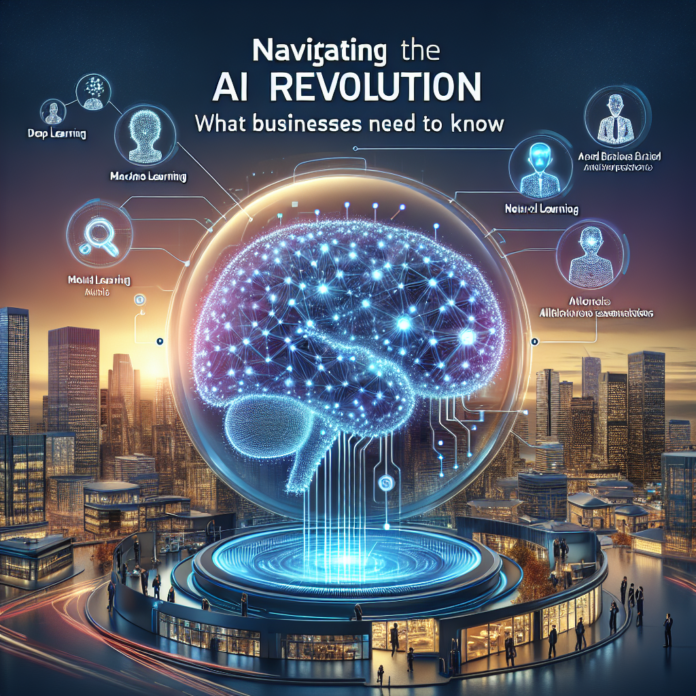
What Businesses Need to Know

The AI revolution is here, transforming industries and redefining how businesses operate. As companies embark on their journey into the world of artificial intelligence, understanding its implications and potential benefits is crucial.

Understanding AI and Its Impact

Artificial Intelligence encompasses a range of technologies that enable machines to perform tasks that typically require human intelligence. This includes understanding natural language, recognizing patterns, and making decisions. The impact of AI is vast and affects various sectors:

  • Healthcare: Personalized medicine and predictive analytics.
  • Finance: Fraud detection and automated trading.
  • Retail: Enhanced customer experiences through personalization.
  • Manufacturing: Improved supply chain efficiency and predictive maintenance.

Key Considerations for Businesses

1. Identify Business Needs

Before diving into AI implementation, businesses must identify specific needs and pain points within their operations. This ensures that AI solutions align with strategic goals.

2. Build a Strong Data Foundation

Data is the lifeblood of AI. Companies should focus on collecting, storing, and managing high-quality data. Collaborating with data scientists can help drive meaningful insights.

3. Embrace Change Management

AI integration will involve changes in processes and potentially workforce roles. Engaging employees through change management strategies can facilitate smoother transitions and foster a culture of innovation.

4. Invest in Training

Up-skilling and training staff on AI tools and technologies are essential. A well-educated workforce can better leverage AI capabilities, leading to improved outcomes.

5. Monitor and Evaluate

Once AI solutions are in place, continuous monitoring and evaluation are critical. Businesses should assess performance, gather user feedback, and iterate as necessary to optimize results.

Challenges to Overcome

While the benefits of AI are substantial, businesses must also navigate various challenges:

  • Data Privacy: Ensuring compliance with regulations such as GDPR is paramount.
  • Bias and Ethics: Developing AI systems responsibly to avoid perpetuating biases.
  • High Costs: Initial investments in AI technology can be significant, requiring careful financial planning.

Conclusion

The AI revolution presents unparalleled opportunities for businesses willing to embrace change. By understanding the landscape and strategically planning their approach, companies can position themselves for success in this dynamic environment. The future belongs to those who adapt and innovate.

Join our website for cool news and cool tips