In the 21st century, technology has permeated almost every aspect of our lives. Among these advancements, smart homes powered by artificial intelligence (AI) stand out as a revolutionary concept that promises to redefine our living experiences. This article explores how smart homes function, the role of AI in their operation, and what the future holds for this innovative trend.
What Are Smart Homes?
Smart homes are residences equipped with devices that connect to a common network. These devices, which include everything from smart thermostats and security systems to refrigerators and lighting, can be controlled remotely through smartphones or other networks. This interconnected ecosystem creates a seamless living experience, enhancing comfort, efficiency, and security.
The Role of AI in Smart Homes
Artificial intelligence plays a pivotal role in making smart homes truly “smart.” Here are some ways AI enhances the functionality of smart homes:
1. Automation
Smart devices can learn from user behavior and optimize their functions accordingly. For example, smart thermostats can adjust temperatures based on historical data and preferences, ensuring energy efficiency and comfort.
2. Predictive Maintenance
AI algorithms can analyze data from home appliances and alert homeowners when maintenance is needed. This proactive approach can prevent larger issues down the line, saving time and money.
3. Enhanced Security
AI-powered security systems can identify unusual patterns, such as unknown faces or movements, and alert homeowners in real time. This offers a level of security that traditional systems cannot provide.
The Benefits of Smart Homes
Embracing smart home technology through AI brings numerous benefits:
Convenience: Control your home with just a few taps on a smartphone.
Energy Efficiency: Smart systems can significantly reduce energy consumption, lowering bills.
Safety: Enhanced security features protect homes and offer peace of mind.
Increased Property Value: Smart homes tend to attract buyers, increasing property value.
Challenges Ahead
Despite the many advantages, challenges remain. Privacy concerns regarding data collection, interoperability between various smart devices, and the initial cost of implementation are significant hurdles that homeowners and manufacturers must address.
The Future of Smart Living
As technology continues to advance, smart homes will become more sophisticated with AI at the core of their operation. With advancements in machine learning, IoT (Internet of Things), and cloud computing, we can expect a future where homes not only learn from occupants but also predict needs and optimize living conditions in real-time.
Conclusion
Smart homes powered by AI represent the forefront of modern living. As technology evolves, our homes will likely transform into highly personalized sanctuaries, offering comfort, security, and efficiency like never before. The future of living is here, and it is indeed smart.
IE 11 is not supported. For an optimal experience visit our site on another browser.
Now Playing
Teyana Taylor Set to Host ‘Saturday Night Live’ for the First Time
00:44
UP NEXT
Jason Momoa Shares How He Got the Part in ‘Baywatch: Hawaii’
00:51
Harry Styles Releases Music Video for Hit Single ‘Aperture’
00:54
Dylan Efron, Boston Rob Talk New Show ‘Everything’s a Competition’
09:42
Should You Give Your Kids Chores to Teach Them Structure?
05:49
Anthony Anderson Talks ’Star Search’ Revival, New Barbecue Line
05:00
Steve Kornacki on Helping With Harry Styles Tour Announcement
01:58
Kate Hudson Gets Emotional After 2026 Oscar Nomination
00:53
‘Heated Rivalry’ Stars Set to Be Torchbearers at the Olympics
00:46
Hudson Westbrook Talks Stardom and Performs ‘Painted You Pretty’
04:07
Craig Robinson Gets Surprise From ‘The Other’ Craig Robinson
05:34
Pop Culture Roundup: Bruno Mars’ Return, Vibration Plates, More
05:09
Rose Byrne Celebrates 2026 Oscar Nom: ‘I Can’t Believe it!’
02:18
Jessie Buckley, Amy Madigan React to 2026 Oscar Nominations
04:53
2026 Oscar Nominations: Who Got Nods And Who Got Snubbed
05:26
The Power of Mattering and How to Regain it in Your Life
05:14
Prue Leith Departs ‘The Great British Bake Off’ After 9 Seasons
00:39
See Teyana Taylor Channel Angela Bassett in New ‘SNL’ Promo
00:58
Martin Short Reveals He Almost Ruined Selena Gomez’s Wedding
01:06
Vanna White Marries Her Longtime Partner John Donaldson
00:37
Teyana Taylor is set to host “Saturday Night Live” for the first time after she scored an Oscar nomination for her role in “One Battle After Another.” Watch the promo!Jan. 24, 2026
Now Playing
Teyana Taylor Set to Host ‘Saturday Night Live’ for the First Time
00:44
UP NEXT
Jason Momoa Shares How He Got the Part in ‘Baywatch: Hawaii’
00:51
Harry Styles Releases Music Video for Hit Single ‘Aperture’
00:54
Dylan Efron, Boston Rob Talk New Show ‘Everything’s a Competition’
09:42
Should You Give Your Kids Chores to Teach Them Structure?
05:49
Anthony Anderson Talks ’Star Search’ Revival, New Barbecue Line
05:00
Steve Kornacki on Helping With Harry Styles Tour Announcement
01:58
Kate Hudson Gets Emotional After 2026 Oscar Nomination
00:53
‘Heated Rivalry’ Stars Set to Be Torchbearers at the Olympics
00:46
Hudson Westbrook Talks Stardom and Performs ‘Painted You Pretty’
04:07
Craig Robinson Gets Surprise From ‘The Other’ Craig Robinson
05:34
Pop Culture Roundup: Bruno Mars’ Return, Vibration Plates, More
05:09
Rose Byrne Celebrates 2026 Oscar Nom: ‘I Can’t Believe it!’
02:18
Jessie Buckley, Amy Madigan React to 2026 Oscar Nominations
04:53
2026 Oscar Nominations: Who Got Nods And Who Got Snubbed
05:26
The Power of Mattering and How to Regain it in Your Life
05:14
Prue Leith Departs ‘The Great British Bake Off’ After 9 Seasons
00:39
See Teyana Taylor Channel Angela Bassett in New ‘SNL’ Promo
00:58
Martin Short Reveals He Almost Ruined Selena Gomez’s Wedding
01:06
Vanna White Marries Her Longtime Partner John Donaldson
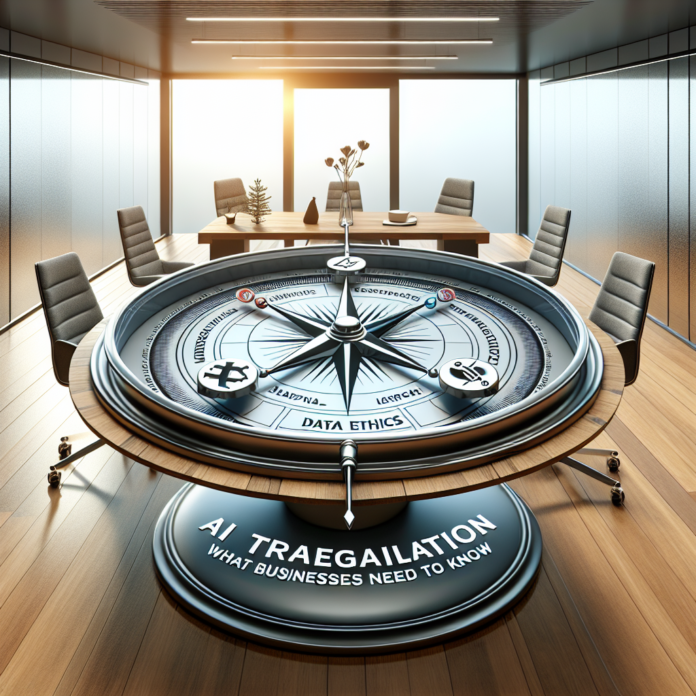
As artificial intelligence (AI) technologies continue to evolve and permeate various sectors, the need for effective governance and regulatory frameworks becomes increasingly crucial. Businesses must be aware of these evolving regulations to mitigate risks and capitalize on AI’s benefits responsibly.
Understanding AI Regulations
The landscape of AI regulations is characterized by rapid change, driven by advances in technology and increasing public awareness regarding ethical implications. AI regulations typically focus on several key areas:
Data Privacy: Ensuring that AI systems comply with data protection laws such as GDPR.
Accountability: Establishing clear lines of responsibility when AI systems make decisions.
Transparency: Mandating that AI systems can explain their decision-making processes.
Bias and Discrimination: Creating guidelines to prevent unjust outcomes generated by AI systems.
Key Regulations to Monitor
Businesses must stay informed about the following regulations and initiatives:
1. General Data Protection Regulation (GDPR)
The GDPR is a comprehensive regulation that governs data protection and privacy in the European Union. Businesses using AI must ensure compliance with GDPR principles, especially regarding the use of personal data.
2. AI Act (Proposed EU Regulation)
The European Commission has proposed the AI Act, which aims to regulate high-risk AI applications. Businesses will need to assess their AI systems against new risk categories outlined in the proposal.
3. National AI Strategies
Many countries are developing their own AI strategies, which encompass ethical guidelines and regulatory frameworks to foster responsible AI development and use. Understanding national policies is crucial for companies operating globally.
Best Practices for Compliance
To navigate the complexity of AI regulations effectively, businesses can adopt several best practices:
Conduct Risk Assessments: Regularly assess the risks associated with AI applications within your organization.
Implement Data Governance: Establish robust data governance practices to manage data privacy and compliance issues.
Train Employees: Ensure that your team is well-informed about compliance responsibilities and ethical AI use.
Engage with Regulators: Maintain open lines of communication with regulatory bodies to stay updated on changes in legislation.
Conclusion
Navigating AI regulations is an essential aspect of responsible business conduct in today’s technology-driven economy. By staying informed, adopting best practices, and proactively managing compliance, businesses can harness the full potential of AI while mitigating risks. The future of AI governance is still unfolding, and businesses must be ready to adapt and evolve with it.
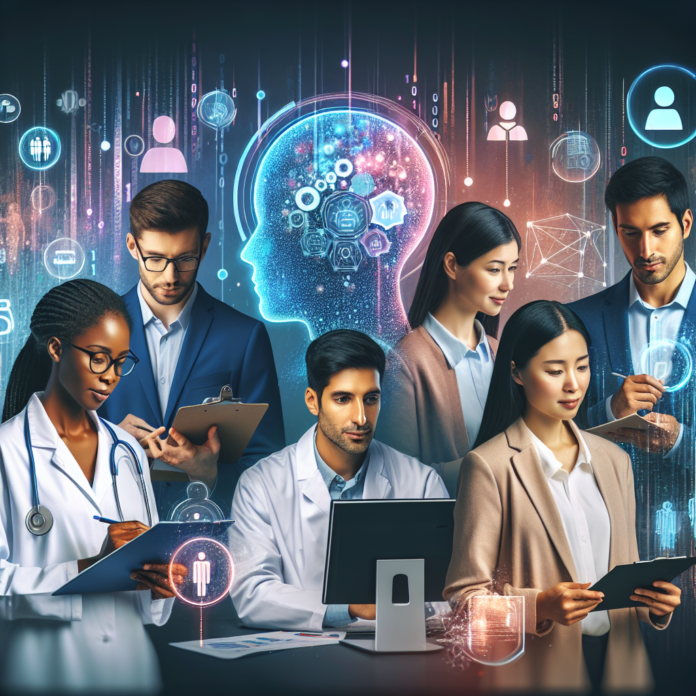
Artificial Intelligence (AI) is transforming various sectors, including healthcare, finance, and entertainment. However, there is an increasing concern about the biases inherent in AI systems. These biases often stem from the data used to train these models. Understanding AI bias is crucial for developing fair and equitable systems that serve all segments of society.
What is AI Bias?
AI bias occurs when an AI system produces results that are systematically prejudiced due to erroneous assumptions in the machine learning process. This can manifest in several ways, including:
Discrimination against certain demographic groups
Reinforcement of stereotypes
Inaccurate predictions or recommendations
The Role of Data in AI Bias
The quality and diversity of the data used to train AI models are pivotal in determining the outcomes of these systems. If the training data lacks diversity, the AI may learn to associate certain features with specific groups, leading to biased outcomes. For example:
A facial recognition system trained predominantly on lighter-skinned individuals may struggle to accurately identify darker-skinned individuals.
An AI hiring tool that only analyzes data from a specific demographic may overlook qualified candidates from diverse backgrounds.
The Importance of Diversity in Data
Diverse data sets are essential for creating responsible and effective AI systems. Here’s why:
Fairness: A diverse data set ensures that all groups are represented, helping to avoid skewed outcomes that harm marginalized communities.
Performance: More inclusive data can lead to improved model accuracy, making AI systems more reliable and pertinent in real-world applications.
Trust: Transparency and fairness in AI systems promote trust among users and stakeholders, facilitating wider acceptance and adoption.
Strategies for Ensuring Diversity in Data
Developers and data scientists can adopt several strategies to enhance diversity in data:
Perform rigorous audits of training data to identify potential biases.
Collaborate with diverse teams to gain various perspectives during the model development process.
Increase the volume of data collected from underrepresented groups to create a more balanced dataset.
Conclusion
As AI continues to permeate various aspects of our lives, understanding and addressing AI bias becomes increasingly important. Emphasizing diversity in data is not just a technical challenge; it is a moral imperative that impacts the fairness and effectiveness of AI systems. By committing to diverse and representative data practices, we can build AI technologies that truly benefit society as a whole.
The News Gazette Your article about Vietnam veterans was appreciated by me. Many of us had a variety of reactions while serving and after returning home. While being processed out, I was told if we where in uniform to expect trouble. Kent State had occurred recently and those against the war were looking for G.I.’s at the airport waiting to fly home.
Many years after, there was still a stigma. While in college, many of us stood out due to our age, attitude, demeanor. Those that didn’t like the war that held places of authority and some students found us worthy of ridicule. Unless we would show contrition for our past deeds, we where less than good people.
We did what the leaders of our country, and those that elected those professional politicians of both parties, told us was what was our duty, what was in the best interest of our country.
The Philosophy Behind Strict Enforcement
Strict enforcement policies prioritize adherence to laws and regulations over flexibility or discretion. Proponents argue that uncompromising enforcement:
Ensures fairness by treating everyone equally under the law.
Deters criminal or illegal activity through clear consequences.
Maintains societal order and trust in institutions.
However, critics warn that rigid enforcement can disproportionately affect vulnerable populations, create systemic inequities, and strain community relationships.
Real-World Impacts
Criminal Justice: Policies such as zero-tolerance policing have been linked to overcrowded prisons and heightened tensions between law enforcement and communities. Studies suggest that communities experiencing aggressive enforcement often face higher rates of mistrust and civil unrest.
Immigration Enforcement: Strict border and immigration policies can lead to family separations, economic disruptions, and humanitarian challenges. Advocates argue for enforcement balanced with humane treatment to protect human rights.
Regulatory Enforcement: In sectors like finance, healthcare, and environmental protection, rigid enforcement can prevent violations but sometimes hampers innovation or disproportionately punishes minor infractions.
Now we have federal agents dealing with the immigration laws, following the orders given to them to enforce laws that both parties for years have ignored out of fear of making a decision, or to reward special interest with cheap labor. They are being treated as we were for things beyond their control. Both parties have had control of all three branches of government many times. They could have changed the laws.
Protest those so-called leaders in Washington, both parties, who create solutions for problems that don’t exist, while pitting citizens against citizens, ignoring real problems. DAVE CRAIG Buena Vista
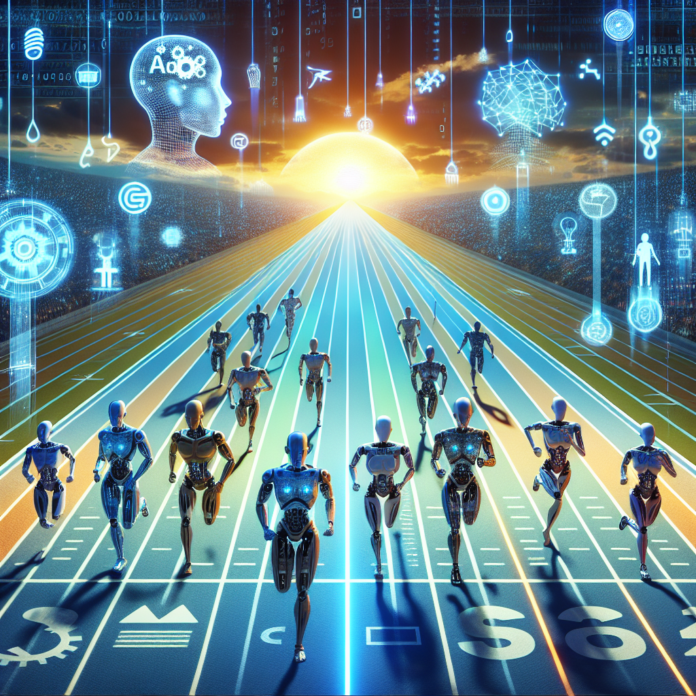
The rapid advancements in artificial intelligence (AI) have sparked an intense competition among nations and corporations. Dubbed the “AI arms race,” this phenomenon is reshaping industries, altering job markets, and even redefining global power dynamics. In this article, we will explore the key players in this race, their contributions, and the implications for the future of humanity.
Key Players in the AI Arms Race
The landscape of machine intelligence is dominated by several major players, each striving to push the boundaries of what AI can achieve:
United States: Home to leading tech giants like Google, Microsoft, and Amazon, the U.S. is at the forefront of AI research and development. Investments in AI startups and significant funding through grants are also driving innovation.
China: With substantial government backing, China is aggressively investing in AI. Initiatives like the “New Generation Artificial Intelligence Development Plan” aim to make China the global leader in AI by 2030.
European Union: The EU is focusing on ethical AI, promoting regulations to ensure responsible development and implementation. While perhaps lagging in speed, the EU aims for a more sustainable and universally beneficial AI ecosystem.
Startups and Tech Startups: Numerous startups worldwide are carving niches in areas like healthcare, finance, and transportation. Companies such as OpenAI, DeepMind, and many others are driving breakthroughs in machine learning and neural networks.
Technological Innovations Fueling the Race
Innovations in several areas of technology are propelling the AI arms race:
Machine Learning: This subset of AI has enabled systems to learn from data, improving their performance over time. Algorithms such as deep learning and reinforcement learning are finding applications in diverse fields.
Natural Language Processing (NLP): Technologies like GPT models and chatbots are transforming how machines understand and generate human language, leading to more intuitive user interfaces and applications.
Computer Vision: Advancements in image and video analysis are driving innovations in sectors such as autonomous vehicles, healthcare diagnostics, and security.
The Implications of the AI Arms Race
The growing AI arms race raises several critical concerns:
Ethics and Regulation: As AI capabilities expand, ensuring ethical use and preventing biases will be paramount. Governments must establish frameworks to regulate AI development.
Job Displacement: Automation driven by AI may lead to significant job losses across various sectors, necessitating a proactive approach to workforce retraining and support.
Security Risks: The vast potential of AI technologies can be exploited, raising concerns over national security, cyber warfare, and the use of AI in military applications.
Conclusion
The AI arms race shows no signs of slowing, with multiple nations and corporations vying for supremacy in machine intelligence. The outcomes of this competition will shape the future of humanity, presenting both extraordinary opportunities and significant challenges. As we advance, it will be crucial to foster collaboration and ethical frameworks to ensure the responsible development of AI technologies.
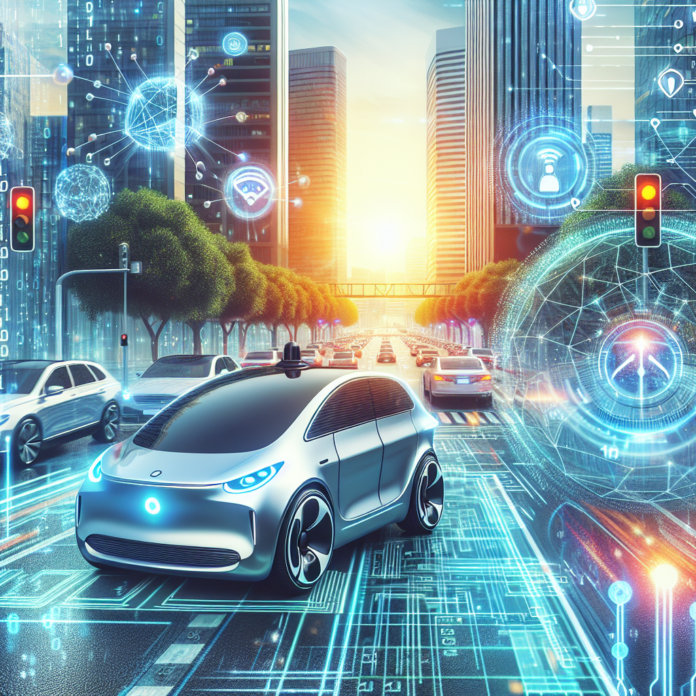
Autonomous vehicles (AVs) are no longer a concept of the distant future; they are rapidly becoming a reality.
Major automobile manufacturers and tech companies alike are investing billions into the development of AV technology.
The objective is clear: to create vehicles that can navigate without human intervention, improving safety, efficiency,
and overall driving experience.The Role of Artificial IntelligenceAt the heart of autonomous vehicles lies artificial intelligence (AI). AI technologies enable these vehicles to perceive,
analyze, and respond to their environment in real time.
The integration of AI into AV systems entails several critical components:
Computer Vision: Using cameras and sensors, AI enables vehicles to identify
objects, pedestrians, and road conditions.
Machine Learning: AVs continuously learn from data inputs, adapting
to new scenarios and improving decision-making processes over time.
Path Planning: AI algorithms determine the most efficient and safest routes,
considering traffic patterns and road conditions.
Predictive Analytics: AI predicts the behavior of other road users, allowing AVs
to make informed decisions that enhance safety.
Challenges Ahead
Despite the promising advancements, the road to fully autonomous vehicles is fraught with challenges.
Some of these include:
Regulatory Hurdles: Governments worldwide are still developing regulations
to govern the use of AVs on public roads.
Safety Concerns: Public trust in AV technology needs to be earned, especially
following accidents involving autonomous systems.
Technological Limitations: There are still technical limitations that need to
be addressed, including handling complex driving scenarios and weather conditions.
The Future Landscape
As technology continues to evolve, the future of autonomous vehicles looks promising. The incorporation
of AI not only fuels advancements in AVs but also brings new opportunities for enhancing urban mobility,
reducing traffic congestion, and improving accessibility for all.Collaboration between tech companies, automotive manufacturers, and regulatory bodies will be essential
to navigate the complexities involved in bringing AVs to the masses.
Love movies? Live for TV? USA TODAY’s Watch Party newsletter has all the best recommendations, delivered right to your inbox. Sign up now and be one of the cool kids.
You’ve got more than a month and a half to get busy and get watching the best picture contenders, those films with all the top acting talent, and more before the big night: Conan O’Brien hosts the 98th Oscars on March 15, airing live on ABC and Hulu (7 p.m. ET/4 PT). Many, like “Marty Supreme” and “Hamnet,” are still in theaters but quite a few are available to watch at home via streaming services and on-demand platforms, and more to come as we get closer to the Academy Awards ceremony.
Here are 12 nominated movies to watch from your couch right now:
‘Bugonia’
Yorgos Lanthimos’ gonzo comedy/psychological romp, which scored nods for best picture and adapted screenplay, offers up dark-web weirdness and sci-fi paranoia. Best actress nominee Emma Stone plays a pharmaceutical CEO who is kidnapped by a pair of conspiracy-theorist cousins (Jesse Plemons and Aidan Delbis) who believe she’s an alien bent on world domination, leading to a battle of wills and a wildly chaotic climax.
Pixar is back in the Oscar category it’s owned over the years – best animated film – with this family-friendly sci-fi adventure that throws back to the 1980s days of “Explorers” and “The Last Starfighter.” A young boy (voiced by Yonas Kibreab) yearns to be abducted by aliens, actually gets his wish and becomes BFFs with a blobby alien. If you’re catching up on nominated films with your youngsters, it’s best for any kids who’ve never seen “E.T.”
Joseph Kosinski’s Formula 1 movie came out of nowhere to score four Oscar nominations, including best picture. As an aging driver-for-hire on an underdog racing team, Brad Pitt brings plenty of personality – and vroom-vroom steeliness – to this four-wheeled crowd-pleaser. There’s macho panache and white-knuckle action sequences aplenty as Pitt’s eccentric Formula 1 veteran plays reluctant mentor to a hotshot rookie (Damson Idris).
Guillermo del Toro’s thoughtful and moving adaptation of Mary Shelley’s legendary work made the best picture cut as part of its nine Oscar nominations. Victor Frankenstein (Oscar Isaac) is the egotistical scientist playing God and creating life with a Creature (supporting actor contender Jacob Elordi) made from discarded human parts. Come for the gothic majesty, stay for Elordi’s stunning and emotive performance as the Creature tries to be human in an inhuman world.
A frazzled and stressed Rose Byrne definitely earns her best actress nomination in this dark comedy. She plays a therapist forced to navigate an increasingly bonkers and exhausting series of unfortunate events. After her apartment ceiling collapses in a water accident, she moves with her sick daughter (Delaney Quinn) to a nearby hotel, fosters a passive-aggressive relationship with her own therapist (Conan O’Brien) and is shocked when a new client (Danielle Macdonald) bolts in the middle of a session without her baby.
Jafar Panahi’s thriller, up for best international film and original screenplay, is an unforgettable juggling of serious moral questions and clever screwball comedy. Following an incident where a family hits a dog with its car, a mechanic (Vahid Mobasseri) believes the driver (Ebrahim Azizi) was his peg-legged torturer in an Iranian jail and kidnaps him, then brings in other former political prisoners who have to figure out if he’s their tormentor and what to do with him in a breathtaking modern fable.
Catchy music, anime style and some horror combine in this kid-friendly action comedy, the Oscar nominee that not only your kids have seen but also absolutely love. When the members of Korean pop trio Huntrix aren’t busy being mega-stars, they protect their fans from supernatural dangers. But dark secrets and hormones become issues, thanks to their latest enemy: demons disguised as a hunky boy band. The earworming hit “Golden” is a no-brainer in both original song and animated film – its chances of winning a couple Oscars are, yes, pretty golden.
Up for 13 Oscars, including best picture, director Paul Thomas Anderson’s action dramedy casts best actor contender Leonardo DiCaprio as a scruffy former demolitions expert desperate to find his teen daughter (Chase Infiniti) with an old enemy (Sean Penn) in hot pursuit. A high-minded, resonant piece of world-building inspired by Thomas Pynchon’s “Vineland,” “One Battle” is full of assorted revolutionaries and villains, featuring a cast of standouts as well as themes and political satire that feel of the moment.
Supporting actor nominee Stellan Skarsgård gives a masterclass, Norwegian style, in Joachim Trier’s touching dramedy. He stars as an aging filmmaker aiming to make a heartfelt movie tying into the family’s traumatic history that’ll be his comeback. However, because he prioritized art over loved ones, he’s now estranged from his daughters: a determined stage actress (Renate Reinsve) and a one-time child star (supporting actress competitor Inga Ibsdotter Lilleaas) who’s now trying hard to mend her clan’s broken fences.
Is it a gangster film? Heck, yeah! Is it a vampire movie? You bet! Did it just obliterate the Oscar nominations record? That, too! Ryan Coogler pulls off something devilishly spectacular with this genre-bending, 1930s-set flick, which scored a monumental 16 nods. Best actor nominee Michael B. Jordan is fantastic playing double duty as twins who come home to Mississippi and have their party crashed by a band of charismatic bloodsuckers. Coogler also tackles racism and cultural appropriation in a wondrous fright fest – buoyed by supporting actor and actress nominees Delroy Lindo and Wunmi Mosaku – that’s mesmerizing in its filmmaking and meaningful in its message.
Set in the early 19th century, the absorbing and thoughtful period drama – and best picture nominee – stars Joel Edgerton as a quiet logger working on building the railroad in the Pacific Northwest whose job keeps him away for long periods from his wife (Felicity Jones) and child. Tragedies and a changing America test his mettle as he struggles to keep living his life and moving forward.
Supporting actress nominee Amy Madigan is one of many reasons to watch Zach Cregger’s follow-up to his deliciously twisty “Barbarian.” There are metaphors aplenty to interpret in a thriller about a town that goes bonkers when 17 kids go missing in the middle of the night and everybody points to their teacher (Julia Garner). The provocative, genre-defying horror flick boasts unhinged gore, a delightfully dark sense of humor, Madigan as the creepiest aunt ever, and a crowd-pleasing finale.
IntroductionThe integration of Artificial Intelligence (AI) into the workplace is not just a trend—it’s a fundamental shift that’s transforming the way we work. As AI technologies continue to evolve, they are altering job descriptions, required skill sets, and the overall landscape of various industries.The Role of AI in the WorkplaceAI is playing an increasing role in various aspects of the workplace. Here are some areas AI is impacting:
Automation: Routine and repetitive tasks are increasingly being automated, allowing employees to focus on more strategic activities.
Data Analysis: AI-driven tools can analyze large datasets quickly and accurately, providing insights that inform business decisions.
Customer Service: Chatbots and virtual assistants are revolutionizing customer interactions, providing 24/7 support and improving efficiency.
Shifting Skill Sets
As AI continues to change the workplace, the skills needed to thrive within it are evolving as well. Here are key areas where skills will need to shift:
Technical Skills: Familiarity with AI tools and technologies will become essential for many roles, from data science to marketing.
Soft Skills: Skills like problem-solving, creativity, and emotional intelligence will become increasingly important as AI takes over routine tasks.
Continuous Learning: The rapid pace of AI development means that workers must prioritize lifelong learning and adaptability.
Emerging Job Roles
While some jobs may be threatened by AI, many new roles are being created. Here are a few examples:
AI/Machine Learning Specialists: Professionals who design and develop AI systems and algorithms.
Data Analysts: Experts who interpret complex datasets to inform strategic decisions.
Ethics Compliance Managers: Roles focused on the moral implications of AI deployment.
Conclusion
The future of work in an AI-driven world is both exciting and challenging. By embracing change and prioritizing skill development, individuals and organizations can better navigate this transformation. Preparing for the future means not only adapting to technological advancements but also redefining what it means to work effectively in a collaborative human-AI environment.Stay-tuned with us on our website
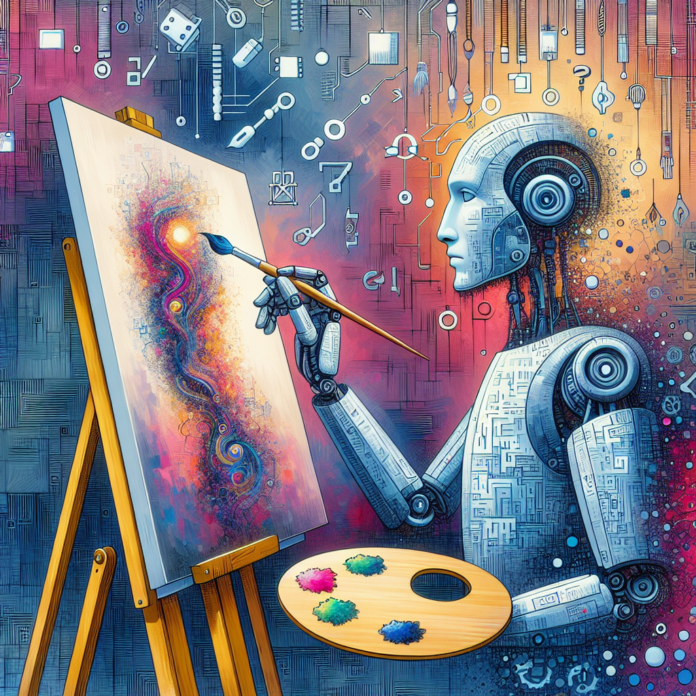
As technology progresses, the intersection of artificial intelligence (AI) and creativity raises intriguing questions about the nature of art itself. Can machines create art? If so, what does that mean for human artists and the notion of creativity?
The Rise of AI in Art
AI has entered the realm of creativity, generating paintings, music, poetry, and even video games. Tools like DeepArt and OpenAI’s DALL-E illustrate how algorithms can produce aesthetically pleasing visuals from a simple text prompt. These advancements challenge our traditional understanding of the artistic process.
What Does It Mean to Create?
To explore whether machines can create art, we must first define what ‘creation’ entails. Traditionally, creating art involves emotions, experiences, and a human touch. AI, however, operates on data and patterns, often mimicking styles rather than expressing individuality or emotion.
The Debate: Can Machines Be Creative?
Proponents argue that AI-generated art showcases a new form of creativity, one that highlights collaboration between human and machine. For instance, artists can use AI as a tool to inspire unique pieces, pushing the boundaries of their imagination.
Critics contend that while AI can produce art-like outputs, it lacks true creativity or emotional depth. Machines do not experience joy, sorrow, or cultural context; they simply process information based on pre-existing patterns.
Notable Examples
One of the most famous examples of AI-generated art is the portrait “Edmond de Belamy,” created by the French art collective Obvious. This piece sold at auction for over $432,000, prompting discussions about ownership, value, and the role of the artist.
The Future of AI in Art
The future holds exciting possibilities. As AI continues to evolve, it may not only assist in creating art but also redefine the relationship between artist and audience. The collaboration between humans and AI could lead to novel art forms and experiences.
Conclusion
While machines may never fully replicate the depth of human creativity, they can augment our artistic endeavors and challenge our perceptions of what art can be. The dialogue surrounding AI and creativity will likely continue to grow, shaping the future of both technology and art.
For more information, continue to visit our website
Websites store cookies to enhance functionality and personalise your experience. You can manage your preferences, but blocking some cookies may impact site performance and services.
Essential cookies enable basic functions and are necessary for the proper function of the website.
Name
Description
Duration
Cookie Preferences
This cookie is used to store the user's cookie consent preferences.
30 days
These cookies are needed for adding comments on this website.
Name
Description
Duration
comment_author
Used to track the user across multiple sessions.
Session
comment_author_email
Used to track the user across multiple sessions.
Session
comment_author_url
Used to track the user across multiple sessions.
Session
These cookies are used for managing login functionality on this website.
Name
Description
Duration
wordpress_logged_in
Used to store logged-in users.
Persistent
wordpress_sec
Used to track the user across multiple sessions.
15 days
wordpress_test_cookie
Used to determine if cookies are enabled.
Session
Statistics cookies collect information anonymously. This information helps us understand how visitors use our website.
Google Analytics is a powerful tool that tracks and analyzes website traffic for informed marketing decisions.
Contains information related to marketing campaigns of the user. These are shared with Google AdWords / Google Ads when the Google Ads and Google Analytics accounts are linked together.
90 days
__utma
ID used to identify users and sessions
2 years after last activity
__utmt
Used to monitor number of Google Analytics server requests
10 minutes
__utmb
Used to distinguish new sessions and visits. This cookie is set when the GA.js javascript library is loaded and there is no existing __utmb cookie. The cookie is updated every time data is sent to the Google Analytics server.
30 minutes after last activity
__utmc
Used only with old Urchin versions of Google Analytics and not with GA.js. Was used to distinguish between new sessions and visits at the end of a session.
End of session (browser)
__utmz
Contains information about the traffic source or campaign that directed user to the website. The cookie is set when the GA.js javascript is loaded and updated when data is sent to the Google Anaytics server
6 months after last activity
__utmv
Contains custom information set by the web developer via the _setCustomVar method in Google Analytics. This cookie is updated every time new data is sent to the Google Analytics server.
2 years after last activity
__utmx
Used to determine whether a user is included in an A / B or Multivariate test.
18 months
_ga
ID used to identify users
2 years
_gali
Used by Google Analytics to determine which links on a page are being clicked
30 seconds
_ga_
ID used to identify users
2 years
_gid
ID used to identify users for 24 hours after last activity
24 hours
_gat
Used to monitor number of Google Analytics server requests when using Google Tag Manager