Home Blog Page 88

The Lincoln Lawyer Season 5 Officially Confirmed by Netflix

Los Angeles’s hottest defense attorney rides on.

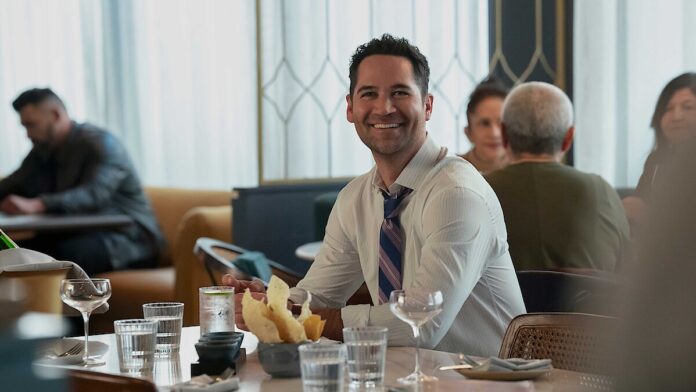
Mickey Haller (Manuel Garcia-Rulfo) will climb into the backseat of his Lincoln Navigator for the fifth season of The Lincoln Lawyer. The legal drama, which follows the Haller and Associates team as they defend LA’s trickiest clients, has been renewed ahead of the launch of Season 4 on Feb. 5.

“We’re so excited to share the upcoming season with the audience on Feb. 5, and even more excited to share the news that we’re already hard at work on the next one,” creator/co-showrunner/executive producer Ted Humphrey and co-showrunner/executive producer Dailyn Rodriguez tell Tudum. “Season 4 is the most challenging and intensely personal journey we’ve taken Mickey Haller on yet, and we’re thrilled and grateful to be able to continue the ride in Season 5!”

Season 3 ended on a cliffhanger: Mickey was arrested for the murder of his former client Sam Scales. As Season 4 begins, the Lincoln lawyer is gearing up for the most challenging trial yet — his own. “If you look back at the show, it’s taken this very clear trajectory from a redemption story of a guy flying too close to the sun to being haunted by the sins of the past and now having all kinds of enemies he’s made conspire in a way to bring him down,” says Humphrey. “Season 4 almost takes us full circle back to a guy … feeling like he has to redeem himself again.”

Humphrey and Rodriguez add that Mickey’s experience — being wrongfully accused and put on trial for murder — fundamentally changes him. “What that change means to Mickey or how that change manifests itself in his life is obviously something we’re excited to explore going forward,” says Humphrey.

The fifth season will consist of 10 episodes, inspired by the seventh book in The Lincoln Lawyer series, Resurrection Walk, by author Michael Connelly. In addition to Garcia-Rulfo, The Lincoln Lawyer also stars Neve Campbell, Becki Newton, Jazz Raycole, Angus Sampson, and Cobie Smulders.

Season 4 of The Lincoln Lawyer pulls up

Relive All of the Twists and Turns in The Lincoln Lawyer

Join our website for cool news and cool tips

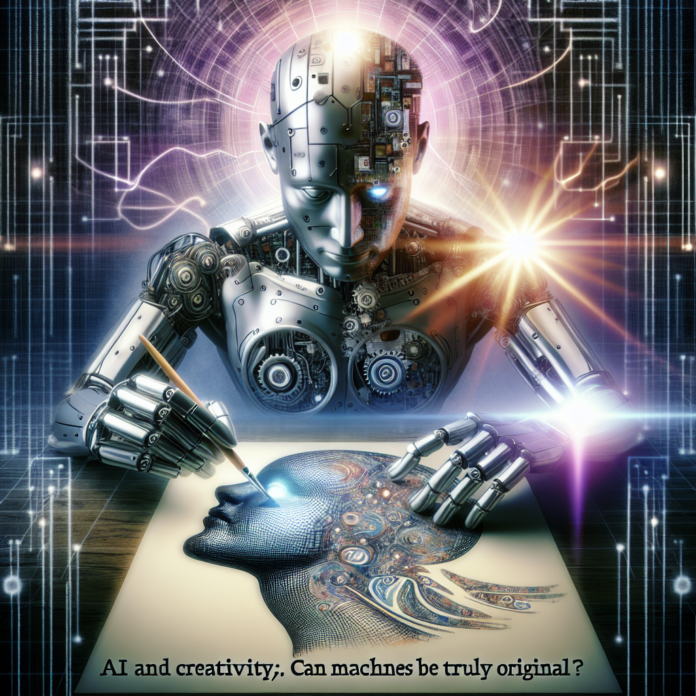
Can Machines Be Truly Original?

Artificial Intelligence (AI) has made significant strides in recent years, leading to intriguing questions about the nature of creativity and originality. Can machines, equipped with algorithms and vast datasets, produce creative works that rival those of human artists, musicians, and writers? This article explores the intersection of AI and creativity, shedding light on the nuances of machine-generated art.

Understanding Creativity

Traditionally, creativity has been seen as a uniquely human trait, characterized by an ability to generate novel ideas, solve problems, and express emotions. It involves intuition, experience, and a deep understanding of context. Creativity isn’t just about producing new works; it also encompasses originality, meaning, and cultural relevance.

How AI Approaches Creativity

AI systems employ algorithms to analyze vast amounts of data, allowing them to spot patterns and generate content. For example, AI can create paintings through neural networks like GANs (Generative Adversarial Networks) or compose music by learning from existing compositions. Although these outputs can be impressive, they often rely on existing work, raising questions of originality.

The Role of Data

AI’s creativity is typically derivative, grounded in the datasets used for training. By imitating existing styles and themes, AI can produce works that resemble human creations. However, critics argue that this imitation lacks true originality since AI does not possess consciousness or emotional experience.

Examples of AI-Generated Art

AI has already made waves in the art world. For instance, the painting “Portrait of Edmond de Belamy,” created by the Paris-based art collective Obvious, sold at auction for $432,500. Similarly, AI-generated music has garnered attention, with programs like OpenAI’s MuseNet able to compose in various styles. These examples show the potential of AI but also highlight the ongoing debate about the authenticity of such art.

Challenges and Limitations

Despite the advancements in AI, several challenges remain. Critics point out that AI lacks a genuine understanding of cultural significance, emotional depth, and the human experience. While AI can generate content that appears original, it cannot replicate the intent and emotion that often accompany human creativity.

The Future of AI and Creativity

As AI technology continues to evolve, collaboration between human artists and machines may redefine creativity. Instead of positioning AI as a replacement for human creators, it could serve as a tool to augment and inspire artistic endeavors. This partnership could lead to new forms of artistic expression that blend human intuition with machine learning capabilities.

Conclusion

The question of whether machines can be truly original remains open-ended. While AI can produce remarkable works that challenge our definitions of creativity, it is essential to recognize the unique qualities of human creativity that machines cannot fully replicate. Ultimately, AI might not achieve originality in the human sense, but it can still play a valuable role in the creative landscape.

For additional details, keep on visiting our website

Sheinelle Jones Reveals Exciting New Project Beyond the Show

Sheinelle Jones just gave Today fans an exciting update on one of her previously announced projects.

Back in September 2024, Jones announced that her debut book, Through Mom’s Eyes: Simple Wisdom From Mothers Who Raised Extraordinary Humans, would be released in April 2025. The book’s drop was twice delayed as Jones took time away from Today following her husband Uche Ojeh’s death in May 2025. (Jones returned to the NBC morning show in September 2025.)

In a Friday, January 30, Instagram post, Jones revealed that fans won’t have to wait too much longer to read her book. “Hi everyone! I wanted to share an update with you.

��

My book, THROUGH MOM’S EYES, is officially coming out on April 14, 2026,” she announced. “Thank you all for being so understanding and supportive- especially if you preordered it, and watched the publication date change, so I could focus on my family.”

She continued, “Years ago, I set out to write this book about motherhood and what I’ve learned from women I admire — and you can probably imagine how it felt as my life got turned upside down ‘while’ I was writing it. I poured my heart into this book and I can’t wait to share it with you in April. You’re going to love what the women in this book have to say. It’ll make you laugh one moment and tear up too! It’s a beautiful combination of wisdom & humor.”

Jones also thanked fans in the post’s video. “I was so excited about this last year. Do you guys remember? And obviously, life started life-ing, and I didn’t want to postpone it, but I had to, and it was the right thing to do,” she stated. “And so, now, it is official. April 14, 2026, in time for this Mother’s Day. Yeah, it’s happening. It already meant the world to me, and now, as you can imagine, it means a lot.”

She concluded the video by saying, “I had to rework it just a little bit in the front because, obviously, my life changed, but I hope you’ll preorder it if you haven’t already, and more to come. But April 14, it’s happening!”

Fans shared their excitement for the book’s release in the post’s comments. “Nice! Are you narrating the audio version??

☺

,” one person asked, to which Jones replied, “Yes! :-).” Another wrote, “It’s happening!

��
��
��
��
��
��
��
��

.”

Someone else shared, “We

❤

you so much! Can’t wait!” A different user wrote, “So glad you are thriving back at work!!” A separate person posted, “I am anxious to read it! I am sure it will be filled with wonderful words of insight and wisdom from mothers who have done it well, just like I know you are doing with your own children.

��
��

.”

Through Mom’s Eyes features heartfelt and candid interviews between Jones and the mothers of several famous faces, including Lin-Manuel Miranda, Lady Gaga, Stephen Curry, Shaquille O’Neal, and more.

“If you are a mom, a grandmom, an auntie, a big sister, a cousin, if you take care of any children — and I say children ages 0 to even 62, because mothering never stops —this is my love letter to you,” Jones said on a September 2024 episode of Today.

Today, Weekdays, 7 a.m./6c, NBC

Read the latest entertainment news on TV Insider.

More related updates, Click Here

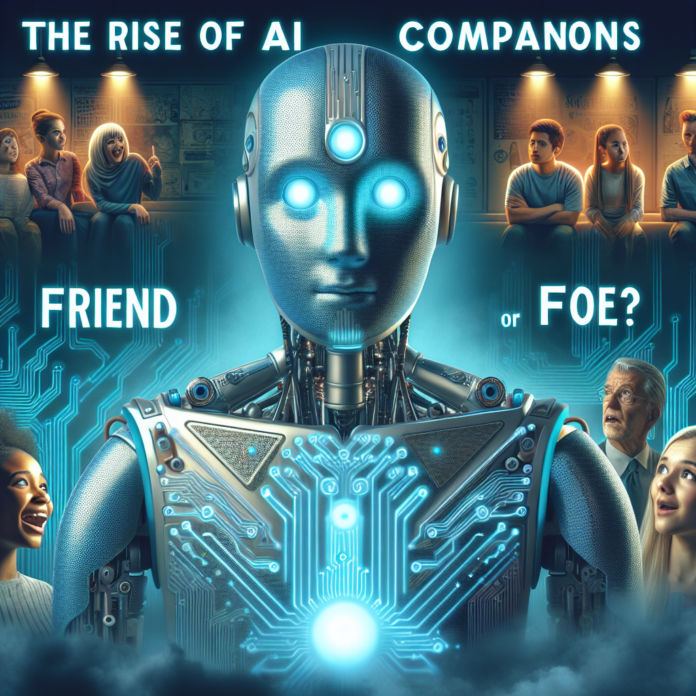
The Rise of AI Companions: Friend or Foe?

Introduction

In recent years, artificial intelligence (AI) has evolved from a niche technology to a ubiquitous part of our daily lives. Among its many applications, AI companions — virtual assistants, chatbots, and emotional support robots — have gained significant traction. But as their presence grows, so does the debate: Are AI companions friends that enhance our lives, or foes that threaten our humanity?

The Benefits of AI Companions

Supporters of AI companions highlight several key benefits:

  • Emotional Support: Many AI companions are designed to offer empathetic interaction, providing comfort to those who may feel isolated or lonely.
  • Accessibility: For individuals with disabilities, AI companions can provide assistance in ways that enhance independence and quality of life.
  • Education and Skill Development: AI tutors can offer personalized learning experiences, helping users acquire new skills at their own pace.
  • Convenience: Smart assistants streamline daily tasks, from managing schedules to controlling smart home devices, thus saving time and effort.

The Risks of AI Companions

Conversely, critics argue that the increasing reliance on AI companions poses several risks:

  • Social Isolation: As people turn to AI for companionship, there is a concern that genuine human interactions may decline, leading to increased loneliness.
  • Privacy Concerns: Many AI companions collect vast amounts of personal data, raising questions about data security and user privacy.
  • Job Displacement: As AI becomes more capable, there is a fear that it could replace jobs, particularly in industries that involve routine interactions.
  • Emotional Deception: Users may form emotional attachments to AI, which could lead to disappointment when they realize these entities lack genuine understanding and empathy.

The Future of AI Companions

As technology continues to advance, the role of AI companions is likely to evolve. It is vital for society to engage in thoughtful dialogue about the implications of these technologies. The design and implementation of AI companions should prioritize ethical considerations, user safety, and social well-being.

Conclusion

Ultimately, whether AI companions are viewed as friends or foes depends significantly on how they are integrated into our lives. With responsible development and open discussions about their limitations and potentials, AI companions could enhance our existence — making technology not just a tool but a meaningful part of our social landscape.

Join our website for cool news and cool tips

Epstein Files Ignite Pizzagate Resurgence in 2026

Key Points

It began with a word as innocuous as dinner: pizza. In 2016, during the heated U.S. presidential election, a handful of casual references to pizza in hacked emails from John Podesta, Hillary Clinton’s campaign chairman, were plucked from their ordinary context and transformed into the foundation for one of the most persistent conspiracy theories of the digital age—Pizzagate. According to BBC, the theory falsely alleged that Democratic elites were running a child trafficking ring out of a Washington, D.C. pizzeria called Comet Ping Pong. The idea was not only baseless, but spectacularly resilient, weaving symbols and emotions into a narrative that refused to die, no matter how thoroughly it was debunked.

The story took a dangerous turn in December 2016. Edgar Welch, a father of two from North Carolina, drove hundreds of miles to Comet Ping Pong, armed with a rifle and convinced by internet rumors that children were imprisoned below the restaurant. He fired shots inside the pizzeria, terrifying staff and customers. As reported by Wikipedia and multiple news outlets, there was no basement, no secret tunnels, and no hostages—just a shaken community and a myth that had leapt from the screen into real life. Yet, for many in the conspiracy community, this violent act was not the end but a new chapter. The absence of proof became, in their eyes, further proof of a cover-up.

Pizzagate’s peculiar power lay not in the credibility of its details, but in its ability to turn the mundane—pizza, emails, emojis—into supposed sinister symbols. As Herzindagi and BBC have both noted, the human mind is wired to seek patterns, and, in the digital age, those patterns can spread at breakneck speed. Social media platforms like Reddit, YouTube, 4chan, and Facebook became breeding grounds for the theory, with explainers, livestreams, and sleuth threads building a vast, ever-evolving architecture of belief. Even denials and debunkings seemed only to feed the fire; skepticism was recast as complicity, and every attempt to set the record straight was twisted into evidence of a broader conspiracy.

The real-world consequences were severe. The owner and employees of Comet Ping Pong endured months of threats and intimidation, their lives upended by a rumor that refused to fade. According to BBC, years later, staff still receive threats, and similar restaurants have been targeted. The theory’s legacy metastasized into other movements, including QAnon and Frazzledrip, and helped popularize a culture of digital detective work that prized intuition over evidence.

Fast forward to early 2026, and Pizzagate is back in the headlines. The catalyst this time? The release of thousands of pages of Jeffrey Epstein’s court documents. As Herzindagi reported, investigators and amateur sleuths alike have pored over the files, noting with fascination—and suspicion—that the word ‘pizza’ appears more than 900 times. Emails referencing a “headcount for pizza,” invitations to “who wants pizza in Austin,” and even odd comments like “butt cake sounds great, but I need pizza” have been seized upon as proof of hidden meaning. The frequency of these references, coupled with Virginia Giuffre’s accounts of Epstein’s strict dietary habits, has fueled speculation that “pizza” is code for something far more sinister.

Online, the response has been frenzied. As Herzindagi documented, X (formerly Twitter) and TikTok have erupted with users declaring, “Pizzagate is 100% real. All roads lead back to that little pizza parlour in DC and the man named James Alefantis.” Others have gone further, tying the new documents to old claims and insisting that coded language and secret meetings are hidden in plain sight. Elon Musk’s cryptic posts on X have only amplified the noise, giving fringe theories a wider audience and lending them a veneer of credibility.

Yet, as Wikipedia and BBC emphasize, Pizzagate has been thoroughly debunked by law enforcement and investigative journalists. There is no evidence of a trafficking ring, no credible connection between pizza references and criminal activity, and no basis for the theory’s central claims. The pizza in the emails—whether in Podesta’s or Epstein’s—remains just that: pizza. Nevertheless, the structure of suspicion that Pizzagate helped build remains stubbornly intact. Symbols are prized over facts, and doubt is more persuasive than dialogue. In this environment, almost any word, emoji, or menu item can be reinterpreted as a clue, and interpretation itself becomes a form of belief.

The persistence of Pizzagate raises troubling questions about the nature of digital misinformation. As Herzindagi points out, the business model of social media platforms inadvertently rewards outrage and emotional engagement, keeping users online longer with sensational stories—true or not. Even videos debunking the theory contribute to its spread by driving up engagement. The result is an environment where conspiracy theories can mutate and resurface with each new scandal or data leak, recruiting a new generation of believers who may have no memory of the original events.

But it’s not all doom and gloom. There is a growing movement to fight back—not by censorship, but by teaching discernment. Digital literacy programs are being developed in schools, and journalists, educators, and even former conspiracy theorists are working to explain not just why these theories are false, but how the rabbit holes work. As one commentator put it, “We live in the aftermath of imagination untethered from evidence.” The goal, then, is not simply to debunk, but to build resilience—to help people recognize patterns, question emotional triggers, and pause before sharing outrage.

The cost of these conspiracies is real. Innocent people, like the staff of Comet Ping Pong, continue to suffer harassment. Resources are diverted from serious investigations, and real victims risk being drowned out by the noise. Yet the legacy of Pizzagate need not be its tenacity, but our response to it. By understanding how such a flimsy hypothesis gained traction, and by fostering a culture of critical thinking and empathy, it’s possible to loosen the grip of even the stickiest myths.

Perhaps, in the not-too-distant future, a reference to pizza in an email will once again make people hungry, rather than fearful.

More related updates, Click Here

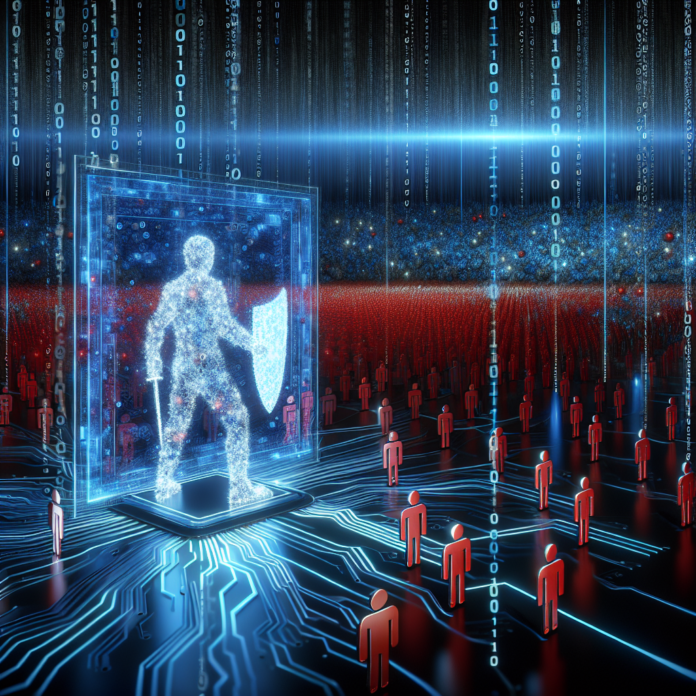
A New Era of Threats and Defenses

<p>As technology continues to evolve, the intersection of cybersecurity and artificial intelligence (AI) presents both unprecedented challenges and innovative solutions. With increasingly sophisticated cyber threats, organizations must adapt their defenses to protect sensitive information and maintain trust with stakeholders.</p>
<h2>The Evolution of Cyber Threats</h2>
<p>The digital landscape has dramatically changed over the past few decades, leading to new types of cyber threats. Traditional methods of attack have become obsolete, as cybercriminals leverage AI technologies to enhance their strategies. AI-driven attacks can include:</p>
<ul>
    <li><strong>Automated Phishing:</strong> Cybercriminals use AI to create highly convincing phishing emails that can fool even the most vigilant recipients.</li>
    <li><strong>Malware Development:</strong> AI algorithms can generate tailored malware that adapts to defenses, increasing the chances of successful infiltration.</li>
    <li><strong>Social Engineering:</strong> AI systems analyze vast amounts of data from social media to craft personalized attacks that manipulate targets.</li>
</ul>
<h2>AI-Enhanced Defenses</h2>
<p>While AI has contributed to the sophistication of attacks, it also offers a new wave of defensive capabilities. Organizations are increasingly adopting AI-based solutions to protect against these emerging threats:</p>
<ul>
    <li><strong>Threat Detection:</strong> AI can analyze network traffic in real time, identifying unusual patterns indicative of a cyber threat.</li>
    <li><strong>Incident Response:</strong> Advanced machine learning algorithms can automate responses to breaches, significantly reducing response times.</li>
    <li><strong>Vulnerability Management:</strong> AI systems can continuously assess and prioritize vulnerabilities based on potential impact, enabling proactive risk management.</li>
</ul>
<h2>Challenges and Considerations</h2>
<p>Despite the potential of AI in cybersecurity, organizations face challenges in implementing AI solutions effectively:</p>
<ul>
    <li><strong>Skill Gap:</strong> There is a shortage of qualified cybersecurity professionals who can manage AI technologies.</li>
    <li><strong>Data Privacy:</strong> The use of AI requires access to vast amounts of data, raising concerns about privacy and compliance with regulations.</li>
    <li><strong>False Positives:</strong> Over-reliance on AI tools may lead to false positives, potentially causing operational disruptions.</li>
</ul>
<h2>Looking Ahead</h2>
<p>The relationship between cybersecurity and AI will continue to evolve. As cyber threats become more advanced, organizations must adopt a proactive approach that includes AI-powered tools. Collaboration between tech companies, government agencies, and educational institutions will be essential in developing effective strategies to combat the rise of AI-driven threats.</p>
<footer>
    <p>&copy; 2023 Cybersecurity Insights. All rights reserved.</p>
</footer>

More related updates, Click Here

Feel free to mix and match or modify these suggestions to fit your specific angle!

Feel Free to Mix and Match Ideas!

In a world overflowing with ideas, inspiration can come from anywhere. The beauty of creativity lies in the ability to combine different elements to create something entirely new. Whether you’re looking to enhance your personal projects, brainstorm for a new business, or simply explore your creativity, mixing and matching suggestions can lead you to unexpected outcomes.

Why Mix and Match?

Combining elements from various sources allows for:

  • Innovation: New ideas often emerge when you combine different perspectives.
  • Diversity: Incorporating various viewpoints enriches your final product.
  • Flexibility: Adapting elements to suit your needs can lead to better results.

How to Effectively Mix and Match

Here are some strategies to help you effectively mix and match ideas:

  • Start with a Base Idea: Choose a foundational concept that resonates with you.
  • Add Layers: Incorporate additional elements from different contexts or fields.
  • Experiment: Don’t hesitate to modify or adapt these ideas until they fit your vision.
  • Seek Feedback: Share your mixed ideas with others and be open to suggestions.

Examples of Mixing and Matching

Here are some areas where mixing and matching can be especially effective:

  • Fashion: Combine styles from different cultures or eras to create a unique look.
  • Cooking: Mix ingredients and techniques from various cuisines for a flavorful fusion dish.
  •  
  • Art: Blend different mediums, such as painting with digital art, to create a stunning visual piece.
  • Writing: Use different genres or storytelling techniques to tell a compelling narrative.

Every piece of content has its own purpose, audience, and tone. While suggestions and templates can provide a helpful starting point, they are never meant to be followed rigidly. The real value lies in adapting ideas to suit your unique perspective and goals.

Feel free to mix and match different suggestions, adjust wording, or refine the structure to better align with your content strategy. Whether you’re aiming for a more professional tone, a conversational style, or a highly SEO-focused approach, small modifications can make a big difference.

Customizing content allows you to highlight what matters most to your audience while staying true to your brand voice. Use these suggestions as flexible tools—experiment, personalize, and shape them to create content that feels authentic and effective.

Conclusion

Feel free to experiment, adjust, and find your unique perspective. The world needs your interpretation of various ideas. So go ahead, mix, match, and modify these suggestions to fit your specific angle. The possibilities are endless!

Stay-tuned with us on our website

Jane Doe Transforms into Reshona Landfair

The woman who testified as Jane Doe at R. Kelly’s 2022 federal trial told “CBS Mornings” it feels “very liberating” to finally reveal her identity and speak publicly about the relationship she formed with the R&B singer when she was just a teenager.

“I really wanted to live in my true skin and my true self. My true self today is Reshona Landfair,” Landfair, now 41, told “CBS Mornings” in her first TV interview about her memoir, “Who’s Watching Shorty?: Reclaiming Myself from the Shame of R. Kelly’s Abuse.”

Kelly was convicted of racketeering and sex crimes in two separate federal trials in 2021 and 2022. Kelly’s legal troubles started many years before that, including when a tape that he had filmed performing sex acts on a 14-year-old girl leaked in 2001. That girl is now identified as Landfair.

The start of R. Kelly’s alleged grooming

Landfair had dreams of becoming a star. In the 90s, she was a child rapper and came from a musical family in Chicago. Her aunt, R&B singer Sparkle, eventually introduced her to Kelly, whose full name is Robert Sylvester Kelly.

In the book, Landfair writes that her aunt Sparkle told her, “The next time we’re at the studio, you should ask Robert to be your godfather,” and to sit on his lap and rub his head.

“That is the start of him entering into my life in a different way than just being an artist or hanging out at the studio. It became more personable at that moment,” Landfair said.

Landfair said Kelly agreed to be her godfather. Soon after, when she was around 13, Landfair alleged the singer began grooming her and touching her inappropriately. At one point, she said her aunt Sparkle suspected something wasn’t right and called social services.

“I don’t think they believed her because there were no obvious signs of what was actually taking place,” Landfair said.

“I was empty”

A few weeks before her 17th birthday in 2001, Landfair said Kelly told her that a sex tape filmed when she was 14 was being sold nationwide. He was arrested on child pornography charges related to the tape in 2002.

“I was empty. I was very hollow inside. I was very confused,” Landfair recalled when she heard the sex tape had been leaked.

According to Landfair, Kelly told her parents that he was in love with their daughter after the sex tape leaked.

“It was very complicated,” Landfair said. “My dad wanted to make the right decision and he was not OK with anything that took place.” Landfair claimed that she was brainwashed by Kelly.

“He utilized me against my parents — making threats of suicide and doing different things out of desperation to convince them to not turn on him,” Landfair said.

In 2008, a jury in Chicago acquitted Kelly in the child pornography case. Landfair later said she lied to a grand jury, when she testified that the young girl on the sex tape was not her – calling it “one of [her] biggest regrets.”

Life-changing moment

For Landfair, the 2019 Lifetime docuseries, “Surviving R. Kelly,” changed everything.

“The spirit of conviction came over me during that moment,” Landfair said. “Somehow, I felt responsible that he was able to hurt so many more people. During the time, I thought maybe these were just sexual fetishes that he had with me. Maybe this was just abuse I was going through.”

“But when I saw that his behavior had gotten so much worse and he was allowed to hurt so many people because I lied – that did not sit well with me as an adult, as a woman,” she added.

A few months after the docuseries was released, federal prosecutors charged the singer with sex trafficking, racketeering and other crimes in New York and in Chicago.

In 2021, Kelly was convicted on counts of racketeering and sex trafficking in a New York trial and sentenced to 30 years in prison. A year later, Landfair testified against him in a separate Chicago trial, where he was convicted on multiple counts, including child pornography, and acquitted of seven others, including a charge of obstruction of justice related to his 2008 child pornography case. He was sentenced to 20 years in federal prison, to be served consecutively with his New York sentence.

In a statement to CBS News, Sparkle said she’s “relieved that Reshona is finally free to speak her truth and begin her healing journey.”

Sparkle, who testified in Kelly’s 2008 trial and spoke out in the “Surviving R. Kelly” docuseries, added: “Any suggestion that I groomed, facilitated, or enabled harm to my niece is untrue and deeply painful, especially given my documented actions at the time and throughout.” In an interview in 2019, Sparkle told Jericka Duncan that she was “the first person who spoke up and out against him, and I did it alone.”

“This is the beginning of Reshona’s lengthy deprogramming journey,” Sparkle’s statement read. “It is true that she is a survivor of years of abuse, still learning to process what happened to her and who is responsible. It is also true and well documented that I stood up for her to try and stop the damage being done to her and countless others. I wish her continued healing and peace as she continues to not only find her voice, but hopefully require accountability from those closest to her.”

In a statement, Kelly’s lawyer said, in part: “Neither Mr. Kelly nor his legal counsel have been provided with an advance copy of Ms. Landfair’s memoir. It is, therefore, impossible to comment on any specific allegation. Nor does Mr. Kelly wish to engage in any kind of refutation that would, in any way, limit the financial success of Ms. Landfair’s memoir.”

The statement went on to say that Kelly “wishes her success and peace at all levels.”

In her memoir, “Who’s Watching Shorty?,” Landfair speaks directly to survivors and reminds herself that she, too, deserves grace. “Embrace this next chapter in your journey with anticipation that God will plant new dreams in the fertile soul of your heart,” writes Landfair.Love you times infinity, Reshona.”

Landfair is now a mother to a 5-year-old boy. She is also the founder of Project Refine, an organization she says she’s building with the goal of mentoring girls and women. She explained: “I’m just trying to put my best foot forward and use all of this pain and turn it into purpose.”

“I’m very proud of myself. I’ve come a long way. A lot of cold nights. But I’m here today,” she said.


For additional information, keep on visiting our website

What You Need to Know About Cryptocurrency

The world of cryptocurrency can seem daunting, but understanding blockchain technology is key to unlocking its potential. This article will guide you through the essential aspects of cryptocurrency and blockchain, helping you navigate this innovative digital landscape.

What is Blockchain?

At its core, blockchain is a decentralized digital ledger that records transactions across multiple computers. This technology ensures that the recorded transactions cannot be altered retroactively, providing a secure and transparent method of data management.

The Fundamentals of Cryptocurrency

Cryptocurrency is a form of digital currency that relies on cryptographic technology for security. Unlike traditional currencies issued by governments (fiat), cryptocurrencies operate on a decentralized network, typically using blockchain technology.

  • Decentralization: No central authority controls cryptocurrency. This reduces the risk of corruption and fraud.
  • Transparency: Transaction details are publicly accessible on the blockchain.
  • Security: Cryptographic techniques make unauthorized access and fraud virtually impossible.

Popular Cryptocurrencies

While there are thousands of cryptocurrencies available today, some stand out due to their widespread adoption and innovative features:

  • Bitcoin (BTC): The first and most well-known cryptocurrency, often referred to as digital gold.
  • Ethereum (ETH): Known for its smart contract functionality, enabling developers to create decentralized applications.
  • Ripple (XRP): Focuses on facilitating real-time cross-border payments.
  • Litecoin (LTC): Often referred to as the silver to Bitcoin’s gold, this cryptocurrency is designed for fast transactions.

How to Invest in Cryptocurrency

If you’re considering investing in cryptocurrency, here are some essential tips:

  • Research: Understand the different cryptocurrencies and their underlying technology.
  • Choose a Wallet: Select a secure wallet to store your cryptocurrencies.
  • Diversify: Consider investing in multiple cryptocurrencies to mitigate risk.
  • Stay Informed: Follow news and trends in the cryptocurrency space to make informed decisions.

The Future of Cryptocurrency

The future of cryptocurrency looks promising, with potential for greater adoption across various sectors. Financial institutions are exploring blockchain for enhanced security and efficiency, and governments are considering issuing their own digital currencies.

Conclusion

Understanding blockchain and cryptocurrency is essential in today’s digital economy. As technology continues to evolve, staying informed and educated about these developments will empower you to leverage their potential effectively.

Keep checking website for additional details

Northern California Tri-Cities: Redding, Chico, Eureka

The Shasta County Health and Human Services Agency (HSSA) has identified an additional exposure location while tracking a confirmed case of measles in the county.

According to the agency, the location was an informal, outdoor capture-the-flag event held at Highland Neighborhood Park, 555 Mill Valley Parkway in Redding, on Friday, Jan. 23, from noon to 4 p.m.

This is in addition to the other sites identified by HHSA earlier this week: Osaka Sushi on Jan. 23 from 6:30 to 10 p.m., Cross Point Church during a basketball game on Jan. 24 from 1:45 to 5 p.m., Costco on Jan. 24 from 6:30 to 9 p.m., and Churn Creek Health Care Clinic on Jan. 28 from 1:45 to 5 p.m. At this time, the locations listed above are safe to visit. Public Health does not have concerns about exposures in those places.

If you were at these locations during the times listed, Public Health staff ask you to check whether you have received two doses of the measles vaccine. If you have not, you could be at risk of measles. Check your vaccine records at myvaccinerecord.cdph.ca.gov. If you have been identified as an exposed contact to measles, you may receive a text message or phone call from CDPH area code 279. You can respond to the text message or call the Shasta County Measles Information Line.

The HHSA said the measles patient is in isolation from others to prevent the spread of the highly contagious disease until their infection period is over.

According to the Shasta County Health and Human Services Agency (HHSA), the measles vaccine is typically given as the MMR vaccine, which protects against measles, mumps and rubella, and two doses are needed for strong protection. HHSA says people who receive both doses have less than a 1% chance of contracting measles after exposure. Children usually receive the first dose at 12 months or older and a second dose before kindergarten, or at least one month after the first.

HHSA notes many adults vaccinated before the 1990s may have received only one dose and are encouraged to ask their health care provider whether a second dose is needed. People born before 1957 are generally considered likely to have natural immunity, according to the agency.

Symptoms

The HHSA says measles isn’t just a little rash, symptoms can include: a rash, typically appearing first on the face along the hairline and behind the ears then spreading to the rest of the body, a high fever—may spike to more than 104 Fahrenheit—a cough, runny nose (coryza) and/or red, watery eyes (conjunctivitis). Infected people are usually contagious from about four days before their rash starts to four days afterwards.

Common complications

Common complications of measles include ear infections, which occur in about one in 10 children, and diarrhea, reported in fewer than one in 10 people.

If you show symptoms

If you show symptoms, public health officials urge you to stay home and avoid public places, including clinics, hospitals, and doctors’ offices, and to call a doctor for guidance to prevent spreading the disease to others.

More related updates, Click Here