When you buy through links on our articles, Future and its syndication partners may earn a commission.
Credit: Photograph by Katrina Marcinowski/HBO and NBC
Minor spoilers for Rooster Season 1, Episode 3 are ahead! Read with caution, and stream the show with an HBO Max subscription. Then, catch new episodes every Sunday at 10 p.m. ET.
When I watched Rooster, I was immediately struck by how brilliant Steve Carell is as a physical comedian. That specifically came to mind because he hilariously falls a lot in the new comedy on the 2026 TV schedule, and it reminded me of some of the funniest gags in The Office. So, I asked the comedic actor what he learned from his work on that great sitcom that applied to his new HBO series. In response, he compared one scene in Rooster to a fantastic moment from The Office.
This conversation all started because I had asked Carell about which moment of physical comedy in Rooster made him laugh the most. I had mentioned to the actor that his character Greg falls a lot, too, which led him to recall the following moment from Episode 3:
There’s a whole storyline that he wears shoes – and he’s not a dress shoe guy, but he figures, ‘Well, I’m sort of a professor now, so I have to look like one.’ So he puts on these shoes, but they’re slick on the bottom. So that was sort of fun to play and to kind of foreshadow what was going to happen later in my just walking like stuff that wasn’t pointed to or talked about, knowing that there was going to be something – like a big splash – later on.
HBO Max: Save Up To $41 On Annual Plans
With an annual HBO Max Plan, you can save up to $41. Then, you’ll also have access to shows that are currently airing weekly, like The Pitt and Rooster, as well as upcoming shows, like House of the Dragon. View Deal
In the episode, when Greg takes heads to the first class he’s teaching, he slips with his new dress shoes on. That’s amusing; however, the real laugh-out-loud moment comes later when he’s trying to walk up a shortcut on campus.
Traversing the path that is a little bit steep, Greg totally loses his balance and slips uphill first. Then, he eats it and tumbles down to the bottom of the incline. After that, he simply gets up and says, “That was a dangerous shortcut,” before going to class. However, the second he walks into his classroom, his students immediately clock that he got injured.
It’s both a comedic moment and, as Carell said, it kind of foreshadows bigger things that happen with Greg, his work, and his relationships.
So, after we spoke about that moment, I asked the Crazy, Stupid, Love actor if there was anything he learned during his time as part of The Office cast that helped him on Rooster when it came to physical comedy. In response, he said that the experiences were “very similar” in terms of the tone of the set and the “freedom to try anything.” He also literally compared Greg’s accident to a moment where Michael Scott fell, too, telling me:
The one that comes to mind was when Michael Scott falls into the koi pond. And I think the trick there is to act like it wasn’t premeditated, and this is all like happening in real time. People fall down. It’s never elegant.
Well, if you want to learn about the art of falling down in a very funny way, look no further than Season 6, Episode 8 of The Office (which you can stream with a Peacock subscription). Michael falling into (and getting out of) the koi pond is so over the top and hilarious, and it’s a prime example of Carell’s comedic genius. He knows how to commit to a bit, and he knows how to make it look like it was unintentional.
And guess what? He did just that on Rooster, too.
Overall, I can totally see why the koi pond came to mind when I asked Steve Carell about The Office and Rooster. While the two shows are very different, his comedic sensibilities transferred over beautifully, and now we get to see the actor falling down and committing to the bit in new and humorous ways. So, let’s all thank the koi pond and the actor who fell in it for giving us even more really, truly funny television moments like the two described in this story.
In recent years, cryptocurrency has gained massive popularity, attracting investors and traders looking to diversify their portfolios. However, as the interest in digital currencies grows, so do the inherent security risks. This article explores these risks and offers practical steps you can take to protect your crypto investments.
Understanding Security Risks
The world of cryptocurrency is notorious for its security vulnerabilities. Here are some key risks to be aware of:
Hacking: Cryptocurrency exchanges and wallets are prime targets for hackers. High-profile hacks have led to the loss of millions of dollars.
Phishing Attacks: Fraudulent emails and websites designed to look legitimate can trick users into giving up their private keys.
Malware: Malicious software can be used to steal credentials, funds, or compromise your device.
Regulatory Risks: Regulatory changes can impact the security of your investments and the platforms you use.
Human Error: Mistakes, such as transferring funds to the wrong address, can lead to irreversible losses.
Best Practices for Protecting Your Crypto Investments
Protecting your crypto investments requires diligence and a proactive approach. Here are some best practices to consider:
1. Use Strong Passwords and Two-Factor Authentication (2FA)
Ensure that you use strong, unique passwords for your wallets and exchange accounts. Always enable two-factor authentication to add an extra layer of security.
2. Store Your Crypto in a Hardware Wallet
Consider storing your cryptocurrencies in a hardware wallet, which keeps your private keys offline. This minimizes the risk of hacks and malware attacks.
3. Stay Informed About Scams
Educate yourself about the common scams and phishing attempts in the crypto space. Be cautious about unsolicited messages or offers.
4. Use Reputable Exchanges
When trading or storing cryptocurrencies, use reputable exchanges with robust security measures. Research user reviews and feedback.
5. Regularly Monitor Your Accounts
Keep an eye on your accounts and transactions. Report any suspicious activity immediately to the platform’s support team.
Conclusion
Investing in cryptocurrency can be lucrative, but it is crucial to understand the associated security risks. By staying informed and implementing robust security measures, you can better protect your investments. Always remember: in the world of crypto, prevention is key.
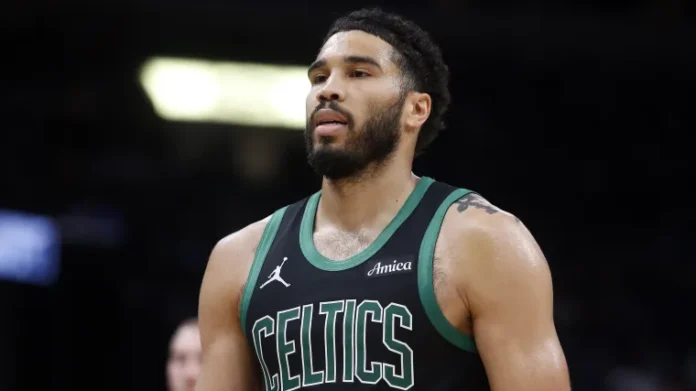
As the Boston Celtics prepare for their home matchup against the Minnesota Timberwolves on Sunday, the latest injury report features Jaylen Brown and Nikola Vucevic. Brown is listed as probable to suit up despite a left quad contusion. Vucevic will miss the game as he continues to recover from a right ring finger fracture that required surgery on March 7 and keeps him sidelined until mid-April. Jayson Tatum will once again be available as he continues upping his conditioning.
The Celtics enter the matchup having won four straight games. Brown is on a heater, averaging over 30 points per game over his last five. On the season, JB is averaging 28.5 points, 7.0 rebounds, and 5.2 assists per game over 63 appearances. He has shot nearly 48 percent from the field, providing steady scoring and playmaking that has helped keep the Celtics maintain contender status with a 47-23 record and a second place position in the Eastern Conference.
According to team reports, the Celtics are monitoring a few key players dealing with minor injuries and fatigue. While none of the concerns appear to be long-term, their status for Sunday remains uncertain, leaving room for potential adjustments in the starting lineup. The coaching staff is expected to make final decisions closer to game time, depending on player recovery and fitness levels.
This update comes at a crucial point in the season, as the Celtics aim to maintain momentum and consistency. Any absence from their core rotation could impact both offensive rhythm and defensive stability, especially against a well-balanced Timberwolves squad.
On the other side, the Timberwolves enter the game with confidence, boasting a strong defensive presence and rising team chemistry. They will be looking to capitalize on any gaps in the Celtics’ lineup and secure a statement win on the road.
Tatum is now averaging 19.6 points and 8.6 rebounds per contest in the seven games he’s played this season. His recent outings indicate progress in regaining rhythm and form.
Jaylen Brown is probable for tomorrow’s game with a left quad contusion
Nikola Vucevic remains out
Jayson Tatum continues to be available for Celtics
The rise of cryptocurrency over the past decade has sparked debates about its potential to transform global finance. One of the more compelling discussions revolves around whether digital currencies can help alleviate financial inequality. As traditional banking systems often leave marginalized groups behind, can cryptocurrency offer a viable solution?
Understanding Financial Inequality
Financial inequality refers to the unequal distribution of wealth and resources among individuals and groups. It presents a significant barrier to economic opportunity, education, and overall well-being. In many parts of the world, a vast majority of the population lacks access to basic financial services. Some of the contributing factors include:
Limited access to banking services
High transaction fees
Strict credit requirements
Economic instability in certain regions
How Cryptocurrency Works
Cryptocurrency operates on decentralized networks using blockchain technology, allowing peer-to-peer transactions without intermediaries like banks. This inherent property lends itself to certain advantages that could potentially bridge the financial gap:
Accessibility: Anyone with internet access can participate in the cryptocurrency market regardless of their location.
Lower Transaction Costs: Cryptocurrency transactions can often be less expensive than traditional banking transactions, especially for international transfers.
Financial Sovereignty: Individuals can manage their own assets without relying on banks or financial institutions.
Potential Benefits for Financial Inclusion
Cryptocurrency has the potential to empower underbanked populations by providing them with tools to manage their finances more effectively. Key benefits include:
Microfinancing: Cryptocurrencies can facilitate micro-loans, enabling small entrepreneurs to start businesses.
Remittances: Digital currencies can reduce the cost of sending money home for many migrants, significantly impacting their families’ financial well-being.
Economic Alternatives: In regions with unstable currencies, cryptocurrencies can serve as more stable alternatives to protect savings from inflation.
Challenges and Considerations
While the potential of cryptocurrencies to address financial inequality is promising, several challenges must be considered:
Regulatory Issues: Governments may impose regulations that could hinder the growth of cryptocurrencies.
Volatility: The price of cryptocurrencies can fluctuate wildly, posing risks for those who invest or save in them.
Education and Awareness: Many individuals, especially in underserved communities, may lack the knowledge to effectively use cryptocurrencies.
In conclusion, while cryptocurrencies present a unique opportunity to address global financial inequality, substantial hurdles remain. Concerted efforts from governments, organizations, and the crypto community are essential to maximize the benefits and create a more inclusive financial system. Ultimately, the future of financial equality may very well depend on how these challenges are navigated.
The second round of the 2026 women’s NCAA tournament is underway as teams look to advance in the bracket.
We’re tracking how every team won Sunday, booking their tickets to the Sweet 16.
Here is ESPN’s guide to all the Day 3 results, with analysis from reporters of how each game was won, and our experts’ takes on each winner’s chances to advance.
How Michigan won: After NC State took an early lead in the first quarter, Michigan dominated for the rest of the game. The Wolverines were at their best when they played a press defense and forced multiple turnovers. Michigan led 28-25 at halftime but started the third quarter by dominating in the paint and pushed the lead to double digits with four minutes left in the period. Michigan’s Olivia Olson, who went scoreless in the first half, found her rhythm in the third and ended up with 27 points. Building off their double-digit lead, the Wolverines locked in with one quarter left and continued to play a stifling press defense. When NC State got into foul trouble, the Wolverines capitalized on the frustration ran away with the game.
How the Wolverines can advance to the Elite Eight: One word: press. Well, actually, three-word hyphenate: Full-court press. Michigan played its best ball Sunday when it pressed on NC State. NC State made 22 turnovers and seemed to crumble under the relentless defense. Scoring leaders like Mila Holloway and Olson will look to continue to to capitalize on opportunities in the paint. The home crowd Sunday seemed to infuse energy into the Wolverines; they need to carry that into Fort Worth. — Charlotte Gibson
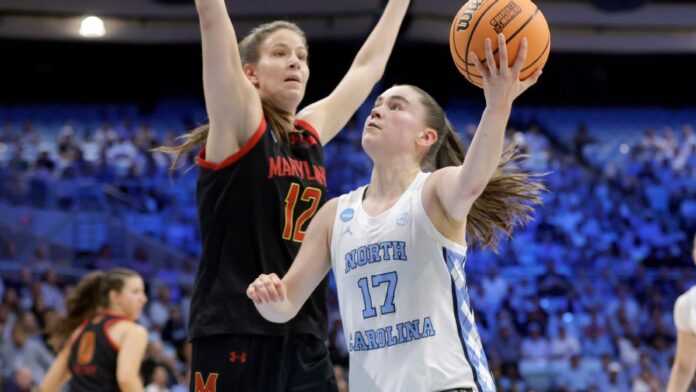
How North Carolina won: The Tar Heels’ win was a true survive-and-advance affair. Far from an artistic success, North Carolina’s win was built on aggressive driving to the rim, opportunistic shooting and physical defense. A pair of sophomores led the way. Elina Aarnisalo scored 21 points and Lanie Grant had 20; the two combined to score or assist on 51 of North Carolina’s 74 points. But the biggest shot of the game came from freshman Nyla Brooks. Her 3-pointer with 1:43 left pushed the lead to 68-62 and out of reach for a Maryland team that struggled for the entire game to make shots. The Terps made just 3 of 23 3-point attempts and will regret a 17-of-31 performance at the free throw line. Maryland shot 32.4% from the field.
Playing in their last game in Maryland uniform, Saylor Poffenbarger and Yarden Garzon combined to shoot 3-of-23 from the field and 0-of-16 from 3-point range.
How the Tar Heels can advance to the Elite Eight: Back in the Sweet 16 for the second year in row, the Tar Heels will have much to improve upon if their first trip to Elite Eight since 2008 is possible. They allowed 21 Maryland offensive rebounds and turned over the ball 16 times. North Carolina will not be able to count on UConn or Syracuse missing the kind of open shots Maryland did.
One thing that worked: reversing the strategy of shooting 40 3-pointers in the first round against Western Illinois. North Carolina launched 11 3s against Maryland, making four, and instead routinely took the ball to the basket, scoring 44 points in the paint. Moving the ball better and getting more open looks from the perimeter will be an area to focus on. — Charlie Creme
Mais uma negociação confusa e mal explicada do Botafogo na gestão John Textor. Reportagem do jornal “O Globo” mostra nesta sexta-feira (30/3) que o clube recebeu € 23 milhões do Nottingham Forest em 4 de junho de 2025 e emprestou € 25,5 milhões ao Lyon no dia seguinte.
O depósito do Nottingham Forest incluiu € 19 milhões por Igor Jesus, € 1 milhão por Cuiabano e € 3 milhões por Jair. Ainda segundo “O Globo”, a venda de Igor Jesus foi por € 19 milhões e a de Jair por € 11 milhões. A de Cuiabano, informa o jornalista João Pedro Fragoso, foi por € 4 milhões.
The summer transfer window continues to gather momentum as Nottingham Forest and Olympique Lyonnais finalize significant multi-million euro deals, signaling strong intent ahead of the upcoming season.
Nottingham Forest have secured a key signing valued at approximately €23 million, reinforcing their squad as they aim to build on recent performances and climb higher in the Premier League standings. The club’s recruitment strategy appears focused on adding depth and quality, ensuring they remain competitive in an increasingly challenging league environment.
Meanwhile, Lyon have completed a €25.5 million loan deal, a move that reflects both ambition and financial strategy. The French side is looking to strengthen crucial areas of their squad while maintaining flexibility in their long-term transfer planning. This loan arrangement could prove pivotal as Lyon targets a return to the top tier of domestic and European competition.
Both clubs have been active in the transfer market, recognizing the importance of early signings to integrate players effectively before the season begins. For Nottingham Forest, this investment underlines their determination to establish stability and progress in England’s top flight. For Lyon, the deal represents a calculated effort to rebuild and compete more consistently in Ligue 1.
The world of cryptocurrency has often been perceived as a male-dominated arena. However, women are increasingly making their mark in this dynamic field, breaking barriers and paving the way for future generations. This article explores the significant contributions women are making in the crypto space and examines the challenges they face.
Rise of Women in Cryptocurrency
Over the past decade, the cryptocurrency landscape has transformed dramatically. Initially seen as a niche market, it has exploded into a multi-billion dollar industry. Women have been at the forefront of this evolution, taking roles in various sectors, from blockchain development to financial advocacy.
Pioneers and Innovators
Women like Elizabeth Stark, co-founder of Lightning Labs, and Katharine Wooller, managing director of the UK arm of the cryptocurrency exchange Diginex, exemplify the pioneering spirit that is reshaping the industry. Their groundbreaking work not only promotes innovation but also inspires others to join the movement.
Community Building and Advocacy
In addition to being tech innovators, women are actively involved in community building and advocacy. Organizations such as Girls in Tech and Blockchaining Women aim to empower females to participate in the cryptocurrency and blockchain sectors. These organizations offer educational resources, networking opportunities, and mentorship for women looking to enter the space.
Challenges Faced by Women
Despite these advancements, women in the crypto space still face significant challenges. Gender biases and a lack of representation can create barriers to entry and growth for many women. Studies indicate that women make up only a fraction of the overall workforce in tech and finance roles, translating to similar underrepresentation in the crypto industry.
Combatting Stereotypes
Women often encounter stereotypes that question their competence in technical fields. Overcoming these biases requires not only resilience but also strong networks of support. Creating environments where women can celebrate their achievements and advocate for change is vital for addressing these issues.
The Future is Female
The future of the crypto space is increasingly bright for women. As more women seize opportunities to lead and innovate, they not only contribute to a diverse and balanced ecosystem but also inspire a culture of collaboration and mentorship. The ongoing dialogue about gender equality in the workplace will continue to shed light on these issues and encourage change.
Conclusion
Women are breaking barriers in the crypto space and building futures that are equitable and inclusive. By supporting one another and advocating for diversity, women can continue to reshape the cryptocurrency landscape. The path forward is not just about embracing technology; it’s about integrating diverse perspectives to create a more robust, innovative, and fair industry for all.
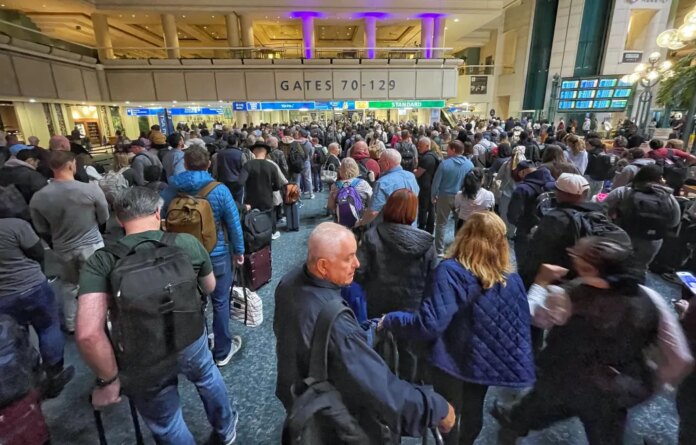
A standoff over federal TSA funding combined with an influx of spring break travelers and bad weather nationwide has created a perfect storm to frustrate travelers at Orlando International Airport.
On Wednesday, travelers at OIA waited in security checkpoint lines for up to 45 minutes at Terminals A and B, while TSA lines at Terminal C waited for as long as 40 minutes, all while fully occupied parking garages forced many into distant economy parking and a shuttle ride to their terminals. Lines were shorter Thursday, though still as long as a half an hour in one terminal.
Elsewhere, TSA lines have topped an hour at some airports, including New York’s JFK and LaGuardia airports. At Chicago’s O’Hare, officials only expected things to get busier on Thursday as spring breakers returned home, according to NBC Chicago.
Airline passengers wait in long lines to get through the TSA security screening at George Bush Intercontinental Airport in Houston on Wednesday, March 18, 2026. (AP Photo/Lekan Oyekanmi)
The nationwide airport security delays are largely the fallout of the ongoing congressional battle over funding the U.S. Department of Homeland Security, which oversees the Transportation Security Administration as well as Immigration and Customs Enforcement, in the wake of controversial immigration actions in Minnesota and around the country.
Democrats in Congress have refused to fully fund DHS until it unless it undertakes significant reforms to its ongoing immigration crackdown, including requiring immigration agents to identify themselves, prohibiting the use of masks and allowing independent investigations of alleged misconduct, especially the killings of Minneapolis protesters Renee Nicole Good and Alex Pretti in January.
President Donald Trump and congressional Republican allies haven’t budged and have rejected Democrats’ offer to fund the rest of DHS, including TSA, which would allow airport security agents to be paid while negotiations continue regarding ICE and Border Patrol.
As a result, numerous unpaid TSA officers have called out of work this week, with CBS News reporting nearly 40% calling out on Tuesday alone nationwide.
At an OIA food court, Jeff Atkins, having just flown into Orlando from Halifax, Canada with his wife and sons, said he was looking forward to visiting beaches on Florida’s Gulf Coast and going to baseball games. But he doesn’t feel the same about having to go through TSA when his vacation ends.
Atkins said he and his family have gone on several trips to Florida before, all through OIA, but have never seen the airport’s TSA lines this bad. While he and his family are flying through the prechecked lines, he said he might have changed travel plans if he had to go through the standard ones.
“I don’t know we wouldn’t have come,” he said. “[But] it would have made me sort of rethink our flights at least, maybe a smaller airport.”
Other travelers were less concerned with the delays.
22-year-old Jabz Lim, flying back to Connecticut with his grandfather and other relatives after visiting for spring break, said the wait times could be worse.
“It’s crazy, but I mean it is what it is. You can’t really do much about it,” he said. “We could complain all day but it’s not going to change anything. Just go with the flow.”
Lim, who has several relatives serving in the military, said he sympathized with the TSA agents as his own relatives have been similarly impacted by past government shutdowns. He agreed with his grandfather, who himself is a veteran, that the agents should get paid for their hard work.
Cesar Londono, an Orlando resident flying to Washington, D.C. for work, said he had seen OIA lines in the past that were “a lot” worse. When speaking about the partial funding lapse, he was more critical of federal workers than sympathetic.
“I don’t think that they themselves are allocating the personnel in a way that is effective. So do I want them to lose their job? No. Do I think it’s fair? No. But I think there should be some transparency” in how resources are being used in the context of lines, he said.
Despite the security delays, OIA spokesperson Angela Starke said Wednesday there hadn’t been a dramatic decrease in the number of TSA agents processing passengers at Orlando’s airport, allowing staffing levels to remain “mostly normal.”
She attributed any delays to spring break travel and flight cancellations over the past few days to nationwide storms.
Over one 24-hour period from Tuesday to Wednesday, there were 46 cancellations at OIA, according to Flight Tracker, and there were nearly 200 flight delays on Wednesday and more than 100 Thursday.
Sen. Markwayne Mullin, R-Okla., President Donald Trump’s pick for Homeland Security secretary, testifies during a Senate Committee on Homeland Security and Governmental Affairs hearing, Wednesday, March 18, 2026 on Capitol Hill in Washington. (AP Photo/Manuel Balce Ceneta)
U.S. Sen. Markwayne Mullin, Trump’s choice to take over as Homeland Security secretary after firing outgoing secretary Kristi Noem, said it was imperative to fully fund the department.
“We have to get DHS funded,” Mullin said at an oft-contentious Senate hearing Wednesday. “We have to set the partisan side down.”
“We’re playing with fire,” he added.
The New York Daily News contributed to this report.
In the past decade, cryptocurrency has emerged as a groundbreaking innovation in the financial sector. Unlike traditional currencies, cryptocurrencies operate on decentralized networks based on blockchain technology, offering unique advantages such as security, transparency, and reduced transaction costs.
The Advantages of Cryptocurrency
Cryptocurrency offers several key benefits that are transforming how financial transactions are conducted:
Decentralization: Unlike traditional banks, cryptocurrencies aren’t controlled by any single entity, reducing the risk of centralized failure.
Lower Transaction Fees: Cryptocurrency transactions typically incur lower fees compared to banks and other financial institutions, allowing for cost-effective transfers.
Global Accessibility: Cryptocurrencies can be accessed anywhere with an internet connection, making them an ideal solution for unbanked populations.
Security: Transactions are encrypted and secured on the blockchain, making them resistant to fraud and hacking.
Cryptocurrency in Everyday Transactions
As cryptocurrency continues to gain traction, more businesses are adopting it as a payment method. Companies like Tesla, Microsoft, and Overstock are already accepting Bitcoin and other cryptocurrencies, indicating a shift in consumer payment preferences.
From everyday purchases to international remittances, cryptocurrencies are paving the way for more efficient transactions. Their ability to facilitate microtransactions also opens new avenues for business models, especially in the realm of digital goods and services.
The Role of Smart Contracts
Smart contracts, which are self-executing contracts with the terms of the agreement directly written into code, are another innovative aspect of cryptocurrency technology. They automate and streamline transactions, reducing the need for intermediaries and increasing efficiency in various sectors, including real estate, insurance, and supply chain management.
The Challenges Ahead
Despite the promising advantages, the cryptocurrency market faces several challenges:
Regulatory Scrutiny: Governments worldwide are still figuring out how to regulate cryptocurrencies, which could impact their growth.
Market Volatility: The high volatility of cryptocurrencies may deter businesses and consumers from widespread adoption.
Security Risks: While blockchain technology is secure, the cryptocurrency ecosystem is not immune to hacks, fraud, and scams.
The Road Ahead
Despite these challenges, the future of finance with cryptocurrency appears bright. As technology evolves and more individuals become aware of the benefits of cryptocurrencies, we can expect to see increased adoption and integration into the global financial system.
Numerous projects aim to improve scalability, enhance security, and ensure regulatory compliance, setting the stage for a more stable and secure cryptocurrency future.
Gabriel Iglesias was in the throes of an existential crisis or, in his words, “bummed out.”
“I was kind of thinking to myself, ‘What do we do now?’” recalls the comedian, known to fans as “Fluffy.” “Are we done? Have we jumped the shark? Should we call it a day?”
The problem was not a catastrophic failure, but an enormous success.
Captured in the Netflix special “Stadium Fluffy: Live From Los Angeles,” Iglesias’ performance is packed with his signature stand-up — touching on everything from COVID, cockroaches and cancel culture, to his beloved pet Chihuahuas — interspersed with moments of gratitude and awe. At one point in the special, he pauses to take a smartphone photo of a blimp hovering in the distance, which is flashing his name and image, and enthuses, “This is like a birthday and Christmas and the Super Bowl and the World Series and losing my virginity all at the same time.”
But after the dopamine high wears off, one is inevitably left — literally or figuratively — singing “Is That All There Is?”
“I still feel young enough to keep doing standup. I still feel relevant. But I don’t know that I can do something like this again,” says Iglesias, who paid a reported $250,000 in penalties and overtime fees for going over his contracted time slot, violating Dodger Stadium’s curfew rules. “So, the question was, can I find something big to do? What’s going to be the next thing?”
The answer came in February 2024, when Iglesias surprised the crowd at the Kia Forum in Inglewood, just south of downtown L.A., by appearing onstage to present comedian Jo Koy with a plaque honoring him for his record sixth sold-out show at the venue. Iglesias suggested they do a show together “across the street” at SoFi Stadium, and the audience erupted.
It wasn’t just an idle comment on Iglesias’ part, but it took a lot of sweat and toil to make the idea a reality. First, Iglesias had to sell Koy on the concept.
“He was like, ‘I don’t know, Gabe,’” recalls Iglesias. “And I’m like, ‘Oh, come on. How many freaking sold-out Forums are you going to keep doing?’”
SoFi’s 70,000-seat capacity is roughly the equivalent of four sold-out Forums, and when Koy saw the seating chart up on the wall during an initial meeting with the venue’s management, he was discouraged by the prospect of selling those seats, as well as the upfront costs they’d have to incur. But Iglesias argued that, with their sales records and overlapping fan bases, the math would all work out.
In the end, “I bullied Jo into doing it,” laughs Iglesias.
Once Koy was fully committed, the real work began. It took a year of planning to make the show — scheduled for March 21 — a reality. They made sure to give themselves plenty of time to sell those seats. Pre-sales began on April 23, 2025, and their fears were quickly assuaged when 70% of the tickets sold in a matter of days. It is now a sellout.
Billed as “One Night Only,” the show will not be televised, and they’re doing their best to make sure it’s a unique experience for those in attendance, from the introductory video and the surprise special guests to the stage they perform on, which will be three times bigger than at their regular shows.
“They’re at a stadium, so it’s got to be larger than just the bill, and the bill obviously is crazy — me and him together on one card,” says Koy. “So we put a lot of money into that stage, and it’s massive. The amount of screens is ridiculous. But we want everyone to see it, we want everyone to feel it.”
At the moment, nobody is feeling it more than Koy. The SoFi gig is a full-circle moment for the comic. Born at Misawa Air Base in Japan to an American Air Force master sergeant father and a Filipina mother, he spent more than five years of his childhood in the Philippines, eventually settling in Washington state with his mother and stepfather, who was also in the military. Looking to jump-start the standup career he launched after dropping out of the University of Nevada, Las Vegas, Koy began driving from Sin City to Los Angeles to perform at open mic nights, but the strain of the 10-hour round-trips became too much, and he decided to pick up stakes and move. But instead of finding an apartment in Hollywood, Santa Monica or another industry-adjacent locale, he set up house south of L.A. proper and found a job at Nordstrom Rack in Culver City.
“I lived in that area, and I remember driving past the Forum and just thinking to myself, ‘Someday,’” recalls Koy. “But to be able to play SoFi … It’s the biggest venue in L.A. This is going to be the most special moment of both of our careers. When we went there two weeks ago to do a photo shoot, we just hugged each other and said, ‘Wow, this is crazy.’”
Iglesias’ ties to the area are even stronger. Born in San Diego, the youngest of six children in a Mexican American family, he moved frequently around various Southern California cities, including Riverside, Corona, Santa Ana, Baldwin Park and Compton, before finally settling in affordable housing in Long Beach, where he was raised by his single mother after his mariachi musician father dropped out of the picture.
Iglesias launched his comedy career in the bar of Long Beach’s Golden Sails Hotel in 1997, when he spontaneously stepped onstage to fill in after the night’s emcee failed to show. Before long, he had quit his job in mobile phone sales to commit to comedy full-time. In the short term, the decision was financially catastrophic — leading to eviction, couch surfing and car repossession — but within three years, he was able to support himself with his stand-up. In 2003, he scored his first TV special, headlining an installment of “Comedy Central Presents.” Three years later, he landed a spot on “Last Comic Standing.” He was disqualified for smuggling in a BlackBerry to send emails to his family, but he made it into the late rounds of the show, giving him weeks of consistent national exposure that put his career into high gear.
The pair have known each other for more than two decades or, as Iglesias likes to say, “since we both had hair.” They became friends after meeting at the Laugh Factory on Sunset Boulevard in 2004, and before long, Iglesias had invited Koy to go on the road with him. Koy turned him down, in part because his son, Joseph Jr., was a year old at the time. But that wasn’t the key reason.
“It was like, man, I want to get out there and be a headliner on my own,” recalls Koy. “To this day, he says, ‘Remember when I was going to take you on the road and you said no? How dare you?!’”
Other than their bald heads, the two are physically dissimilar. Trim with Filipino tribal tattoos running up his arms, Koy tends to dress in black, while Iglesias — whose size has been fodder for both his comedy and his image (“I’m not fat. I’m fluffy.”) — favors baggy shorts and shirts with bold colorful designs, including one he wore for his stadium show dotted with images of Funko Pop Fluffy figurines sporting Dodger gear.
But they have a lot in common comedically, including formative influences like Eddie Murphy. More significantly, both draw heavily on family and cultural identity in their material. Iglesias made frequent references to his Mexican American mother, Esther, in his act prior to her passing in 2012, and Koy’s mother, Josie, still makes regular appearances in his routines.
Koy has received backlash for what some regard as his exaggerated portrayal of his mom’s high-pitched Filipino accent and cultural quirks, but he argues that the stories are real, the voice is spot-on and, more importantly, they have a universal appeal.
“It has nothing to do with ethnicity. It has nothing to do with color. It has nothing to do with anything other than my mom is a mom, and this is how she raised me,” says Koy. “There’s nothing better than Martin Lawrence telling me, ‘Oh, my God, my mom is just like your mom.’”
Lawrence was one of the stars on hand — along with Iglesias, Tisha Campbell, Kenneth “Babyface” Edmonds, Taboo from the Black Eyed Peas and others — when Koy was immortalized with a hand and footprint ceremony at the TCL Chinese Theatre on Feb. 12.
“It was a surreal moment,” marvels Koy, who, during his speech, recalled visiting the Chinese Theatre as a kid and putting his hands in Murphy’s handprints. “When I was at the podium talking about it, I felt my life flashing before my eyes in a matter of seconds. I went back to being a kid doing that.”
“Surreal” is also the word Iglesias uses to describe his recent landmark Hollywood moment, receiving a star on the Walk of Fame on March 3.
“I’m honored, but I don’t feel worthy of it because, in my head, these are for movie stars and Academy Award winners, somebody that’s done multiple films and stuff like that,” says Iglesias.
You can call it false modesty, but it’s revealing that the multimillion-dollar automobile collection Iglesias maintains in his 14,404-sq.-ft. warehouse-turned-clubhouse in Long Beach-adjacent Signal Hill is dominated by various models of the humble Volkswagen microbus — some 30 of them — rather than Porsches or Ferraris.
But there’s no denying that both Iglesias and Koy are hugely successful. On the year-end Billboard Boxscore chart for top-grossing comedy tours of 2025, Iglesias was ranked No. 4, earning $35.3 million from 100 shows, while Koy came in at No. 8 with $20.9 million from 83 shows. And that’s just one year of many for the two veteran performers. The numbers are all the more impressive when one considers the low overhead for touring comics relative to musical acts and other large live productions, which require exponentially more people and equipment, onstage and off.
Both have also done a string of Netflix standup specials, lent their voices to numerous animated projects (e.g., Iglesias as Speedy Gonzalez in 2021’s “Space Jam: A New Legacy”) and acted in live action projects — from Iglesias’ three-season stint on the Netflix sitcom “Mr. Iglesias” (2019-2020) to Koy’s leading role in the semi-autobiographical comedy feature
“Easter Sunday” (2022).
Of course, there are downsides to being in the spotlight. In 2024, Koy agreed to step in at the last minute to host the 81st Golden Globes, and was rewarded with a cold reception in the room. (“Yo, I got the gig 10 days ago. You want a perfect monologue? Shut up,” he snapped at one point.) It was some of the worst reviews of his life.
And last October, both he and Iglesias were part of a contingent of comedians lambasted on social media for taking big paychecks to perform at the Riyadh Comedy Festival in Saudi Arabia, despite the country’s well-documented human rights abuses and the content restrictions it placed on their routines.
“There are some places that are a little bit more selective, Saudi Arabia being one of those places,” says Iglesias, who first performed there in 2012. “I’m willing to play by the rules when I do a corporate event here in America. Don’t make fun of Google. Don’t talk about the CEO. Don’t talk shit about his shoes. Don’t make fun of his wife. There’s always rules no matter where you go.”
When Iglesias played Dodger Stadium, he learned a few rules that will serve both of them at the SoFi gig, particularly regarding the time it takes the sound of the crowd’s reaction to reach the stage.
After his performance on the first night, “a friend who’s a comic goes, ‘Dude, you waited too long [for the laughs],’” recalls Iglesias. “So, the next night, I went out there and performed at my normal speed.”
As a stadium novice, Koy is less sure about how to calibrate his performance.
“A theater is a comedy club on steroids, but it’s still intimate,” he observes. “Arenas are like five theaters, and you’ve got to keep that pace up and maintain that energy. A stadium …? Bro, I don’t know what to think.”
Websites store cookies to enhance functionality and personalise your experience. You can manage your preferences, but blocking some cookies may impact site performance and services.
Essential cookies enable basic functions and are necessary for the proper function of the website.
Name
Description
Duration
Cookie Preferences
This cookie is used to store the user's cookie consent preferences.
30 days
These cookies are needed for adding comments on this website.
Name
Description
Duration
comment_author
Used to track the user across multiple sessions.
Session
comment_author_email
Used to track the user across multiple sessions.
Session
comment_author_url
Used to track the user across multiple sessions.
Session
These cookies are used for managing login functionality on this website.
Name
Description
Duration
wordpress_logged_in
Used to store logged-in users.
Persistent
wordpress_sec
Used to track the user across multiple sessions.
15 days
wordpress_test_cookie
Used to determine if cookies are enabled.
Session
Statistics cookies collect information anonymously. This information helps us understand how visitors use our website.
Google Analytics is a powerful tool that tracks and analyzes website traffic for informed marketing decisions.
Contains information related to marketing campaigns of the user. These are shared with Google AdWords / Google Ads when the Google Ads and Google Analytics accounts are linked together.
90 days
__utma
ID used to identify users and sessions
2 years after last activity
__utmt
Used to monitor number of Google Analytics server requests
10 minutes
__utmb
Used to distinguish new sessions and visits. This cookie is set when the GA.js javascript library is loaded and there is no existing __utmb cookie. The cookie is updated every time data is sent to the Google Analytics server.
30 minutes after last activity
__utmc
Used only with old Urchin versions of Google Analytics and not with GA.js. Was used to distinguish between new sessions and visits at the end of a session.
End of session (browser)
__utmz
Contains information about the traffic source or campaign that directed user to the website. The cookie is set when the GA.js javascript is loaded and updated when data is sent to the Google Anaytics server
6 months after last activity
__utmv
Contains custom information set by the web developer via the _setCustomVar method in Google Analytics. This cookie is updated every time new data is sent to the Google Analytics server.
2 years after last activity
__utmx
Used to determine whether a user is included in an A / B or Multivariate test.
18 months
_ga
ID used to identify users
2 years
_gali
Used by Google Analytics to determine which links on a page are being clicked
30 seconds
_ga_
ID used to identify users
2 years
_gid
ID used to identify users for 24 hours after last activity
24 hours
_gat
Used to monitor number of Google Analytics server requests when using Google Tag Manager