There is a reason Illinois basketball doesn’t look like anyone else left in March. The size jumps out. The skill is obvious. The way the ball moves feels different. It is not random. It is not luck. It is the result of a vision that started long before the wins started stacking up.
Advertisement
Everyone sees Brad Underwood on the sideline. Few see the work done behind the scenes by Geoff Alexander. That is where this team was really built. Not just through recruiting rankings or transfer portal headlines, but through identifying a lane in college basketball that others were slow to fully commit to and then attacking it with purpose.
Illinois did not just recruit players. It built a roster with a specific identity. And that identity now has them one win away from something bigger.
From Lincoln roots to a global vision
Alexander’s story starts in Lincoln, Illinois, and it starts with one of the most respected high school coaches in the state.
Advertisement
His father, Neil Alexander, is a Hall of Fame coach who is still leading Lincoln High School. Known for his signature 1-2-2 zone defense, he built a program rooted in discipline, toughness, and understanding how to win games, not just play them.
That environment shaped Geoff Alexander.
He grew up in gyms where details mattered. Where teaching mattered. Where systems mattered. That foundation shows up now in how he evaluates players and how he helps build a roster.
From Lincoln High School to Western Illinois and then into coaching, Alexander took the long road. Graduate assistant. Junior college stops. Idaho State. Eastern Illinois. Evansville. Years of learning, evaluating, and building relationships.
Advertisement
None of it came easy. All of it prepared him for this.
The blueprint started overseas
Alexander saw value in players others were not fully prioritizing.
European systems develop players who are comfortable with the ball, who understand spacing, and who have already faced older competition. That translates immediately to the college game, especially in March when experience and decision-making take over.
Illinois leaned into that. Not as a one-off idea, but as a core strategy.
Now it defines them.
Production that backs it up
This is not just about style. It is about production.
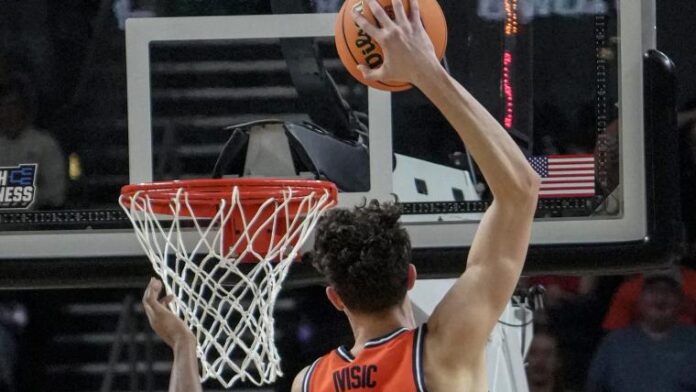
David Mirkovic, from Montenegro, has been one of the most impactful freshmen in the country. He is averaging 13.8 points, 8.0 rebounds, and 2.6 assists, with 26 double-figure scoring games and eight double-doubles. His 17-rebound NCAA Tournament performance set a program record, and his 29-point game in the opening round put him in rare company historically.
Advertisement
Tomislav Ivisic, from Croatia, brings consistency. He is averaging 10.1 points and 5.6 rebounds, with 16 double-digit scoring games. A year ago, he led Illinois in rebounding and posted 11 double-doubles.
Brother, Zvonimir Ivisic, also from Croatia, changes games defensively. He averages 2.0 blocks per game and ranks among the national leaders in block rate, giving Illinois a rim protector who can also stretch the floor.
Andrej Stojakovic, born in Greece, a transfer from Cal, brought proven scoring with him. After averaging nearly 18 points per game previously, he has added 13.3 points per game this season, with multiple 20-point performances and the ability to take over stretches.
Mihailo Petrovic, from Serbia, has had a smaller role, appearing in 19 games and averaging 5.8 minutes per game. He has been used sparingly, but his background running high-level European offense still adds value in preparation and depth.
Advertisement
This is not a theoretical upside. This is real production at every level of the roster.
Illinois will face Iowa in the Elite Eight in Houston, with a trip to the Final Four on the line.
It is a matchup that feels fitting. Two teams that know each other. Two teams that have already played, with Illinois winning 75-69 on January 11.
But this is different now.
Illinois has not reached the Final Four since 2005. Brad Underwood has never coached in one.
Advertisement
That is the next step.
And the roster that Alexander helped build is now one win away from taking it.
Changing how a contender can be built
Illinois is not just chasing a Final Four. It is showing a different way to get there.
College basketball has long leaned on one model. Illinois found another.
Alexander’s ability to identify talent across borders, trust it, and fit it into a system has changed what this program looks like. It has also changed what it can be.
Now the rest of the sport is watching.
Because this is no longer just a story about international players.
It is a story about a roster built with purpose, a staff that trusted a different path, and a team that is one step from proving it all works.
In the realm of blockchain technology, a term that frequently surfaces is “smart contracts.” While many have heard of them, few understand the full breadth of their implications for the future of business. In this article, we delve into what smart contracts are, how they operate, and why they are poised to revolutionize various industries.
What Are Smart Contracts?
Smart contracts are self-executing agreements with the terms of the contract directly written into code. They run on blockchain technology, which ensures transparency, security, and immutability. The most notable platform for deploying smart contracts is Ethereum, though other blockchain platforms also support them.
How Do Smart Contracts Work?
Smart contracts function on a simple premise: if a predefined condition is met, the contract executes automatically. Here’s a basic breakdown:
Agreement: Two or more parties agree on the terms of the contract.
Programming: The terms are coded into the smart contract.
Deployment: The contract is deployed on the blockchain.
Execution: When conditions are met, the contract executes automatically, transferring assets or executing actions without manual intervention.
Advantages of Smart Contracts
Smart contracts offer several transformative advantages:
Efficiency: Automating processes reduces the time taken to fulfill agreements.
Cost-effectiveness: Minimizing the need for intermediaries reduces transaction costs.
Security: Information is encrypted and stored on a decentralized network, significantly reducing fraud risk.
Transparency: The terms and conditions are visible to all parties involved, leading to greater trust.
Real-World Applications of Smart Contracts
The applications of smart contracts span various sectors:
Finance: Automating loan agreements and insurance claims.
Real Estate: Facilitating property sales without intermediaries.
Supply Chain: Ensuring product authenticity and tracking shipments.
Healthcare: Managing patient records and insurance claims securely.
Challenges and Considerations
While the benefits are significant, some challenges accompany the adoption of smart contracts:
Legal recognition: Not all jurisdictions recognize smart contracts as legally binding.
Immutability: Once deployed, modifying a smart contract can be difficult, which raises concerns over bugs and vulnerabilities.
The Future of Smart Contracts
As technology evolves, smart contracts are expected to gain traction in various industries. Companies and governments are increasingly exploring their potential for improving processes, enhancing security, and reducing costs. With continuous advancements and regulatory frameworks catching up, the future of smart contracts looks bright.
Conclusion
Smart contracts stand at the crossroads of technology and business. Their ability to streamline processes, enhance security, and reduce costs makes them a compelling option for the future. As more organizations recognize their potential and leverage their benefits, smart contracts may very well become the standard for conducting business efficiently and transparently.
Ryan O’Hanlon is a staff writer for ESPN.com. He’s also the author of “Net Gains: Inside the Beautiful Game’s Analytics Revolution.”
Multiple Authors
Let’s take a minute to do something I’m not sure has ever been done before: think about all of the things that went well for the U.S. men’s national team at the last World Cup.
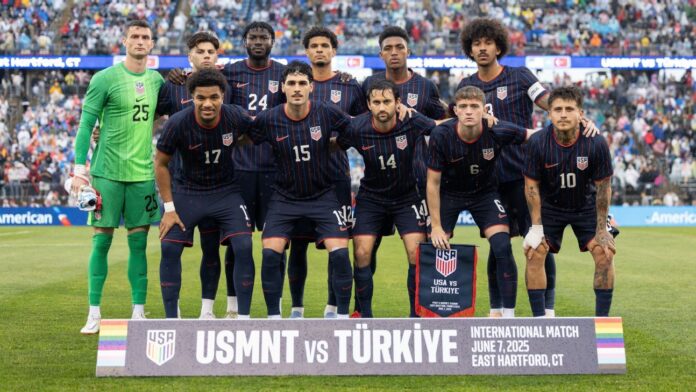
Their best player — and the best player in the history of the program — played like it. Christian Pulisic risked the future of his lineage to score the winning goal in the final match of the group stage against Iran. He either scored or assisted every goal the U.S. generated in Qatar, and he backed that up with consistent threat. He led the team in both expected assists and expected goals. You can’t ask for much more than that.
Timothy Weah balanced out the other side of the attack, scoring the opener against Wales and stressing the depth of the opposition backline. The Europe-based midfield of Weston McKennie, Yunus Musah and Tyler Adams was the strength of the team — most notably nullifying England in a group-stage match in which the Americans contested possession high up the field.
The fullbacks, Sergiño Dest and Antonee Robinson, were vital buildup-play engines: the former with his passing and dribbling, the latter with his never-ending off-ball running. Tim Ream, in his first World Cup at age 35, allowed the U.S. to control possession and build from the back in a manner we’d never seen at a World Cup. And Matt Turner looked like Matt Turner, even though he was riding the bench for Arsenal.
In other words, all of the best American players played like the best American players. The problem wasn’t a lack of top-end talent. Obviously, Pulisic, McKennie, & Co. all need to play well this summer for Mauricio Pochettino’s team to make a deep run, but the reality is that these are really talented players who play well more often than not.
Instead, what really hindered the Americans in Qatar — and what, beyond luck, will determine how far they advance this summer — was their depth, or lack thereof. Every team that wins the World Cup has depth, and the USMNT didn’t have it four years ago.
To answer this question, I went back and looked at the past 16 World Cup semifinalists.
In 2006, soccer was still stuck in that reactive tactical netherworld created by Jose Mourinho and Rafa Benitez, but by 2010, Pep Guardiola’s possession-based approach had won out, and the physicality of Jurgen Klopp’s gegenpressing was just beginning to bubble up. The demands of the game were quite different in 2006, so I decided to cut off the analysis there.
I looked at the semifinalists because these are the four teams who have objectively achieved success at the tournament, and then I looked at how each team employed its bench players. In other words, how important was depth to the teams that did well at the World Cup?
First, here’s a comparison of the average percentage of minutes played by the 12th- through 16th-most used players across the 16 semifinalists:
And here’s how those numbers broke down, per tournament:
So, 12th-man usage has remained pretty consistent over time, but the reliance on players 13 through 16 has risen significantly. That’s driven by a combination of a growing understanding that managers should be subbing more often, and also the increase from three subs allowed per game to five since after the COVID-19 pandemic.
But there’s a bit of noise in these numbers since two of the semifinalists ultimately play in a third-place match in which they’re rarely selecting their full first-choice starting 11. That’s probably going to boost the number of minutes for all of these players. If we only look at the eight finalists from the past four World Cups, then this is how the minutes have been distributed:
That’s not much of a difference, but it’s a slight decrease in every slot.
As for the per-tournament numbers of the finalists:
Of course, there have been specific quirks to each tournament. The 2010 World Cup was played in the South African winter. The 2014 World Cup featured cooling breaks because it was so hot in parts of Brazil. The 2018 World Cup was in Russia and yet … mostly normal? And then 2022 in Qatar was played in the middle of the club season — in December, instead of June.
Given how hot it’s likely to be in the United States this summer, the peak numbers from 2022 feel like the right ones to guide us the rest of the way. They might even be a little too conservative.
In Qatar, France manager Didier Deschamps doled out his minutes like so:
12th: Ibrahima Konaté, Liverpool center back: 44.2% 13th: Youssouf Fofana, Monaco midfielder: 34.1% 14th: Randal Kolo Muani, Eintracht Frankfurt forward: 27.3% 15th: Kingsley Coman, Bayern Munich winger: 25.0% 16th: Marcus Thuram, Inter Milan forward: 22.3%
And here’s how it looked for coach Lionel Scaloni, as he guided Argentina to its third World Cup trophy:
12th: Lisandro Martínez, Manchester United center back: 43.6% 13th: Angel Di María, Juventus winger: 42.0% 14th: Lautaro Martínez, Inter Milan forward: 34.5% 15th: Leandro Paredes, Juventus midfielder: 32.5% 16th: Gonzalo Montiel, Sevilla fullback: 17.1%
Winning the World Cup probably requires at least four players beyond your most-used 11 who play 25% of the minutes or more. And in 2022, those players pretty much all had to play for Champions League or Champions League-quality teams.
How did the USMNT compare?
In 2022, Ream, Adams, Turner, Musah, Robinson, Dest, Pulisic and Weah all played at least 85% of the minutes. McKennie was the only member of the true core who was below that mark, but he was still out there 75% of the time.
As for the bench, well, there wasn’t much of one. This is how the USMNT’s usage compared to France and Argentina:
Now, part of the reason the U.S. numbers are so low is that they played only four matches, and France and Argentina played seven, including the unforgettable final that went all the way to penalties. It’s natural that the managers would need to dig deeper into their rosters as the number of overall minutes ticked upward.
You might also want to look at this and blame U.S. coach Gregg Berhalter for not managing his squad more aggressively — but when you look at the players and how they performed, it’s hard to really blame him. Wright mostly looked out of place, and his goal against the Netherlands in the round of 16 was a happy accident that ricocheted off of his heel. I will also never forget the moment against the Netherlands when Aaronson squared up 32-year-old Daley Blind, who was pretty much a human traffic cone at this point in his career, for a 1v1 and got stone-walled.
Carter-Vickers came in for the Iran match and was fantastic, but he’s a center back. Reyna’s family was trying to get Berhalter fired during the tournament, and he was completely forgettable in his round-of-16 cameo and then for the rest of the club season afterward. Ferreira, meanwhile, just wasn’t at the same level as his other teammates.
The nine core players for the U.S. in 2022 were all playing, or had recently played, at a high level in Europe — but that was it. The fact that Berhalter rotated out Walker Zimmerman for a must-win match speaks to the uncertainty of the center back spot next to Ream, and then center forward, with Wright, Ferreira, and Josh Sargent all getting chances, was a black hole.
This wasn’t a roster equipped to handle a deep run.
What about the 2026 World Cup?
This is where I encourage U.S. fans to have some hope.
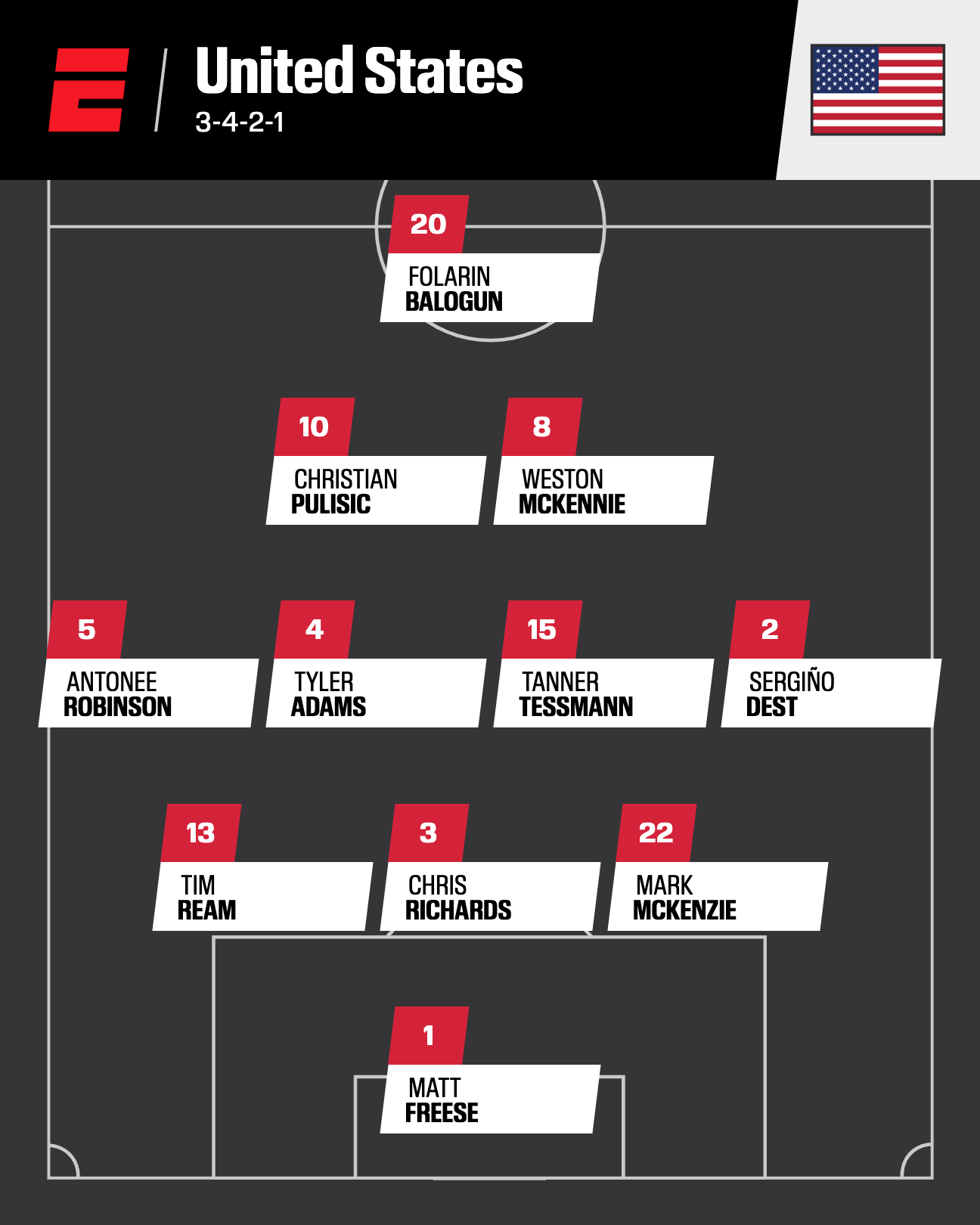
The biggest question is goalkeeper, but otherwise I’d say this is inarguably a better lineup than what we saw in Qatar. Ream is four years older, but Chris Richards and Mark McKenzie are big upgrades on the other center backs who played in 2022. And then, obviously, Folarin Balogun is way ahead of where any of the U.S. strikers were four years ago.
But what about the players who might occupy those 12th-through-16th depth roles?
There’s Weah, who started in 2022 and is currently a starter for Marseille, the third-place team in France. There’s midfielder Johnny Cardoso, who just played all 180 minutes of Atletico Madrid’s dominant win over Tottenham in the Champions League’s round of 16. There’s attacking midfielder Malik Tillman, who has played about two-thirds of the minutes for Bayer Leverkusen, another Champions League team.
PSV forward Ricardo Pepi seems likely to move for tens of millions of dollars at some point really soon. Fullback Alex Freeman just moved to Villarreal, who are in third behind Real Madrid and Barcelona in LaLiga, for €3.5 million. Hybrid defender Joe Scally continues to play every minute of every game for Monchengladbach in the Bundesliga.
Even the likely bench players who were on the bench four years ago have improved. Wright is second in the English Championship with 14 non-penalty goals, and he’s doing it for a team with a 22-point lead atop the table. Aaronson is scoring and assisting goals at double the rate he was at with Leeds in 2022.
There are a number of other really good Championship players, Aidan Morris and Patrick Agyemang, and the MLS players this time around, specifically Cristian Roldan and Max Arfsten, look more likely to have a positive impact than what we saw the last time.
If the U.S. is going to win at least one knockout round match, then it’s going to need memorable contributions from the players who don’t start every match.
While we’re still waiting for the first true American superstar to emerge, Pochettino will head into this summer’s tournament with something no American manager has ever had: a bunch of Champions League starters and European stalwarts, sitting on his bench.
In other words, if depth is necessary for a deep run at the World Cup, this iteration of the U.S. men’s team has a chance to go further than it has gone in a long time.
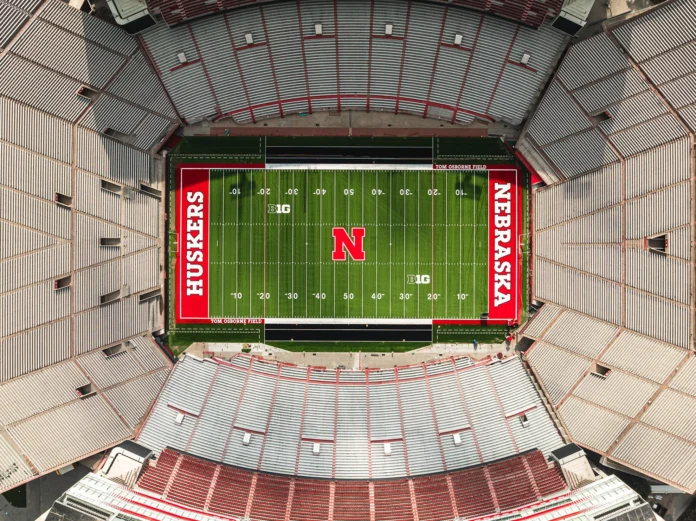
Below is information for fans in advance of Saturday’s Red-White Spring Game presented by FNBO.
Tickets & Seating
Fans are encouraged to save time and money by buying tickets in advance as ticket prices increase the day of game. Tickets can be purchased at Huskers.com or on game day at windows at gates 10 or 22 which open at 8 a.m.
Thursday-Friday: $10 general admission seating
Saturday (Day of Game): $20 general admission seating
Nebraska Athletics will be donating ticket proceeds from Saturday’s Red-White game to relief efforts for the wildfires across the state of Nebraska.
Fans should access their mobile tickets to the game prior to reaching the stadium gates. To make the process of entering Memorial Stadium as efficient as possible fans are encouraged to access their ticket account and save their digital tickets to their Apple or Google Wallet apps prior to arrival.
All seating at Memorial Stadium on Saturday will be general admission. The East and West lower bowls will be available to the public. There will be no reserved seating and no seating in the North and South Stadiums.
As a reminder, Memorial Stadium is a cashless facility, including ticket purchases and concessions.
Gates and Entry
Stadium gates will open at 9:30 a.m.
Gates 3, 4, 10, and 20 will be open to those holding game tickets in the general seating bowl.
Gates 19 and 21 will be open to those holding east stadium 300 club level tickets. These gates are for club ticket holders only.
Gate 3 is the primary ADA entrance for those that have indicated they need ADA seating accommodations in the general seating bowl. All ADA seating accommodations for general public seating will be in the north stadium field level seating area (this is located directly behind the north end zone). The restrooms and concession stand directly behind the north field level ADA seating area will be open.
There will be no re-entry to Memorial Stadium.
Memorial Stadium’s Clear Bag policy will be in effect for the spring game.
Concourse Access
For ease of accessing both the east and west seating areas, the entire concourse level inside the north, east, and west stadiums will be accessible. The east and west concourses will have restrooms and concessions available. The north concourse will only have restrooms available.
Those holding pre-purchased permits on campus will need to follow the parking directions within your mobile parking pass.
UNL Parking & Transit Services will have public paid lots at the 1th & Avery Parking Garage (ADA parking with shuttle to Stadium), the 17th & R Garage, 19th & Vine Garage, and the University surface parking lots east of 14th Street.
Baseball and softball fans who have tickets to those games will be allowed to park at Haymarket Park for free. Fans who do not have a baseball or softball game ticket may still park in the Haymarket Park lots but will be charged for parking.
The city’s Big Red Express (StarTran) will not be operating for the spring game.
Rosters & Media Coverage
Digital rosters will be available by using the QR codes located throughout the concourse. The updated Nebraska 2026 Nebraska Football roster is also available at Huskers.com.
The Huskers Radio Network will provide radio coverage of the Red-White game statewide and around the world through Huskers.com, and the official Huskers App. Husker Sports Network coverage begins at 9 a.m. on Saturday. Kyle Crooks and Damon Benning will call the action of the Red-White game on the Huskers Radio Network.
The game can be seen live on BTN beginning at 11 a.m. Chris Vosters, Kenny Bell and Michelle Steele will be on the call for BTN.
Other Husker Events this Weekend
Both the Nebraska baseball and softball teams will be home for a three-game series this weekend. The baseball team will host Indiana, while the softball team hosts UCLA in a matchup of top-10 teams. First pitch for both games on Saturday is at 2 p.m.
As cryptocurrency continues to gain traction, the importance of securing digital assets has never been higher. With the rise of cyber threats, investors must be proactive in protecting their crypto investments.
Understanding the Risks
Digital assets are susceptible to various threats, including hacking, phishing attacks, and fraud. Awareness of these risks is the first step in developing a solid security strategy.
1. Hacking
Despite the security provided by blockchain technology, crypto exchanges and wallets are prime targets for hackers. Recent breaches have resulted in significant losses, highlighting the need for vigilant security practices.
2. Phishing Attacks
Cybercriminals utilize phishing techniques to deceive users into revealing sensitive information, such as private keys. Recognizing suspicious emails and links can help mitigate this threat.
Building a Strong Security Posture
To safeguard your crypto assets, consider implementing the following security measures:
1. Use Hardware Wallets
Hardware wallets keep your private keys offline and away from potential online threats. Investing in a reputable hardware wallet can provide superior protection compared to software wallets.
2. Enable Two-Factor Authentication (2FA)
Implementing 2FA adds an extra layer of security by requiring not only a password but also an additional verification method, such as a text message or an authentication app.
3. Regularly Update Your Software
Keep your wallets and devices updated with the latest security patches to protect against vulnerabilities. Regular updates are essential to maintaining a strong defense.
Staying Informed
The cryptocurrency landscape is ever-evolving. Staying informed about the latest security threats and best protection practices is essential for any investor. Follow reputable blogs, news outlets, and forums focused on cryptocurrency security.
Conclusion
In this digital age, protecting your crypto assets is paramount. By understanding potential risks, implementing robust security measures, and staying informed, you can safeguard your investments and contribute to the overall security of the cryptocurrency ecosystem.
D’Onofrio was working the floor at the Hard Rock Cafe on 57th Street in New York when a chance encounter set his career on a different trajectory. His friend Matthew Modine, on hiatus from a film shoot, walked past with his wife. When D’Onofrio asked what he was working on, Modine told him it was a Stanley Kubrick movie, and passed along an address where hopefuls were sending materials.
D’Onofrio, who had a theater agent but no film representation, scraped together about $60 with a friend, rented a camera, and sat on a stoop at 10th Avenue and 21st Street to record a monologue. A film student at NYU edited the tape. D’Onofrio mailed it in, expecting nothing.
About a week later, the phone rang. The voice on the other end claimed to be calling on behalf of Stanley Kubrick. D’Onofrio assumed it was one of his friends, off-duty firefighters and cops who worked second jobs and regularly gave him grief about wanting to be an actor. He hung up.
They called back immediately. ‘Don’t hang up!’ said Leon Vitali, Kubrick’s right-hand man. ‘Stanley Kubrick wants to talk to you.’
D’Onofrio’s mistake was understandable. He told Meyers he had assumed Kubrick was British. He didn’t know the director was from the Bronx.
The role was Private Leonard ‘Pyle’ in Full Metal Jacket, and landing it required D’Onofrio to gain 80 pounds, going from roughly 210 to 290. He was also permitted to sit with Kubrick during the filming of Vietnam sequences before his own scenes began, which he said, was a front-row education in how the notoriously exacting director worked. Kubrick communicated to actors via megaphone from 40 feet away, D’Onofrio recalled, and was known to push well past the takes most directors would consider sufficient. The most D’Onofrio personally did was nine, for a scene called ‘The Blanket Party.’ He said he witnessed other actors pushed to around 60.
Forty years later, D’Onofrio is back as Wilson Fisk, a.k.a ‘Kingpin,’ in season two of Daredevil: Born Again, now airing Tuesdays on Disney+. He no longer gains weight for the role. Instead he wears a fat suit, and has been open about finding it miserable. He noted that Colin Farrell, who wore a similar suit for The Penguin, became a friend partly through that shared grievance.
For the boxing scenes this season, D’Onofrio wanted Kingpin’s arms and shoulders visible, which meant training hard enough that his upper body looked proportional to the suit. The result is on screen.
D’Onofrio’s journey from a stoop on 10th Avenue to the undisputed crime lord of New York has certainly had its ups and downs (if you’ll pardon the pun). But it was well worth it.
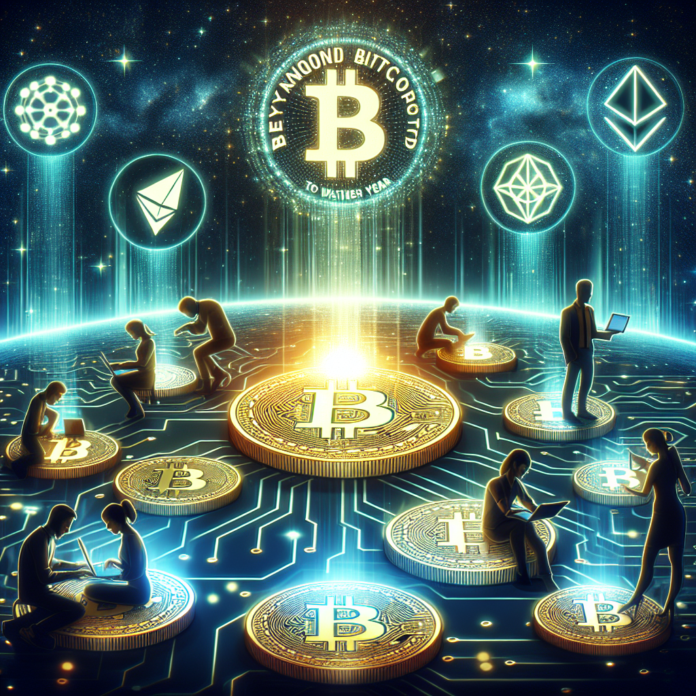
As cryptocurrency continues to evolve, more and more investors are looking beyond Bitcoin to discover promising projects that could yield significant returns. Here are some emerging cryptocurrencies to keep an eye on this year.
1. Ethereum 2.0 (ETH)
Ethereum has long been recognized as the second-largest cryptocurrency by market cap. With the transition to Ethereum 2.0, the network aims to improve scalability, security, and sustainability by shifting from a Proof of Work (PoW) to a Proof of Stake (PoS) consensus mechanism. The upgrade addresses many of Ethereum’s previous challenges and positions it for future growth.
2. Solana (SOL)
Solana has emerged as one of the most promising blockchain platforms in the crypto space, known for its lightning-fast transaction speeds and low fees. Its unique consensus mechanism, called Proof of History (PoH), allows it to handle thousands of transactions per second, making it ideal for decentralized applications (dApps). As more projects build on its platform, Solana could see substantial growth.
3. Cardano (ADA)
Cardano is often hailed for its rigorous and peer-reviewed development approach. The platform aims to create a more secure and scalable blockchain, offering advanced features like smart contracts. With the recent launch of its Alonzo upgrade, which enables smart contract functionality, Cardano is set to compete with Ethereum in the dApp space.
4. Polkadot (DOT)
Polkadot goes beyond just a single blockchain by facilitating various interconnected blockchains, allowing them to communicate and share information. This interoperability could revolutionize the way blockchain technology is utilized. As more developers recognize the benefits of building on Polkadot, it could gain traction in the coming year.
5. Avalanche (AVAX)
Avalanche is gaining popularity for its high throughput and quick finality, allowing for fast transaction processing. Its unique consensus mechanism and compatibility with the Ethereum Virtual Machine (EVM) make it an attractive platform for dApp developers. With a growing ecosystem and robust community support, Avalanche has the potential for significant appreciation.
Conclusion
While Bitcoin remains the most recognized cryptocurrency, there are numerous other emerging projects worth watching this year. Investors should research and assess their risk tolerance before diving into these digital assets. As the cryptocurrency landscape continues to evolve, innovation and opportunities are likely to abound.
For more information on the latest developments in cryptocurrency, feel free to check out CoinDesk and CoinMarketCap.
Christopher Nolan has built his reputation on directing blockbuster movies that entertain and expand the minds of moviegoers around the world. It also doesn’t hurt that he works with recognizable comic book franchises and sparked summer hype with viral sensations like Barbenheimer, a 2023 viral sensation that paired his movie Oppenheimer with another movie released the same day: Barbie.
It may not surprise you, then, to discover that Nolan’s films do well with critics. In fact, according to Rotten Tomatoes, not a single one of the films he’s directed has scored less than 70%. But which of Nolan’s films are rotten – relatively speaking – and which ones are interstellar?
The first of three Batman films on this list is also the best, at least according to reviewers on Rotten Tomatoes. The Dark Knight pits Christian Bale’s Batman against The Joker, portrayed as a more gritty, sinister, and dark version by Heath Ledger than many fans of the comics had seen before on television or in movies. The move paid off, with Ledger posthumously winning the Oscar for Best Supporting Actor for his role.
Memento (2000) – 93%
The second-oldest film on this list is also second-best, or at least that’s what we perceive it to be. In the film, Leonard, played by Guy Pearce, struggles with an altered perception of reality as a man who is dealing with a form of short-term memory loss. Nolan’s narration allows the audience to feel the same kind of disorientation by telling the story in a non-linear fashion, helping viewers understand Leonard’s condition while also putting us off-balance as we try to piece the story together.
Oppenheimer (2023) – 93%
Fans didn’t seem to mind the three-hour runtime of this Nolan film, exploring the life of physicist J. Robert Oppenheimer, played by Cillian Murphy, who was instrumental in developing the atomic bomb in 1945 as part of the Manhattan Project. Not only did the film garner the attention of moviegoers who sometimes even doubled up on Oppenheimerand Barbie screenings, but it also caught the attention of the Academy Awards. The movie won seven Oscars, including Best Picture and Best Director for Nolan. He was nominated once before for directing, but this was his first directing win to date.
Dunkirk (2017) – 92%
The other Oscar directing nomination for Nolan came for Dunkirk, the harrowing real-life tale of 330,000 soldiers evacuated from beaches in France to save them from advancing German forces in 1940. The World War II drama featured actors James D’Arcy, Barry Keoghan, Kenneth Branagh, and even Harry Styles. The movie earned eight Oscar nominations and won three.
Insomnia (2002) – 92%
Nolan was able to channel his success with Memento into picking up some big names for his next feature film. Al Pacino and Robin Williams signed on to star in Insomnia, sending a police detective played by Pacino to a small town in Alaska to investigate the murder of a girl. Williams took on the role of the primary suspect, who plays a cat-and-mouse game with the detective, making him question his investigation as he battles sleepless nights.
The Dark Knight Rises (2012) – 87%
The final of Nolan’s Batman trilogy once again featured Christian Bale as Batman – and Bruce Wayne – who returns after a long hiatus away from battling criminals in Gotham City. For this installment of the Batman films, Nolan directed Anne Hathaway as Selina Kyle, who is better known as Catwoman, and Tom Hardy as Bane.
The trippy Inception found Leonardo DiCaprio using his rare gift to steal secrets from people’s subconscious minds when they sleep, but what happens when he’s tasked with actually planting an idea in someone’s mind? The visually stunning film featured unique, dreamy shots and mind-bending landscapes, giving moviegoers an off-kilter view of the world Nolan created. The movie won four Oscars, including Best Cinematography and Best Visual Effects.
Batman Begins (2005) – 85%
The first of Nolan’s Batman trilogy was also the one least liked by fans and critics. Batman Begins was Bale’s first time taking on the role of the Caped Crusader with Nolan in the director’s chair. Bale starred alongside Morgan Freeman, Liam Neeson, Katie Holmes, Gary Oldman, and Michael Caine, as the trustworthy butler Alfred.
The Prestige (2006) – 77%
It isn’t all just Batman for Bale and Nolan. A year after the release of the first Batman movie was The Prestige, with Bale taking on another Nolan-helmed project, this time facing off against Hugh Jackman as two 19th-century magicians escalating a feud with potentially terrible consequences. The movie even features David Bowie as Nikola Tesla if you watch carefully.
Interstellar (2014) – 73%
Interstellar was another of Nolan’s long epic films, but you may not have noticed the length if you were watching the stunning visuals as Matthew McConaughey travels through the universe in search of a possible new home to save humans on a decaying Earth. Nolan’s epic vision was once again recognized by the Academy Awards, earning the film an Oscar for Best Visual Effects for its work showcasing unique worlds.
Following (1998) – 82%
Not all debuts are stellar, as was the case for Nolan and his movie, Following, which is his earliest film on this list. The movie focuses on a young writer who follows strangers around to get material, and he meets a thief who decides to help him. The black-and-white film, however, didn’t garner much of a following.
Tenet (2020) – 70%
Nolan’s trippy style and time-bending storytelling are showcased in Tenet, about a CIA agent sent on a time-bending mission that could prevent World War III. Tenet also suffered from a delayed release date due to the COVID-19 pandemic, with its original July release date pushed back to September.
For additional information, keep on visiting our website
EXCLUSIVE: Hannah Berner and Paige DeSorbo, reality stars from Summer House and podcast stars via their popular Giggly Squad, are now looking to become comedy series stars. Netflix is developing a half-hour scripted comedy co-written and headlined by the longtime best friends, which the streamer landed in a competitive situation. It is produced by Amy Poehler(Parks and Recreation, SNL), with Kay Cannon (Pitch Perfect, 30 Rock) co-writing and serving as showrunner. Universal Television, where Poehler’s Paper Kite Prods. is based, is the studio.
Set in NYC, the Untitled Hannah and Paige project stars Berner and DeSorbo as fictionalized versions of themselves as they become the ultimate ride-or-dies, helping each other shed their baggage and emerge as the people they’ve always wanted to be.
Berner and DeSorbo executive produce alongside Cannon and Kite Prods’ Poehler and Kim Lessing for Universal Television, a division of Universal Studio Group.
The project stems from an idea by Berner and DeSorbo who first met while working briefly for the same company in New York. They bonded during their time together on Bravo’s Summer House, which they both joined for its third season. Berner left after Season 5 when she kicked off her stand-up career. DeSorbo departed after last year’s Season 9 and has been focused on her career as fashion influencer, including launching her Daphne sleepwear line.
Together, Berner and DeSorbo co-host Giggly Squad, which recently won Podcast of the Year at the 2026 iHeartPodcast Awards. They also have been taking on acting roles, including in Mindy Kaling’s upcoming Hulu comedy series Not Suitable For Work.
As a stand-up, Berner opened for Poehler and Tina Fey in May 2025, and Berner and DeSorbo were guests on Poehler’s podcast Good Hang around the same time, which is how Poehler came on board their comedy project. It also wasn’t lost on Berner and DeSorbo that Poehler executive produced Comedy Central’s Broad City, which similarly starred real-life friends Ilana Glazer and Abbi Jacobson as two best friends navigating life in New York City. Poehler, in turn, brought in her longtime friend Cannon with whom she goes back to their early days on the Chicago comedy scene.
The comedy was set up at Universal TV through Poehler’s exclusive deal there. The pitch was taken out, garnering interest from multiple buyers and landing at Netflix with a script-to-series commitment.
Universal TV has become one of Netflix’s top comedy series suppliers via talent on the studio’s overall deal roster with such shows as Mike Schur’s The Man On the Inside, Fey’s The Four Seasons and Darren Star’s upcoming Uncorked.
In 2024-25, Berner and DeSorbo took their Giggly Squad podcast on a tour in the U.S. and Canada, including two sold-out shows at New York City’s Radio City Music Hall. The duo also are the authors of the bestselling book How to Giggle: A Guide to Taking Life Less Seriously.
Separately, Berner headlined the 2024 Netflix comedy special Hannah Berner: We Ride At Dawn while DeSorbo recently hosted the red carpet at the Actor Awards for Netflix. Berner is repped by WME, Entertainment 360 and Hansen, Jacobson, Teller; DeSorbo is with WME and Hansen, Jacobson, Teller.
Cannon is directing the upcoming Netflix romantic comedy One Attempt Remaining starring Jennifer Garner and John Cena and recently directed the Hulu comedy pilot Don’t Get High. She is repped by WME and Hansen, Jacobson, Teller.
Poehler, who recently won the first podcast Golden Globe for Good Hang, co-created with Schur and stars in their upcoming Peacock comedy series Dig. She is repped by WME, 3 Arts and Sloane, Offer, Weber & Dern.
Websites store cookies to enhance functionality and personalise your experience. You can manage your preferences, but blocking some cookies may impact site performance and services.
Essential cookies enable basic functions and are necessary for the proper function of the website.
Name
Description
Duration
Cookie Preferences
This cookie is used to store the user's cookie consent preferences.
30 days
These cookies are needed for adding comments on this website.
Name
Description
Duration
comment_author
Used to track the user across multiple sessions.
Session
comment_author_email
Used to track the user across multiple sessions.
Session
comment_author_url
Used to track the user across multiple sessions.
Session
These cookies are used for managing login functionality on this website.
Name
Description
Duration
wordpress_logged_in
Used to store logged-in users.
Persistent
wordpress_sec
Used to track the user across multiple sessions.
15 days
wordpress_test_cookie
Used to determine if cookies are enabled.
Session
Statistics cookies collect information anonymously. This information helps us understand how visitors use our website.
Google Analytics is a powerful tool that tracks and analyzes website traffic for informed marketing decisions.
Contains information related to marketing campaigns of the user. These are shared with Google AdWords / Google Ads when the Google Ads and Google Analytics accounts are linked together.
90 days
__utma
ID used to identify users and sessions
2 years after last activity
__utmt
Used to monitor number of Google Analytics server requests
10 minutes
__utmb
Used to distinguish new sessions and visits. This cookie is set when the GA.js javascript library is loaded and there is no existing __utmb cookie. The cookie is updated every time data is sent to the Google Analytics server.
30 minutes after last activity
__utmc
Used only with old Urchin versions of Google Analytics and not with GA.js. Was used to distinguish between new sessions and visits at the end of a session.
End of session (browser)
__utmz
Contains information about the traffic source or campaign that directed user to the website. The cookie is set when the GA.js javascript is loaded and updated when data is sent to the Google Anaytics server
6 months after last activity
__utmv
Contains custom information set by the web developer via the _setCustomVar method in Google Analytics. This cookie is updated every time new data is sent to the Google Analytics server.
2 years after last activity
__utmx
Used to determine whether a user is included in an A / B or Multivariate test.
18 months
_ga
ID used to identify users
2 years
_gali
Used by Google Analytics to determine which links on a page are being clicked
30 seconds
_ga_
ID used to identify users
2 years
_gid
ID used to identify users for 24 hours after last activity
24 hours
_gat
Used to monitor number of Google Analytics server requests when using Google Tag Manager