Cryptocurrencies have evolved beyond their initial purpose as merely a digital form of currency. Today, they encompass a wide range of use cases that leverage the inherent benefits of blockchain technology, such as decentralization, transparency, security, and efficiency. This article explores some of the most versatile applications of cryptocurrencies, including payment systems, smart contracts, and more.
1. Digital Payment Systems
One of the primary use cases for cryptocurrencies is as a means of payment. Bitcoin, Ethereum, and numerous other altcoins provide users with the ability to make peer-to-peer transactions without the need for intermediaries. This not only increases the speed of transactions but also reduces costs associated with traditional banking.
Businesses are embracing cryptocurrencies as a form of payment, with companies like PayPal and Coinbase enabling users to transact in various digital currencies. This trend is particularly notable in regions with unstable monetary systems, where cryptocurrency presents a viable alternative.
2. Remittances
Cryptocurrencies are transforming the way people send and receive remittances. Traditional remittance services can be slow and expensive, charging high fees and taking days to process transactions. In contrast, cryptocurrencies can facilitate instant transfers across borders at a fraction of the cost.
Services such as BitPesa allow users in countries with limited access to banking infrastructure to send money home quickly and affordably.
3. Smart Contracts
Smart contracts are self-executing agreements with the terms of the contract directly written into lines of code. Built primarily on blockchain platforms like Ethereum, they allow for automated and trustless transactions between parties.
Smart contracts have numerous applications, from supply chain management to real estate transactions. They eliminate the need for intermediaries, reducing the risk of fraud and errors while ensuring that agreements are executed exactly as intended.
4. Decentralized Finance (DeFi)
DeFi encompasses a wide range of financial services powered by smart contracts, including lending, borrowing, trading, and earning interest on cryptocurrencies. Platforms like Uniswap and Aave allow users to participate in decentralized exchanges and liquidity pools without the need for traditional banks.
By utilizing DeFi protocols, users can maintain full control over their assets while enjoying the benefits of financial services like yield farming and lending.
5. Non-Fungible Tokens (NFTs)
Non-fungible tokens (NFTs) represent digital ownership of unique assets, whether they be art, music, videos, or even virtual real estate. Each NFT is stored on a blockchain, providing verifiable ownership and provenance.
The rise of platforms like OpenSea and Rarible has led to a flourishing digital art market, where artists can monetize their work directly with collectors, cutting out traditional galleries and auction houses.
6. Supply Chain Management
Blockchain technology, coupled with cryptocurrencies, is also making waves in supply chain management. By providing an immutable record of transactions, businesses can track products from origin to consumer seamlessly.
Companies like Quorum are utilizing blockchain to enhance transparency and efficiency in supply chains, which benefits both businesses and consumers by minimizing fraud and improving product traceability.
Conclusion
The versatility of cryptocurrencies and blockchain technology continues to expand, offering innovative solutions across various industries. From revolutionizing traditional payment systems to enabling smart contracts and decentralized finance, the potential applications seem limitless. As the technology matures and more people embrace digital currencies, we can expect to see even more transformative use cases emerging in the future.
The Milwaukee Brewers are reportedly in early discussions with promising infielder Cooper Pratt regarding a potential contract extension, signaling the organization’s confidence in the young player’s long-term future.
Pratt, one of the Brewers’ top prospects, has steadily gained attention within the organization for his athleticism, defensive versatility, and developing offensive skills. Since being drafted, he has shown consistent growth in the minor leagues, positioning himself as a key piece in the team’s future plans.
Sources close to the situation suggest that the Brewers are eager to secure Pratt early, a strategy that has become increasingly common among Major League Baseball teams looking to lock in young talent before they reach peak value. By pursuing an extension now, Milwaukee could ensure stability within its roster while potentially avoiding higher costs down the line.
For Pratt, a contract extension would not only provide financial security but also demonstrate the franchise’s belief in his abilities. Young players often benefit from such deals, as they allow them to focus on development without the pressure of short-term performance expectations.
The Brewers have a history of investing in emerging talent, and extending Pratt would align with their broader strategy of building a competitive roster through a mix of homegrown players and strategic acquisitions. With the team aiming to remain competitive in the National League, securing key prospects early could play a crucial role in sustaining success.
While negotiations are still ongoing and no official agreement has been announced, both sides appear motivated to reach a deal. Fans and analysts alike will be watching closely as talks progress, with the potential extension representing another important step in the Brewers’ long-term vision.
As the season unfolds, Pratt’s performance will likely influence the pace and structure of negotiations. If he continues to develop at his current trajectory, a finalized deal could come sooner rather than later, marking a significant milestone in his young career.
The Brewers and prospect Cooper Pratt are reportedly on the verge of finalizing an eight-year contract worth $50.75MM. There will also be two club options worth about $15MM per year. Bob Nightengale of USA Today first reported that the two sides were working on an eight-year deal worth more than $50MM, including those club options. Jon Heyman of The New York Post reported the specific guarantee.
The Milwaukee Brewers are reportedly in early discussions with promising infielder Cooper Pratt regarding a potential contract extension, signaling the organization’s confidence in the young player’s long-term future.
Pratt, one of the Brewers’ top prospects, has steadily gained attention within the organization for his athleticism, defensive versatility, and developing offensive skills. Since being drafted, he has shown consistent growth in the minor leagues, positioning himself as a key piece in the team’s future plans.
Sources close to the situation suggest that the Brewers are eager to secure Pratt early, a strategy that has become increasingly common among Major League Baseball teams looking to lock in young talent before they reach peak value. By pursuing an extension now, Milwaukee could ensure stability within its roster while potentially avoiding higher costs down the line.
For Pratt, a contract extension would not only provide financial security but also demonstrate the franchise’s belief in his abilities. Young players often benefit from such deals, as they allow them to focus on development without the pressure of short-term performance expectations.
The Brewers have a history of investing in emerging talent, and extending Pratt would align with their broader strategy of building a competitive roster through a mix of homegrown players and strategic acquisitions. With the team aiming to remain competitive in the National League, securing key prospects early could play a crucial role in sustaining success.
While negotiations are still ongoing and no official agreement has been announced, both sides appear motivated to reach a deal. Fans and analysts alike will be watching closely as talks progress, with the potential extension representing another important step in the Brewers’ long-term vision.
As the season unfolds, Pratt’s performance will likely influence the pace and structure of negotiations. If he continues to develop at his current trajectory, a finalized deal could come sooner rather than later, marking a significant milestone in his young career.
What happens when you combine a Yankee legend with a landscape layout, a gigantic All-Star Rookie trophy, a headfirst slide, and a bang-bang play at the plate? Only good things, obviously. And such was exactly the case with the 1971 Topps All-Star Rookie card. At the same time, a keen eye, a bit of research, and a healthy dose of Hobby history reveal even more about the card that’s great.
Look quickly at Thurman Munson’s facsimile signature, and it’s possible all you’ll notice is how much more legible it is that most of what passes for autos on today’s cards. And if you’re not a die-hard Yankee fan or member of the Society for American Baseball Research, good chance you’ll think to yourself, “Oh, I didn’t know his middle initial was L. Wonder what it stands for.” (Answer: Lee.) Look longer, however, and you’ll see that the signature actually matches the silhouette of the sliding player remarkably well. The initial “Th” correspond to the legs in the air, the capitalized “L” and “M” in the middle match up with the raised shoulders and head. And finally, the “unson” at the end follows the baserunner’s outstretched arms. Not saying it’s a perfect match but it sure ain’t bad either.
Bruce Markusen at the National Baseball Hall of Fame and Museum and others have identified the sliding baserunner on the card as Oakland pitcher Chuck Dobson, who notched double-digit victories for the club five straight years from 1967 to 1971. Markusen also noted that in 1968 Dobson and teammate Reggie Jackson became major league baseball’s first pair of regular roommates to cross racial lines.
Out or Safe?
Line score from the game | Baseball-Reference.com (click image for source page)
Immediately following the All-Star Break, the A’s and Yankees kicked off their second half with a Thursday doubleheader at Yankee Stadium. The A’s thoroughly dominated, winning the game 8-2 behind a complete game by the aforementioned Chuck Dobson. But what about the play at the plate? How did it happen and what was the result? This is fairly easy to pin down since Dobson was on the bases only once that day.
With two outs in the top of the fourth and runners on first and third, Dobson successfully bunted for a base hit, scoring Tommy Davis and advancing Frank Fernandez to second. Bert Campaneris followed with a single of his own, plating Fernandez and moving Dobson into scoring position. The next batter, Joe Rudi, followed with a single of his own, sending Dobson streaking toward home plate. Yankees right fielder Curt Blefary fired the ball to Munson, no cut-off needed, but Dobson was able to slap home plate with a hand just before Munson could apply the tag.
Making the Call
1972 Topps Tom Haller “In Action” | TCDB.com (click image for source page)
Though he doesn’t make it onto the frame of the card, calling Dobson safe at home was veteran umpire Bill Haller of Joliet, Illinois. Haller made a bit of history nearly two years to the day after the call, setting up behind the plate in Detroit when the Tigers catcher was none other than his brother Tom! Whether the Detroit pitchers were a bit wild that day or Haller was trying extra hard not to show any brotherly bias, opposing batters walked seven times as Detroit lost the game 1-0.
Besides both players being legendary members of the Bronx Bombers, there is a common thread connecting the 1971 Topps Thurman Munson and 1952 Topps Mickey Mantle. The two cards are among the handful of second-year cards in Hobby history far more famous than their rookie card counterparts.
The world of cryptocurrency offers innovative financial opportunities, but it also has its share of risks, particularly from scams. Knowledge is your best defense. This guide outlines the types of scams prevalent in the crypto space and how to safeguard yourself.
Common Types of Crypto Scams
Phishing Scams: Attackers create fake websites or emails that mimic legitimate exchanges, tricking users into providing sensitive information.
Pyramid Schemes: Some cryptocurrencies promise exorbitant returns for recruiting others into the scheme, rather than investing in a legitimate service or product.
Fake ICOs: Fraudsters create phony Initial Coin Offerings, leading investors to buy tokens for a non-existent or poorly executed project.
Pump and Dump Schemes: Scammers inflate the price of a low-value coin through misleading promotions, only to sell their holdings once prices soar, leaving others with worthless assets.
Investment Scams: Promises of guaranteed returns on investments are often a red flag, particularly when they sound too good to be true.
How to Spot a Fraud
To protect yourself, be vigilant and recognized the signs of a potential scam:
Research the team behind the project. Check for credible backgrounds and previous successes.
Be wary of promises that seem too good to be true, such as guaranteed returns.
Look for transparent communication. Legitimate projects provide regular updates and have open channels for inquiries.
Verify website URLs and ensure they are secure (look for HTTPS). Scammers often use website addresses that are slightly altered or mimicked.
Trust your instincts. If something feels off, it’s better to err on the side of caution.
Safety Tips for Crypto Investors
To enhance your safety while investing in cryptocurrency, consider implementing the following strategies:
Use Reputable Exchanges: Always trade on established platforms with a proven track record.
Enable Two-Factor Authentication: This adds an additional layer of security to your accounts.
Keep Your Software Updated: Ensure that your devices and wallets are updated to protect against vulnerabilities.
Educate Yourself: Stay informed about the latest trends and common scams in the crypto world.
Use Cold Storage: Store your assets in offline wallets to mitigate hacking risks.
Conclusion
The cryptocurrency landscape can be daunting for beginners, but understanding how scams operate and being proactive about safety measures can significantly reduce your risk. Always do your due diligence, and remember: when in doubt, don’t engage.
For additional information, continue to visit our website
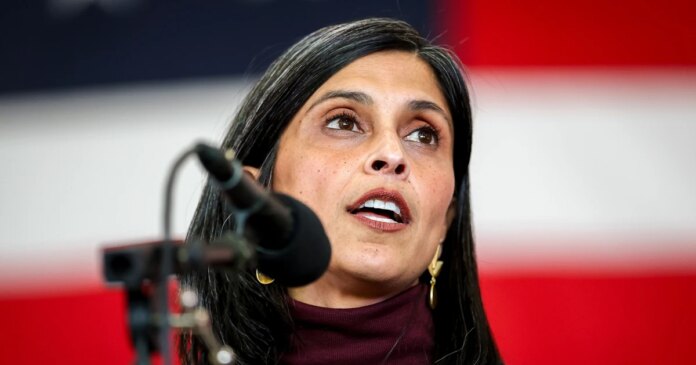
WASHINGTON — Second lady Usha Vance on Friday said that she and her husband, Vice President JD Vance, don’t always see eye to eye on every issue, but that the room for disagreement creates space for “open-minded” conversations.
“I’m not his staffer. I’m not involved in this in any professional sense. … There’s no expectation that we are going to see eye to eye on everything,” Vance said.
“The expectation is that we are going to be open-minded and have a conversation, and that I’ll provide meaningful input from, you know, the perspective of someone who loves him and wants him to succeed. So even if we don’t agree, it’s — I think it’s always very productive.”
Vance sat down with NBC News for a 30-minute interview in her new studio ahead of the launch of her podcast, “Storytime With the Second Lady,” which premieres Monday.
Vance, 40, spoke about her shift from being a Democrat to voting Republican, whether her husband plans to run for president in 2028, their decision to have another child, and why she felt strongly about creating a podcast to encourage young readers.
In late January, the Vances announced they were expecting their fourth child, a boy, in July. JD and Usha Vance would be the first vice presidential family in modern history to welcome a child while in office.
On her role in JD Vance’s job as vice president
The second lady said she considers herself a trusted adviser to her husband, especially when he’s taking a position on an issue that is “important personally.”
“There are conversations all the time,” Vance said. “I do really like to understand what’s going on in his world, what he’s really focused on, what concerns he has, because it’s a marriage. I mean, I want to be supportive of him, and if I don’t really know what’s going on, then I can’t do that.”
She added that the vice president has an entire staff of policy advisers, but he comes to her “when something is troubling him” or “when he really wants to talk through something that feels more, kind of, intensely personal or important personally.”
Vance said her husband’s future political prospects aren’t a “priority” in their current private conversations, even though he’s widely expected to run for president in 2028.
“JD is very focused on the midterm elections right now, on all the things that are happening right this moment, which are obviously exceedingly important. And so if you come back in 2027 and ask me, I’ll have a better sense of, you know, what he’s thinking in that way. But that’s not the priority in our conversations,” Vance said in response to questions about a potential presidential campaign.
The vice president himself said in a December interview with NBC News that he wouldn’t decide whether to run for president until after the 2026 midterm elections.
“I try to not wake up and ever think, ‘What does this mean for my future?’ I always try to think, ‘How can I do a good job right now,’ right? And that’s one of the reasons why I’ve tried to steer away from the 2028 conversation. … I never want the focus on the future to come at the expense of this job,” he said at the time.
The second lady, who was a registered Democrat until at least 2014 and voted Republican when her husband ran for Senate, was asked if she feels fully comfortable in the political universe she’s in now. She said that she’s never felt pressure to conform to any policy ideas even though her views don’t always fit neatly on the political spectrum.
“I do feel very comfortable in that no one has ever asked me to engage in any kind of litmus test on anything. And what I’ve found is that I was myself in 2014. I can be myself today. And I feel very comfortable in that world,” Vance said.
“I don’t feel like I have to walk around pretending anything of any sort. I didn’t think I had to do that [in 2014], actually. Sometimes I have thoughts that fit very comfortably into one side or another. Sometimes I have views that are way more idiosyncratic,” she added. “And it’s a world that I think is actually rather accepting of that, since everyone knows that I really care greatly about JD’s success.”
Vance also spoke about her role breaking barriers as the first second lady to be Hindu, saying she doesn’t feel “pressure” being the first.
“Everything about this is so novel that this is just one element of the novelty, in many ways,” she said.
Expecting a fourth child
Vance will be the first person to give birth while her husband is vice president since the 1870s.
“I learned that after I was pregnant,” she said with a laugh, adding that this pregnancy is far different from her previous three because she has to dress up more often for her role as second lady.
“My last pregnancy, there were a lot of sweat pants,” she said. “I was working from home — you know, sometimes put a blazer on over what was under.”
Vice President JD Vance, second lady Usha Vance, their daughter, Mirabel, and their son, Vivek, disembark Air Force Two in Milan on Feb. 5.Kevin Lamarque / Pool / AFP via Getty Images
She also responded to her husband’s viral comments from an event in Michigan this month in which the vice president said he was “persuasive” enough to convince her to have a fourth child.
“I remember when we decided to run for vice president, I said, ‘Honey, I really want to have a fourth kid.’ And she said, ‘Well, you can become vice president or you can have a fourth baby,’” the vice president recounted. “But, ladies and gentlemen, I am persuasive, because I got both.”
Usha Vance laughed when asked to respond to the remarks, saying her husband did persuade her to have another child, “in a manner of speaking,” although “I’ve never closed the door on that.”
The couple’s three children — two boys and one girl — are currently ages 4, 6 and 8.
“I grew up in a family of two. And I thought that was a great number. And then I had two kids, and I thought — I didn’t feel quite done, right?” Vance said. “So I really wanted to have a third child.”
She said that after having their third child their family felt complete, but she still entertained having another.
“We have our daughter, who’s amazing, and it was great. And so I just wasn’t sure. But as time passed, I realized that I was feeling more and more, kind of, excited about that possibility.”
“And so if there was a chance, I should take it, and I knew that I’d be happy if we only had three kids, and I knew that I’d be happy if we had four. And so here we are.”
The new podcast and family life
The second lady said her children helped with the design and decor of her podcast studio, where she’ll record episodes of the show. The first three episodes will premiere on Monday, featuring one episode with the second lady reading solo, one episode with racing legend Danica Patrick and one episode with Paralympian and author Brent Poppen.
“It’s a podcast that really is just for children. The notion is we will have someone come in — a special reader, we’re calling them — read a fun book, have a very short little conversation about things related to the book, maybe about their career, if they have some sort of interesting background,” Vance said. “And then invite children to pick up books on their own. It’s sort of just an advertisement for reading.”
The target audience for the podcast, the second lady said, is kids who are in late preschool or early elementary school. Vance said each episode will range between 10 to 15 minutes.
Vance added that part of the inspiration for starting a podcast for children featuring books was her experience teaching her own kids to read.
“I’ve taught all of them to read now. Our 4-year-old is just at the end of the early process,” she said.
The second lady added that while teaching her children to read was “this most amazing thing,” she was also “starting to see some of the statistics out there about the decline in literacy rates, about the fact that this is really a long-term trend, not just a pandemic-related thing.”
She added that declining literacy among children is “worrisome,” and seeing the statistics led her to think, “If I was going to do anything, this would be the thing to focus on at this moment in time.”
Vance added that she hopes the podcast will inspire parents to read to their children at home, saying, “There’s just a lot that people can do in their family home without a ton of resources or effort.”
The second lady also spoke about some aspects of daily life that she tries to maintain despite the spotlight on her family, which lives in the vice president’s residence at the Naval Observatory in Washington.
“We have our neighborhood shops. We have our Costco membership,” Vance said, adding that making those trips as the second family is always “an adventure.”
“We have all our favorite things that we get,” she said. “They pick their lunchbox items from there. It’s just sort of a family tradition. It’s the kind of stuff that you don’t want to let go when you have a family life and you move into something like the Naval Observatory.”
She’s also maintained the love of reading that drew attention from the public on the campaign trail in 2024 by joining a book club, she said, which includes “some neighbors of mine.”
“One of the other advantages of my position is that, in reality, people don’t recognize me all that much. And if I wear my jeans and a T-shirt and pull my hair up and go to the grocery store or go to the library, maybe someone will notice,” Vance said. “But for the most part, I can just do those kinds of things. And I try to make a point of it, you know, not to be afraid to get out there. And I find I’m always pleasantly surprised.”
In recent years, cryptocurrency has transitioned from a niche digital currency to a legitimate financial instrument influencing economies across the globe. This article explores how cryptocurrencies are reshaping the financial landscape, their implications for traditional banking systems, and the future of financial transactions.
The Rise of Cryptocurrency
Bitcoin, the first decentralised cryptocurrency, was introduced in 2009, marking the beginning of the blockchain revolution. Since then, thousands of cryptocurrencies have emerged, including Ethereum, Ripple, and Litecoin, each serving unique purposes beyond just transactions.
Decentralization: A Game Changer
One of the core features of cryptocurrencies is their decentralised nature. Traditional financial systems are often controlled by central banks and governments, whereas cryptocurrencies operate on a distributed ledger technology called blockchain. This decentralisation allows for greater transparency and security, minimizing the risks of fraud and manipulation.
Empowering the Unbanked
Approximately 1.7 billion people globally lack access to basic banking services. Cryptocurrencies provide an alternative for these individuals, allowing them to store and transfer wealth without the need for traditional banking infrastructure. With just a smartphone and internet connection, anyone can access financial services, making cryptocurrency a powerful tool for financial inclusion.
Smart Contracts and Automation
Beyond simple transactions, platforms like Ethereum enable developers to create smart contracts—self-executing contracts with the terms of the agreement directly written into code. This innovation can streamline various industries, from real estate to supply chain management, reducing the need for intermediaries and cutting costs.
Challenges Ahead
Despite its potential, the cryptocurrency market faces challenges, including regulatory scrutiny, price volatility, and security concerns. Governments worldwide are grappling with how to regulate digital assets effectively while fostering innovation. Furthermore, public perception and understanding of volatility remain significant barriers to widespread adoption.
The Road Ahead
As cryptocurrencies continue to evolve, their impact on the global economy is likely to grow. Financial institutions are already exploring ways to integrate blockchain technology into their operations, and central bank digital currencies (CBDCs) are becoming a reality in many countries. The future of finance may be decentralised, digital, and incredibly dynamic, transforming how we conduct transactions and interact with money.
Conclusion
Cryptocurrency is not just a trend; it is a pivotal force in redefining the global economy. With its potential to disrupt traditional financial systems, empower the unbanked, and streamline processes through smart contracts, the future of finance looks promising. As we navigate the challenges ahead, embracing this technological revolution could lead to a more inclusive and efficient global economy.
This market refers on the tennis match between Nikoloz Basilashvili and Daniel Michalski in the Bucharest Open, Qualification, scheduled for March 30 at 7:00AM ET.This market will resolve to ‘Nikoloz Basilashvili’ if Nikoloz Basilashvili advances against Daniel Michalski.
This market will resolve to ‘Daniel Michalski’ if Daniel Michalski advances against Nikoloz Basilashvili.
If the match is canceled (not played at all), ends in a tie, or is delayed beyond 7 days from the scheduled date without a winner determined, this market will resolve to 50-50.
If the match begins but is not completed, and one player advances due to the opponent’s retirement, default, or disqualification, this market will resolve to the player who advances.
Both teams have shown mixed form in recent fixtures. One side has demonstrated strong attacking capabilities, consistently finding the back of the net, while the other has relied on a solid defensive structure to grind out results. Analyzing their last five matches reveals trends in scoring patterns, defensive lapses, and overall momentum heading into this game.
Individual brilliance often decides tight contests. Keep an eye on the leading goal scorers, playmakers, and defensive anchors. A striker in top form or a goalkeeper with a high save percentage could significantly influence the outcome. Injuries or suspensions to key players may also shift the balance.
Past encounters between these two teams provide valuable insights. Historically, one side may have dominated, or matches could have been evenly contested. These records can help predict possible outcomes, though current form should not be overlooked.
Expect contrasting styles of play. One team may adopt an aggressive, high-press approach, while the other could focus on counterattacks and maintaining possession. Tactical discipline and in-game adjustments will be critical in determining which side gains the upper hand.
If the match ends in a walkover (player withdraws before the start and the other advances automatically), this market will resolve to 50-50.
The primary resolution source will be official information from the ATP Tour. A consensus of credible reporting may also be used.
AUSTIN, Texas — For the second straight game, No. 2 Texas walked off No. 8 Oklahoma in 10 innings, securing the sweep with a 5-4 victory at UFCU Disch-Falk Field on Saturday afternoon.
With the bases loaded and two outs, Casey Borba singled up the middle to plate Adrian Rodriguez, capping off the Longhorns’ first series sweep over the Sooners (19-8, 4-5 SEC) since 2014.
Once again, Texas (23-4, 7-2 SEC) erased a three-run hole, scoring in three of the final four frames to register its fifth comeback win of the season.
In the eighth, Carson Tinney and Aiden Robbins led off with back-to-back singles on consecutive pitches to place runners on the corners for Rodriguez.
The sophomore shortstop delivered a run-scoring groundout to tie the score, 4-4.
One inning earlier, Ethan Mendoza pulled the Longhorns within a tally on an RBI single.
After Oklahoma jumped out to a 3-0 lead in as many frames, Tinney tattooed a two-run blast into the YETI Yard to put Texas on the board in the bottom half. The catcher’s 111-mph rocket was his seventh homer of the season.
As the Longhorns began to rally in the later innings, Texas’ bullpen quieted the visitors.
Brett Crossland pitched a career-best 2 1/3 innings, punching out four of the 10 batters he faced in relief of Dylan Volantis.
Meanwhile, Haiden Leffew (2-0) retired all six Sooners over the final two frames, recording three strikeouts.
Across the series, the Longhorns welcomed 23,407 fans to UFCU Disch-Falk Field, the third-highest mark for a three-game set in the ballpark’s history. On Saturday, the 8,059 fans in attendance were the second-most for a regular season contest since opening more than 41 years ago.
Prior to the finale, Texas hosted its second traDISCHions day of the 2026 campaign.
The Longhorns honored right-handed pitcher Adrian Alaniz, who helped guide Texas to the 2005 national championship.
During that title-winning season, Alaniz tossed a no-hitter against Oklahoma on April 16.
Following his standout career in burnt orange, he was selected in the eighth round of the 2007 Major League Baseball Draft by the Washington Nationals. Alaniz would go on to play five years in professional baseball.
Up next, Texas wraps up its four-game homestand with Texas State on Tuesday. First pitch is slated for 6:30 p.m. at UFCU Disch-Falk Field.
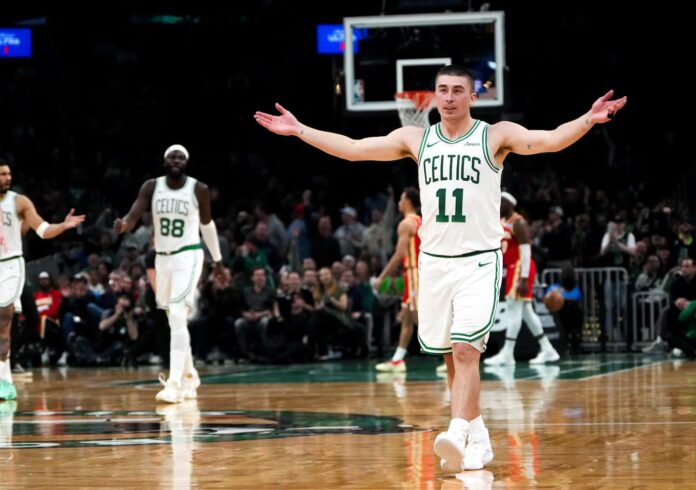
Boston can clinch a playoff berth in a variety of ways. Win, and the Celtics are in. A Raptors loss or a Knicks win will also secure a spot in the postseason for the Celtics.
In the group’s last game, the Celtics turned away the red-hot Hawks, winning 109-102. Atlanta had won 14 of their last 15 games entering Thursday’s game.
The Hornets claimed the first meeting of the season on Mar. 4, dominating en route to a 118-89 decision.
Get Starting Point
A guide through the most important stories of the morning, delivered Monday through Friday.
Charlotte (39-35) occupies the final play-in spot in the Eastern Conference. Here’s the preview:
When: Sunday, 6 p.m.
Where: Spectrum Center, Charlotte, N.C.
TV, radio: NBCSB, WROR-FM 105.7
Line: Boston -1. O/U: 216.0.
CELTICS
Season record: 49-24. vs. spread: 42-31. Over/under: 26-47
Last 10 games: 7-3. vs. spread: 5-5. Over/under: 4-6
HORNETS
Season record: 39-35. vs. spread: 46-27, 1 push. Over/under: 28-46
Last 10 games: 7-3. vs. spread: 5-5. Over/under: 3-7
TEAM STATISTICS
Points per game: Boston 114.1, Charlotte 116.3
Points allowed per game: Boston 106.9, Charlotte 111.7
Field goal percentage: Boston .463, Charlotte .460
Opponent field goal percentage: Boston .441, Charlotte .467
3-point percentage: Boston .361, Charlotte .381
Opponent 3-point percentage: Boston .356, Charlotte .359
Stat of the day: The Celtics average 15.2 made 3-pointers per game –– good for third in the league — while shooting 36.1 percent from downtown.
Notes: The Hornets are 7-3 in their last 10 games … The teams will meet for a third and final time on April 7 in Boston … Following a five-game winning streak, the Hornets lost to the 76ers, 118-114, on Saturday … Derrick White leads the team with 2.8 made 3-pointers per game. He shoots 32.3 percent from beyond the arc … Boston has won six of its last seven contests … Sunday’s game kicks off a four-game road trip for the Celtics … Jaylen Brown (left Achilles tendonitis), Neemias Queta (right thumb sprain), and Derrick White (right knee contusion) are all questionable to play … Nikola Vucevic will not play as he recovers from a fractured right ring finger.
Websites store cookies to enhance functionality and personalise your experience. You can manage your preferences, but blocking some cookies may impact site performance and services.
Essential cookies enable basic functions and are necessary for the proper function of the website.
Name
Description
Duration
Cookie Preferences
This cookie is used to store the user's cookie consent preferences.
30 days
These cookies are needed for adding comments on this website.
Name
Description
Duration
comment_author
Used to track the user across multiple sessions.
Session
comment_author_email
Used to track the user across multiple sessions.
Session
comment_author_url
Used to track the user across multiple sessions.
Session
These cookies are used for managing login functionality on this website.
Name
Description
Duration
wordpress_logged_in
Used to store logged-in users.
Persistent
wordpress_sec
Used to track the user across multiple sessions.
15 days
wordpress_test_cookie
Used to determine if cookies are enabled.
Session
Statistics cookies collect information anonymously. This information helps us understand how visitors use our website.
Google Analytics is a powerful tool that tracks and analyzes website traffic for informed marketing decisions.
Contains information related to marketing campaigns of the user. These are shared with Google AdWords / Google Ads when the Google Ads and Google Analytics accounts are linked together.
90 days
__utma
ID used to identify users and sessions
2 years after last activity
__utmt
Used to monitor number of Google Analytics server requests
10 minutes
__utmb
Used to distinguish new sessions and visits. This cookie is set when the GA.js javascript library is loaded and there is no existing __utmb cookie. The cookie is updated every time data is sent to the Google Analytics server.
30 minutes after last activity
__utmc
Used only with old Urchin versions of Google Analytics and not with GA.js. Was used to distinguish between new sessions and visits at the end of a session.
End of session (browser)
__utmz
Contains information about the traffic source or campaign that directed user to the website. The cookie is set when the GA.js javascript is loaded and updated when data is sent to the Google Anaytics server
6 months after last activity
__utmv
Contains custom information set by the web developer via the _setCustomVar method in Google Analytics. This cookie is updated every time new data is sent to the Google Analytics server.
2 years after last activity
__utmx
Used to determine whether a user is included in an A / B or Multivariate test.
18 months
_ga
ID used to identify users
2 years
_gali
Used by Google Analytics to determine which links on a page are being clicked
30 seconds
_ga_
ID used to identify users
2 years
_gid
ID used to identify users for 24 hours after last activity
24 hours
_gat
Used to monitor number of Google Analytics server requests when using Google Tag Manager