

Home Blog Page 44

Evolving Risks in Personal Injury Law


California’s roads are getting more dangerous, and the legal landscape is shifting fast. With over 4,000 traffic fatalities reported in a single year by the California Office of Traffic Safety, the pressure on personal injury attorneys to adapt has never been higher.

The Scale of California’s Traffic Problem

California consistently ranks among the states with the highest volume of traffic collisions. With a population exceeding 39 million and heavy reliance on highway infrastructure, that shouldn’t come as a surprise. According to the California Office of Traffic Safety, the state sees roughly 1,370 collisions every single day.

So what’s causing all these crashes? Statewide car accident statistics point to speeding as a factor in about one-third of all incidents. Distracted driving and alcohol impairment remain persistent hazards as well. And as the severity of these accidents climbs, the legal and financial stakes for victims grow right alongside them.

California Traffic Safety Metric Reported Data
Daily traffic collisions 1,370+ incidents
Annual traffic fatalities 4,061 deaths
Fatalities involving alcohol impairment 1,355 deaths
Crashes attributed to speeding ~33% of all incidents

Insurance Companies Are Playing a Different Game

Here’s what many accident victims don’t realize: the insurance industry is increasingly relying on artificial intelligence and automated tools to process claims faster. Speed sounds like a good thing, right? It’s not. At least not for the people filing those claims.

These automated systems frequently undervalue long-term medical costs, lost earning potential, and the emotional toll of a serious accident. The goal is simple: close cases quickly, before the full extent of injuries becomes clear. For someone dealing with mounting hospital bills and an inability to work, a fast settlement offer can feel like a lifeline. But accepting too early often means leaving significant money on the table.

Why “Honest Assessment” Models Are Gaining Traction

Countering these algorithmic lowball offers takes more than aggressive posturing. It requires a calculated, data-driven approach that starts long before a case reaches a courtroom.

Nick Cohen, Founder of Cohen Injury Law Group, a Los Angeles-based personal injury firm, sees this dynamic playing out daily. “The legal industry currently faces a flood of automated, low-ball settlement offers designed to capitalize on a victim’s immediate financial panic,” Cohen says. “Our honest assessment model relies on transparent communication. We tell clients exactly what their case is worth based on historical data, and if an insurer refuses to meet that valuation, we bypass the settlement table and take the case to trial.” This commitment to securing fair compensation is a critical factor for anyone searching for a dedicated Ventura car accident lawyer.

That willingness to litigate matters. When insurance carriers know a firm won’t just accept whatever number their algorithm spits out, it forces a very different kind of negotiation. Cases move from automated lowball territory into serious, evidence-based discussions.

What Victims Should Look For in Legal Representation

Beyond courtroom strategy, the operational side of a law firm can make or break a claim. Victims of severe collisions often face immediate physical, emotional, and financial vulnerabilities. So what separates a firm that truly serves its clients from one that’s just processing cases?

A few factors stand out:

  • Around-the-clock availability: Accidents don’t happen on a convenient schedule. Firms offering 24/7 live call answering ensure victims can reach counsel when they need it most.
  • Home and hospital visits: Severely injured clients can’t always travel to an office. The best firms come to them.
  • Contingency fee structures: If a firm only gets paid when you win, it removes the financial barrier that keeps many victims from seeking help in the first place.
  • Ethical accountability: Accreditation through organizations like the Better Business Bureau signals a commitment to transparent practices.

These aren’t just nice-to-have features. They’re structural advantages that protect clients during what’s often the most difficult period of their lives.

Where Personal Injury Law Is Headed

As California’s roads get busier and insurers lean harder into automated claim processing, the gap between a quick settlement and a fair one is only going to widen. Victims who understand this dynamic, and who choose representation that combines rigorous case valuation with genuine accessibility, will be in a far stronger position.

The firms setting the benchmark in 2026 aren’t the ones filing the most cases. They’re the ones willing to go to trial when the numbers don’t add up. For legal professionals watching these trends, the takeaway is clear: data-driven, client-focused advocacy isn’t a niche strategy anymore. It’s becoming the standard.



Source link

Blockchain Beyond Bitcoin: Innovative Uses of Cryptocurrency Technology


Blockchain Beyond Bitcoin: Innovative Uses of Cryptocurrency Technology

While Bitcoin is often the first thing that comes to mind when discussing blockchain technology, its potential extends far beyond digital currency. The underlying technology, characterized by decentralization, transparency, and security, opens doors to various innovative applications across multiple sectors. Here are some key areas where blockchain is making a notable impact.

1. Supply Chain Management

Blockchain technology is revolutionizing supply chain management by providing a transparent and immutable record of every transaction that occurs within the supply chain. Companies can track products from their origin to the consumer, improving accountability and reducing fraud. For instance:

  • Blockchain can verify the authenticity of products, protecting consumers from counterfeits.
  • Smart contracts can automate and streamline processes, ensuring timely deliveries and payments.

2. Healthcare

The healthcare industry is leveraging blockchain for enhanced patient data management and security. With blockchain, patient records can be securely shared among authorized providers while maintaining patient privacy. Key benefits include:

  • Improved data integrity, preventing unauthorized tampering.
  • Enhanced collaboration across healthcare providers for better patient outcomes.

3. Voting Systems

Blockchain technologies can significantly enhance the integrity of voting systems. By allowing votes to be cast on a blockchain, the process becomes more transparent and less susceptible to fraud. Advantages include:

  • Ensured anonymity and security of voters.
  • Real-time tracking and auditing of votes, enhancing public trust in electoral processes.

4. Real Estate

Real estate transactions can be complex and fraught with paperwork. Blockchain can simplify the process by digitizing relevant documents and enabling secure, automated transactions. Gains from this innovation include:

  • Reduced paperwork and faster transactions.
  • Increased transparency regarding property ownership and history.

5. Digital Identity Verification

Blockchain technology can offer individuals greater control over their digital identities. By creating decentralized, tamper-proof digital identities, users can manage their personal information more securely, with applications such as:

  • Cross-platform verification without the need for multiple passwords and accounts.
  • Reduced risk of identity theft and fraud.

As we can see, the innovative uses of blockchain technology far surpass its initial conception as merely the foundation for Bitcoin. From supply chain tracking to digital identities, the applications of blockchain are poised to create profound changes across various industries. As development continues and adoption spreads, we may find ourselves increasingly reliant on this transformative technology in our daily lives.

© 2023 Innovative Tech Insights. All rights reserved.

Buffalo Bill’s Fan Defensiveness in 2026


The Buffalo Bills have a long list of tasks toward building a roster that best-fits the new regime, which includes head coach Joe Brady and defensive coordinator Jim Leonhard. With the hype of free agency behind them, one of the team’s best chances at developing long-term roster viability is through the 2026 NFL Draft.

There are plenty of options for Buffalo to consider, with unfilled needs across the roster. Yet, it’s the defense that stands out most in this department, and one in you’re likely to see plenty of continued talk about from analysts and mock drafts.

Advertisement

In considering the latest Reacts poll results here at Buffalo Rumblings, readers are in lock-step with the idea of defense in Round 1 of the draft. So how did the vote turn out? The linebacker position led the way, with 33% of the vote, followed by edge rusher at 23% of voters. The defensive line even garnered 15% of votes despite the Bills’ recent draft investments in the room. All told, 71% of votes went to the defensive side of the ball — with a nebulous 5% of voters choosing “other,” and which could be seen to include the safety position.

As for Buffalo’s biggest offense since needs, the wide receiver position finished in third with 22% of votes, meanwhile offensive line won just 2% of votes.

Regarding the results of our second question, Rumblers are not on board with the Bills trading up in Round 1 of the 2026 NFL Draft. Just 21% of voters said they’d want One Bills Drive to be aggressive in moving up to select a player early in the proceedings.

Think you’ve got what it takes to make a play on the Buffalo Bills this season? Get in the game within the game now at FanDuel Sportsbook!


Source link

Charting the Course: Trends and Predictions for Cryptocurrency in 2024


Charting the Course: Trends and Predictions for Cryptocurrency in 2024

The cryptocurrency market has experienced significant evolution and volatility over the past few years. As we advance into 2024, understanding the emerging trends and making informed predictions is crucial for investors, enthusiasts, and policymakers alike. Here, we explore some of the key trends and predictions shaping the future of cryptocurrency.

1. Regulatory Developments

As governments worldwide grapple with the rise of digital currencies, we anticipate a wave of regulatory frameworks coming into effect. Countries may begin to harmonize their policies, creating a more stable environment for crypto trading and investment.

2. Rise of Central Bank Digital Currencies (CBDCs)

With numerous central banks exploring the idea of issuing their own digital currencies, the rise of CBDCs is expected to accelerate in 2024. This could lead to increased adoption of blockchain technology and potentially reshape traditional banking systems.

3. Enhanced Focus on Security

As cyber threats continue to evolve, the cryptocurrency space will likely see a heightened emphasis on security measures. Innovations like multi-signature wallets, decentralized identity solutions, and improved encryption may gain prominence.

4. Institutional Investment and Adoption

Institutional investment in cryptocurrency is expected to grow as more funds and corporate investors enter the market. This trend will drive greater liquidity and stability, opening new avenues for retail investors.

5. Integration of DeFi and Traditional Finance

Decentralized Finance (DeFi) has revolutionized the way financial services are accessed. By 2024, we predict a stronger integration of DeFi platforms with traditional finance, leading to innovative financial products that leverage the best of both worlds.

6. Environmental Concerns and Sustainable Practices

Given the increasing scrutiny over the environmental impact of cryptocurrency mining, there will be a strong push towards greener practices. Proof-of-Stake (PoS) mechanisms and sustainable energy solutions will likely become more common.

Conclusion

As we step into 2024, the cryptocurrency landscape is poised for transformative changes. By staying informed of these trends and predictions, stakeholders can navigate the complexities of the crypto world more effectively. Whether you are an investor, a developer, or simply a curious observer, understanding these dynamics will be key to charting your own course in the ever-evolving cryptocurrency ecosystem.

49ers GM John Lynch Rules Out Joey Bosa, Parting Ways with Jauan Jennings


PHOENIX — As the NFL owners’ meetings were about to get underway, San Francisco 49ers general manager John Lynch took time Sunday to say goodbye to a former player, Jauan Jennings, while trying to gently temper expectations about a possible reunion for another player’s mom.

The 49ers decided free agent Mike Evans was a more “dynamic fit” for their offense than Jennings, and reminded reporters the team had tried to sign Jennings to a long-term contract in the past. It just didn’t work out, as he wound up testing the free-agent market.

Unlike the tests on the nearby substation, these evaluations are still underway as Jennings remains unsigned.

“He’ll find a good home, and Jauan will go play great football for someone,” Lynch said. “I can’t say enough for what that guy did; when that guy stepped between the lines, man, he was a presence, and they had to deal with him, and he won us a lot of games.”

Lynch was also asked about the prospect of signing free agent defensive end Joey Bosa to play with his younger brother, 49ers stalwart Nick Bosa.

Lynch smiled.

“I know that would make Mama Bosa happy,” he said, “but I don’t know if we can afford him.”

Cheryl Bosa has taken to social media to post an edited picture of her sons in 49ers uniforms.

The team looked into signing Joey last offseason, but he wound up getting a one-year deal with the Buffalo Bills for $12.6 million. The two were last teammates at St. Thomas Aquinas High in Fort Lauderdale, Fla., in 2012.

Bosa turns 31 in July, and the 49ers have said they want to get younger and faster. That was, of course, before they signed Evans, who turns 33 in August.

Lynch said coach Kyle Shanahan had a vision of how Evans would fit with the 49ers after a dozen years putting up “Hall of Fame numbers” for the Tampa Bay Buccaneers. Evans took less money — $14.3 million next season — than other teams were offering.

“We got him on a good deal,” Lynch said. “He really wanted to be part of our organization. That’s humbling.”

The same goes for former Arizona Cardinals and Houston Texans receiver Christian Kirk.

“Very similar to Mike, Kirk could have gone some other places, too, but he wanted to be in the right situation, and he liked our place,” Lynch said. “Always been a huge fan of Christian since Arizona. I feel lucky to get both of those guys.”

There has been some speculation the 49ers might draft another receiver in the first couple of rounds of next month’s NFL Draft, but Lynch downplayed that possibility. They have Evans, Kirk, Ricky Pearsall, Demarcus Robinson, Jacob Cowing and Jordan Watkins at the top of the depth chart and could add someone later in the draft, Lynch said.

Meanwhile, he is excited about the example Evans and Kirk will set, which will benefit receivers coach Leonard Hankerson in meetings and at practice.

“Those (receivers) rooms are always interesting ones, with a lot of dynamics,” Lynch said. “To have two grown men is really exciting. Hank’s looking forward to it, and we’re all looking forward to it, not to disparage anyone we’ve had. … Those guys play the game the right way.”

Extra points: The 49ers are “hopeful,” Lynch said, that tight end George Kittle will make it back for the season-opening game in Australia against the Los Angeles Rams. He suffered a torn Achilles on Jan. 11. “There’ll be some management during training camp,” Lynch said. “He’s progressing at a good rate.”

Nick Bosa, meanwhile, is expected to be ready for the start of training camp as his recovery from a torn ACL is going well. Last year’s first-round pick, defensive end Mykel Williams, is a little behind Bosa’s schedule, as he tore an ACL in November, and Lynch said the team will ramp up his workload over the summer. “It could go into the season, but he’s doing really well,” the GM said.

Lynch envisions a competition among Robert Jones, Connor Colby and Brett Toth for the starting left guard spot but didn’t say the starter would be one of those three. “I don’t think we’re done there yet,” Lynch said. “You know, we still have a draft.”


Source link

Game Day Rituals of a University of Arizona Superfan

TUCSON, Ariz. (KGUN) — Whether it’s a lucky shirt, a specific seat, or a pre-game routine, University of Arizona sports fans say these traditions provide a sense of connection, and perhaps even a little control, over the outcome of a game.

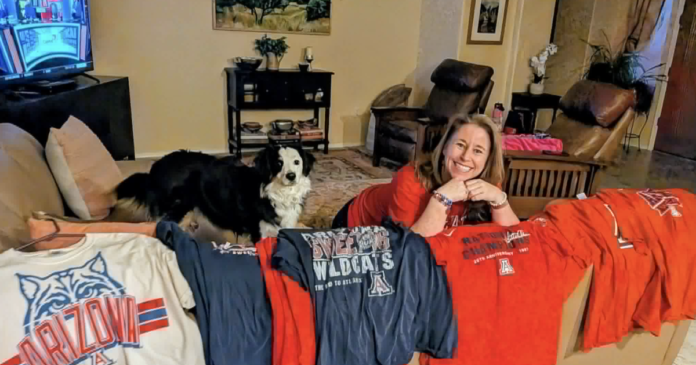
For Ashley Hendrickson, a 2001 U of A graduate, that dedication involves a strict game-day wardrobe ritual.

Ashley Hendrickson

Ashley Hendrickson poses next to the clothes she uses for her game day ritual during every University of Arizona men’s basketball games.

“Oh no, I mean, anything that might sway the game in the Cats’ favor for us to win, I’m pretty much down for it as long as someone is willing to bail me out of jail,” Hendrickson said.

Hendrickson’s lifelong fandom started early.

“I was little, I was really little. My dad and my mom would take me to the games; we had three season tickets,” Hendrickson said.

Over time, that fandom turned into a routine she follows during every men’s basketball game.

“The first time I changed my shirt was at the Elite Eight in LA, 2015, when we lost to Wisconsin. And I had taken the shirts, and when we started to lose, I changed the shirts a couple of times. And it worked, and then it didn’t work, so I changed it back,” Hendrickson said.

She says her wardrobe routine is not random.

“I always start every game in this outfit. With the same shirt, the same jeans, same socks, same bracelets, same earrings,” Hendrickson said.

Her ritual follows a specific order as the game unfolds. If the Wildcats start losing, she takes matters into her own hands.

“And I start by taking the left bracelet off, and if that doesn’t make an incredible difference right away, immediately the right bracelets come off,” Hendrickson said.

Sometimes, the timing of those changes feels impossible to ignore.

“Then I watch for another 30 seconds and I sit back for another 30 seconds, a minute, see what happens and then I go to this shirt,” Hendrickson said.

Hendrickson recalls a 2024 University of Arizona men’s basketball game against Utah where she felt her game-day ritual worked.

“We had gone into triple overtime, and I kept changing shirts, and we kept tying the game. And so, but I had gone through all the shirts, and we couldn’t pull away. So, for the third overtime, I actually just went shirtless and sat under a blanket and we won,” Hendrickson said.

Now, the ritual has grown beyond just her, with friends and other fans watching closely and joining in.

Ashley HendricksonAshley Hendrickson
Ashley Hendrickson at a University of Arizona men’s basketball game with her friend Kathy VonCannon.

“I will get texts from my friends, ‘Did you take the bracelets off? Are you changing yet? When are you changing? What’s happening?’” Hendrickson said.

While she does not fully believe it controls the outcome, it makes every game feel more connected.

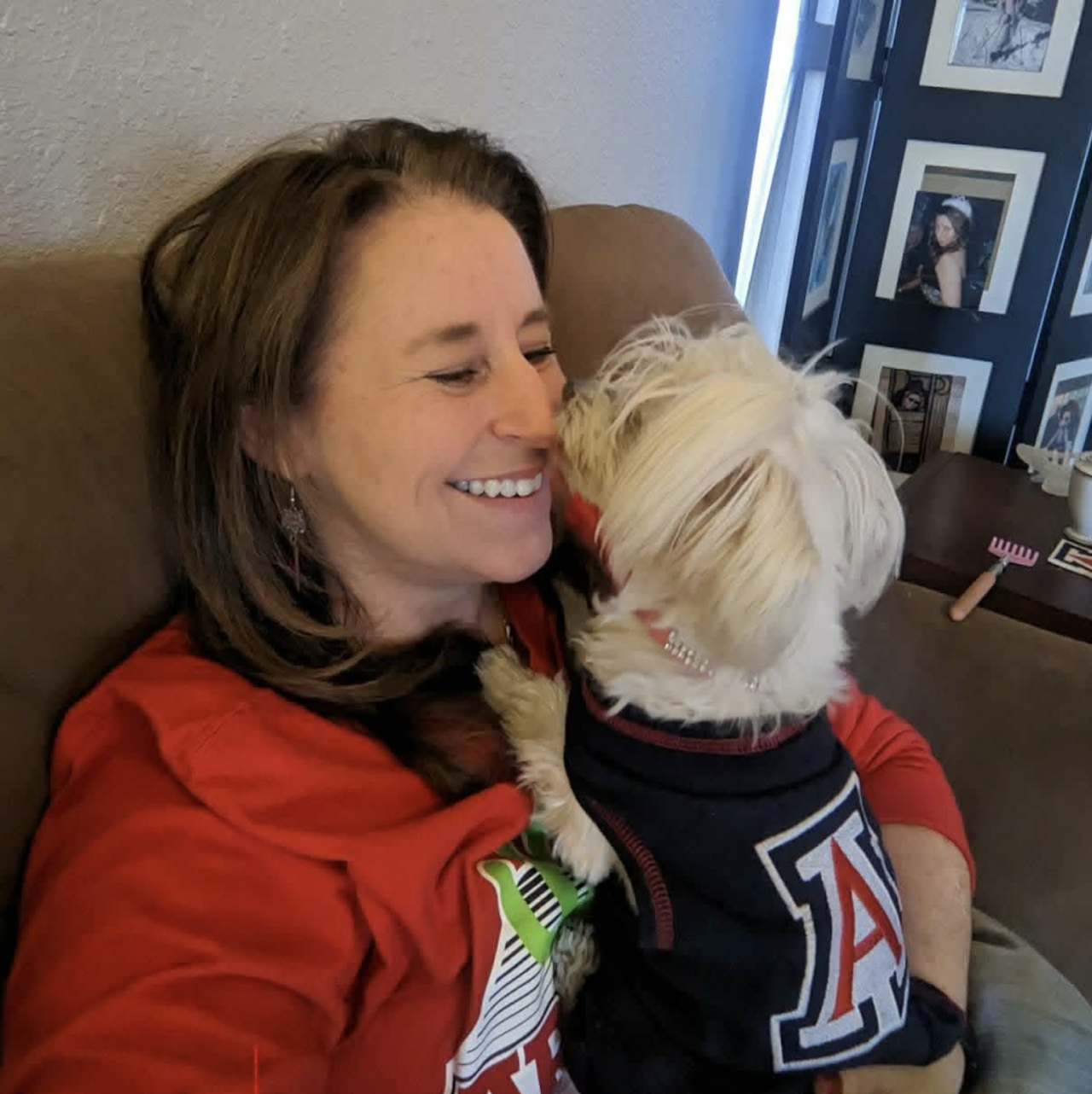
Ashley Hendrickson and her dog DasherAshley Hendrickson
Ashley Hendrickson and her dog Dasher.

“If anything more, it just brings a sense of community, having something in common. That’s my favorite part about it,” Hendrickson said.

She is taking her routine on the road, heading to Indianapolis Friday to watch the Wildcats play and hoping her rituals bring a little extra luck.

This story was reported on-air by a journalist and has been converted to this platform with the assistance of AI. Our editorial team verifies all reporting on all platforms for fairness and accuracy.

——
Jacqueline Aguilar is a multimedia journalist at KGUN 9. Born and raised in Yuma, AZ., she is no stranger to the unforgiving Arizona heat. Now this U of A wildcat is excited to be back in Tucson and is looking forward to involving herself in the community. Share your story ideas with Jacqueline by emailing jacqueline.aguilar@kgun9.com or connecting on Facebook, Instagram or X.

Join our website for cool news and cool tips

How to Protect Your Digital Assets

The cryptocurrency market is expanding rapidly, but with this growth comes a higher risk of security breaches and cyberattacks. Whether you are a casual investor or a professional trader, it is crucial to take the necessary precautions to protect your digital assets. In this article, we will explore various strategies and tools that can help safeguard your investments in the crypto space.

1. Use Secure Wallets

Your cryptocurrency wallet is where your digital assets are stored, making it a target for hackers. There are different types of wallets, including:

  • Hardware Wallets: These are physical devices that store your private keys offline, providing superior security.
  • Software Wallets: These wallets are applications that can be installed on your computer or mobile device. Make sure to choose reputable software.
  • Paper Wallets: This method involves printing your private and public keys on paper, which can be a secure offline method if stored properly.

2. Enable Two-Factor Authentication (2FA)

Two-factor authentication adds an extra layer of security by requiring a second form of verification, such as a text message or a mobile app, in addition to your password. Enable 2FA on all crypto exchanges and wallets that offer this feature.

3. Be Wary of Phishing Scams

Phishing scams are attempts to trick you into providing sensitive information, such as your wallet credentials. Always double-check URLs and avoid clicking on suspicious links. Use official websites and bookmarks to access your accounts.

4. Keep Software Updated

Regularly update your wallet software and any applications you use. Developers frequently release updates to address security vulnerabilities. Keeping your software up to date minimizes the risk of exploitation.

5. Use Strong Passwords

Ensure that your passwords are complex and unique. A strong password should include a mix of letters, numbers, and special characters. Additionally, consider using a password manager to help keep track of your credentials.

6. Diversify Your Holdings

Investing in a variety of cryptocurrencies can reduce risk. Should one asset experience a security breach, your overall portfolio’s value may remain stable if other assets are unaffected.

7. Regularly Monitor Your Accounts

Stay vigilant by frequently checking your wallet and exchange accounts for any unauthorized transactions. Early detection can help mitigate losses if a security issue arises.

Conclusion

The crypto space can be lucrative, but it also presents unique security challenges. By following the practices outlined in this article, you can help protect your digital assets from theft and loss. Stay informed and be proactive about your security measures to navigate the crypto landscape safely.

For more information, consider visiting reputable resources such as CoinDesk or Crypto.org.

To find out more, keep on visiting our website

Giants Prevail as Buehler Struggles and Padres Fall Short

The first test of the Walker Buehler experiment was not great.

How long it lasts will be a question every time he pitches or until he is much better than in his Padres debut.

As for Monday, while the three runs Buehler allowed in the first four innings ended up being the difference in a 3-2 loss, it was only at the last possible moment that the Padres offense helped out in any way and posed any threat to the Giants getting their first victory of the season.

Both Padres runs came with two outs in the bottom of the ninth when Jackson Merrill launched a two-run homer off Giants closer Ryan Walker.

The Padres’ pitching (both bad and good) and the Detroit Tigers’ excellent pitching made so that attention was diverted from an anemic Padres offense in the season’s first series.

But four games in, they have scored a total of nine runs, are batting .181 and are 5-for-26 (.192) with runners in scoring position.

Giants starter Landon Roupp, who in four previous starts against the Padres had either shut them out for at least five innings or been pummeled, allowed two hits, walked two and struck out seven over six innings on Monday.

“Our game plan is there,” Gavin Sheets said. “We just need to trust ourselves. I think we’re trying to go get results instead of just letting it come.”

Roupp might have gotten them off their plan a bit. The right-hander pounded the strike zone and had the Padres off-balance with an excellent changeup and curveball and by throwing harder and mixing in more cutters than they expected. He allowed singles to Xander Bogaerts in the second inning and Fernando Tatis Jr. in the sixth and threw 88 pitches while turning in the third quality start of the season against the Padres.

“The velo was up in the first couple innings,” Jake Cronenworth said of Roupp, who was topping 95 mph the first two innings, a couple ticks above his norm. “He was pounding the fricking zone. With the way he attacks, you’ve got to be pretty precise with how you attack.”

Buehler was not as pinpoint, at least not as his outing progressed. His first two innings were about as good as could be, but the second two did him (and the Padres) in.

“I think first two innings, when you get in good counts, good things happen,” Buehler said. “And third and fourth — more the fourth inning — get in bad counts and bad things happen.”

The 31-year-old right-hander, who signed a minor-league deal in February, made the season-opening rotation by committing during the spring to a different approach. No longer able to throw in the high 90s, he struggled the past two seasons since returning from his second Tommy John surgery. He turned this spring to more often mixing in his five other offerings.

That worked well for a time. Buehler began the game by retiring the first six Giants batters in 20 pitches, just three of them fastballs.

A curveball Buehler left up over the plate in the third was sent by Harrison Bader to the ribbon scoreboard beyond left field to give the Giants their first lead of the season on their first home run of the season.

They had scored one run in a three-game sweep by the Yankees to start the season.

They were not finished.

The first hits of the season by Patrick Bailey and Casey Schmitt, both two-out singles, gave the Giants a 3-0 lead in the fourth after Buehler had surrendered a single and walked a batter with one out.

“I feel like I took kind of the energy out of our team there giving up two in the fourth,” Buehler said.

Tatis’ single with one out in the sixth was followed by Manny Machado grounding into a double play and six more outs in succession against Giants relievers Matt Gage and Keaton Winn before Cronenworth led off the bottom of the ninth with a walk against Ryan Walker.

Tatis followed with a strikeout, and Machado grounded out softly to first base before Merrill’s homer. Bogaerts’ groundout ended the game.

More related updates, Click Here

Opportunities and Challenges

Introduction

Cryptocurrency, a digital or virtual form of currency that uses cryptography for security, has been gaining traction globally. While its popularity started in more developed economies, its impact is increasingly being felt in developing countries. This article explores the opportunities and challenges that cryptocurrencies present in these regions.

Opportunities

1. Financial Inclusion

In many developing economies, a significant portion of the population remains unbanked. Cryptocurrency offers a viable alternative for individuals to access financial services without the need for traditional banking infrastructure. With just a smartphone and internet access, people can participate in the global economy.

2. Lower Transaction Costs

Cross-border remittances often incur high fees through traditional financial institutions. Cryptocurrencies can significantly reduce these costs, making it cheaper for families to send money back home. This can lead to improved livelihoods for many in developing countries.

3. Economic Empowerment

Cryptocurrencies provide opportunities for entrepreneurs to raise capital through Initial Coin Offerings (ICOs) and other blockchain-based funding methods. This access to funding can stimulate local economies and drive innovation.

Challenges

1. Regulatory Uncertainty

Many governments in developing economies are still in the early stages of understanding and regulating cryptocurrency. This uncertainty can deter investment and innovation in the sector.

2. Volatility and Risk

The inherent volatility of cryptocurrencies makes them a risky investment. Sudden price fluctuations can lead to significant losses for investors and consumers alike, raising concerns about the reliability of using digital currencies.

3. Infrastructure and Technology Issues

For cryptocurrency to thrive, adequate technological infrastructure is essential. In many developing economies, limited internet access, low technological literacy, and inadequate energy supply can hinder the adoption of cryptocurrencies.

Conclusion

The role of cryptocurrency in developing economies offers a blend of exciting opportunities and significant challenges. As this financial technology continues to evolve, it is crucial for governments, businesses, and individuals to navigate these complexities carefully. Embracing the potential while addressing the challenges head-on could lead to unprecedented growth and development in many regions around the world.

For more information and updates on cryptocurrency, visit Blockchain.com.

Stay-tuned with us on our website

16 Partidos Convicted, But Trapped on the Road to Victoria

La Selección de Ecuador de fútbol llega al partido amistoso ante Países Bajos con un récord histórico que pretende ampliar. El equipo de Sebastián Beccacece llega con 16 partidos sin perder, para jugar en Eindhoven este martes 31 de marzo.

Selecciones Editoriales

La Tricolor suma seis victorias y 10 empates, en una racha que empezó el 10 de septiembre de 2024. La última derrota había sido en el partido anterior, el 6 de septiembre, cuando cayó 1-0 ante Brasil, en Curitiba, justamente en el debut de Beccacece.

De esas victorias cinco fueron en las Eliminatorias al Mundial y solo una en un amistoso, en el duelo del año pasado ante Nueva Zelanda (2-0). Los cuatro amistosos restantes terminaron en empate, incluido el partido ante Marruecos de la semana pasada, que fue 1-1.

Ecuador ha mostrado una capacidad defensiva envidiable, que le permitió cerrar las Eliminatorias en segundo lugar detrás de Argentina, con la dificultad adicional de que empezó el torneo con tres puntos menos, por el caso Byron Castillo.

En ese contexto, también presentó dificultades para imponerse. Si bien logró empates provechosos en contextos complicados, en otras circunstancias no pudo ganar en casa. Justamente en Eliminatorias tuvo una racha de cuatro partidos empatados 0-0, que se desactivó con la victoria ante Argentina en la última fecha.

Ecuador sumó, en estos 16 partidos, 12 encuentros sin recibir goles, lo que reafirma su buena condición defensiva. En esa línea cuenta con dos centrales de élite como Willian Pacho y Piero Hincapié, a la que se suma con un crecimiento sostenido, Joel Ordóñez.

En el partido anterior ante Marruecos, la Tri tuvo una mejor imagen en la creación ofensiva, pero de nuevo con dificultades para terminar esas acciones. Países Bajos será una nueva prueba para confirmar una mejora o mantener la racha, pero sin sumar una victoria.

Join our website for cool news and cool tips