
Home Blog Page 118

“Surgeon Neil Hopper Jailed After Leg Amputations”

Jonathan MorrisBBC News, South West and

Tamsin MelvilleBBC News, Cornwall
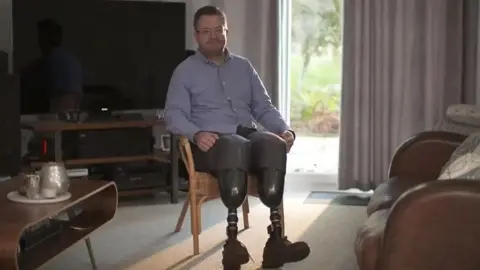
BBC The picture shows a person seated in a living room. They are wearing a blue shirt and have prosthetic legs. The room includes a coffee table and sofa.BBC
Neil Hopper was motivated by sexual interest in amputation, the court heard

An NHS vascular surgeon who had his own legs removed has been jailed for two years and eight months for insurance fraud and possessing extreme pornography.

Neil Hopper, 49, of Truro, Cornwall, carried out hundreds of amputation operations before having his own legs removed in 2019.

Truro Crown Court heard he lied to insurers by claiming that injuries to his legs were the result of sepsis and not self-inflicted.

It heard that in May 2019 Hopper had below knee amputations after a “mysterious illness”. In fact he had used ice and dry ice to freeze his own legs so they had to be removed, said prosecutor Nicholas Lee.

The court heard Hopper, who admitted two counts of fraud and three of possessing extreme pornography, had a “sexual interest in amputation”.

Judge James Adkin said in sentencing that he accepted that Hopper, who had no previous convictions, was remorseful.

However, the “level of harm” in three videos of body mutilation which were the subject of the pornography charges, was “exceptionally high”, he said.

Hopper had both legs amputated after complaining that his feet were in pain.

He was treated for suspected sepsis before he was told by surgeons that he should have his legs amputated and he was operated on.

He did not tell the medics the real cause of his injuries, the court heard.

Devon and Cornwall Police A bearded man in loose clothes and greying hair faces towards the camera.Devon and Cornwall Police
Neil Hopper had caused shock among former patients said a law firm

The fraudulent insurance claims from two firms totalled more than £466,000 the court heard.

Hopper had been tempted by “greed” said Mr Lee.

He had messaged a friend about the claims saying he should “milk it”, the court heard.

He “enjoyed” the interest from the media in his case, Mr Lee told the court.

“His motivations were a combination of obsession with removing parts of his own body and a sexual interest in doing so,” he said.

“It seems to have been a long-standing ambition of his,” he said.

Feet were ‘unwelcome extra’

After the amputations, he was back at work in just under six months with prosthetic legs.

He was arrested in March 2023 and has been suspended from the medical register since December 2023.

Andrew Langdon, KC, said in mitigation, that the offences had been a “shock” to friends.

He said: “He [Hopper] has been committed to working to the service of others.

“The whole saga is very difficult to comprehend.”

The extreme pornography offences were connected to videos of body mutilations that Hopper had purchased online and did not include children, the court heard.

Hopper was identified following investigations into Marius Gustavson who ran the EunuchMaker website.

Mr Lee told the court that Hopper had bought three videos from the website for £10 and £35, respectively, showing men willingly having their genitals removed.

He also exchanged about 1,500 messages with Gustavson about his own lower leg amputations and how he had done it, including asking how much dry ice he used.

Gustavson was jailed for life with a minimum term of 22 years at the Old Bailey in 2024 for leading an extreme body modification ring.

Hopper had suffered body dysphoria since childhood and his feet were an “unwelcome extra” and a “persisting never-ending discomfort” to him, said Mr Langdon.
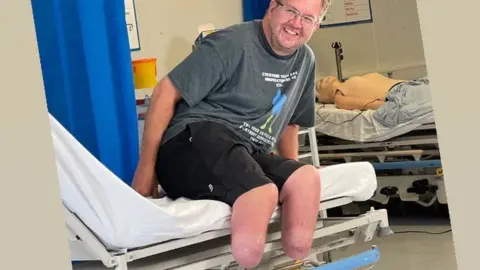
Instagram/Bionicsurgeon This picture shows a person sitting on a hospital bed with both legs amputated below the knee. Their face is blurred for privacy. They are wearing a grey t-shirt and black shorts.Instagram/Bionicsurgeon
Hopper had an obsession with removing parts of his own body, the court heard

Hopper did not regret the operations, but “bitterly regrets” the “dishonesty” about their cause, he said.

After the operations, Hopper had been “totally overwhelmed by support from friends and family which made it even more difficult to tell them what had really happened”.

Hopper, who is originally from Aberystwyth, Ceredigion, had been employed by the Royal Cornwall Hospitals NHS Trust (RCHT) from 2013 until he was arrested in March 2023.

A spokesperson for the Royal Cornwall Hospitals Trust said after the case that the convictions did not relate to Mr Hopper’s “professional conduct” at its hospitals.

The trust had carried out “comprehensive clinical reviews of surgery” by Hopper, “including engaging an experienced independent clinical expert to review decisions to operate”, they said.

“We want to reassure the public that our exhaustive investigations have found no evidence whatsoever to indicate any risk or harm to patients at our hospitals,” they said.

‘Shock and grave concern’

Assistant Chief Constable Jim Pearce said after the case that Devon and Cornwall Police had “worked closely” with the trust and “none of the criminal charges related to Hopper’s professional conduct with no risk to patients he treated in his work at the hospital identified during the current police investigation”.

However, former patients of Hopper, including some who underwent amputations, have contacted a South West-based medical negligence firm.

They said they were concerned about the treatment they received from Hopper, in light of the criminal charges brought against him.

Mike Bird, partner at Enable Law, said the case had caused “shock and grave concern” among his former patients.

“Some have had life-changing surgery and are now worried it was not really needed,” Mr Bird said.

“While we understand that RCHT have said that the charges do not relate to his professional conduct and there is apparently no evidence suggesting any risk to patients, this is such a serious situation that there must be a rigorous public investigation.”

The Crown Prosecution Service said it would be making an application under the Proceeds of Crime Act 2022 to recover the money that Hopper acquired through the fraud.
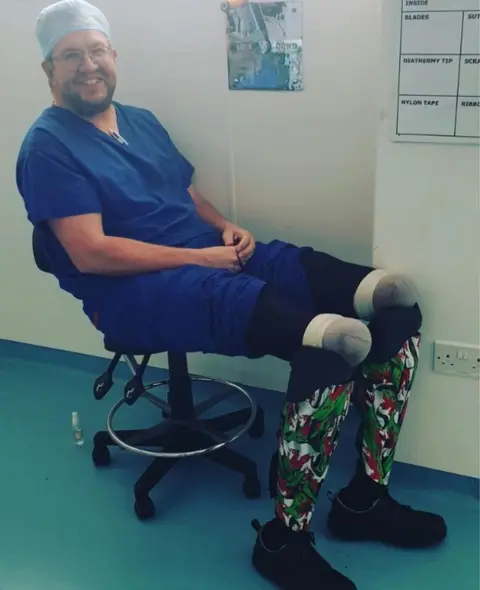
Instagram/Bionicsurgeon A person with two prosthetic limbs, sitting down on a swivel chair and wearing a blue outfit and cap.Instagram/Bionicsurgeon
Hopper was back at work six months after the operations

Jason Abbot, 38, from Hayle, whose foot was amputated by Hopper in November 2022 after painful arthritis in an ankle, said he had no concerns about his care.

“He was great, very supportive of the situation, [he gave] me loads of information about it and told me to have a really good think about it and I did.”

He said he “felt shocked” that Hopper had been convicted.

“I never thought he would do anything like that.”

Hopper also worked at the Royal Gwent Hospital in Newport, Wales, for a period of training in general surgery in 2011, Aneurin Bevan University Health Board has confirmed.

In an interview with the BBC in 2023 he also said he had worked in Swansea and Bangor.

The relevant health boards have been asked to confirm.

Additional reporting on website

7 Fall 2025 Denim Trends to Add to Your Closet—Editor Approved

With fall on the horizon, I can’t help but daydream about the chic denim outfits to come and have already begun planning a few timeless, versatile additions to my closet. Naturally, to guide my decision-making and get a sense of the trends that will define the season (and carry us into next year), I turned to the fall 2025 runways.

Designers are embracing the unexpected, with bold twists like bleached tie-dye patterns, heavy embellishments, and intricate embroidery. At the same time, there’s a clear resurgence of classic silhouettes. While super wide-leg styles have taken center stage, straight-leg and vintage-inspired cuts are holding their ground. Ahead, uncover iconic looks you’ll be eager to replicate.


Oversized and Super Wide-Leg

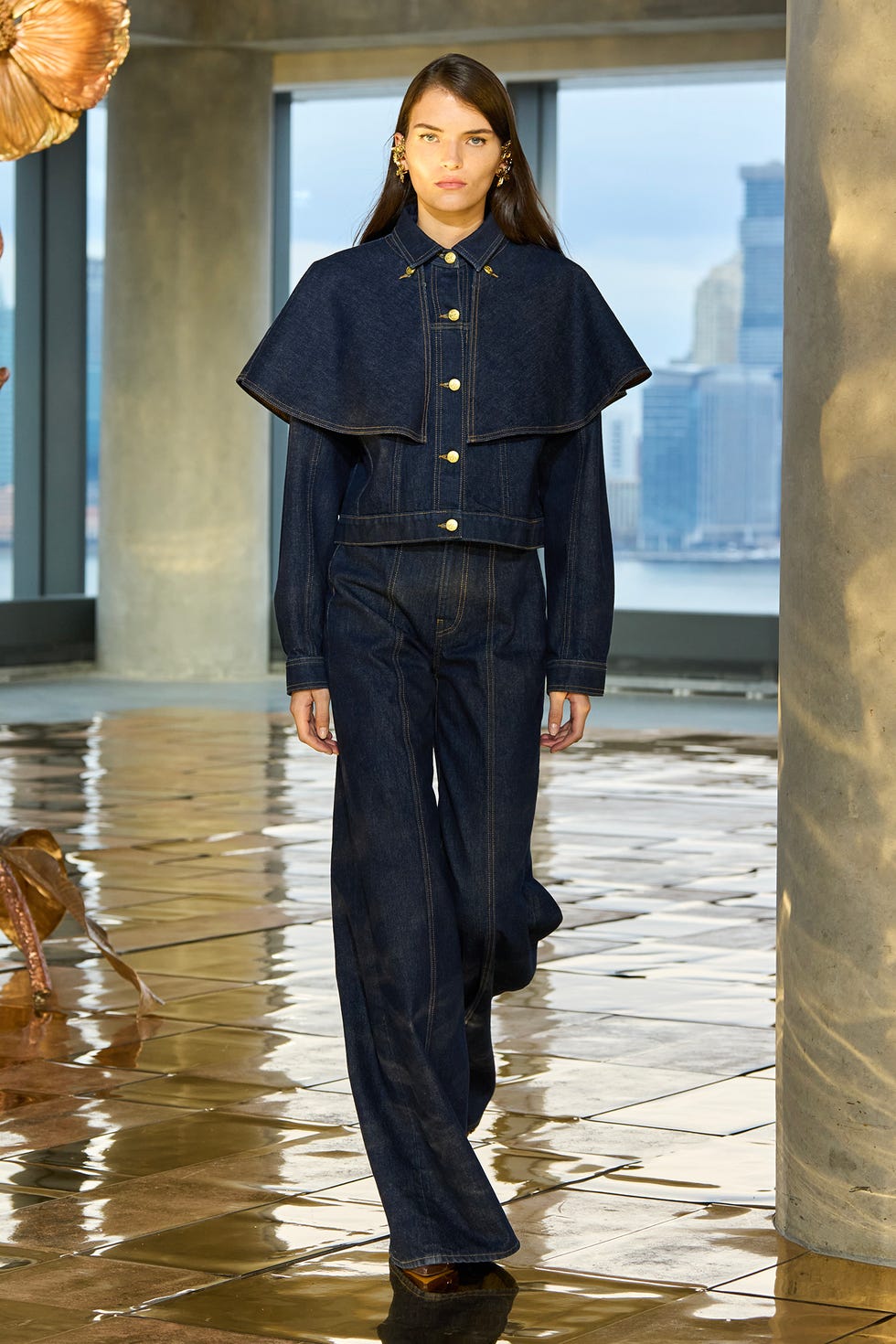
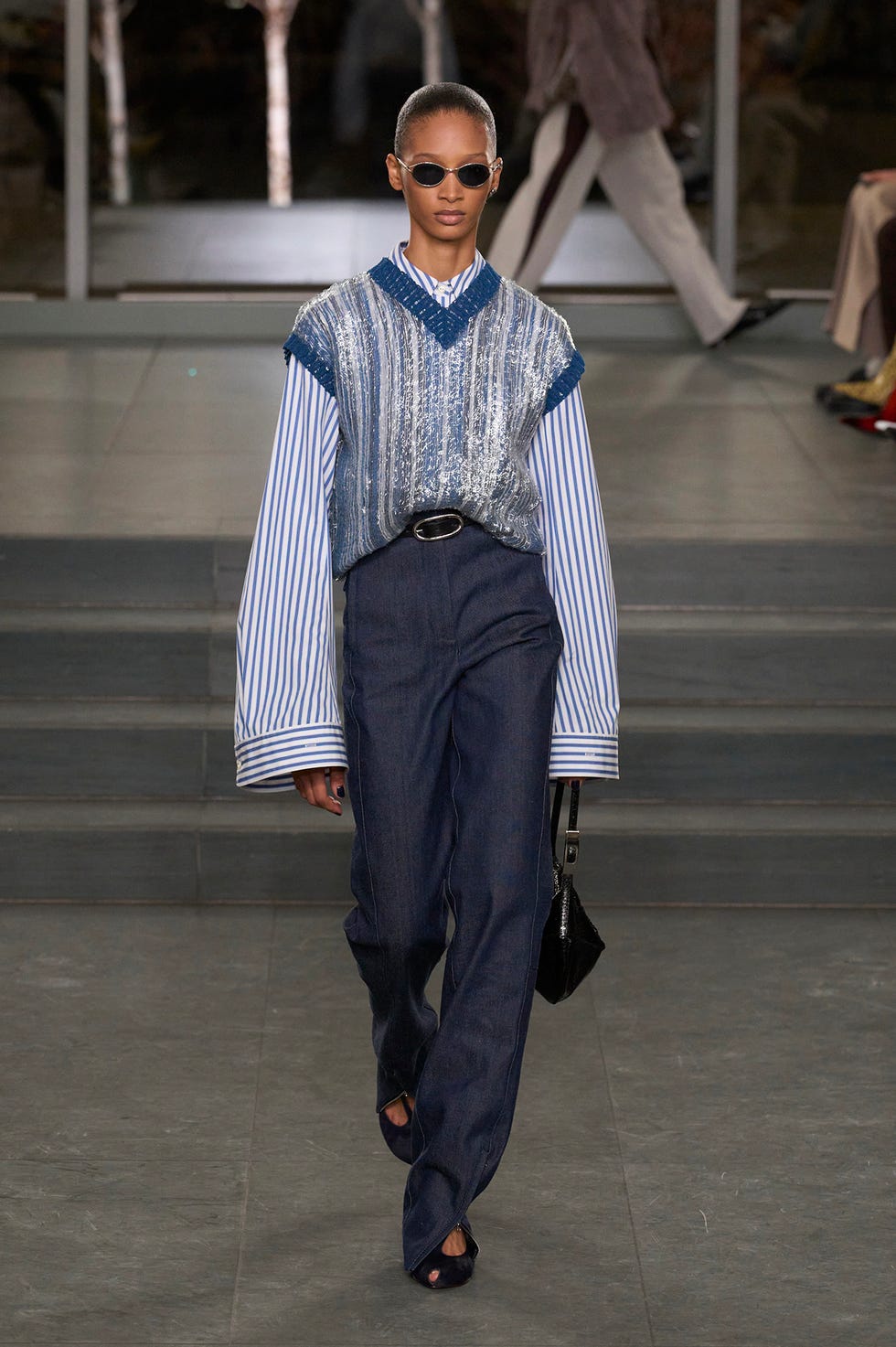
This season Coach delivered a super-slouchy silhouette in New York, cinched with a belt that carried the same laid-back charm, while Khaite offered a more refined take in a sumptuous dark wash. In Paris, Stella McCartney leaned into a carpenter-inspired style with contrast stitching at the knees, and Zimmermann elevated the wide-leg shape with polished front-seam detailing.

With so many designers embracing the look, now is the time to stock up on a pair (or two) to wear with elegant button-downs and fall blouses. Gap and BDG denim make a bold statement with ultra-wide silhouettes, while Agolde offers unique styles versatile enough to weave seamlessly into your workwear rotation.

Vana Draped Low-Rise Wide-Leg Jeans
Agolde Vana Draped Low-Rise Wide-Leg Jeans
Ayla Baggy
Citizens of Humanity Ayla Baggy
The Drape Jean
Relaxed Jeans 1996 D-Sire 09h59
Diesel Relaxed Jeans 1996 D-Sire 09h59
Jaya Baggy Boyfriend Jean
BDG Jaya Baggy Boyfriend Jean
Superwide-Leg Jeans: Airy Denim Edition
Madewell Superwide-Leg Jeans: Airy Denim Edition
Nessi Jean With Side Stripe
Alice & Olivia Nessi Jean With Side Stripe
Low Slung Extra Baggy Jeans
Gap Low Slung Extra Baggy Jeans

Now 21% Off

Renee Baggy Wide Leg Jeans
NYDJ Renee Baggy Wide Leg Jeans
Karmine Refined Wide Leg High Rise 31”
DL1961 Karmine Refined Wide Leg High Rise 31”

Crystal-Studded and Embroidered

runway outfits, dolce & gabbana, versace, kobi halpernin, blumarine

The spotlight is on bling this fall, and if you’re drawn to all things sparkly, this trend is impossible to resist. Think gem-studded patterns trailing from the waist and fringe-like embellishments that catch the light with every step. Embroidery also made a strong statement—on the Paris runway, Coperni showcased striking stitched accents, while in Milan, Etro unveiled pieces richly adorned with eye-catching details.

501® ’90s Jeans
Beyoncé X Levi’s® 501® ’90s Jeans
Lexi Mid Rise Bowed Straight Jean
Pistola Lexi Mid Rise Bowed Straight Jean
Embellished High Rise Wide Leg Jeans
Maje Embellished High Rise Wide Leg Jeans
Featherweight Sofie Embellished High-Rise Wide-Leg Jeans
Rag & Bone Featherweight Sofie Embellished High-Rise Wide-Leg Jeans
Betty Floral Embroidered Straight-Leg Jeans
Simkhai Betty Floral Embroidered Straight-Leg Jeans
Embellished Straight-Leg Jeans
Versace Embellished Straight-Leg Jeans
Studded Low Rise Jeans
Jaded London Studded Low Rise Jeans
Studded Rigid High-Rise Wide-Leg Jeans
Coperni Studded Rigid High-Rise Wide-Leg Jeans

Now 60% Off

Credit: Moda Operandi, Inc.

SNACKS! The Smoothie Sneak
Mother SNACKS! The Smoothie Sneak
Embellished High-Rise Wide-Leg Jeans
Self-Portrait Embellished High-Rise Wide-Leg Jeans

Seams and Pleats

runway outfits, bally, ulla johnson, kseniaschnaider, eckhaus latta

Prominent stitching, pleats, and seams were standouts on the fall 2025 runways, from Ulla Johnson’s effortlessly tailored denim in New York to Bally’s vintage-inspired designs in Milan. Whether you lean toward utility-inspired silhouettes or prefer a more polished cut, these picks deserve a spot on your wish list.

The Genevieve High-Rise Wide-Leg Jeans
Ulla Johnson The Genevieve High-Rise Wide-Leg Jeans
365 High Rise UltraSoft Pleated Denim Trousers
Gap 365 High Rise UltraSoft Pleated Denim Trousers

Now 21% Off

Hypnotic Pleated Wide-Leg Jeans
Zimmermann Hypnotic Pleated Wide-Leg Jeans
5 Pocket Wide Leg Jeans
Maison Margiela 5 Pocket Wide Leg Jeans
The ’90s Tailored Hi-Rise Wide Jean
Aritzia The ’90s Tailored Hi-Rise Wide Jean
Enzo Double Knee Carpenter Jeans
EB Denim Enzo Double Knee Carpenter Jeans

Now 30% Off

Tate Panel Denim ver.2
PVCS Tate Panel Denim ver.2
Dax Denim Pant
Rebecca Taylor Dax Denim Pant
Dorothea Wide-Leg Jeans
Cinq à Sept Dorothea Wide-Leg Jeans
The Olympia Jean
Ulla Johnson The Olympia Jean

Printed and Dyed

fall runway outfits, chanel, giuseppe di morabito, prabal gurung

Designers presented an array of unique patterns this season, signaling more experimentation with the everyday jean and plenty of intriguing street style moments to come. For fall 2025, Chanel showcased carefully bleached pinstripes in Paris, Prabal Gurung unveiled a meticulously crafted denim-printed look in New York, and Giuseppe Di Morabito delivered a groovy full tie-dye ensemble in Milan. Replicate this trend with Pucci’s striking Marmo jean or Veronica Beard’s Taylor jean in a distinctive diamond print.

Taylor Diamond Printed Wide-Leg Jean
Veronica Beard Taylor Diamond Printed Wide-Leg Jean
Wide Leg Floral Jeans
Desigual X Tyler McGillivary Wide Leg Floral Jeans
Barocco Regular-Fit Jeans
Versace Barocco Regular-Fit Jeans
Marmo Printed High-Rise Wide-Leg Jeans
Pucci Marmo Printed High-Rise Wide-Leg Jeans
Charismatic Jeans
Lioness Charismatic Jeans

Faded and Distressed

fall runway outfits, acne studios, ottolinger

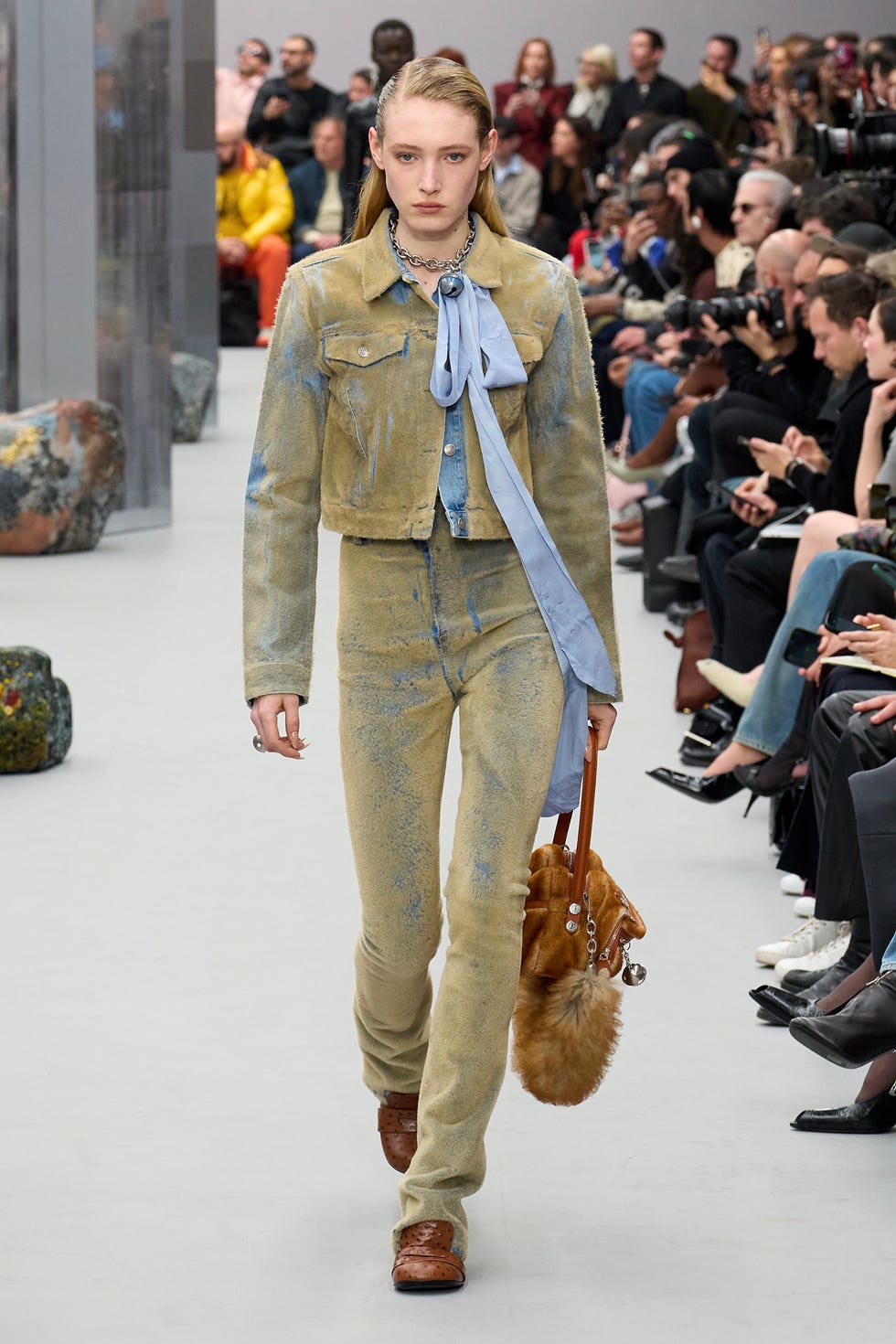
Heavy fading and distressed denim emerged as an unexpected fall trend. In Paris, Acne Studios highlighted jeans that appeared caked in mud, while Ottolinger offered shredded designs with abstract waistlines and pocket detailing. Redefine your off-duty style with Moussy’s coveted lineup of lived-in distressed denim, or turn to Balenciaga’s artfully faded washes and relaxed silhouettes for a bold statement.

Low Waist Baggy Pants in Blue
Balenciaga Low Waist Baggy Pants in Blue
2023 Distressed Organic Mid-Rise Wide-Leg Jeans
Acne Studios 2023 Distressed Organic Mid-Rise Wide-Leg Jeans
Showell Selvedge Straight
Moussy Showell Selvedge Straight
Washed Distressed Ripped Barrel Jeans 2445
Jessie Tearaway Super Baggy Jean
True Religion Jessie Tearaway Super Baggy Jean

Now 40% Off

Back to the Classics

fall runway outfits, tory burch, brandon maxwell, marine serre, elisabetta franchi. s.s.daley, denim

While some designers strayed from classic silhouettes, we still saw plenty of styles that signal what’s likely to become the go-to everyday jean. In New York, Tory Burch kept things timeless with high-waisted, vintage-inspired cuts. Over in London, S.S. Daley offered a vibrant twist with a bold blue-jean hue. And in Paris, Marine Serre embraced both the high-waist and an ultra-blue wash, further affirming that these beloved styles aren’t going anywhere.

Danielle High-Rise Straight Jeans
Khaite Danielle High-Rise Straight Jeans
Hepburn Wide Leg High Rise 32” Jeans
DL1961 Hepburn Wide Leg High Rise 32” Jeans
Hattie High-Rise Barrel
AG Jeans Hattie High-Rise Barrel
Halston Dark Wash Denim Wide-Leg High-Rise Jeans
Just Black Denim Halston Dark Wash Denim Wide-Leg High-Rise Jeans
High-Rise Wide-Leg Crop Jeans
Polo Ralph Lauren High-Rise Wide-Leg Crop Jeans

Bold Hems

fall runway loutfits denim, sandy liang, baum und pferdgarten, msgm, diesel

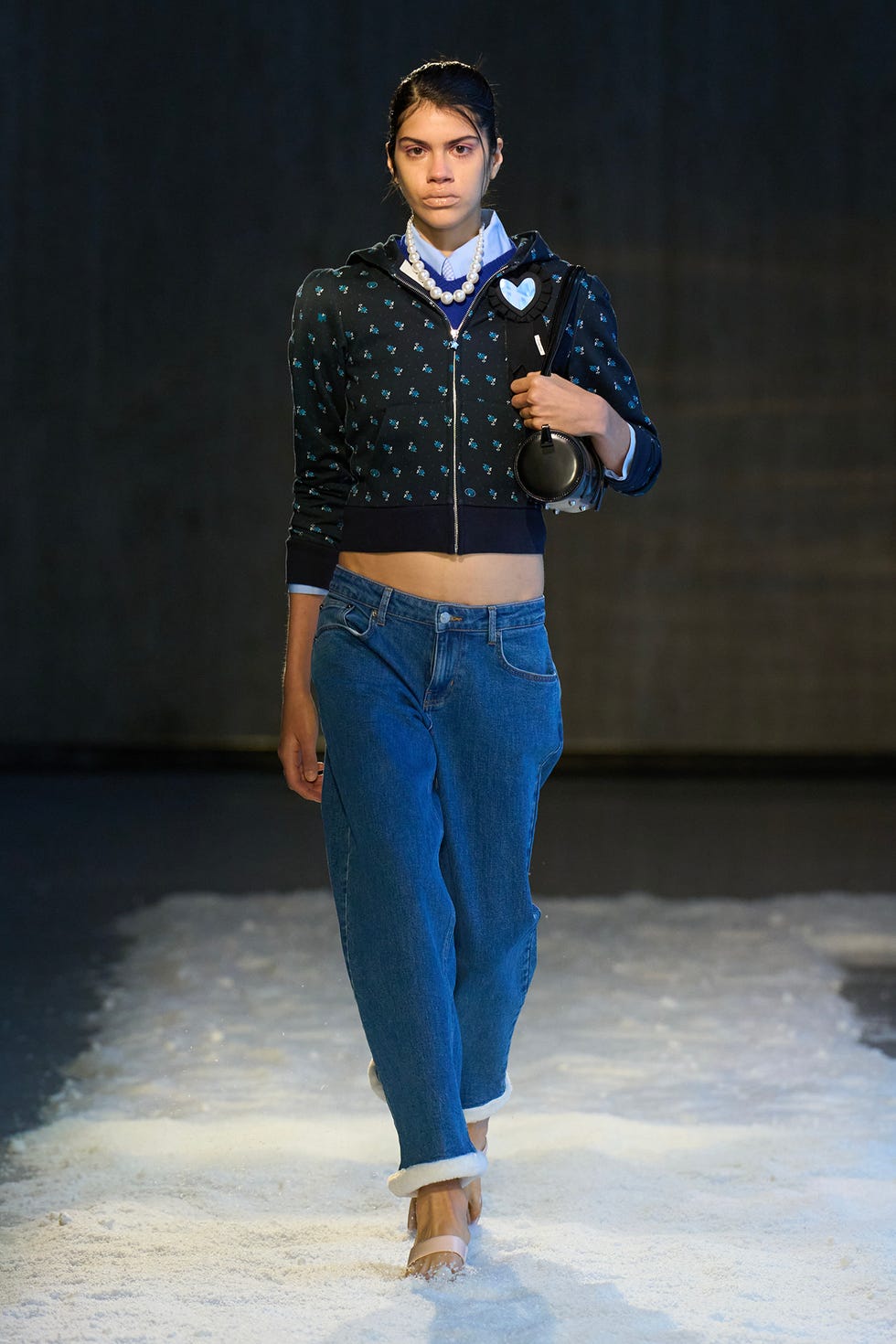
Playful hems are a chic way to reinvigorate your denim wardrobe. In New York, Sandy Liang’s furry cuffs became an instant focal point and in Copenhagen, Baum und Pferdgarten showed off a bold cuff that makes just as strong a statement. If you’re looking to add some personality to your minimalist outfits, here’s a fun, trend-forward way to do it.

Moni Jeans
Faux Fur Hem Corsair Skinny Jeans
Coperni Faux Fur Hem Corsair Skinny Jeans

Now 45% Off

The Cuffed Wide in Spencer
Frame The Cuffed Wide in Spencer
Wilson Jean
The Tomcat Roller Jeans
La DoubleJ X Mother The Tomcat Roller Jeans

To get more information, keep visit on website


How to Turn Near Bankrupt into $40M ARR—StackBlitz’s Bolt Does It in 6 Months

In a year that’s seen developer tools either sink or soar, one comeback story stands out—StackBlitz, the once-promising in-browser coding platform that nearly folded, is now blazing ahead thanks to an AI-powered tool called Bolt.

Just six months ago, StackBlitz was running on fumes. With runway drying up, shrinking usage, and competition eating into its market share, insiders whispered of an imminent shutdown. But instead of quietly disappearing, StackBlitz pivoted hard—and fast.

The Turnaround Catalyst: Introducing “Bolt”

Launched quietly at the start of the year, Bolt was StackBlitz’s moonshot: an AI-native development assistant embedded directly into its browser-based IDE. Unlike traditional copilot-style tools, Bolt was designed to go beyond code completion. It understood the full development lifecycle—setup, debugging, configuration, deployment—and operated inside the browser with no installs.

Bolt could spin up full-stack environments in milliseconds, analyze repo intent, configure dependencies on the fly, and guide developers through real-time troubleshooting. In essence, it wasn’t just “autocomplete” for devs—it was an AI-native developer companion.

The response? Explosive.

From Red to Rocket: $40M ARR in Six Months

By Q2 2025, StackBlitz had gone from near-zero revenue to $40 million in annual recurring revenue (ARR). Its user base surged, with over 3 million developers interacting with Bolt monthly. Enterprises—once hesitant to use browser-based IDEs for security and scalability reasons—began onboarding en masse after StackBlitz offered SOC 2 compliance, private AI models, and integration with secure CI/CD pipelines.

Key growth drivers included:

  • Freemium to Pro model: Bolt’s core features remained free, but productivity-enhancing plugins, priority support, and multi-environment sync features drove paid conversions.
  • Enterprise AI APIs: Companies began paying for private versions of Bolt fine-tuned to their own repositories.
  • Community momentum: Word-of-mouth from frustrated local IDE users helped StackBlitz trend on GitHub, Reddit, and Hacker News repeatedly.

A Second Life in the Dev Tools Arena

StackBlitz’s revival isn’t just about AI—it’s about identifying a real problem (bloated local dev environments) and solving it with an always-on, cloud-native, AI-assisted solution. Bolt now powers development for early-stage startups, large enterprises, and open-source maintainers alike.

In an ecosystem where even legacy giants are scrambling to retrofit AI into decades-old software, StackBlitz built its new identity from the ground up—with AI at the core, not bolted on as an afterthought.

What’s Next?

Flush with growth and new funding opportunities, StackBlitz plans to:

  • Expand Bolt’s capabilities to mobile and embedded systems
  • Release a plugin marketplace where developers can build Bolt extensions
  • Launch AI-powered CI/CD orchestration later this year

StackBlitz’s resurrection proves that even near the edge of collapse, the right product at the right time—with the right AI bet—can flip the script completely.

More related updates,Click Here

How to Support Men’s Mental Health Amid Cultural Stigma

In many cultures across the world—especially in the Middle East, South Asia, and parts of Africa—men are raised to be providers, protectors, and pillars of strength. Vulnerability is often seen as a weakness, and emotional expression is discouraged. This cultural conditioning has created a silent crisis: men’s mental health is suffering, and the stigma around seeking help is costing lives.

The Numbers Paint a Stark Picture

Globally, men are less likely than women to seek help for mental health issues, yet they are more likely to die by suicide. According to the World Health Organization, suicide is one of the leading causes of death among men under 50. Depression, anxiety, PTSD, and substance abuse affect millions of men—many of whom suffer in silence.

Why Don’t Men Talk?

In cultures where masculinity is tightly linked with stoicism and dominance, expressing mental pain is seen as unmanly. Phrases like “man up,” “don’t cry,” or “boys don’t show emotion” are still common, especially in conservative societies. These harmful narratives teach boys from a young age to suppress their feelings, setting the stage for adult men to ignore their emotional and psychological needs.

Cultural and Religious Influences

In many communities, mental illness is still misunderstood. It’s seen as a moral failing, spiritual weakness, or even possession. Men are encouraged to “pray it away” or “tough it out” rather than consult a mental health professional. This stigma not only prevents early diagnosis but can lead to worsening conditions that affect work, relationships, and even physical health.

The Hidden Cost of Silence

Unchecked mental health issues in men manifest in alarming ways: increased aggression, substance abuse, burnout, and chronic illness. Relationships suffer. Productivity dips. The longer these issues go untreated, the harder they are to reverse. And in too many cases, they end in tragedy.

The Shift Has Begun—but It’s Not Enough

Thankfully, there is a growing movement toward breaking the silence. Celebrities, athletes, and influencers are opening up about their struggles, helping to normalize therapy and emotional vulnerability. In the Arab world and South Asia, mental health startups are emerging, offering culturally-sensitive counseling and teletherapy options. But more needs to be done.

What Needs to Change?

  1. Redefine Masculinity
    Strength should include the courage to seek help, to express emotion, and to care for one’s mind as much as the body.
  2. Education and Awareness
    Mental health education should start early—at schools, mosques, temples, and community centers. Men need to know it’s okay to talk.
  3. Safe Spaces for Men
    Support groups, online communities, and workplace wellness programs tailored for men can provide a crucial outlet for those who feel isolated.
  4. Healthcare Access
    Governments and private sectors should make mental health services accessible, confidential, and affordable—especially for men in conservative or underserved areas.

Final Thoughts: It’s Time to Talk

The cultural stigma around men’s mental health isn’t just outdated—it’s dangerous. We must create a world where men are allowed to feel, to cry, to break down—and most importantly, to heal. Mental health doesn’t discriminate, and neither should compassion.

Stay-tuned with us on our website

The Future Is Now: UAE Rolls Out AI-First, Free Healthcare by 2030

The UAE isn’t just planning for the future—it’s engineering it. With an ambitious healthcare blueprint that blends accessibility, innovation, and digital disruption, the country is positioning itself as a global model for 21st-century wellness. By 2030, the UAE aims to offer free medical checkups for all, integrate AI-powered diagnostics into daily clinical use, and build a HealthTech ecosystem that rivals its fintech and smart city counterparts.

Here’s how the UAE is redefining health as a national asset—and why the world is watching.


1. Free Preventive Care for All Residents

At the heart of the UAE’s healthcare revolution is one key idea: prevention is more powerful than cure.

By 2030, the government plans to provide free annual health checkups for Emiratis and residents alike. The goal? Early detection of chronic diseases like diabetes, cardiovascular issues, and cancer—conditions that are costly not just financially, but in human lives.

This pivot not only reduces long-term healthcare costs but also aligns with global trends toward value-based care.


2. AI Doctors & Smart Clinics Are Already Rolling Out

Forget long waiting times and rushed consultations. The UAE is fast-tracking the rollout of AI-powered diagnostics and virtual doctors—starting in smart hospitals across Abu Dhabi and Dubai.

AI systems are already being tested to:

  • Analyze radiology scans faster and more accurately than humans.
  • Monitor patient vitals in real time.
  • Offer chatbot-driven triage services available 24/7 in multiple languages.

By 2030, the vision is that every clinic and hospital will have AI-integrated systems, making healthcare not only smarter but also more scalable.


3. HealthTech: The UAE’s Next Billion-Dollar Sector

The UAE is investing heavily in HealthTech startups, offering grants, regulatory sandboxes, and international collaborations to foster innovation.

Key areas of growth include:

  • Telemedicine platforms connecting rural patients with top-tier urban doctors.
  • Wearable tech integrated with government health dashboards.
  • Blockchain-secured health records to ensure privacy and interoperability.

The launch of Abu Dhabi’s HealthTech Hub and Dubai Health Strategy 2030 are already attracting global companies looking to pilot futuristic solutions in a regulation-friendly, innovation-first environment.


4. Medical Tourism 2.0: Wellness Meets Innovation

Dubai and Abu Dhabi are also upgrading their status as global medical tourism destinations—not just for cosmetic or elective procedures, but for AI-driven diagnostics, longevity treatments, and personalized medicine.

With smart hospitals, multilingual AI support, and concierge health packages, the UAE is redefining what it means to “travel for treatment.”


5. Healthcare as a Human Right—and a Competitive Advantage

What makes the UAE’s approach so unique is its fusion of compassion with competitiveness. Healthcare is being treated not only as a citizen right but also as a sector of strategic national importance.

  • Healthier populations mean higher productivity.
  • Innovation in healthcare drives tech development and job creation.
  • Leadership in digital health boosts global soft power.

Final Thoughts: 2030 Is Closer Than You Think

With bold policy, investment, and vision, the UAE isn’t just preparing for the healthcare future—it’s building it. From free screenings to AI consultations, from smart hospitals to wearable health ecosystems, this small nation is sending a big message:

Additional relevant updates


The Science Behind Teen Social Media Addiction — And How to Break It

In a world where swipes, likes, and scrolls dominate our daily rhythms, teenagers are the most immersed — and arguably, the most at risk. While technology has opened doors for global learning, connection, and creativity, its darker side is becoming harder to ignore: digital addiction. More specifically, social media is not just consuming teens’ time — it’s rewiring their brains.

The Rise of Digital Dependence in Teenagers

Today’s teens are the first true “digital natives.” By the age of 13, many already manage multiple social media accounts, with TikTok, Instagram, Snapchat, and YouTube being among the most used. According to recent studies, the average teen spends over 7 hours a day on screens, not including schoolwork.

But this isn’t just about time — it’s about how this screen time is shaping the brain. Constant notifications, the dopamine rush of likes, and the fear of missing out (FOMO) are engineering a behavioral loop that’s hard to escape.


What Social Media Does to the Teenage Brain

The teenage brain is still developing, especially in areas related to decision-making, emotional regulation, and impulse control. Social media platforms, designed to keep users engaged, exploit these developmental vulnerabilities.

  1. Dopamine Feedback Loop: Likes, shares, and comments activate the brain’s reward system. This leads to a dopamine spike — the same neurochemical that plays a major role in addiction. Teens start craving the next notification, which reinforces compulsive usage.
  2. Reduced Attention Span: Fast-paced, bite-sized content trains the brain to expect instant gratification. As a result, many teens struggle with sustained attention, deep focus, and boredom tolerance.
  3. Emotional Instability: Comparing oneself to curated, filtered lives on social media can trigger anxiety, depression, and low self-esteem. Studies have found strong links between excessive social media use and increased rates of depression and suicidal thoughts in teens.
  4. Sleep Disruption: Screen exposure — especially before bed — reduces melatonin levels and disrupts sleep cycles. Poor sleep further exacerbates mental health issues and affects academic performance.

Signs of Social Media Addiction in Teens

  • Irritability or anxiety when away from their phone
  • Loss of interest in offline activities
  • Constant checking of notifications, even during school or meals
  • Neglecting sleep, homework, or personal hygiene for screen time
  • Lying about time spent online

If these patterns sound familiar, it might be time to intervene.


How to Help Teens Reclaim Control

  1. Set Digital Boundaries Together
    Create tech-free zones (like the dinner table or bedroom) and agree on screen limits. Parental modeling is critical — if you’re always on your phone, your teen will follow suit.
  2. Encourage Mindful Usage
    Teach teens to question why they’re opening an app. Is it boredom? Loneliness? The need for validation? Self-awareness is the first step in breaking the cycle.
  3. Reintroduce Offline Joy
    Sports, art, nature, reading, volunteering — help them rediscover real-world experiences that provide meaning and joy.
  4. Use Tech to Fight Tech
    Apps like Forest, Moment, and Screen Time can help track and reduce digital consumption. Turn off non-essential notifications to reduce dopamine-triggering interruptions.
  5. Talk About Mental Health Openly
    Normalize discussions about anxiety, loneliness, and peer pressure. Let your teen know they’re not alone — and that seeking help is a strength, not a weakness.

A Call for Conscious Parenting and Digital Responsibility

Social media isn’t going away — and that’s not necessarily a bad thing. When used mindfully, it can be a powerful tool for learning, advocacy, and expression. But without awareness and boundaries, it can hijack a developing mind.

Parents, educators, and teens must work together to build digital literacy, promote emotional intelligence, and prioritize well-being over likes.

In this new era, the goal isn’t to disconnect — it’s to reconnect: with self, with purpose, and with the real world beyond the screen.


Final Thought
We’re not raising robots. We’re raising humans. And their mental health is worth every effort to protect in this hyperconnected age.

Continue visiting on our website for more information

Why Doctors Are Backing Intermittent Fasting in Islam for Better Health

Fasting isn’t just a diet trend—it’s a divine design.

For over 1,400 years, Muslims have practiced intermittent fasting through the spiritual discipline of Sawm, especially during the holy month of Ramadan. What was once seen purely as a religious ritual is now gaining serious traction in the world of modern health and wellness. Science is finally catching up with what Islam has long encouraged: mindful fasting is good for both body and soul.

What is Intermittent Fasting?

Intermittent fasting (IF) refers to an eating pattern that cycles between periods of fasting and eating. Popular IF methods include:

  • 16:8 method: 16 hours fasting, 8 hours eating window
  • 5:2 diet: Eat normally for 5 days, significantly reduce calories on 2 days
  • 24-hour fasts: Once or twice a week

Interestingly, the Islamic practice of fasting shares many similarities, especially in its time-restricted eating approach during Ramadan—from dawn (Suhoor) to sunset (Iftar).

Fasting in Islam: More Than Just Abstaining

Islamic fasting isn’t just about avoiding food and drink. It’s a comprehensive spiritual detox, involving restraint from anger, negative speech, and harmful behavior. This holistic approach adds a mental and emotional layer to intermittent fasting that many modern approaches lack.

But how does Islamic fasting affect your health?

Let’s explore the scientific benefits.


1. Weight Loss & Fat Burning

When you fast, insulin levels drop, and your body switches to burning stored fat for energy. Studies show that intermittent fasting can help with:

  • Reducing belly fat
  • Boosting metabolism
  • Improving insulin sensitivity

Science says: A 2020 review in the New England Journal of Medicine concluded that intermittent fasting improves weight loss and metabolic health markers.


2. Cellular Repair & Longevity

During fasting, your body initiates a process called autophagy—a cellular “clean-up” that removes damaged cells and regenerates new ones. It’s like hitting the reset button.

Science says: Autophagy may play a role in slowing aging and preventing diseases like Alzheimer’s and certain cancers.


3. Heart Health

Fasting can improve key risk factors for heart disease:

  • Lower blood pressure
  • Reduced cholesterol
  • Decreased inflammation

Science says: According to the American Heart Association, intermittent fasting is linked to better cardiovascular health and lower risk of heart attacks.


4. Brain Boost

Many people report improved mental clarity and focus during fasting. This isn’t anecdotal—fasting increases production of brain-derived neurotrophic factor (BDNF), a protein linked to cognitive function and reduced risk of depression.

Science says: Fasting helps stimulate new brain cell growth and protects the brain from degenerative diseases.


5. Gut Health & Digestion

Regular breaks from eating give your digestive system a rest, allowing the gut lining to repair and inflammation to decrease. This can lead to:

  • Improved gut microbiome
  • Reduced bloating
  • Better nutrient absorption

Science says: A study published in Cell Metabolism showed fasting improves gut barrier integrity and microbial diversity.


6. Spiritual & Mental Health Benefits

Unlike secular diets, Islamic fasting integrates intention (niyyah), prayer, charity, and reflection. These spiritual practices promote:

  • Gratitude and empathy
  • Reduced anxiety and stress
  • Greater discipline and willpower

This mental clarity and emotional resilience, paired with physical health benefits, create a uniquely powerful wellness experience.


Intermittent Fasting: Designed by Faith, Backed by Science

What many consider a “health hack” in 2025 has, in reality, been a divinely prescribed practice since the 7th century. Islam’s approach to fasting—rooted in discipline, community, and purpose—offers a blueprint for balanced living in today’s fast-paced world.

Whether you’re observing Ramadan or exploring fasting as a wellness practice, know this: Science is finally catching up to the Sunnah.


Final Thoughts

Fasting in Islam is not about deprivation—it’s about healing, balance, and connection. As modern research continues to validate its benefits, Muslims around the world can take comfort in knowing that their ancient tradition is not only spiritually enriching, but scientifically sound.

More related updates

Middle East Faces Surge in Vitamin D Deficiency: What You Need to Know

When you think of the Middle East, one of the first things that comes to mind is sun—plenty of it. With arid climates and cloudless skies for most of the year, you’d assume that vitamin D levels here would be optimal. Yet, paradoxically, the region is facing a growing public health crisis: a silent epidemic of vitamin D deficiency.

The Shocking Numbers

Research across countries like Saudi Arabia, the UAE, Kuwait, and Qatar shows that 60–90% of the population may be deficient in vitamin D. Even among younger people and otherwise healthy adults, deficiency is widespread. For a region bathed in sunlight, the stats are both baffling and alarming.


Why Is This Happening?

1. Cultural and Lifestyle Practices

Traditional clothing in the Middle East, especially garments that cover most of the body for religious or cultural reasons, reduces direct skin exposure to sunlight. While these clothes are vital for sun protection and cultural identity, they also limit the skin’s ability to synthesize vitamin D naturally.

2. Indoor-Centric Lifestyles

With modern urban living and extreme daytime heat, many people spend the majority of their time indoors. Whether in malls, offices, or cars, minimal time is spent outside—especially during peak sunlight hours.

3. Sunscreen Use and Pollution

Increased awareness about skin cancer and the aging effects of sun exposure has led to higher sunscreen use, further reducing vitamin D synthesis. Additionally, urban air pollution in cities like Riyadh or Cairo may block UVB rays needed for the body to produce vitamin D.

4. Dietary Gaps

Vitamin D isn’t found in many natural foods. Unless diets include fortified products like milk, cereals, or fatty fish, it’s hard to meet daily needs through food alone. In many Middle Eastern diets, such foods are often limited or under-consumed.


What Are the Health Consequences?

Vitamin D isn’t just about strong bones—it’s crucial for immune function, mood regulation, and metabolic health. Deficiency has been linked to:

  • Fatigue and muscle weakness
  • Depression and mood disorders
  • Weakened immunity
  • Higher risk of diabetes and cardiovascular issues
  • Poor pregnancy outcomes and infant health problems

Left unchecked, this silent epidemic could become a catalyst for broader health crises across the region.


Who’s Most at Risk?

  • Women and children: Due to lifestyle and dress codes, women—especially those who are pregnant or breastfeeding—are at higher risk.
  • Elderly people: With aging skin and less outdoor activity, the elderly often have lower vitamin D levels.
  • People with darker skin tones: More melanin reduces the skin’s ability to produce vitamin D efficiently.

What Can Be Done?

Public Health Campaigns

Governments can launch awareness drives to promote safe sun exposure and educate people about symptoms and long-term risks of deficiency.

Fortification and Supplementation

Mandatory fortification of staple foods and government-subsidized vitamin D supplements—especially for women and children—can help.

Regular Screening

Encouraging routine blood tests for vitamin D, particularly during health checkups, can help with early detection and intervention.

Urban Planning with Wellness in Mind

More shaded parks, walking paths, and open-air social spaces could nudge people to spend more time outdoors without excessive sun exposure.


Final Thoughts: A Sunshine Paradox

The Middle East’s vitamin D crisis is a paradox that highlights how modern lifestyles can unintentionally clash with natural advantages. While sun is abundant, access to its benefits has quietly slipped away behind glass windows, protective clothing, and changing routines.

It’s time to shine a light—literally and figuratively—on this silent epidemic before its impact grows any further.


Are you getting enough vitamin D? Share your thoughts or personal experiences below—and don’t forget to get some more information Check Here

Middle East Rising: The New Magnet for Global Startup Talent

In the global race to attract the best and brightest startup talent, two regions stand out as powerhouses — Silicon Valley, and the Middle East, a rapidly evolving hub fueled by innovation, investment, and ambition. But who’s really winning this high-stakes battle? Let’s dive into the strengths, challenges, and future potential of these two startup ecosystems to see how the battle for talent is shaping up.


The Silicon Valley Legacy: Innovation Meets Experience

Silicon Valley’s dominance is no accident. With decades of technological breakthroughs, world-renowned universities like Stanford and Berkeley, and a dense network of venture capitalists, it has created an unmatched environment for startups to thrive.

  • Talent Pool: The Valley attracts a global pool of engineers, developers, marketers, and entrepreneurs. Its culture fosters creativity, risk-taking, and rapid iteration.
  • Funding Ecosystem: Access to billions in venture capital fuels innovation across AI, biotech, fintech, and more.
  • Established Giants and Startups: The presence of companies like Apple, Google, and Tesla creates a magnetic pull for ambitious talent seeking growth and mentorship.

However, Silicon Valley is also facing challenges:

  • High Cost of Living: Skyrocketing housing prices and expenses are pushing some talent to look elsewhere.
  • Work-Life Balance Issues: The intense work culture can burn out employees, prompting a shift towards more balanced ecosystems.
  • Competition: The sheer number of startups means talent is constantly in demand and turnover is high.

The Middle East’s Rise: A New Startup Frontier

In recent years, cities like Dubai, Riyadh, and Tel Aviv have emerged as dynamic startup hubs, reshaping the narrative about where innovation can happen.

  • Government Backing: Ambitious initiatives like Dubai’s 10X Strategy and Saudi Vision 2030 provide robust support, infrastructure, and funding for startups.
  • Access to Emerging Markets: The Middle East offers startups a unique gateway to Africa, Asia, and Europe, attracting talent eager to build solutions for rapidly growing markets.
  • Cultural Shift: A young, tech-savvy population and increasing gender diversity are expanding the talent pool.
  • Quality of Life: Competitive salaries combined with tax benefits, modern living, and cultural vibrancy make the region appealing.

Still, challenges remain:

  • Talent Development: While rapidly improving, there is a relative shortage of highly experienced startup talent compared to Silicon Valley.
  • Regulatory Environment: Navigating diverse regulations across countries can be complex for entrepreneurs.
  • Retention: Attracting global talent is easier than retaining it long-term without a fully mature ecosystem.

Who’s Winning the Battle?

The answer isn’t black and white. Silicon Valley remains the gold standard for startup talent due to its deep-rooted ecosystem, network effects, and continuous innovation. But the Middle East is closing the gap quickly by offering compelling alternatives — lower costs, government incentives, and access to untapped markets.

Key Trends to Watch:

  • Hybrid Talent Flows: Increasingly, top talent is embracing hybrid lifestyles, working remotely while engaging with multiple hubs including the Middle East and Silicon Valley.
  • Cross-Regional Collaborations: Partnerships between Middle Eastern governments and Silicon Valley firms are creating pathways for talent exchange and joint ventures.
  • Specialization: The Middle East is positioning itself in niche verticals like fintech, clean energy, and logistics, where it can become a global leader.

Conclusion: The Future Is Collaborative, Not Competitive

Rather than a zero-sum game, the startup talent war between the Middle East and Silicon Valley is evolving into a dynamic collaboration. Silicon Valley’s innovation expertise combined with the Middle East’s strategic market access and supportive ecosystems is creating new opportunities for entrepreneurs worldwide.

For startup talent, this means more choices, greater mobility, and exciting new frontiers to build the future, Visit our website

The New Dubai Dream: Why the World’s Wealth Is Moving East

Dubai has long been synonymous with architectural marvels, luxury living, and a booming real estate market. However, the city is now witnessing what many experts call “Real Estate Boom 2.0,” a transformative wave fueled not by traditional investors, but by two modern powerhouses: digital nomads and crypto millionaires. This fresh surge is reshaping Dubai’s property landscape and setting new trends that promise to sustain growth well into the future.

The New Face of Dubai’s Real Estate Market

Gone are the days when Dubai’s real estate scene was dominated primarily by wealthy regional buyers and global investors seeking holiday homes. The latest boom centers around a tech-savvy, highly mobile population that values flexibility, lifestyle, and innovation.

Digital Nomads: The Remote Work Revolution’s Real Estate Champions

With the rise of remote work accelerated by the pandemic, digital nomads have emerged as a new breed of residents in global cities. Dubai, with its world-class infrastructure, safety, and lifestyle appeal, has become a top choice for these remote workers.

  • Flexible Leasing Options: Many developers and landlords have adapted by offering shorter-term leases and fully furnished apartments tailored for remote professionals who value convenience and connectivity.
  • Co-living and Community Spaces: Properties that foster community, networking, and co-working environments have skyrocketed in demand, catering to digital nomads’ desire to blend work and social life.
  • Strategic Location: Dubai’s time zone, bridging Asia and Europe, makes it ideal for digital nomads managing global projects.

Dubai’s government has also facilitated this trend by introducing the Virtual Working Program, allowing professionals to live in the emirate for up to a year while working remotely for foreign companies—making Dubai an attractive, hassle-free destination.

Crypto Millionaires: Fueling Luxury and Innovation

Parallel to the digital nomad influx is a growing community of crypto entrepreneurs and millionaires who see Dubai as a crypto-friendly hub. Dubai’s progressive stance on blockchain technology and cryptocurrency has attracted a wealthy, high-net-worth clientele ready to invest heavily in the property market.

  • Luxury Developments: Exclusive high-end developments are springing up, designed with smart home technology and integrated blockchain services for transparency and security in transactions.
  • Crypto Payment Options: Several developers now accept cryptocurrencies for property purchases, making it seamless for crypto millionaires to invest.
  • Blockchain-Powered Real Estate: Dubai is pioneering blockchain solutions to digitize property records and sales, increasing efficiency and trust—an attractive feature for crypto investors.

Synergy Creating a New Urban Lifestyle

The intersection of digital nomads and crypto millionaires is driving innovation beyond just sales numbers. There’s a growing emphasis on mixed-use developments combining residential, office, and leisure spaces, designed with technology at their core.

This synergy is transforming Dubai’s urban fabric into vibrant, tech-enabled communities where startups, freelancers, and innovators thrive alongside luxury living. The boom also fuels ancillary sectors like hospitality, retail, and tech services, broadening economic growth.

Challenges and Sustainability

While the boom is exciting, Dubai faces challenges related to balancing rapid growth with sustainability. Authorities are increasingly focused on smart urban planning, green building codes, and infrastructure upgrades to ensure that growth does not come at the expense of livability.

What’s Next for Dubai’s Real Estate?

The real estate market’s future looks robust, with digital nomads and crypto millionaires continuing to be the primary drivers. We can expect:

  • More innovative housing concepts like smart apartments and eco-friendly towers.
  • Increased integration of digital tools and blockchain in real estate transactions.
  • Greater diversification of the property portfolio to cater to the lifestyle needs of a global, mobile workforce.

Conclusion

Dubai’s Real Estate Boom 2.0 is not just a story of numbers but a narrative of transformation. Driven by the dynamic forces of digital nomads and crypto millionaires, Dubai is reinventing itself as a global epicenter of innovation, luxury, and futuristic living. For investors, residents, and businesses alike, this boom signals new opportunities and a glimpse into the future of urban living.


More relevant updates