

<h1>AI in Healthcare: Revolutionizing Diagnosis and Treatment</h1>
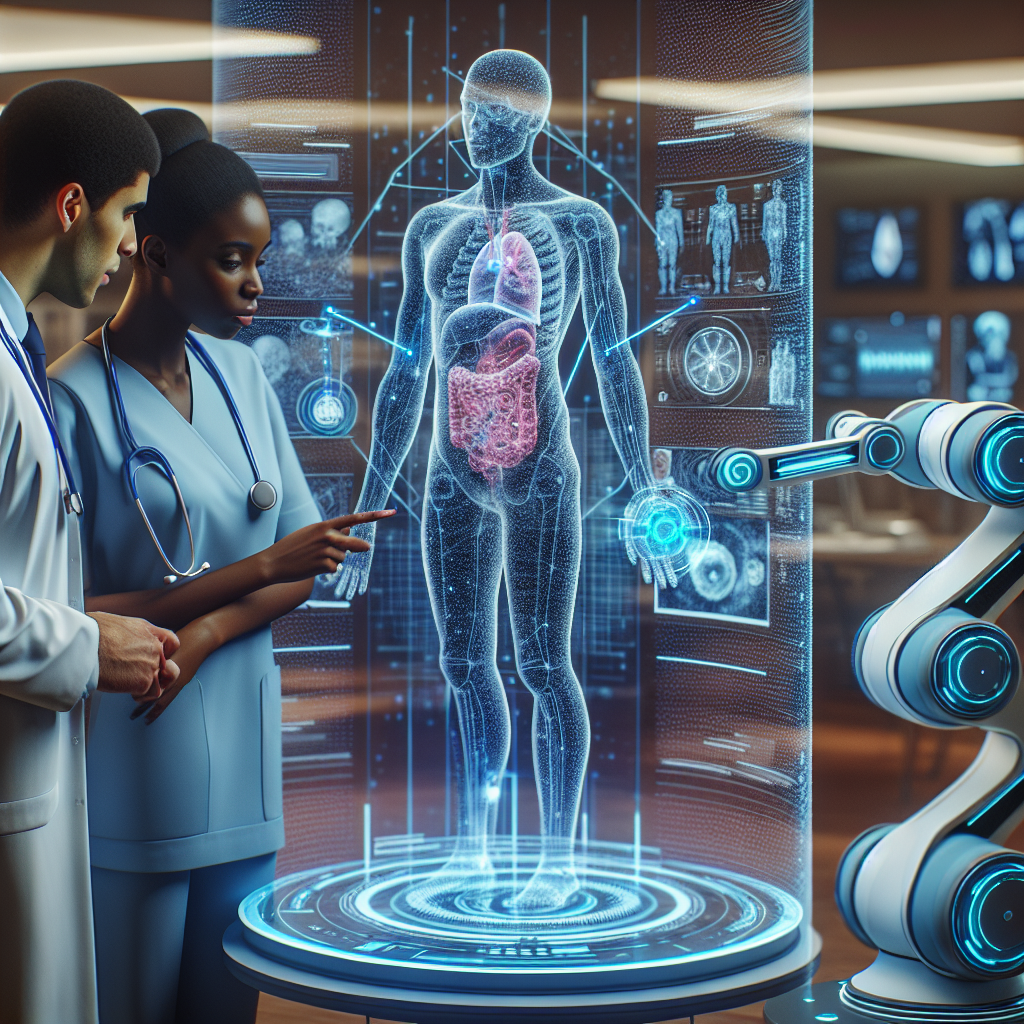
<p>Artificial Intelligence (AI) is transforming numerous industries, and healthcare is no exception. By integrating AI technologies into medical practices, healthcare providers can improve diagnosis accuracy, personalize treatment, and enhance patient care.</p>
<h2>AI in Diagnosis</h2>
<p>One of the most significant impacts of AI in healthcare is its role in diagnosis. Traditional diagnostic methods can be time-consuming and prone to human error. AI algorithms can analyze vast amounts of data quickly and accurately, ensuring a higher rate of early detection of diseases.</p>
<p>Some key applications include:</p>
<ul>
    <li><strong>Image Analysis:</strong> AI systems are capable of analyzing medical images such as X-rays, MRIs, and CT scans with remarkable precision.</li>
    <li><strong>Predictive Analytics:</strong> AI can predict the likelihood of diseases based on patient histories and genetic information.</li>
    <li><strong>Symptom Checkers:</strong> AI-driven applications can evaluate patient symptoms and suggest potential diagnoses.</li>
</ul>
<h2>AI in Treatment</h2>
<p>Once a diagnosis is established, AI can aid in developing personalized treatment plans. By considering an individual’s unique genetic makeup, lifestyle, and preferences, AI can help in custom-tailoring therapies for better outcomes.</p>
<p>Applications in treatment include:</p>
<ul>
    <li><strong>Personalized Medicine:</strong> AI can analyze data to identify which treatments are most effective for specific patient profiles.</li>
    <li><strong>Drug Discovery:</strong> AI accelerates the process of identifying new drugs and predicting their efficacy.</li>
    <li><strong>Robotic Surgery:</strong> Advanced AI systems can assist surgeons in performing complex procedures with enhanced precision.</li>
</ul>
<h2>Improving Patient Care</h2>
<p>The intersection of AI and healthcare extends beyond diagnosis and treatment. AI tools facilitate improved patient care by providing real-time monitoring and support.</p>
<p>Consider these advancements:</p>
<ul>
    <li><strong>Telemedicine:</strong> AI enhances virtual consultations by providing healthcare professionals with insightful data during patient interactions.</li>
    <li><strong>Remote Monitoring:</strong> Wearable devices powered by AI monitor patient vitals and alert healthcare providers of potential emergencies.</li>
    <li><strong>Virtual Health Assistants:</strong> AI-driven chatbots can answer patient queries, schedule appointments, and provide medication reminders.</li>
</ul>
<h2>The Future of AI in Healthcare</h2>
<p>As AI continues to advance, its integration into healthcare is expected to deepen. However, challenges remain, such as data privacy concerns, ethical considerations, and the need for robust regulatory frameworks.</p>
<p>In conclusion, AI is not a replacement for healthcare professionals; rather, it is a powerful tool that enhances their capabilities. By leveraging AI technologies, healthcare providers can offer better diagnosis, treatment, and overall patient care, genuinely revolutionizing the healthcare landscape.</p>AI in Healthcare: Revolutionizing Diagnosis and Treatment


RELATED ARTICLES