

Home Blog Page 96

Ben Kingsley Shines in Marvel’s New Dramedy Series

Simon Williams, the lead of Disney+’s Wonder Man, is no superhero. I don’t mean he’s a future Avenger yet to come into his potential — he’s just not a superhero in any sense, and has no desire to become one. Nor is he any kind of villain, though like any of us he has his bad days.

No, Simon, an aspiring actor played by former DC supervillain Yahya Abdul-Mateen II, is that rarest of Marvel protagonists: a totally regular person, albeit one blessed (or saddled) with unexplained hidden powers.

Wonder Man

The Bottom Line

More human than superhuman.

Airdate: Tuesday, Jan. 27 (Disney+)
Cast: Yahya Abdul-Mateen II, Ben Kingsley, Arian Moayed, X Mayo, Zlatko Buric
Creators: Destin Daniel Cretton, Andrew Guest

Perhaps this should make him less interesting than the likes of Spider-Man or Captain America, who can’t seem to step outside for coffee without being whisked into one galaxy-hopping adventure or another. Simon’s most dramatic chase, by contrast, is tracking a scooter-riding brat through Los Angeles gridlock. But Wonder Man turns Simon’s ordinariness into its secret weapon, delivering a dramedy that’s all the more charming for being so low-key.

As the second title released under the “Marvel Spotlight” banner, following 2024’s Echo, Wonder Man is a standalone affair. Well, mostly. The Disney+ series finds Simon looking for his big break, and then stumbling into an irresistible opportunity when he meets Ben Kingsley‘s Trevor Slattery — whom fans will recall as the oddball thespian revealed in 2013’s Iron Man 3 to be posing as the terrorist Mandarin, though the show provides enough context for even non-fans to get up to speed. (Trevor also appeared in 2021’s Shang-Chi and the Legend of the Ten Rings, directed by Destin Daniel Cretton, who co-created Wonder Man with Andrew Guest, but that’s less relevant to the plot.)

Now just a working actor like any other, Trevor tips Simon off to the auditions for Wonder Man, a remake of Simon’s favorite 1980s action movie. The two couldn’t be more different in temperament: Simon overthinks his roles to the point of self-sabotage; Trevor is all impulse and intuition. Simon is so reserved that even his live-in girlfriend (an egregiously underused Olivia Thirlby) has given up on him; Trevor is a kooky gadabout who’d be right at home trading druggy celebrity anecdotes with Oliver Putnam.

They nevertheless become fast friends, drawn together by two major commonalities. The biggest is a sincere passion for their craft. These are men who bond by reciting their favorite monologues at each other, who absolutely mean it when they tell Joe “Everybody Calls Me Joey Pants” Pantoliano (in a highly amusing cameo) that acting is the “single most consequential” calling a person could possibly hope for in life.

Abdul-Mateen and Kingsley are adorable in their bromance, the former’s combination of confidence and neediness playing against the latter’s oddball sense of humor. Their chemistry, fun and fizzy with a hint of melancholy, is the main reason to watch Wonder Man — more so than any big shocking twists (there aren’t any) or action thrills (there is one important fight scene in eight half-hour episodes) or weighty themes (this isn’t really that kind of show).

Trevor and Simon also share, unbeknownst to Simon, the interest of the Department of Damage Control. Desperate to fill up their new state-of-the-art prison with “enhanced individuals” in order to justify the enormous budget granted to them by the government — a situation with definitely no real-life resonance at all — they’re looking to lock up any superpowered being who might possibly be conceived of as dangerous. So Simon is seen as a viable target, thanks to some vague ion-based (don’t ask me) ability to blow things up, and Trevor is blackmailed by ambitious agent Cleary (Arian Moayed) into helping entrap him.

To the extent that Wonder Man has a villain, it’s a system that targets minority populations under the callous pretense of “security.” Simon’s reality is one where studios have banned all superpowered performers following a tragic incident (dramatized in an episode-length black-and-white flashback starring Byron Bowers as DeMarr “Doorman” Davis and Josh Gad as an entertainingly douchey version of himself), and where the DODC has no qualms about detaining people who’ve committed no crimes. The stakes might be low in the sense that no one’s trying to stop the manifestation of depression or an otherwordly entity from smiting the planet, but they’re astronomical from Simon’s perspective: If his secret were to come out, he could lose not just his career but his freedom.

For most of the series, though, Simon’s most pressing concerns are ones that’ll be familiar to any struggling artist. He argues with an agent, Janelle (X Mayo, very funny), who’s as encouraging of his talents as she is exasperated by his self-important habits. He sweats in audition rooms full of actors who are more successful or more connected. He argues with relatives who dismiss his aspirations as irresponsibility or laziness.

Wonder Man shares with other recent showbiz sendups like The Other Two or The Studio the wry amusement of creators who’ve clearly spent enough time in the trenches of Hollywood to know just how unglamorous it is up close — to know their way around cramped trailers and cheap apartments and self-tape studios. It does not, however, share with those shows the sharp satirical bite toward the industry in general, or the skepticism toward and critique of big-budget IP filmmaking more specifically. This is hardly surprising, given that Wonder Man hails from the money-minting Marvel machine, but it feels like a missed opportunity nonetheless.

Instead, the series subverts the genre in its own characteristically unflashy way. By stripping away the epic scope and fantastical battles these superhero blockbusters have been known for, it brings to the forefront the very human drives — for approval, for connection, for meaning — that have always given Marvel movies their real magic. It’s a pretty neat trick, even if it is a modest one.

For additional information, keep on visiting our website

Gigi Hadid and Daughter Khai’s Stylish Christmas Snapshot

Gigi Hadid’s daughter has never looked more like her mini me.

The 30-year-old model gave fans a glimpse inside her family’s 2025 holiday celebrations, including some sweet moments with her and ex  Zayn Malik’s 5-year-old daughter, Khai.

Leading her Instagram photo dump posted on Jan. 20, Gigi shared a pic of herself sitting next to Khai on a Santa train ride. Though her daughter’s back was to the camera, Gigi and Khai showed off their matching red attire, with the model wearing a red and black plaid jacket and jeans. Meanwhile, Khai sparkled in a festive red dress with white tights. The duo also rocked matching hairstyles with their long blonde locks on full display.

In the sweet shot, Gigi leaned her head towards her daughter’s shoulder and smiled for the camera while Khai looked out the window.

Supermodel Gigi Hadid shared a heartwarming and fashionable glimpse of her holiday season with daughter Khai. In a recent Instagram post, the mother-daughter duo posed in coordinated festive outfits, capturing the magic of Christmas in style.

The snapshot quickly gained attention from fans, who praised Khai’s adorable holiday look and Gigi’s chic seasonal ensemble. The post reflects Gigi’s signature blend of high fashion and everyday family moments, offering a rare peek into her life beyond the runway.

Fans flooded the comments with love and admiration, celebrating both the festive spirit and the special bond between mother and daughter. The snapshot is a perfect reminder of the joy and warmth of the holiday season, captured through the lens of one of the world’s most celebrated supermodels.

However, the matching didn’t last long, as both Gigi and Khai got major haircuts just days later. Gigi—who debuted a dark bob style on Jan. 8—wrote in the Instagram caption, “My lil bestie ended the year with the big chop she wanted.”

Get the information on our website

How Cryptocurrency is Revolutionizing the Economy

Introduction
The financial landscape is undergoing a monumental shift, driven primarily by the rise of cryptocurrency. As digital currencies become more mainstream, they are not only invading the traditional financial system but also challenging the very definition of money.

The Rise of Cryptocurrency

Bitcoin, the first cryptocurrency, paved the way for thousands of alternative coins since its inception in 2009. Initially dismissed as a fad, cryptocurrencies have gained significant traction, and their total market cap has surged into the trillions of dollars. This growth has been fueled by technological advancements, increased investor interest, and a growing acceptance by businesses globally.

Decentralization Benefits

One of the key features of cryptocurrencies is decentralization. Unlike traditional currencies issued by central banks, cryptocurrencies operate on decentralized networks using blockchain technology. This provides several advantages:

Security: Transactions are verified by a distributed network, reducing the risk of fraud.

Transparency: Blockchain technology allows for a transparent ledger of transactions accessible to all users.

Lower Fees: Cryptocurrency transactions often incur lower fees compared to traditional banking and wire transfers.

Impact on Global Trade

Cryptocurrency is revolutionizing international trade by enabling faster and cheaper transactions across borders. Businesses can settle payments in real time, avoiding expensive currency conversion fees and reducing the complexities of international banking.

The Future of Banking

Banks are starting to adapt to this new landscape. Many are exploring blockchain technology for improving efficiency, while others have begun to offer cryptocurrency services. This paradigm shift raises the question: Will banks remain relevant in a future dominated by decentralized finance (DeFi)?

Challenges Ahead

Despite its potential, the future of cryptocurrency is not without challenges. Regulatory uncertainties, security concerns, and market volatility pose significant hurdles. Governments around the world are grappling with how to create a regulatory framework that protects consumers while fostering innovation.

Conclusion

As cryptocurrency continues to evolve, it promises to reshape the economic landscape in profound ways. Its potential to democratize access to financial services, empower individuals, and disrupt traditional banking systems marks a pivotal moment in financial history. The journey ahead may be fraught with challenges, but the revolution has only just begun.

Join our website for cool news and cool tips

Forecasting the Future of Intuitive Surgical: 5-Year Outlook

Despite significant disruption from the pandemic and macroeconomic headwinds, Intuitive Surgical (NASDAQ: ISRG) has performed well over the past five years both as a company and as a stock. The company’s shares have outpaced broader equities over this period.

However, a lot is changing within Intuitive Surgical’s competitive landscape. Can the medical device leader still perform well over the next five years? Let’s find out how things might unfold for the company through 2031.

Image source: Getty Images.

Intuitive Surgical is best known for its da Vinci systems, robotic-assisted surgery (RAS) devices that help physicians perform minimally invasive surgical procedures. In 2024, the company earned clearance for the fifth generation of this famous system. The rollout of the da Vinci 5 is still ongoing, but over the next five years, we could see it gain significantly more traction. Intuitive Surgical will launch software updates and other upgrades for the da Vinci 5 based on real-world data and physician feedback. The device should also earn additional indications for its use over the years.

This matters for Intuitive Surgical’s prospects, as it will help boost its installed base and procedure volume, which are important drivers of revenue growth. Intuitive Surgical makes the majority of its revenue from instruments and accessories needed for the da Vinci systems, as well as servicing the devices and training. The more of its devices are out in hospitals and medical offices, the more surgeries are performed with it, and the more instruments and accessories it sells, and the more servicing and training are needed. Intuitive Surgical’s work with the da Vinci 5 should be an important thing to watch over the next five years, though its older devices will still play a role.

Intuitive Surgical has had little competition over the past couple of decades. That is now changing. Last year, Medtronic received U.S. Food and Drug Administration clearance for its Hugo RAS system for urologic procedures, an indication for which the da Vinci system is also approved. Medtronic won’t stop there. It is already running additional clinical trials, including in hernia repair, to expand the device’s approved indications.

Additional relevant updates

Protecting the Digital Frontier

Introduction
As our world becomes increasingly digital, the need for robust cyber security measures has never been more critical. At the intersection of technology and security, artificial intelligence (AI) emerges as a formidable ally. This article explores how AI is reshaping the cybersecurity landscape and enhancing our ability to defend against ever-evolving threats.

The Rise of Cyber Threats

Cyber threats are more prevalent and sophisticated than ever before. Data breaches, ransomware attacks, and phishing scams pose significant risks to individuals and organizations alike. According to recent reports, cyber crime is projected to cost the world $10.5 trillion annually by 2025, forcing businesses to rethink their security strategies.

AI’s Role in Cyber security

AI encompasses machine learning, deep learning, and data analytics, all of which can significantly enhance cybersecurity efforts. Here are some key ways in which AI contributes:

1. Threat Detection and Response

AI systems can analyze vast amounts of data to identify patterns indicative of cyber threats. By employing machine learning algorithms, these systems continuously learn from new data, improving their predictive capabilities and enabling faster threat detection and response.

2. Behavioral Analysis

AI can monitor user behavior, flagging anomalies that may signal a security breach. By understanding normal activity patterns, these systems can quickly detect unusual behaviors that warrant further investigation.

3. Automated Incident Response

In response to detected threats, AI-driven systems can automate incident response actions, significantly reducing the time between detection and mitigation. This automation allows cyber security teams to focus on more complex issues while ensuring rapid responses to security incidents.

Challenges of AI in Cyber security

Despite its advantages, integrating AI into cyber security is not without challenges. These include:

1. False Positives

AI systems can sometimes misidentify non-threatening activities as threats, leading to unnecessary alerts and wasted resources.

2. Adversarial Attacks

Cyber criminals are increasingly leveraging AI to develop more sophisticated attacks. This arms race requires continuous updates and improvements to AI systems.

The Future of AI in Cyber security

Looking ahead, the combination of AI and cyber security will likely define the future of digital protection. Businesses and governments must invest in AI-driven security solutions while fostering a culture of cyber security awareness among employees.

Conclusion

As cyber threats continue to grow in complexity, embracing AI in cyber security is no longer optional; it is essential for protecting our digital frontier. By leveraging AI’s capabilities, organizations can build resilient defenses capable of adapting to the dynamic nature of cyber threats.

Additional relevant updates

Exploring Mexico City: A 36-Hour Adventure

When Mexico City was still the Aztec capital of Tenochtitlan, the district of La Merced, in the southeastern edge of the Historic Center, served as a dock for goods from the mainland. There’s no water anymore, but with its thousands of informal vendors and 11 or so covered markets, La Merced still feels like a port: raucous, heady and overwhelming. To avoid getting lost, the best way to visit is over a roving breakfast with Eat Like a Local, a small tour operator that directs part of its proceeds toward educational programming for young women in the neighborhood. The company’s flagship, four-hour walk ($120 per person) covers both La Merced and the Mercado Jamaica flower market, but it can organize shorter, custom tours focused on this Mexico City landmark.

1 p.m. Immerse yourself in art and craft in the Historic Center

Walking from La Merced to the spectacular ceremonial plaza known as the Zócalo, stop at Cerería de Jesús for handmade beeswax candles (24 pesos) and the Ex-Teresa Arte Actual (free), a museum set in a precipitously tilting former convent. From there, traverse the sunken ruins of the Aztec Templo Mayor (100 pesos) en route to the new flagship shop for FONART, the National Fund for the Development of Crafts, and, around the corner, the moving works of José Clemente Orozco at the Colegio de San Ildefonso (50 pesos), widely considered the birthplace of Mexican muralism. Finally, take in Diego Rivera’s dynamic suite of paintings — ranging from romantic depictions of Mexican folkways to giddy gibes at capitalist excess — in the former Secretariat of Public Education, open since 2024 as the Museo Vivo del Muralismo (free).

4:30 p.m. Sip a cocktail with a view

Opened in April 2025, the restaurant Charco, on the roof of the new, kid-friendly Museo del Cacao & Chocolate, overlooks the domes and buttresses of the Metropolitan Cathedral. Charco’s kitchen, run by the Chilean chef Ricardo Verdejo, turns out an inventive, seafood-heavy menu with a strong program of cocktails, mezcals and natural wines (cocktails from 190 pesos, dinner for two about 1,500 pesos, without drinks). On a clear day — admittedly few and far between — the twin volcanic peaks of Popocatépetl and Iztaccíhuatl might appear on the horizon, but sunsets are spectacular in any weather. For a low-key drink with a bit of history, try one of the neighborhood’s classic cantinas like El Gallo de Oro (beers from 65 pesos), open since 1874 with décor that’s practically unchanged since the 1970s.

7 p.m. Enjoy rare mezcals

In 2022, after almost six years of collecting rare agave distillates across Mexico, the food writer Natalia de la Rosa and photographer Jason Thomas Fritz opened one of the city’s best tasting rooms, Ahuehuete, in the Historic Center. Receiving six visitors at a time, the owners pour a diverse range of high-quality spirits purchased from producers in remote villages from the highlands of Sonora to the tropical hills of Guerrero and the volcanic valleys of Michoacán. Two-hour tastings, $90, include at least six pours of mezcal that paint an incomparable picture of Mexico’s cultural and ecological diversity. For a more self-guided experience, Bósforo, also in the Centro neighborhood, remains the city’s standard-bearer for agave spirits and experimental music — still sexy and surprising more than 15 years after opening (one-ounce pours from 80 pesos).

10 p.m. Indulge in a late-night snack

In Mexico City, where lunches stretch well into the evening, late-night provisions, often served under fluorescent lights and a halo of smoke, make a common replacement for dinner. Options abound. Café La Pagoda, one of the Historic Center’s venerable cafés de Chinos — coffee shops opened by Chinese immigrants beginning in the 1930s — turns out enchiladas (149 pesos) and chilaquiles (94 pesos) 24 hours a day, the same punishing schedule kept at Caldos de Gallina Luis in la Roma, known for its warming bowls of chicken soup (from 65 pesos). In the Narvarte neighborhood, Tacos Tony turns out fragrant tacos de suadero (32 pesos), a block from El Vilsito, a mechanic’s shop by day and taquería by night, serving marbled petals of pastor (27 pesos) until 5 a.m.

Visit our website to get more updates

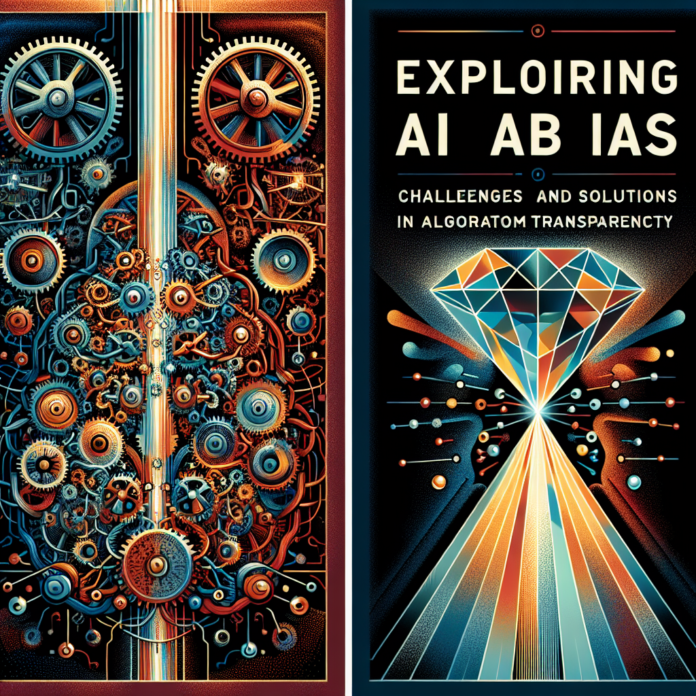
Challenges and Solutions in Algorithm Transparency

Introduction

As artificial intelligence (AI) continues to evolve and permeate various sectors, a pressing concern has emerged: AI bias. This phenomenon not only affects the accuracy of AI systems but also raises ethical questions regarding fairness and accountability. Understanding these biases and enhancing algorithm transparency is crucial for building trust in AI technologies.

The Nature of AI Bias

AI bias occurs when algorithms produce unfair, prejudiced results due to flawed data, unintentional human biases, or skewed training processes. Such biases can manifest in several areas, including recruitment, law enforcement, and credit scoring, leading to significant real-world consequences. Recognizing and diagnosing these biases is the first step toward mitigating their impact.

Types of AI Bias

  • Data Bias: This type occurs when the training data is unrepresentative of the population it is meant to serve.
  • Algorithmic Bias: Bias that arises from the algorithms that process the data and make predictions.
  • Human Bias: The extension of human prejudices into algorithm design by engineers or stakeholders.

Challenges in Algorithm Transparency

Achieving algorithm transparency is an uphill battle. The complexity of AI systems, particularly those that utilize deep learning, can make it difficult for developers and end-users to understand how decisions are being made. Additionally, proprietary technologies and diverse regulatory standards across regions hinder efforts toward transparency.

Key Challenges

  • Lack of Standards: Currently, there is no uniform framework that dictates how algorithms should be audited or assessed.
  • Complexity of Models: Many AI systems operate as ‘black boxes,’ creating challenges in interpreting their decision-making processes.
  • Data Privacy Concerns: Sharing data for transparency purposes may conflict with privacy laws and ethical principles.

Solutions for Enhancing Transparency and Reducing Bias

Addressing AI bias requires a multifaceted approach, integrating technical, ethical, and regulatory frameworks.

Technological Solutions

  • Explainable AI (XAI): Developing models that provide insights into how decisions are made can enhance understanding and trust.
  • Bias Audits: Regular assessments and audits of algorithms can help identify and rectify bias before it affects end-users.
  • Diverse Data Sets: Utilizing diverse and representative data sets during training can help mitigate data bias.

Ethical and Regulatory Approaches

Establishing Ethical Guidelines: Organizations should adopt ethical frameworks that guide AI development and deployment.

Government Regulations: Implementing regulations can ensure accountability and establish baseline standards for transparency.

Collaboration: Partnerships between stakeholders, including tech companies, academia, and governments, can foster shared responsibility in mitigating bias.

Conclusion

As AI continues to shape our society, exploring and addressing AI bias through enhanced algorithm transparency is vital. By fostering collaboration among stakeholders and adopting technological, ethical, and regulatory solutions, we can work toward making AI systems that are fair, accountable, and beneficial for all.

For further readings, please check out the resources from ResearchGate and ACM Publications.

More related updates, Click Here

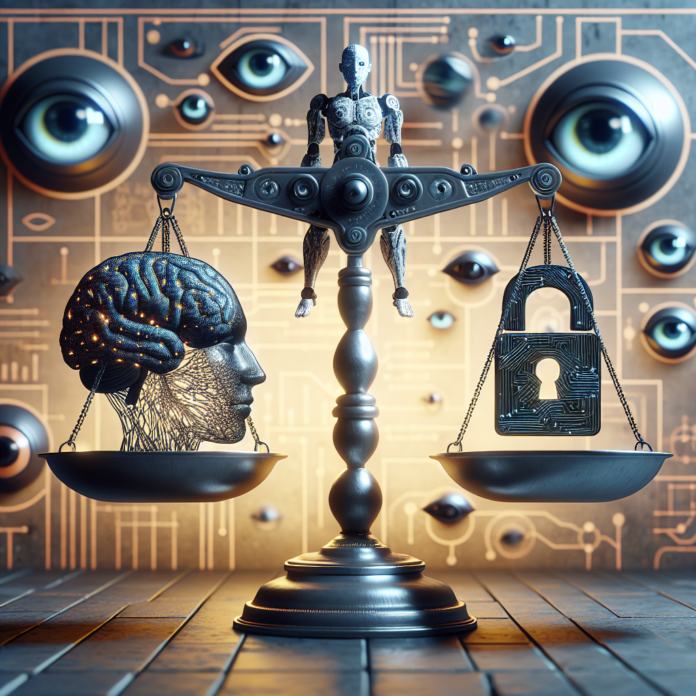
Striking a Balance in the Age of Surveillance

<article>
    <header>
        <h1>Privacy and AI: Striking a Balance in the Age of Surveillance</h1>
        <p>By [Your Name]</p>
    </header>
<section>
        <h2>Introduction</h2>
        <p>In an era dominated by rapid advancements in artificial intelligence (AI), the subject of privacy has emerged as a central concern. With the increasing implementation of AI technologies in various sectors, the delicate balance between leveraging data for innovation and protecting individual privacy has become a pressing issue.</p>
    </section>
<section>
        <h2>The Ubiquity of Surveillance</h2>
        <p>Surveillance technologies have become embedded in our daily lives. From smartphones to smart home devices, data is continuously collected and analyzed. AI plays a crucial role in this surveillance landscape, enabling real-time data processing and insights. While these innovations can lead to improved services and efficiencies, they also raise significant privacy concerns.</p>
        <p>Key examples of surveillance include:</p>
        <ul>
            <li>Facial recognition systems used in public spaces.</li>
            <li>Data mining from social media platforms.</li>
            <li>Tracking of online behaviors for targeted advertising.</li>
        </ul>
    </section>
<section>
        <h2>AI and Data Privacy</h2>
        <p>Artificial intelligence requires vast amounts of data to function effectively. However, the collection and storage of personal data can infringe upon individual privacy rights. Outdated laws and regulations often fail to keep pace with technological developments, making it imperative to address the privacy implications of AI.</p>
        <p>Some critical aspects include:</p>
        <ul>
            <li>The need for transparent data collection practices.</li>
            <li>The implementation of stronger regulations, such as the GDPR in Europe.</li>
            <li>Ethical AI practices that prioritize user consent and data minimization.</li>
        </ul>
    </section>
<section>
        <h2>Striking a Balance</h2>
        <p>Finding a balance between leveraging AI’s potential and safeguarding privacy rights is essential. Here are some strategies to consider:</p>
        <ul>
            <li><strong>Education and Awareness:</strong> Raising awareness about data privacy and the implications of AI among users.</li>
            <li><strong>Policy Development:</strong> Crafting comprehensive privacy laws that address the challenges posed by AI.</li>
            <li><strong>Technological Solutions:</strong> Using privacy-preserving technologies, such as differential privacy, to anonymize personal data.</li>
            <li><strong>Collaboration:</strong> Encouraging collaboration between tech companies, governments, and civil society to create a holistic approach to privacy.</li>
        </ul>
    </section>
<section>
        <h2>Conclusion</h2>
        <p>As we navigate the complexities of AI in the age of surveillance, it is imperative to prioritize privacy alongside technological advancement. By striking a balance, we can harness the benefits of AI while ensuring that individual rights are respected and protected. The future of AI and privacy depends on our collective commitment to fostering an ethical and transparent digital landscape.</p>
    </section>
</article>

Stay-tuned with us on our website

Managing Your Privacy Preferences

Your privacy is important to us

Additional relevant updates

How AI is Redefining Jobs and Skills

The landscape of work is undergoing a seismic shift, driven largely by advancements in artificial intelligence (AI). As we move into a new era, the integration of AI technologies is reimagining jobs and the skills required to succeed in them. This article delves into how AI is influencing the workplace and what it means for the future workforce.

AI and Job Transformation

AI is not merely reshaping existing roles but is also creating new job categories. As machines take over routine tasks, the demand for human roles that require complex decision-making, creativity, and interpersonal skills is on the rise.

Key Areas of Transformation:

  • Automation of Repetitive Tasks: AI excels in handling repetitive and mundane tasks, freeing up human employees to focus on more strategic work.
  • Augmentation of Decision-Making: AI tools provide data-driven insights that help employees make informed decisions faster.
  • Creation of New Industries: Entirely new fields, such as AI ethics and machine learning engineering, are emerging.

The Skills of Tomorrow

With the evolution of roles, the skills required are also changing. Traditional skill sets that once guaranteed job security are being replaced by a demand for digital proficiency, critical thinking, and emotional intelligence.

Essential Skills for the Future Workforce:

  • Technical Skills: Understanding AI technologies and digital platforms will be crucial.
  • Soft Skills: Communication, adaptability, and teamwork are increasingly important in collaborative AI-enhanced environments.
  • Continuous Learning: The ability to learn and adapt to new technologies and methodologies will define career success in the coming years.

Embracing Change

Organizations must embrace this transformation and invest in training programs that align with the changing skill landscape. By fostering a culture of continuous education and flexibility, companies can better prepare their workforce for the challenges ahead.

Conclusion

As AI continues to evolve, it will redefine job roles and the skills required. The future of work calls for a proactive approach to professional development, where employees and employers collaborate to prepare for an AI-driven world. Embracing this change will not only enhance productivity but also enable individuals to thrive in new and exciting career paths.

More related updates, Click Here