The Psychology of HODLing: Why Investors Stick with Crypto
In the ever-evolving world of cryptocurrency, the term HODL has become synonymous with long-term investment strategies. Originating from a misspelled user post on a Bitcoin forum in 2013, HODLing has transformed into an ethos that encapsulates the determination of crypto investors to hold onto their assets despite market volatility. This article delves into the psychological factors that drive HODLers to maintain their positions in a seemingly chaotic investing environment.
Understanding the HODL Mentality
The core philosophy behind HODLing lies in the belief that cryptocurrency represents a revolutionary change in finance and technology. Investors who adopt this mindset often focus on long-term gains rather than short-term fluctuations. Here are some key psychological factors that contribute to this behavior:
1. The Fear of Missing Out (FOMO)
Many investors initially enter the crypto market out of fear of missing out on potential gains. The dramatic price surges of assets like Bitcoin and Ethereum can evoke a sense of urgency, prompting investors to buy in. Once they own cryptocurrencies, the fear of missing further growth encourages them to hold onto their investments despite market downturns.
2. Loss Aversion
Behavioral economics suggests that people experience losses more acutely than gains. This principle of loss aversion drives many investors to hold onto their cryptocurrencies even when prices decline, as they prefer to avoid realizing a loss rather than selling and potentially locking in a negative outcome.
3. Community and Belonging
The cryptocurrency community plays a pivotal role in reinforcing the HODL mentality. Online forums, social media platforms, and meetups create a sense of belonging among investors. The shared values and collective mindset encourage individuals to stick together during turbulent times, fostering an environment where HODLing becomes a badge of honor.
4. Confirmation Bias
Investors often seek information that supports their beliefs about the long-term potential of cryptocurrencies. This confirmation bias leads them to dismiss negative news or trends, focusing instead on positive developments to rationalize their decision to hold. By reinforcing their conviction, HODLers can maintain a resilient outlook even in unfavorable conditions.
5. The Vision of Financial Independence
For many, investing in cryptocurrencies symbolizes a pathway to financial independence. The dream of achieving substantial wealth can be a powerful motivator for HODLing. This vision helps investors endure the emotional rollercoaster of the crypto market, as they remain focused on the potential benefits of staying the course.
Conclusion
The psychology behind HODLing in the cryptocurrency market is influenced by a combination of emotional, social, and cognitive factors. Investors’ inherent biases, community support, and their visions for the future all contribute to their willingness to endure market volatility. Understanding these psychological aspects can help new investors navigate the complexities of the crypto landscape more effectively.
The last time Australia hosted the Duke and Duchess of Sussex they were the fresh new faces of the royal family, ready to walk the path set by decades of tradition.
This time, there was no royal walkabout, but a mix of quasi-regal public engagements and private commercial events for a tour that’s part-celebrity, part-charity.
A tour by Harry and Meghan to Australia – where his father is still the king – was always going to be controversial given their deliberate attempt to distance themselves from the family yet retain some vestiges of royal status.
Even before they arrived, some complained about cost to taxpayers of police security, and the couple’s attempt to cash in on their titles – as one newspaper column put it, to use Australians “as an ATM.”
Yet, for all the headlines about their money-making exploits, it’s unclear how much cash they’ll make from the privately funded tour that includes many unpaid appearances.
Prince Harry wasn’t paid anything to speak at the InterEdge Summit on Thursday, a spokesperson told CNN. And sources say rumors about Meghan’s huge payday for a surprise appearance on MasterChef Australia are also false.
To observers, the tour – and the couple’s status – was hard to define. “What exactly are they? They’re not royals, but they’re assuming the facade of royals,” commentator and author Bonnie Greer told CNN.
Holly Wainwright, the executive editor of Australian news site Mamamia, wrote that Harry and Meghan had returned to Australia not as royals or celebrities but ”some kind of new, indestructible hybrid.”
Australia’s relationship with Harry and Meghan
The couple last touched down in Australia in 2018 for a formal tour as royal newlyweds, whose wedding was watched by millions worldwide and boosted that year’s sales of Australian women’s magazines.
Less than two years later, the couple announced their split from the royal family, but interest in them remained high as mostly negative headlines from Rupert Murdoch’s UK tabloids – longtime foes of Prince Harry – carried over into News Corp’s vast stable of Australian mastheads.
As a member of the Commonwealth, Australia has a direct connection to the British royal family, with King Charles as its head of state.
While rumblings of a republic are never too far away, a survey taken at the end of the king’s last visit to Australia in 2024 showed most Australians wanted to keep the status quo.
By then Harry and Meghan’s popularity had taken a hit in Australia, but local media coverage of their latest tour suggests – love them or hate them – interest is high.
Harry and Meghan’s arrival in Melbourne Tuesday on a commercial Qantas flight made local breakfast news with live reports from journalists who stopped passengers for comment on the famous couple.
“They were super friendly around the toilet areas,” one passenger said.
Australian media has followed their latest trip closely – covering Meghan’s comments on bullying and Harry’s thoughts on parenthood.
“Every day for 10 years, I have been bullied and attacked. And I was the most trolled person in the entire world,” Meghan told students at Melbourne’s Swinburne University of Technology at an event by batyr, a mental health organization, on Thursday.
‘Every day for 10 years I’ve been bullied and attacked’: Meghan, Duchess of Sussex
‘Every day for 10 years I’ve been bullied and attacked’: Meghan, Duchess of Sussex
0:34
Harry also reflected on his past challenges in royal life at an event the same day.
“I don’t want this job. I don’t want this role – wherever this is headed, I don’t like it,” he recalled feeling as a teenager, speaking at the InterEdge Summit. “It killed my mum, and I was very much against it.
“Eventually I realized – well, hang on, if there was somebody else in this position, how would they be making the most of this platform and this ability and the resources that come with it to make a difference in the world?”
Most of the negative headlines this week are around the private engagements with hefty entry costs, though it’s not clear how much money they’ll take home to California – if any.
Proceeds from ticket sales to the InterEdge Summit – from almost 1,000 Australian dollars ($720) to more than twice that – would be used to support Lifeline Narrm, the Victoria branch of a national charity that runs a 24-hour crisis support and suicide prevention hotline, the spokesperson said.
It was also questionable how much Meghan would financially benefit from taking part in the “Her Best Life” retreat at the InterContinental Hotel.
Marketed as an “intimate luxury weekend,” the event was organized by podcaster Gemma O’Neill, who last month told listeners that Meghan was turning up effectively “as a favor” to their mutual friend Markus Anderson, described by Marie Claire as Meghan’s “long-time confidant.”
As of Wednesday, tickets were still available for the exclusive event – priced at up to 3,199 Australian dollars ($2,283) for two nights’ accommodation, a gala dinner with free-flow drinks, two breakfasts, one lunch, a Saturday-night disco, yoga, sound healing, talks on mediation and manifestation and, of course, a chat and a group photo with Meghan.
O’Neill told her listeners she’d worked hard to keep prices the same as the last retreat she hosted. She did not respond to CNN’s request for comment, but sources suggested any fee paid to the duchess was nominal.
In a price-sensitive economic climate – with Australians being warned that fuel shortages related to the United States and Israel’s war on Iran could drive up inflation and interest rates – the notion of people spending thousands of dollars on a weekend retreat may have touched a nerve.
But this is Sydney, one of the world’s most expensive property markets. Some people can afford to drop thousands of dollars on a luxury weekend.
Reports suggest the pair may be setting the stage for the potential expansion of Meghan’s lifestyle brand “As Ever” to Australia, but at the time of writing that hadn’t been confirmed.
It’s clear the duke and duchess need to create new revenue streams to maintain their life as ex-royals. (Meghan’s partnership with Netflix for her show “With Love, Meghan” ended last month.)
But to sell anything requires willing buyers – and so far, this tour has shown that there’s still an audience for Harry and Meghan in Australia – working royals or not.
The Environmental Debate: Is Cryptocurrency Mining Sustainable?
Cryptocurrency, a digital asset designed to work as a medium of exchange, has gained immense popularity in recent years. However, the process of ‘mining’ new coins and confirming transactions has sparked a heated debate over its environmental impact. With concerns surrounding climate change and resource depletion, it’s essential to evaluate whether cryptocurrency mining is sustainable in today’s world.
Understanding Cryptocurrency Mining
Cryptocurrency mining is the process by which transactions are verified and added to the public ledger, known as the blockchain. Miners use powerful computers equipped with specialized hardware to solve complex mathematical problems, which require significant computational power and, consequently, energy.
Energy Consumption
The energy consumption of cryptocurrency mining is staggering. For example, Bitcoin mining’s energy requirements are often compared to those of entire countries. This high energy demand raises several critical questions:
Where is the energy sourced from? Is it renewable?
What is the carbon footprint of such energy consumption?
Can technological advancements reduce energy usage?
The Environmental Impact
The environmental impact of cryptocurrency mining can be categorized into several key areas:
Carbon Emissions
Many mining operations rely on fossil fuels like coal, significantly contributing to carbon emissions. According to studies, Bitcoin alone could produce an estimated 0.1% of global electricity consumption, leading to substantial greenhouse gas emissions.
Resource Depletion
The mining equipment itself requires significant resources to produce. Mining rigs are made from metals and minerals that need to be mined, further straining the planet’s finite resources.
Possible Solutions and Innovations
Despite the challenges, there are potential solutions that can make cryptocurrency mining more sustainable:
Renewable Energy Sources: Utilizing wind, solar, or hydroelectric power can mitigate the environmental effect of mining.
Energy Efficiency Improvement: Innovations in hardware and software can lead to a reduced energy footprint.
Proof of Stake (PoS): Transitioning from energy-intensive Proof of Work (PoW) to PoS can significantly cut down on energy consumption.
Conclusion
The debate surrounding the sustainability of cryptocurrency mining is multifaceted and ongoing. While current practices may not be environmentally sustainable, advancements in technology and energy sourcing can pave the way for a greener future in cryptocurrency. Stakeholders, including miners, developers, and environmentalists, must collaborate to find balanced solutions that address the financial benefits of cryptocurrencies while protecting our planet.
April 16, 2026Updated April 17, 2026, 9:22 a.m. ET
For the past five weeks, Jamie Ding has wowed and charmed television viewers with his vast knowledge and friendly demeanor while becoming one of the most successful contestants in “Jeopardy!” history.
While his Detroit-area family has known that Ding, who grew up in Michigan, is smart, they never anticipated that he would notch 25 consecutive victories through Thursday, going into Friday contest. The 25 wins are the fifth-highest total in the history of the long-running TV game show.
“We know he knows a lot, but not this much,” said his father, Yuchuan Ding.
Jamie, 33, said he cherishes the time he spent in Michigan and hasn’t left the state behind entirely — his phone number still has a 313 area code, after all.
“Michigan was and is a wonderful place to be,” he said. “The emotional turning point of my first game was getting the clue about Belle Isle. After that, I felt like I was in the swing of things.”
Jamie’s younger sister, Jessie, 30, said she originally feared that Jamie would “crash and burn” on the show. But when he got a “Jeopardy!” question correct in which the answer was Detroit, she said both she and Jamie knew he would be fine.
“I didn’t want him to go on national TV and embarrass himself,” said Jessie, adding with a laugh: “But he didn’t.”
As of Thursday, Jamie has earned $702,000 on “Jeopardy!” — the sixth most prize winnings ever compiled by a single contestant. He has answered 783 clues correctly, compared with 61 incorrect responses as of Wednesday’s episode, according to the online database The Jeopardy! Fan.
Jamie’s mother, Ning Yan, said many people have reached out to the family as Jamie continued to pile up win after win.
“Friends, family, everybody, classmates … tell us they are watching,” Ning Yan said. “It’s very exciting.”
Before he became TV’s latest game show star, Ding was one of the brightest youths in Metro Detroit.
“He started reading at the age of 3, and we provided him with all the possible materials we could,” Yuchuan Ding said. “He’s always been very curious about everything.”
The elder Ding, who is a professor of neurosurgery at Wayne State University in Detroit, has vivid memories of young Jamie reading every informational plaque during family outings to the zoo. And at age 4 or 5, his dad said, Jamie saved his family some strife when he was able to understand the rules posted on a “no parking” sign and told his parents to move their car.
“When he’s with us, we can’t do anything wrong,” Yuchaun said with a smile. “He’s our guide.”
Jamie Ding’s appearance turns parents into ‘Jeopardy!’ fans
The family has been watching Ding every night from their home in Grosse Pointe Shores, where Jamie and Jessie attended Grosse Pointe public schools from elementary through high school.
Yuchuan said he wasn’t familiar with “Jeopardy!” before Jamie became one of its longest-reigning champs ever. But now he and his wife are regular viewers.
Jamie’s parents are originally from Beijing, where Yuchaun found career success as a cosmetic surgeon. He and wife, Ning Yan, left the country in 1989 after the political violence that erupted at Tiananmen Square, which the U.S. State Department said resulted in hundreds to thousands of Chinese protesters being killed by the People’s Liberation Army.
After residing for several years in Australia, where Jamie was born and Yuchuan earned his doctorate, the young family moved to Tennessee. There, Yuchuan was a research fellow at Vanderbilt University while Ning Yan worked in child care.
The family moved to Michigan in 1998, when Yuchuan started work at Wayne State University and Ning Yan joined the Detroit public school system. She has since retired from teaching math at Cass Technical High School.
While in the Grosse Pointe school system, Jamie competed in the Scripps National Spelling Bee, the National Geographic Bee and the National Academic Quiz Tournaments’ high school championship — while still graduating a full year early.
“I remember Jamie well as a brilliant young man and excellent student,” said Tim Bearden, who was the principal at Grosse Pointe North High School when Jamie was a student and is now the superintendent of West Ottawa Public Schools. “I’m not surprised at all at his success, and I’m super happy for him!”
During Jamie’s trip to Washington, D.C., to participate in the 2004 Geographic Bee, he briefly met Alex Trebek, the late, longtime host of “Jeopardy!”
Neurologist father weighs in on Jamie’s government work
After graduating from high school in 2009, Ding matriculated at prestigious Princeton University in New Jersey, graduating in 2013 with a degree in molecular biology.
He remained in New Jersey after earning his degree and now, at age 33, works for the state’s Housing and Mortgage Finance Agency, helping to administer the low-income housing tax credit program. His work involves managing the review process that determines whether mixed-income housing projects are eligible for tax credits.
Yuchuan, who is an internationally recognized expert in stroke therapy, traumatic brain injury and thermal injury research, said he didn’t necessarily expect his son to wind up as a bureaucrat working in government housing, but he’s proud of the work Jamie does nonetheless.
“I know it’s important …, and he really likes the work,” Yuchuan said.
When he’s not monitoring New Jersey’s housing projects, he’s attending law school as a part-time student.
That, or winning tens of thousands of dollars each night on TV.
He says he couldn’t have accomplished his impressive streak without his family’s support.
“My family are absolute heroes,” he said. “I would not be where I am today without their unconditional love and support. I’m very glad that I got to do something grand to make them proud.”
Jamie is still a long way from matching current “Jeopardy!” host Ken Jennings’ 2004 streak of 74 consecutive victories, but he’s already tied him in one area. During one episode last month, he recorded 45 correct answers in a single episode, tying Jennings’ mark.
Episodes are taped months in advance, so the fate of Jamie’s streak is already sealed. But that doesn’t make the Dings’ experience of seeing their child or brother rack up more winnings every night any less exciting.
Jessie was in the audience at the “Jeopardy!” set in Culver City, California, for Jamie’s run. While it is now fun to remember moments she has forgotten, Jessie said, “Sometimes it still gets a little nerve-wracking even though I know the outcome.”
“Even though I know the results,” Yuchuan added, “I still get very nervous.”
MILWAUKEE – Recent storms brought flooding back to parts of Milwaukee, causing new damage in neighborhoods still recovering from historic flooding last August.
Local perspective:
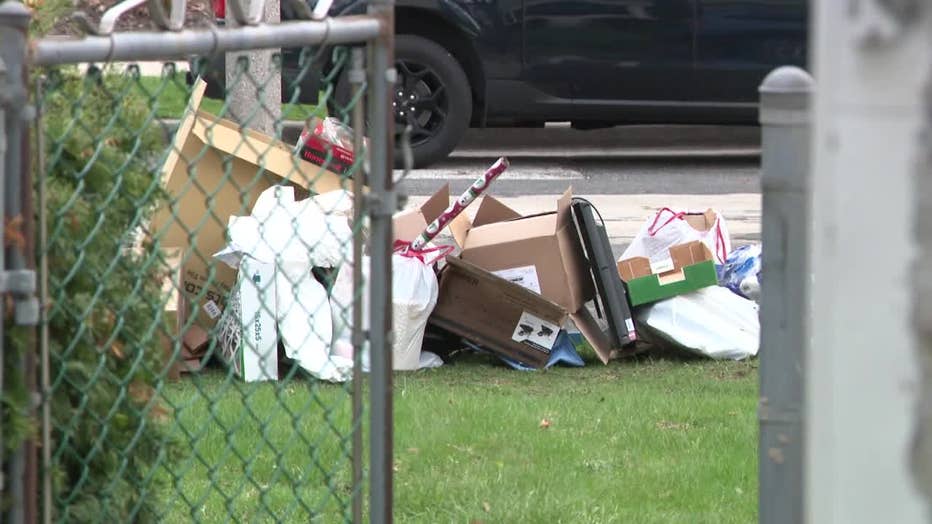
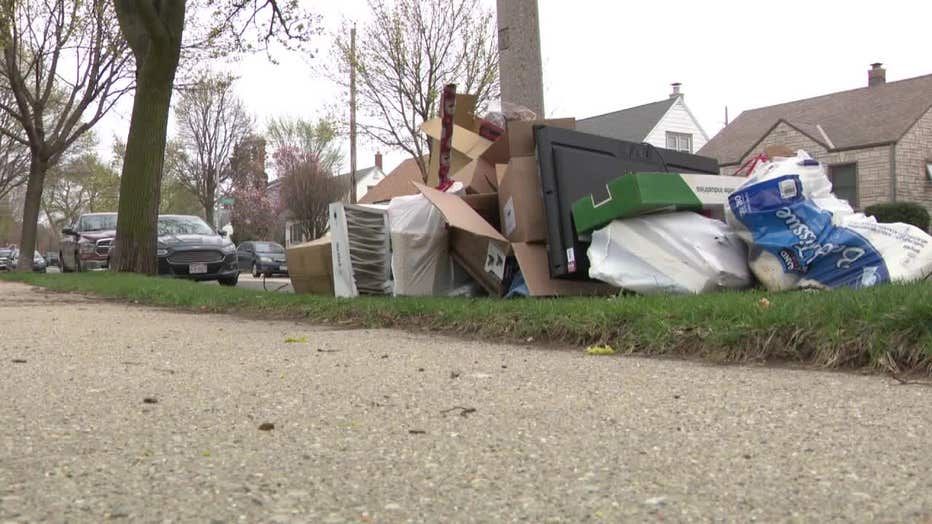
Along South Fulton Street in Bay View, piles of debris lined the road Thursday night as residents threw out water-damaged items from their basements. While the damage was not as severe as last year, neighbors said it is still frustrating.
Residents were also seen picking up dehumidifiers and fans, trying to dry out before more rain arrives.
At the intersection of Howell and Oklahoma, which was underwater Wednesday night, a business flooded again.
“We’re kind of used to it over so many years,” said Michael Arenas, an insurance agent with Reilly’s Insurance Services.
Arenas said flooding has become almost an annual issue, often leaving water in the building’s basement. He pointed to window seals that were pushed out by floodwaters.
“We even had some of these windows sealed up over here, and the flood actually pushed these out pretty good, so we’re gonna have to get these […] yeah, they pushed them out pretty good, and put all these leaves and stuff down here from the window wells,” Arenas said.
What they’re saying:
About a mile away, homeowner Allison Gipp listed what she had to throw out after water entered her basement.
“Boxes, a TV, luggage, you know, wrapping paper and toilet paper,” Gipp said.
She said sewage backed up through her floor drain, reaching about three inches this time.
“They’re saying, ‘Well, our biggest priority is not to have sewage in people’s basements.’ Well… This is what keeps happening,” Gipp said.
In recent years, the financial landscape has undergone a significant transformation, largely fueled by the emergence of Decentralized Finance (DeFi). This new paradigm challenges the traditional banking system, raising fundamental questions about the relevance and future of established financial institutions.
What is Decentralized Finance?
Decentralized Finance refers to a financial ecosystem built on blockchain technology that allows users to access financial services without the need for intermediaries, such as banks. Using smart contracts—self-executing contracts with the terms directly written into code—DeFi applications enable users to lend, borrow, trade, and earn interest on their assets seamlessly.
Key Drivers Behind the Rise of DeFi
Accessibility: DeFi platforms are open to anyone with an internet connection, democratizing access to financial services.
Lower Costs: By removing middlemen, DeFi reduces fees associated with traditional banking.
Transparency: Transactions and operations on the blockchain are publicly verifiable, enhancing trust among users.
Programmability: Smart contracts allow for innovative financial products and services that can be customized to meet the unique needs of users.
Are Traditional Banks Obsolete?
While DeFi has gained momentum, declaring traditional banks obsolete may be premature. Banks offer critical services such as regulatory oversight, customer protection, and stability, which cannot be easily replicated in the DeFi space. Moreover, many traditional institutions are beginning to adopt blockchain technology and integrate DeFi solutions into their services to improve efficiency and customer experience.
Challenges Ahead for DeFi
Despite its potential, DeFi faces numerous challenges, including:
Regulatory Uncertainty: Governments worldwide are still figuring out how to regulate DeFi without stifling innovation.
Security Concerns: The DeFi space is susceptible to hacks and fraud, with numerous high-profile incidents undermining trust.
User Experience: The complexity of interacting with DeFi protocols can deter less tech-savvy individuals.
Conclusion
The rise of decentralized finance signifies a major shift in how we think about money and financial services. While it poses challenges to traditional banks, it also offers opportunities for collaboration and innovation. The financial ecosystem is likely to evolve into a hybrid model where both DeFi and traditional banking coalesce to serve the needs of consumers better.
The National Weather Service (NWS) confirmed that the April 14 storm damage in Washington County was caused by two tornadoes.
The first started near Christie in Adair County, Oklahoma, before crossing the state line into Washington County around 11:45 p.m. and ending near Cincinnati. This tornado uprooted multiple trees and damaged buildings.
The second tornado started about 5 miles southeast of Baron in Adair County and ended near Lincoln in Washington County. It also uprooted trees and damaged buildings just before midnight Tuesday.
These are the first two tornadoes of the year for our area. Stay with 5NEWS as we learn more.
Beyond Bitcoin: Exploring the Top Altcoins for 2023
Introduction
Bitcoin has long been the poster child for cryptocurrencies, but as the digital currency ecosystem evolves, many altcoins are gaining traction. In 2023, a variety of altcoins show promising potential for investment. This article dives into some of the top contenders shaping the future of crypto.
<h2>What are Altcoins?</h2>

<p>Altcoins, or alternative coins, refer to all cryptocurrencies other than Bitcoin. They were created to improve upon Bitcoin's limitations or to offer different functionalities. Today, there are thousands of altcoins available, each with its unique features and use cases.</p>
<h2>Top Altcoins for 2023</h2>
<h3>1. Ethereum (ETH)</h3>

<p>Ethereum remains the leading smart contract platform, driving the decentralized finance (DeFi) sector and non-fungible tokens (NFTs). Its upcoming upgrades aim to enhance scalability and reduce transaction fees.</p>
<h3>2. Binance Coin (BNB)</h3>

<p>As the native coin of Binance, one of the largest cryptocurrency exchanges, BNB is utilized for a variety of transactions, including trading fees and token sales. Its utility and integration into the Binance ecosystem keep it in high demand.</p>
<h3>3. Cardano (ADA)</h3>

<p>Cardano is known for its research-driven approach and aims to provide a more secure and scalable blockchain. With its ongoing upgrades and focus on sustainability, Cardano is poised for growth in 2023.</p>
<h3>4. Solana (SOL)</h3>

<p>Solana has emerged as a high-performance blockchain, known for its fast transaction speeds and low costs. Its growing ecosystem of decentralized applications (dApps) makes it a strong contender in the altcoin market.</p>
<h3>5. Polkadot (DOT)</h3>

<p>Polkadot aims to facilitate a network of blockchains, enabling them to communicate and share information. This interoperability is seen as a game changer for the blockchain landscape, offering great potential for the future.</p>
<h2>Investment Considerations</h2>

<p>While investing in altcoins can be lucrative, it also carries risks. Here are a few factors to consider:</p>

<ul>

    <li><strong>Market Volatility:</strong> Altcoins can be significantly more volatile than Bitcoin, leading to larger price swings.</li>

    <li><strong>Project Fundamentals:</strong> Research the project's whitepaper, development team, and community support.</li>

    <li><strong>Diversification:</strong> Don’t put all your eggs in one basket. Consider diversifying your crypto portfolio.</li>

</ul>
<h2>Conclusion</h2>

<p>The cryptocurrency market is filled with potential beyond Bitcoin. In 2023, altcoins like Ethereum, Binance Coin, Cardano, Solana, and Polkadot stand out due to their unique offerings and growth prospects. Always perform thorough research and consult with financial advisors before making investment decisions.</p>
Rhea Ripley doesn’t think you can make it alone in WWE anymore. For years, success in professional wrestling meant protecting your spot and looking out for yourself.
Ripley understands why it worked that way, but she doesn’t think it’s functional now.
“I feel we’ve gotten to a point within this industry where it is about working together,” Ripley told CBS Sports. “Back in the day, I see why there were so many arguments, people not getting along and fights. Everyone was pretty much out there trying to succeed by themselves.
“In this business, you can’t really be super selfish. It’s a team effort. You have to go out there and work as a team.”
That mindset has followed her to the top of the company.
Few women are on Ripley’s level. She’s among WWE’s most popular superstars, boasting the largest Instagram following of any full-time woman on the roster. Her TikTok following is larger than that of any active wrestler on the roster besides Logan Paul.
A commercial and critical darling, the three-time world champion also shares the record for the single longest women’s title reign in WWE history.
Ripley’s success is the perfect recipe for an inflated ego, but she believes that a rising tide lifts all boats. After all, what purpose does “The Eradicator” serve with no one to annihilate?
“If you make your opponent look like a piece of shit and you lose to them, you lost to a piece of shit,” Ripley said. “If you beat them, congratulations, you beat a piece of shit. Well done.”
Ripley, one of WWE’s most dominant stars, is always looking to the future. She’s thinking about what comes next and who comes with her. In her mind, it shouldn’t be lonely at the top.
“For me, I think I’m a good representation of that,” she said. “I’m always there to try and help the person I’m in the ring with. I try to vouch for them whenever I can.
“I’m able to get myself into this spotlight where I’m not looked at as one of, if not the top, woman in WWE. My job is to bring everyone else up because I’ll need some competitors that I need to step in the ring with, where it looks like a real fight.”
That philosophy showed up in her recent match with Giulia, one of Japan’s most acclaimed female wrestlers. While Giulia has twice won the women’s United States title in her first year on the main roster, she’s a step below the main event and absent from WrestleMania.
“She’s the champion, but she also hasn’t been given long matches on the main roster and that spotlight to show that she can really shine,” Ripley said. “I’m going to go out there, bust my ass, and make sure she looks good. Hopefully, that opens up opportunities.”
Her match with Giulia was undoubtedly memorable. In fact, one moment from their Feb. 20 encounter was the biggest talking point from SmackDown. During the match, Ripley took a brutal-looking stomp from Giulia. The subsequent replays looked even worse.
“It looked so brutal,” Ripley said. “Watching it back, I thought, ‘Oh! That looks good.'”
Fortunately, Ripley only suffered surface-level damage from the nasty sequence.
“I don’t know if I’m so acclimated to being hit in the face, but it wasn’t that bad,” she said. “Yeah, it looked back and gave me a black eye, but I have a hard face. I turned my face just in time. I wasn’t going to break my nose again.”
With Giulia in the rearview mirror, the stage gets bigger.
Ripley will challenge WWE women’s champion Jade Cargill at WrestleMania 42 on Sunday, one of the marquee matches on the card. The two have gone back and forth on social media leading up to the event, sparking speculation about real tension backstage.
Ripley acknowledged what Cargill brings to the table despite their potential differences. Like Oba Femi vs. Brock Lesnar, which takes place the same night, Ripley vs. Cargill jumps off the poster.
“You look at her, and you can tell she looks like a superstar,” Ripley said. “She fits in very well in the WWE, especially at Mania. It has a very big match feel when you put someone who looks like Jade against someone who looks like me.”
The polarity between them might stem from their roots. Their paths to the world title match at WrestleMania could not be more different. Cargill, a collegiate basketball star, has only wrestled on national stages. The world has watched her every success and failure.
“To learn this craft on the road, on live television, I have to give her props,” Ripley said. “That would be very daunting and scary. For me, I’ve gone through this for years. I’ve been wrestling since I was 16. I’ve been through everything.”
Ripley took a more traditional path to the top. Her resume is long, built step by step.
“I started on the independent scene in Australia,” she said. “I made it to WWE. I went through NXT UK, NXT, Raw and now SmackDown. I know the grueling task that comes with this business.
“She knows a different kind of grueling task. It’ll be very intriguing to see how WrestleMania pans out. We’re two different dogs in this fight.”
The trial will be livestreamed and live blogged in this article. The judge has warned that the trial will include graphic testimony and video. NBC 5 has decided to cut away from particularly graphic parts of the testimony. We will return to the trial as soon as we are able. Viewer discretion is advised.
A complete live blog on the day’s events at trial appears below the article.
After being warned since the start of the trial that it would include graphic testimony, including audio of the murder of Athena Strand, Judge George Gallagher warned the courtroom on Thursday that this was their last chance to leave before that chilling recording was played for the jury.
“If you think you cannot watch it or listen to it, leave now. Now’s your time to get out,” Gallagher told the courtroom.
Prosecutors played excerpts of the video in court, including what they said showed Horner driving past Athena Strand’s home while police and family searched for her. According to testimony in court, he stopped and was told a 7-year-old had been taken.
“Are you serious?” he responded.
The court also heard details from a video recorded the day before inside his delivery truck, when prosecutors said FedEx surveillance cameras captured Horner kidnapping and attacking Strand.
Athena’s parents left the courtroom before those videos were played.
Jurors watched the video that showed Horner pull up to Athena’s home and look around before getting out, according to the proceedings in court. A few minutes later, he was seen walking past the van, with Athena walking behind him. She was then seen standing behind the van and peering inside before Horner picked her up, put her inside and shut the truck’s door.
Jurors then heard audio from inside the truck, where Athena repeatedly asked him the same question: “Are you a kidnapper?” she said.
Jurors also heard Horner threaten to hurt her if she screamed. Some of Athena’s extended family, who stayed to listen to parts of the recording, then left the courtroom.
Before he covered the camera inside the truck, Horner made a chilling statement: “You’re really pretty. You know that?”
Jurors later heard Horner tell Athena to take her shirt off and her say “no” while asking for her mom. The audio from the attack continued for more than an hour and included crying, screaming and banging.
Jurors were visibly shaken and sobbing. For at least part of the recording, Horner was seen with his head down.
The video evidence was not the only testimony presented Thursday. Athena’s father, Jacob Strand, also took the stand.
Strand testified about how his daughter’s murder affected his life, saying he turned to alcohol and that it ruined his marriage. He said, as a man and as her father, he feels like he should have been there to protect his child.
“It made me feel horrible,” Strand said. “You know, like, I should have done something or been there. I wasn’t there to protect them like I should be, like a father’s role.”
Strand went on to describe the guilt he felt after Athena’s death and how he handled his pain and trauma through “self-destruction.” Strand said he “just kind of held everything in,” and he told the jury that he turned to alcohol. He said her death ruined his marriage, that he couldn’t sleep, and that he “lost, like 50 pounds” because he “would only eat, like, every seven days.”
He said that Athena’s sister was in therapy after Athena’s death, and that she recently returned to therapy because she had been having nightmares about “everything that she’s having to hear about and what happened to her sister.”
The jury will return to the courtroom on Wednesday when the defense will begin presenting its case. On Friday, Monday and Tuesday, the judge and the attorneys are expected to be in court for procedural hearings where they will presumably discuss questions of law and objections to evidence or testimony related to the defense, without the jury hearing potentially prejudicial information.
This story was originally reported for broadcast by NBC DFW. AI tools helped convert the story into a digital article, and an NBC DFW journalist edited it again before publication.
Websites store cookies to enhance functionality and personalise your experience. You can manage your preferences, but blocking some cookies may impact site performance and services.
Essential cookies enable basic functions and are necessary for the proper function of the website.
Name
Description
Duration
Cookie Preferences
This cookie is used to store the user's cookie consent preferences.
30 days
These cookies are needed for adding comments on this website.
Name
Description
Duration
comment_author
Used to track the user across multiple sessions.
Session
comment_author_email
Used to track the user across multiple sessions.
Session
comment_author_url
Used to track the user across multiple sessions.
Session
These cookies are used for managing login functionality on this website.
Name
Description
Duration
wordpress_logged_in
Used to store logged-in users.
Persistent
wordpress_sec
Used to track the user across multiple sessions.
15 days
wordpress_test_cookie
Used to determine if cookies are enabled.
Session
Statistics cookies collect information anonymously. This information helps us understand how visitors use our website.
Google Analytics is a powerful tool that tracks and analyzes website traffic for informed marketing decisions.
Contains information related to marketing campaigns of the user. These are shared with Google AdWords / Google Ads when the Google Ads and Google Analytics accounts are linked together.
90 days
__utma
ID used to identify users and sessions
2 years after last activity
__utmt
Used to monitor number of Google Analytics server requests
10 minutes
__utmb
Used to distinguish new sessions and visits. This cookie is set when the GA.js javascript library is loaded and there is no existing __utmb cookie. The cookie is updated every time data is sent to the Google Analytics server.
30 minutes after last activity
__utmc
Used only with old Urchin versions of Google Analytics and not with GA.js. Was used to distinguish between new sessions and visits at the end of a session.
End of session (browser)
__utmz
Contains information about the traffic source or campaign that directed user to the website. The cookie is set when the GA.js javascript is loaded and updated when data is sent to the Google Anaytics server
6 months after last activity
__utmv
Contains custom information set by the web developer via the _setCustomVar method in Google Analytics. This cookie is updated every time new data is sent to the Google Analytics server.
2 years after last activity
__utmx
Used to determine whether a user is included in an A / B or Multivariate test.
18 months
_ga
ID used to identify users
2 years
_gali
Used by Google Analytics to determine which links on a page are being clicked
30 seconds
_ga_
ID used to identify users
2 years
_gid
ID used to identify users for 24 hours after last activity
24 hours
_gat
Used to monitor number of Google Analytics server requests when using Google Tag Manager