Dubai, UAE — In a strategic move to strengthen the region’s Web3 ecosystem, Sui, a leading Layer 1 blockchain, has announced a groundbreaking partnership with the Virtual Assets Regulatory Authority (VARA) of Dubai. The collaboration aims to empower startups, cultivate local talent, and offer regulatory clarity in support of decentralized innovation across the Middle East.
The partnership marks a pivotal moment for the region’s Web3 ambitions, aligning with Dubai’s broader vision to be a global hub for blockchain, virtual assets, and digital economy leadership.
Local Talent Development: Educational programs, bootcamps, and certifications will be introduced to upskill local developers, entrepreneurs, and regulators in blockchain technology and Web3 infrastructure.
Regulatory Guidance: Through direct collaboration, Sui will work with VARA to ensure compliance frameworks are developer-friendly and scalable, bridging the gap between innovation and regulation.
Omar bin Sultan Al Olama, UAE Minister of AI and Digital Economy, commented,
“Partnerships like these are key to making Dubai the capital of future technology, driven by public-private collaboration.
🌍 Why This Matters for the Middle East
The collaboration signifies growing institutional acceptance of blockchain technologies and demonstrates Dubai’s commitment to fostering a regulated yet progressive environment for virtual assets.
With a proactive regulator like VARA and a powerful protocol like Sui working in tandem, Dubai is well-positioned to lead the next wave of blockchain innovation in the MENA region.
In just over a decade, blockchain technology has evolved from a fringe fascination among cryptographers to a global economic force. While cryptocurrencies like Bitcoin and Ethereum often dominate headlines, the real revolution lies in the underlying tech: blockchain. From finance to healthcare, from governance to supply chains, countries around the world are betting big on blockchain—and how they do it could shape the future of our digital lives.
Here are some of the top nations leading the charge—and why it matters.
Moreover, China is a global leader in Central Bank Digital Currency (CBDC) development, with its digital yuan (e-CNY) already in pilot use across multiple cities.
What’s at stake: If China’s blockchain vision succeeds, it could set a precedent for state-controlled decentralized infrastructure—an ironic but powerful blend of control and innovation.
2. United Arab Emirates (UAE): Blockchain for Smart Governance
The UAE isn’t just dabbling in blockchain—it’s embedding it into its national transformation plans.
The government is also using blockchain for land registry, digital identity, and visa processing—cutting bureaucracy while increasing transparency.
What’s at stake: The UAE’s approach shows how blockchain can redefine the relationship between governments and citizens, offering a blueprint for “smart governance” around the world.
3. Estonia: The Digital Pioneer
Often hailed as the most digitally advanced country in the world, Estonia has been a quiet powerhouse in blockchain adoption.
Why It Matters:
Estonia has integrated blockchain into healthcare, judicial systems, security, and data registries. Its digital identity infrastructure, launched in the early 2000s, now benefits from blockchain’s tamper-proof architecture, ensuring secure access and data integrity.
What’s at stake: Estonia’s experience proves that blockchain isn’t just hype—it can function as a core part of a national digital infrastructure that boosts efficiency and trust.
4. Switzerland: The Crypto Valley
Switzerland, particularly the region of Zug, is home to one of the most vibrant blockchain ecosystems in the world.
Why It Matters:
The country’s regulatory clarity, business-friendly policies, and data privacy laws make it a haven for blockchain startups and crypto companies. It was among the first to recognize cryptocurrencies as legal assets and has allowed for tax payments in Bitcoin in some cantons.
What’s at stake: Switzerland is showing that with the right regulatory approach, blockchain can thrive without compromising legal or financial stability.
5. Singapore: Asia’s Web3 Gateway
Singapore has positioned itself as a global innovation hub for fintech and blockchain.
Why It Matters:
Its central bank, the Monetary Authority of Singapore (MAS), has launched initiatives like Project Ubin (blockchain-based interbank payments) and Project Guardian (tokenized finance). The country’s balanced regulatory framework welcomes innovation while protecting investors.
What’s at stake: Singapore’s strategy demonstrates how public-private collaboration can unlock the full potential of blockchain across financial and non-financial sectors.
Honorable Mentions:
India: With mixed signals on crypto regulation but a strong push for blockchain in supply chain and governance.
Brazil: Experimenting with a digital real and using blockchain for public services transparency.
South Korea: Investing heavily in blockchain for gaming, digital identity, and finance.
Why This Global Race Matters
Blockchain isn’t just about decentralizing finance—it’s about reimagining how societies operate in a digital-first world. Countries that invest early in blockchain infrastructure, education, and policy stand to gain:
Increased transparency and trust
Improved efficiency and security
Global competitiveness in tech and finance
Resilience against cyber threats and fraud
As with any transformative technology, the stakes are high. The nations leading the blockchain race aren’t just shaping their own futures—they’re influencing global standards for how this revolutionary tech is used, governed, and scaled.
Final Thoughts
Whether it’s through government innovation, private sector momentum, or a blend of both, the blockchain revolution is already underway. The question isn’t whether blockchain will change the world—but who will lead that change. And right now, these countries are showing us the way.
In this blog, we’ll explore what’s currently legal in blockchain use and what remains off-limits in 2025’s regulatory environment.
The Regulatory Landscape: A Quick Overview
Governments worldwide have recognized blockchain’s transformative potential, but also the risks it carries—fraud, money laundering, tax evasion, and consumer protection issues. By 2025, most major economies have enacted comprehensive frameworks to govern blockchain applications, with significant variations depending on jurisdiction.
European Union: The EU’s Markets in Crypto-Assets (MiCA) regulation took full effect, setting clear standards for crypto asset issuers, service providers, and consumer protection.
Asia: Countries like Singapore and Japan lead with pro-innovation policies balanced by strict AML and Know Your Customer (KYC) rules. China has reinforced bans on crypto trading but promotes blockchain for government and enterprise use.
What’s Legal in Blockchain in 2025?
1. Tokenization with Regulatory Compliance
Tokenization of assets—from real estate to art—is booming. However, in 2025, issuing tokens that represent securities or investment contracts must comply with securities laws. This means registering with regulators or qualifying for exemptions. Many platforms have embraced RegTech tools to automate compliance.
2. Decentralized Finance (DeFi) With KYC/AML
DeFi is no longer a lawless frontier. Many DeFi platforms now require some form of user identity verification, especially when interacting with fiat gateways or large transactions. This approach aligns with global AML efforts without stifling innovation.
3. Central Bank Digital Currencies (CBDCs)
Several countries have launched CBDCs regulated as legal tender, blending blockchain benefits with government oversight. Using and transacting with CBDCs is fully legal and increasingly common.
4. Enterprise Blockchain Solutions
Supply chain tracking, digital identity verification, and cross-border payments on permissioned blockchains are widely adopted and fully compliant with data privacy and industry-specific regulations.
What’s Not Legal in Blockchain in 2025?
1. Unregistered Securities Offerings
Despite clearer regulations, some projects still attempt to launch Initial Coin Offerings (ICOs) or Security Token Offerings (STOs) without proper registration or licensing. These activities are illegal and heavily prosecuted in many jurisdictions.
While privacy coins exist, their use beyond specific transaction size thresholds without KYC is illegal in most countries due to AML laws. Large-scale anonymous transfers raise red flags for regulators.
3. Unlicensed Crypto Exchanges
Operating a crypto exchange without the necessary licenses or failing to comply with AML/KYC requirements is prohibited and subject to fines or shutdown.
4. DeFi Protocols Facilitating Illegal Activities
DeFi platforms knowingly or negligently facilitating money laundering, terrorist financing, or fraud are under strict legal scrutiny. Developers and operators can face criminal charges.
The Road Ahead: Navigating Blockchain Compliance
As blockchain technology advances, so will regulatory frameworks. For users and businesses, staying informed and compliant is no longer optional—it’s essential. Legal blockchain innovation requires:
Transparent governance and clear terms of use
Robust KYC and AML procedures
Engaging with regulators proactively
Adopting international best practices
Final Thoughts
Blockchain in 2025 is a mature ecosystem balancing innovation and regulation. While many blockchain uses are perfectly legal and encouraged, crossing regulatory lines invites serious consequences. Whether you’re an investor, developer, or user, understanding the legal landscape ensures you harness blockchain’s power safely and sustainably.
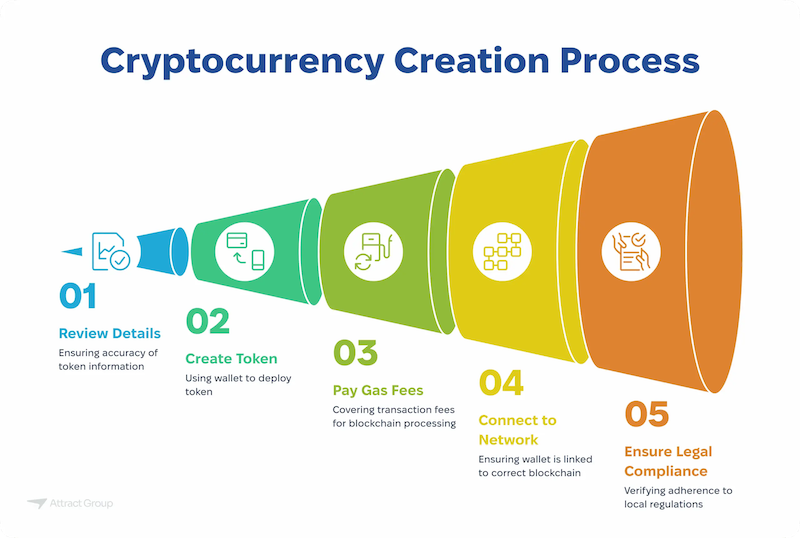
The crypto revolution is well underway, and creating your own token isn’t just for developers or big corporations anymore. Whether you’re an entrepreneur, artist, or community leader, launching a token can open doors to fundraising, community-building, and innovative digital economies. But how exactly do you go from writing code to holding your own coin? Let’s break down the process into 7 clear, actionable steps.
Not all blockchains are created equal. Ethereum remains the most popular choice due to its robust ecosystem and support for smart contracts, but alternatives like Binance Smart Chain, Solana, and Polygon offer faster transactions and lower fees.
Consider:
Network security and decentralization
Transaction costs (gas fees)
Developer tools and community support
Compatibility with wallets and exchanges
6. Step 3: Design Your Tokenomics
Tokenomics is the economic model behind your token — how many will exist, how they’re distributed, and what incentives users have to hold or use them.
Key decisions include:
Total supply (fixed or inflationary?)
Distribution method (airdrops, sales, mining rewards?)
Use widely accepted standards like ERC-20 for fungible tokens or ERC-721/ERC-1155 for NFTs
Test extensively on testnets (Ropsten, Rinkeby) before mainnet deployment
Consider security audits to catch vulnerabilities early
If coding isn’t your forte, platforms like TokenMint or third-party developers can help.
4. Step 5: Deploy Your Token to the Blockchain
Once your smart contract is ready and tested, it’s time to deploy it on the blockchain. This process involves sending the contract code in a transaction, which requires some native cryptocurrency (ETH, BNB, etc.) to pay for gas fees.
After deployment:
Verify your contract source code on explorers like Etherscan
Share your token address with your community for transparency
3. Step 6: Build Your Community and Ecosystem
A token is only as valuable as the community and use cases behind it. Start building early with:
Social media channels (Twitter, Discord, Telegram)
Educational content about your token’s use
Partnerships with other projects or platforms
Incentives like staking rewards or airdrops to encourage engagement
Strong community support can fuel demand and adoption.
2. Step 7: List Your Token on Exchanges
To unlock liquidity and real-world trading, get your token listed on exchanges. Start with decentralized exchanges (DEXs) like Uniswap or PancakeSwap, where listing can be immediate after adding liquidity.
Later, pursue centralized exchanges (CEXs) which often require a listing application, due diligence, and sometimes fees.
1. Bonus Tips for Success
Stay compliant: Be aware of regulations in your jurisdiction to avoid legal troubles.
Maintain transparency: Regular updates and open communication build trust.
Keep improving: Listen to feedback and iterate on your project.
Launching your own token is an exciting journey that blends technology, economics, and community-building. By following these 7 steps, you’re well on your way from writing code to creating real-world value with your very own coin.
When most people hear the word “blockchain,” their minds immediately go to Bitcoin, volatile cryptocurrency markets, or maybe even NFTs. But beneath the buzz and hype, blockchain has been steadily weaving its way into the foundations of industries far beyond finance. In fact, it’s quietly transforming how the world works—one sector at a time.
Let’s peel back the curtain and explore how this revolutionary technology is reshaping industries from the inside out.
1. Supply Chain: From Transparency to Trust
Imagine being able to trace your morning coffee all the way back to the exact farm it came from. Blockchain is making this possible.
Major retailers and food companies like Walmart and Nestlé have adopted blockchain-based systems to track goods from origin to shelf. This boosts transparency, minimizes fraud, and enables faster responses to issues like food recalls. In industries where provenance matters—think diamonds, pharmaceuticals, or luxury goods—blockchain creates an immutable ledger that can’t be tampered with.
Why it matters: With every transaction recorded and verified, trust is no longer assumed—it’s proven.
2. Healthcare: Securing the Most Valuable Data
Healthcare is plagued by siloed data, outdated record-keeping, and constant security threats. Blockchain offers a powerful alternative: a decentralized, secure system where medical records can be stored, accessed, and updated by patients and providers alike—with full control over who sees what.
Startups and governments are piloting blockchain-based electronic health records (EHRs) that promise more accurate diagnoses, reduced costs, and enhanced privacy.
Why it matters: Your health data should be yours to control—not locked in a hospital database or vulnerable to hackers.
3. Finance: Reinventing the System From the Inside
Blockchain began its journey in finance, and it continues to shake the industry’s foundations. From cross-border payments using stablecoins to decentralized finance (DeFi) platforms offering loans and savings accounts without a bank, blockchain is giving rise to a parallel financial system.
Even traditional giants like JPMorgan and Mastercard are building blockchain infrastructure to stay ahead.
Why it matters: Financial inclusion is no longer a lofty goal—it’s becoming a practical reality, even in underserved regions.
4. Real Estate: Cutting Through the Clutter
Buying property involves a maze of paperwork, middlemen, and verification processes. Blockchain is streamlining this mess with smart contracts—self-executing digital agreements that ensure all conditions are met before a sale is finalized.
Countries like Sweden and Georgia are exploring blockchain-based land registries that offer clearer, tamper-proof property records.
Why it matters: Property transactions can become faster, cheaper, and more secure—without sacrificing oversight.
5. Entertainment & Intellectual Property: Power to the Creators
From music to movies to memes, creators often struggle to get fairly compensated for their work. Blockchain is flipping the script.
Artists can now tokenize their creations, receive instant micro-payments, and track ownership across platforms. Smart contracts allow automatic royalty distribution, cutting out middlemen and giving creators direct access to fans.
Why it matters: Content creators gain control, transparency, and fair pay in a digital economy.
6. Voting: Restoring Faith in Democracy
Election integrity has become a global concern. Blockchain-based voting platforms are emerging as a potential solution, offering verifiable, tamper-resistant ballots that can be cast from anywhere.
While it’s still in the early stages, countries like Estonia have already embraced digital governance with secure blockchain elements.
Why it matters: When every vote is transparently recorded and immutable, the foundation of democracy becomes stronger.
The Common Thread: Trust Through Technology
What unites all of these use cases is trust. In a world full of data breaches, misinformation, and inefficiencies, blockchain creates a digital environment where verification doesn’t require blind faith—it’s embedded in the system itself.
This doesn’t mean blockchain is a silver bullet. It has its limitations—scalability, energy use, regulatory uncertainty—but the potential is undeniable. Like the internet in its early days, blockchain is quietly building a new infrastructure. One that may, sooner than we think, become invisible yet indispensable.
Final Thought
You don’t need to “get into crypto” to be affected by blockchain. Chances are, it’s already affecting your life—whether it’s tracking your package, verifying your vaccine record, or powering the backend of your banking app.
Alberta is stepping up its efforts to attract skilled immigrants by conducting two separate draws recently, issuing invitations to a fresh batch of candidates under its Provincial Nominee Program (PNP). This proactive approach highlights the province’s commitment to addressing labor market needs and supporting economic growth through targeted immigration.
Dual Draws Signal Increased Immigration Activity
In a move that underscores Alberta’s strategic immigration planning, the province held two draws in quick succession. These draws are designed to identify and invite candidates who demonstrate the skills and experience that align with Alberta’s current workforce demands. By hosting multiple draws, Alberta increases its chances of selecting the right candidates to fill critical job vacancies and contribute to local communities.
Provincial Nominee Program: A Key Immigration Pathway
The Provincial Nominee Program remains one of the most popular routes for skilled workers seeking permanent residence in Canada. Alberta’s PNP streamlines the immigration process for applicants with the qualifications and job offers that meet the province’s economic priorities. Through the recent draws, Alberta issued invitations to candidates from various streams, including Express Entry and Alberta Opportunity Stream, reflecting a diverse approach to immigration selection.
Why Alberta’s Immigration Strategy Matters
Alberta’s economy is driven by sectors such as energy, technology, healthcare, and agriculture. However, like many regions, it faces labor shortages that can hinder growth and innovation. By issuing timely invitations through the PNP, Alberta aims to attract professionals who can help fill these gaps efficiently. Moreover, welcoming newcomers contributes to cultural diversity and strengthens communities across the province.
Looking Ahead
With these recent draws, Alberta reinforces its role as a welcoming destination for skilled immigrants. Prospective candidates interested in the Alberta PNP should stay informed about upcoming draws and eligibility criteria. As the province continues to refine its immigration pathways, it presents promising opportunities for newcomers to build a new life while supporting Alberta’s economic ambitions.
In an age where data breaches are commonplace and identity theft is on the rise, the question on everyone’s mind should be: Is my identity truly safe? If you’ve ever received a notification that your personal information has been compromised, you’re not alone—and you’re not paranoid. Traditional digital identity systems are outdated, fragmented, and vulnerable. But a promising alternative is gaining traction: blockchain-based digital identities.
Let’s explore why this innovation may be the key to securing our identities in the digital world.
The Problem with Traditional Digital IDs
Most people rely on centralized institutions—banks, governments, and tech platforms—to store and manage their identity information. Whether it’s your driver’s license, passport, or online login credentials, these identifiers are typically stored in siloed databases controlled by third parties.
Here’s the issue:
Centralized systems are high-value targets. Hackers only need to breach one database to access millions of records.
Users lack control. You don’t own your data; you’re trusting others to safeguard it.
Verification is inefficient. Proving who you are often requires going through multiple parties, making processes like opening a bank account or accessing services unnecessarily slow and bureaucratic.
Enter Blockchain: A New Paradigm for Digital Identity
Here’s what makes blockchain-based digital IDs revolutionary:
1. Self-Sovereign Identity (SSI)
With SSI, individuals own and manage their digital identity without relying on a central authority. Your identity lives in a digital wallet—encrypted and under your control. You decide who gets access to which data and for how long.
2. Tamper-Proof and Transparent
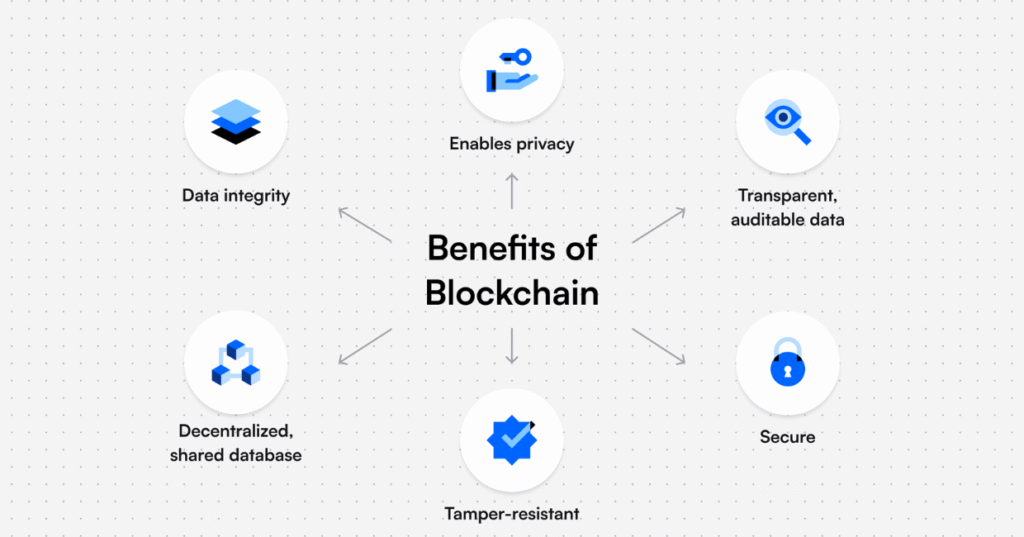
Because blockchain records are immutable, once identity data is verified and written to the blockchain, it cannot be changed or forged. This prevents common forms of identity fraud like duplication or impersonation.
3. Privacy by Design
Blockchain-based IDs enable selective disclosure—meaning you can share only the necessary information. For example, to prove you’re over 18, you don’t need to show your full birth date or address. You just share a cryptographic proof of age.
4. Global and Interoperable
Blockchain IDs aren’t tied to a single government or platform. They’re potentially universal, meaning you can use the same ID to access services across borders and systems—without needing to reverify yourself every time.
Real-World Use Cases Already Emerging
Estonia is pioneering e-residency programs built on blockchain principles, allowing global citizens to start businesses and access services securely.
Microsoft’s Entra ID and Polygon ID are developing decentralized identity solutions for login and verification.
UNICEF and other NGOs are testing blockchain IDs for refugee populations, giving them access to aid and services even without traditional documentation.
What’s Holding It Back?
While the promise is massive, challenges remain:
Regulation is unclear. Governments are still figuring out how to oversee decentralized identities.
Adoption is slow. It requires infrastructure, education, and cross-industry cooperation.
Scalability and standards. Many blockchain networks struggle to handle high volumes of transactions quickly and cheaply.
But as blockchain matures and more real-world applications prove successful, these barriers are gradually being addressed.
The Bottom Line: Your Identity Deserves Better
The way we manage identity today is outdated and risky. We live in a digital-first world, but we’re still relying on analog systems bolted onto the internet. Blockchain-based digital identities offer a secure, privacy-preserving, and user-centric alternative.
They aren’t just a tech trend—they’re a foundational shift.
So, is your identity safe? Not entirely—not yet. But with blockchain-powered digital IDs, the future looks a lot more secure.
Ready to take control of your digital identity? Stay informed, ask your service providers about decentralized ID options, and keep an eye on emerging platforms embracing blockchain-based solutions. The shift has already begun—and your security might just depend on it.
In a significant move to modernize and enhance the country’s labour market, the United Arab Emirates has launched a cutting-edge digital academic qualification verification system for the private sector. The initiative aims to streamline hiring processes, improve transparency, and ensure that the workforce meets the skill standards required by the UAE’s growing economy.
The Ministry of Human Resources and Emiratisation (MoHRE), in collaboration with the Ministry of Education, has rolled out this system as part of its broader push toward digital transformation. All private sector employees will now be required to have their academic credentials digitally verified before formal job offers can be issued.
🔍 What Is the Digital Qualification System?
The new system allows employers to verify job applicants’ academic degrees and diplomas through a secure digital platform linked with local and international academic institutions. The goal is to prevent document fraud, speed up employment procedures, and match talent with the right roles more effectively.
Employers can now upload applicants’ credentials via the MoHRE portal. The data is instantly checked against verified academic databases, ensuring both authenticity and speed. The system supports qualifications issued from over 80 countries and growing.
🛠️ Key Benefits
Faster Hiring: Reduces onboarding time by automating verification.
Fraud Prevention: Stops fake degrees from entering the workforce.
Data-Driven Policy: Supports national employment planning with accurate data.
Improved Confidence: Employers gain trust in the authenticity of applicants’ qualifications.
🧑🎓 Who Does It Affect?
The system is mandatory for all private sector employers and employees, regardless of nationality. Expatriates must now ensure their degrees are attested and submitted through the approved digital channel. This is also expected to increase demand for accredited education and reduce fraudulent credentials circulating in the region.
📈 Strategic Move for a Knowledge-Based Economy
This policy aligns with the UAE’s vision to become a global hub for skilled professionals and to transition into a knowledge-based economy. By building a transparent, data-driven labour market, the UAE aims to remain competitive and future-ready.
Officials also indicated that the system may soon be expanded to freelancers, contractors, and part-time workers, helping regulate all corners of the evolving labour market.
📢 What Employers and Job Seekers Should Do
Employers should update their onboarding procedures to include academic document verification.
Job seekers are advised to pre-verify their credentials before applying for jobs in the UAE.
For more information, employers and employees can visit mohre.gov.ae or use the MoHRE app.
In a decisive move underscoring the government’s commitment to immigration reform, Prime Minister Carney has issued a new mandate letter to cabinet ministers, emphasizing immigration as a cornerstone of his administration’s policy agenda. This latest directive signals a clear vision to address the complex challenges surrounding immigration while leveraging its potential to fuel economic growth and social cohesion.
At the heart of the mandate is a commitment to modernize immigration infrastructure. This includes investing in digital technologies to reduce processing times for visas and residency applications, as well as strengthening inter-agency coordination to curb illegal migration. By prioritizing innovation and cooperation, the government hopes to create a system that is transparent, accessible, and fair.
Economic Growth Through Skilled Immigration
Carney’s mandate highlights the critical role skilled immigrants play in driving innovation and addressing labor shortages. Ministers are tasked with refining policies that attract global talent, particularly in sectors such as technology, healthcare, and engineering. The letter encourages the adoption of flexible visa programs that respond quickly to market demands, helping Canadian businesses remain competitive on the world stage.
Additionally, the mandate stresses support for immigrant entrepreneurs, recognizing their contributions to job creation and economic diversification. By fostering a welcoming environment for startups and small businesses founded by newcomers, the government aims to cultivate a dynamic, inclusive economy.
Promoting Social Integration and Community Engagement
Beyond economic priorities, Carney’s letter places significant emphasis on integration initiatives. Ministers are called upon to enhance language training, cultural orientation, and community support programs that facilitate newcomers’ successful settlement. This focus reflects an understanding that effective integration benefits not only immigrants but the broader society by promoting mutual respect and shared prosperity.
The mandate also urges collaboration with provincial governments, local authorities, and non-profit organizations to create a unified support network. Such partnerships are vital to addressing challenges faced by immigrants, including access to education, healthcare, and housing.
Security and Compassion in Balance
While emphasizing inclusion, Carney’s letter does not overlook the importance of security. It calls for rigorous vetting processes and improved border management to safeguard public safety. At the same time, it reaffirms the country’s commitment to humanitarian principles by upholding refugee protections and providing pathways for asylum seekers.
This balanced stance illustrates a nuanced understanding of immigration as a multifaceted issue requiring careful policy calibration.
Looking Ahead
Carney’s new mandate letter sends a strong message to ministers and the public alike: immigration will remain a priority, approached with innovation, fairness, and humanity. As the government moves forward, the success of this agenda will depend on effective implementation and ongoing dialogue with communities and stakeholders.
In an increasingly interconnected world, embracing immigration strategically is not just a political imperative but a pathway to a vibrant and resilient future. With this mandate, Carney sets the stage for transformative progress that could redefine the nation’s immigration landscape for years to come.
Canada’s rapidly aging population and ongoing healthcare expansion make medical-focused programs some of the safest, highest-paying choices for international students. If your goal is a stable career, strong earnings, and a smoother path to permanent residency (PR), concentrate on skill-intensive, hands-on courses where Canadian shortages are most acute.
1. Physician Assistant (PA)
Length: 2 yrs (after bachelor’s)
Pay: CAD $85-120 k
Limited Seats, Huge ROI: Only a few universities offer PA studies; graduates hired instantly in hospitals and clinics.
2. Medical Laboratory Science / Medical Laboratory Technician
Length: 2-3 yrs Diploma / 4 yrs Degree
Pay Range: CAD $60-90 k (technologist)
Demand Hotspots: Alberta, Manitoba, Ontario
Highlights:
Behind-the-scenes diagnostic role with automation skills.
Fast job offers—many labs recruit students before graduation.
3. Pharmacy Technician & PharmD (Doctor of Pharmacy)
ProgramTypical LengthStarting PayProvinces with Highest DemandPractical Nursing Diploma2 yrsCAD $55-70 kBC, Ontario, Nova ScotiaBachelor of Science in Nursing 4 yrsCAD $70-100 kAcross Canada
Why choose it?
Consistently tops “critical shortage” lists.
Straightforward licensing pathway (NCLEX-RN or CPNRE).
Strong PR support via healthcare-focused Provincial Nominee Programs (PNPs).4. Respiratory Therapy
Length: 3 yrs Advanced Diploma
Pay: CAD $65-95 k
Demand: Very high after COVID-19; ICUs and sleep clinics keep expanding.
5. Respiratory Therapy
Length: 3 yrs Advanced Diploma
Pay: CAD $65-95 k
Demand: Very high after COVID-19; ICUs and sleep clinics keep expanding.Co-op & Clinical Placement: Your Fast-Track to Employment
Select colleges/universities with mandatory clinical rotations or co-op semesters—they double as extended job interviews and satisfy licensing hour requirements.
PR Roadmap for Medical Graduates
Finish an accredited program → qualify for Canadian licensure exams.
Obtain Post-Graduate Work Permit (up to 3 yrs).
Accumulate 1 yr full-time Canadian healthcare experience → gains extra CRS points.
Apply for PR via Express Entry (Canadian Experience Class) or healthcare-stream PNP (e.g., Ontario HCP, Nova Scotia Health).
Top Colleges & Universities
Humber, George Brown, Conestoga — renowned for Nursing & Respiratory Therapy.
Michener Institute — elite Medical Lab and Respiratory programs.
UBC, University of Waterloo — leading PharmD.
McMaster, University of Manitoba — established Physician Assistant programs.
Quick Tips for Applicants
Verify the program is accredited by the relevant Canadian council (e.g., CCAPP for Pharmacy, CASN for Nursing).
Book English proficiency tests early (IELTS 7.0+ often required for healthcare).
Budget for licensing fees post-graduation (CAD $1-2 k).
Target provinces that list your occupation under NOC TEER 1-3 shortages—this speeds up PR.
Final Word
Healthcare skill gaps in Canada aren’t shrinking any time soon. By choosing a medical-related, shortage-area course, you secure not just a degree but a high-value ticket to a rewarding career, solid income, and Canadian permanent residency. Study smart, focus on accredited clinical programs, and you’ll graduate into a job market that’s waiting for you with open arms—and open positions.
Websites store cookies to enhance functionality and personalise your experience. You can manage your preferences, but blocking some cookies may impact site performance and services.
Essential cookies enable basic functions and are necessary for the proper function of the website.
Name
Description
Duration
Cookie Preferences
This cookie is used to store the user's cookie consent preferences.
30 days
These cookies are needed for adding comments on this website.
Name
Description
Duration
comment_author
Used to track the user across multiple sessions.
Session
comment_author_email
Used to track the user across multiple sessions.
Session
comment_author_url
Used to track the user across multiple sessions.
Session
These cookies are used for managing login functionality on this website.
Name
Description
Duration
wordpress_logged_in
Used to store logged-in users.
Persistent
wordpress_sec
Used to track the user across multiple sessions.
15 days
wordpress_test_cookie
Used to determine if cookies are enabled.
Session
Statistics cookies collect information anonymously. This information helps us understand how visitors use our website.
Google Analytics is a powerful tool that tracks and analyzes website traffic for informed marketing decisions.
Contains information related to marketing campaigns of the user. These are shared with Google AdWords / Google Ads when the Google Ads and Google Analytics accounts are linked together.
90 days
__utma
ID used to identify users and sessions
2 years after last activity
__utmt
Used to monitor number of Google Analytics server requests
10 minutes
__utmb
Used to distinguish new sessions and visits. This cookie is set when the GA.js javascript library is loaded and there is no existing __utmb cookie. The cookie is updated every time data is sent to the Google Analytics server.
30 minutes after last activity
__utmc
Used only with old Urchin versions of Google Analytics and not with GA.js. Was used to distinguish between new sessions and visits at the end of a session.
End of session (browser)
__utmz
Contains information about the traffic source or campaign that directed user to the website. The cookie is set when the GA.js javascript is loaded and updated when data is sent to the Google Anaytics server
6 months after last activity
__utmv
Contains custom information set by the web developer via the _setCustomVar method in Google Analytics. This cookie is updated every time new data is sent to the Google Analytics server.
2 years after last activity
__utmx
Used to determine whether a user is included in an A / B or Multivariate test.
18 months
_ga
ID used to identify users
2 years
_gali
Used by Google Analytics to determine which links on a page are being clicked
30 seconds
_ga_
ID used to identify users
2 years
_gid
ID used to identify users for 24 hours after last activity
24 hours
_gat
Used to monitor number of Google Analytics server requests when using Google Tag Manager