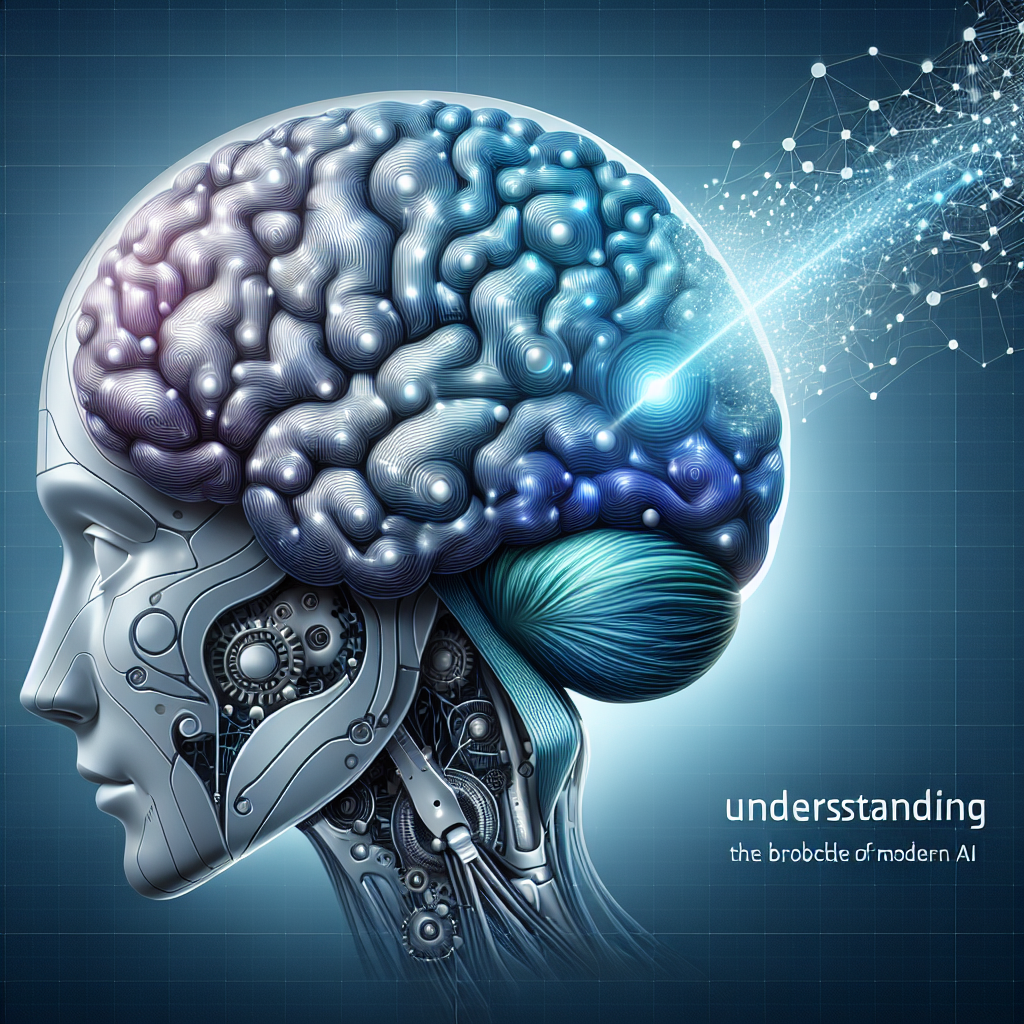
Understanding Machine Learning: The Backbone of Modern AI
Introduction
In the realm of artificial intelligence (AI), machine learning (ML) stands as a pivotal element that empowers systems to learn from data and improve over time without being explicitly programmed. This article aims to provide a comprehensive understanding of machine learning—its definitions, types, applications, and significance in modern AI.
What is Machine Learning?
Machine learning is defined as a subset of AI that enables systems to learn from data. It involves the use of algorithms and statistical models that analyze and draw inferences from patterns found in data. The primary goal of ML is to develop systems that can perform tasks autonomously, based on learned experience.
Types of Machine Learning
1. Supervised Learning
In supervised learning, models are trained on labeled data, meaning each training example is paired with an output label. The algorithm learns to associate the input with the corresponding output through various techniques such as regression and classification.
2. Unsupervised Learning
Unlike supervised learning, unsupervised learning works with unlabeled data. The algorithm seeks to find hidden patterns or intrinsic structures within the input data. Common techniques include clustering and association.
3. Reinforcement Learning
Reinforcement learning involves training models to make a sequence of decisions by rewarding desired outcomes and penalizing undesired ones. This type of learning is akin to teaching a dog new tricks.
Applications of Machine Learning
Machine learning has a diverse range of applications across various sectors, including:
-
- Healthcare: Predictive analytics for patient diagnoses and personalized treatment plans.
-
- Finance: Algorithmic trading and fraud detection.
-
- Retail: Recommendation systems for personalized shopping experiences.
-
- Transportation: Optimization of routes and self-driving cars.
The Significance of Machine Learning in AI
The advancements in machine learning have been fundamental to the evolution of AI. It enables machines to adapt to new situations, learn from past experiences, and make data-driven decisions. As data generation continues to proliferate, the role of machine learning in making sense of this data is even more critical.
Conclusion
In summary, machine learning is not just a buzzword; it is a foundational technology that is driving innovation across multiple sectors. Understanding its principles and applications can empower individuals and organizations to harness the power of AI effectively.