


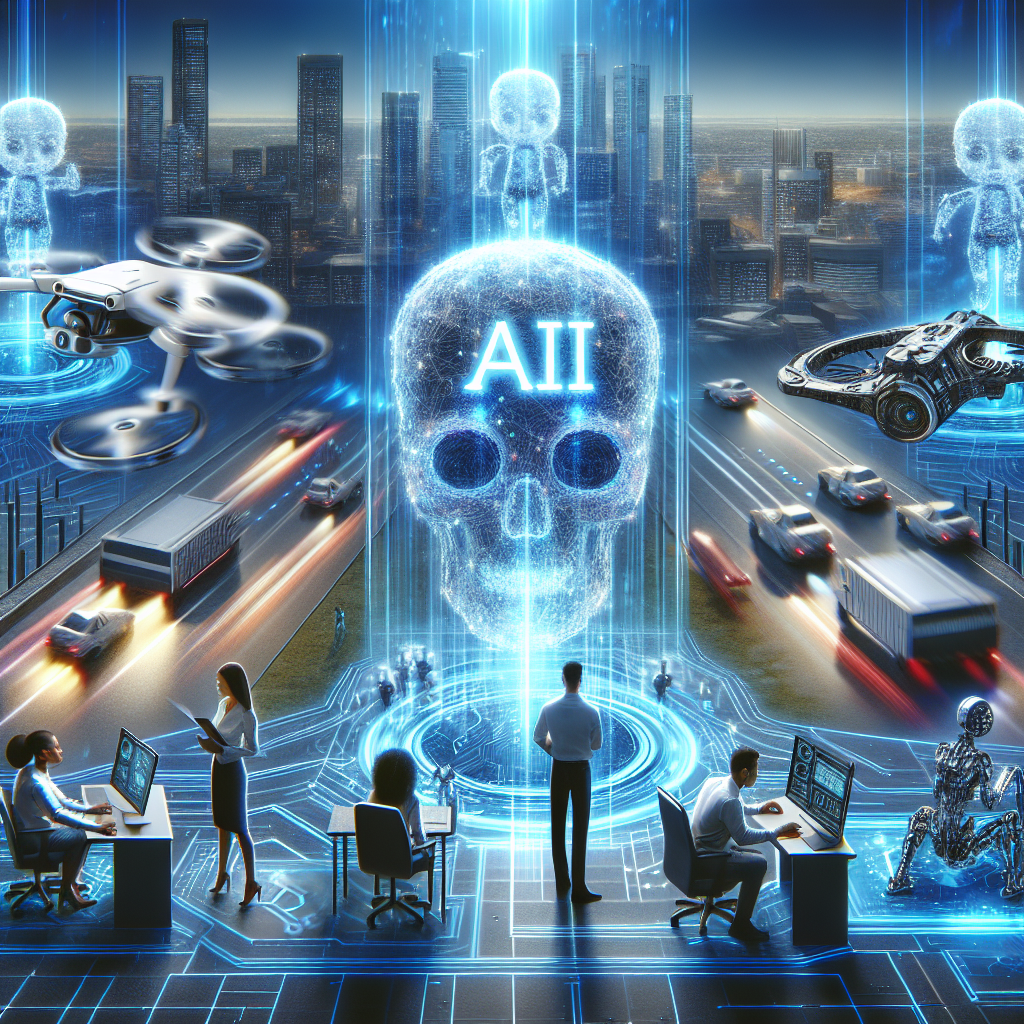
The Security Risks of AI: Safeguarding Against Emerging Threats
Published on: October 10, 2023
<article>
<section>
<h2>Introduction</h2>
<p>
As artificial intelligence (AI) proliferates across industries, its potential benefits are immense, ranging from increased efficiency to enhanced decision-making. However, as with any transformative technology, AI also presents significant security risks that organizations must address to protect sensitive data and ensure user safety. This article delves into the various security risks associated with AI and offers insights on safeguarding against these emerging threats.
</p>
</section>
<section>
<h2>Understanding the Security Risks</h2>
<p>
AI systems, while powerful, can be vulnerable to various types of attacks. Some of the primary security risks include:
</p>
<ul>
<li><strong>Data Poisoning:</strong> Attackers can manipulate training data to corrupt AI models, leading to faulty predictions or decisions.</li>
<li><strong>Adversarial Attacks:</strong> Malicious inputs designed to trick AI systems can cause them to operate incorrectly, posing risks in areas like facial recognition and autonomous driving.</li>
<li><strong>Privacy Concerns:</strong> AI can inadvertently expose sensitive information, raising ethical and legal questions about data use and governance.</li>
<li><strong>Automation of Cyber Attacks:</strong> Cybercriminals can leverage AI to automate attacks, making them faster and more sophisticated.</li>
<li><strong>Systemic Risks:</strong> As AI is integrated into critical infrastructure, failures or breaches can have far-reaching consequences.</li>
</ul>
</section>
<section>
<h2>Strategies for Safeguarding Against AI Threats</h2>
<p>
To mitigate the security risks associated with AI, organizations should implement the following strategies:
</p>
<ul>
<li><strong>Robust Data Management:</strong> Regularly audit and cleanse training data to minimize risks related to data poisoning.</li>
<li><strong>Adversarial Training:</strong> Use techniques such as adversarial training to improve AI models' resilience against manipulation.</li>
<li><strong>Privacy Preservation Methods:</strong> Implement techniques like differential privacy to safeguard sensitive data while still allowing for meaningful analysis.</li>
<li><strong>Incident Response Planning:</strong> Develop and regularly update incident response plans specific to AI-related threats and vulnerabilities.</li>
<li><strong>Continuous Monitoring:</strong> Employ continuous monitoring of AI systems to detect anomalies and potentially malicious activities swiftly.</li>
</ul>
</section>
<section>
<h2>The Role of Regulation and Standards</h2>
<p>
As AI technology evolves, so too must the regulations governing it. Policymakers and industry leaders must work together to establish standards that encourage secure AI deployment. This includes:
</p>
<ul>
<li>Creating guidelines for ethical AI use that prioritize user privacy and security.</li>
<li>Fostering collaboration between organizations to share information on threats and best practices.</li>
<li>Advocating for transparent AI systems that allow for better understanding and oversight of decision-making processes.</li>
</ul>
</section>
<section>
<h2>Conclusion</h2>
<p>
While the rise of AI offers tremendous opportunities, it also introduces significant security risks that cannot be ignored. By understanding these threats and proactively implementing safeguards, organizations can protect themselves and their stakeholders. A collaborative effort between technology developers, users, and regulators is essential in developing a secure AI ecosystem that harnesses the technology’s potential while minimizing risks.
</p>
</section>
</article>
<footer>
<p>© 2023 Your Company Name. All rights reserved.</p>
</footer>