


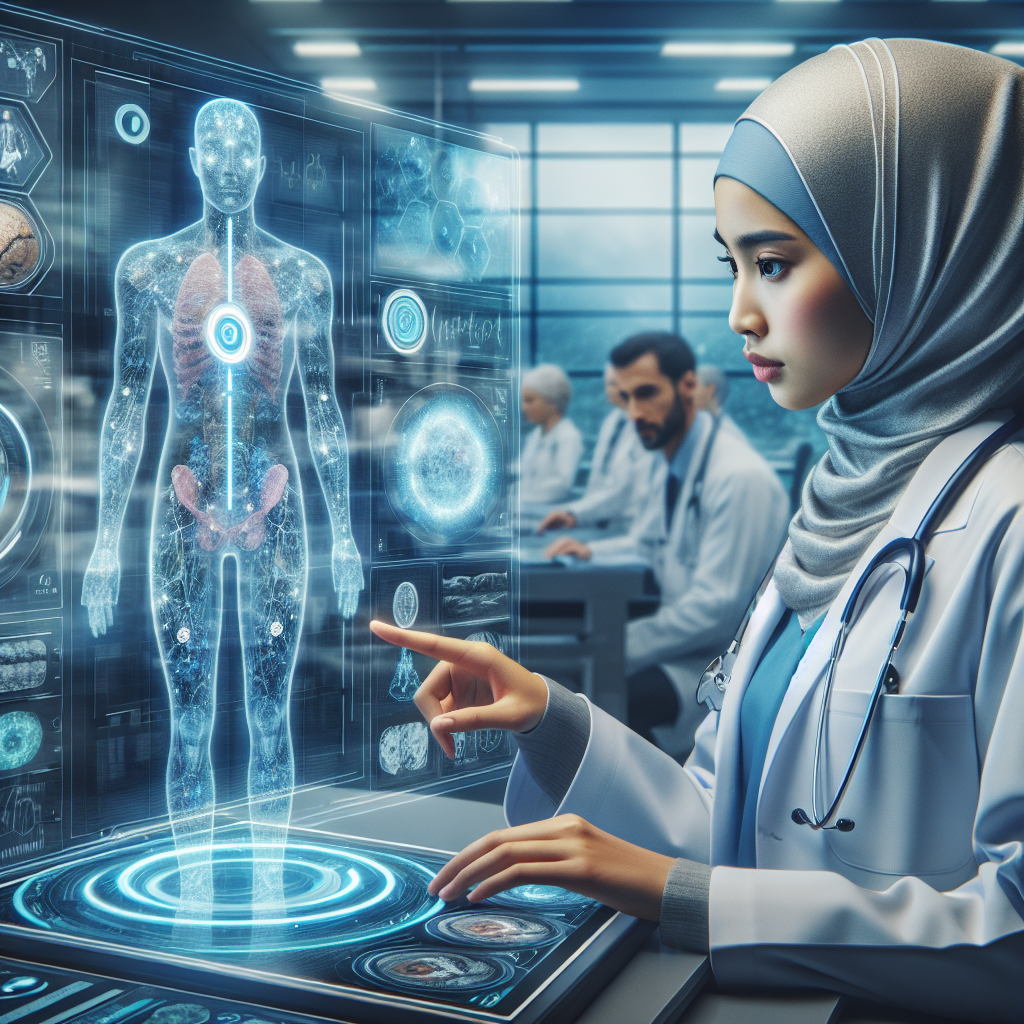
AI in Healthcare: Transforming Diagnosis and Treatment
Introduction
Artificial Intelligence (AI) is rapidly evolving and has found unprecedented applications in various sectors, most notably in healthcare. The integration of AI technologies is reshaping how diagnoses are made and treatments are administered, leading to more accurate, efficient, and personalized care.
<h2>The Role of AI in Diagnosis</h2>
<p>
    AI algorithms, particularly those based on machine learning, are being employed to assist healthcare professionals in diagnosing illnesses. These systems analyze vast datasets—such as medical histories, lab results, and imaging data—to identify patterns that may be overlooked by human eyes. For example:
</p>
<ul>
    <li><strong>Radiology:</strong> AI models can interpret medical images like X-rays and MRIs with remarkable precision, often identifying conditions such as tumors at early stages.</li>
    <li><strong>Pathology:</strong> AI tools can assist pathologists by analyzing tissue samples more quickly and accurately, improving the diagnosis of diseases like cancer.</li>
    <li><strong>Predictive Analytics:</strong> AI can analyze patient data to predict potential health issues, enabling early intervention and preventive care.</li>
</ul>
<h2>Enhancing Treatment Plans</h2>
<p>
    Beyond diagnosis, AI is also revolutionizing treatment strategies. Personalized medicine, where treatment is tailored to individual patients, is becoming a reality due to AI advancements. Key applications include:
</p>
<ul>
    <li><strong>Drug Discovery:</strong> AI speeds up the drug discovery process by predicting how different compounds will interact in the human body, reducing the time and cost of bringing new medications to market.</li>
    <li><strong>Treatment Optimization:</strong> AI systems can recommend treatment plans based on a patient’s unique genetic makeup, lifestyle, and preferences, optimizing outcomes.</li>
    <li><strong>Robotic Surgery:</strong> Robotics powered by AI enhance the precision of surgical procedures, allowing for minimally invasive techniques and faster recovery times.</li>
</ul>
<h2>Challenges and Considerations</h2>
<p>
    Despite the tremendous potential of AI in healthcare, several challenges remain. Ethical considerations, data privacy, and the need for transparent algorithms are critical issues that must be addressed. Ensuring AI systems are designed to support healthcare providers rather than replace them is essential for fostering trust in these technologies.
</p>
<h2>The Future of AI in Healthcare</h2>
<p>
    The future of AI in healthcare is promising. Continuous advancements in AI technologies will likely lead to even more significant breakthroughs in diagnostics, treatment protocols, and patient outcomes. As regulations evolve and healthcare professionals gain more familiarity with AI tools, the integration of these technologies will only become more seamless.
</p>
<h2>Conclusion</h2>
<p>
    AI stands at the forefront of transforming healthcare, offering innovative solutions to longstanding challenges. As we move forward, a collaborative approach between technology and medical professionals will be crucial in harnessing the full potential of AI, ultimately leading to a healthier world.
</p>