


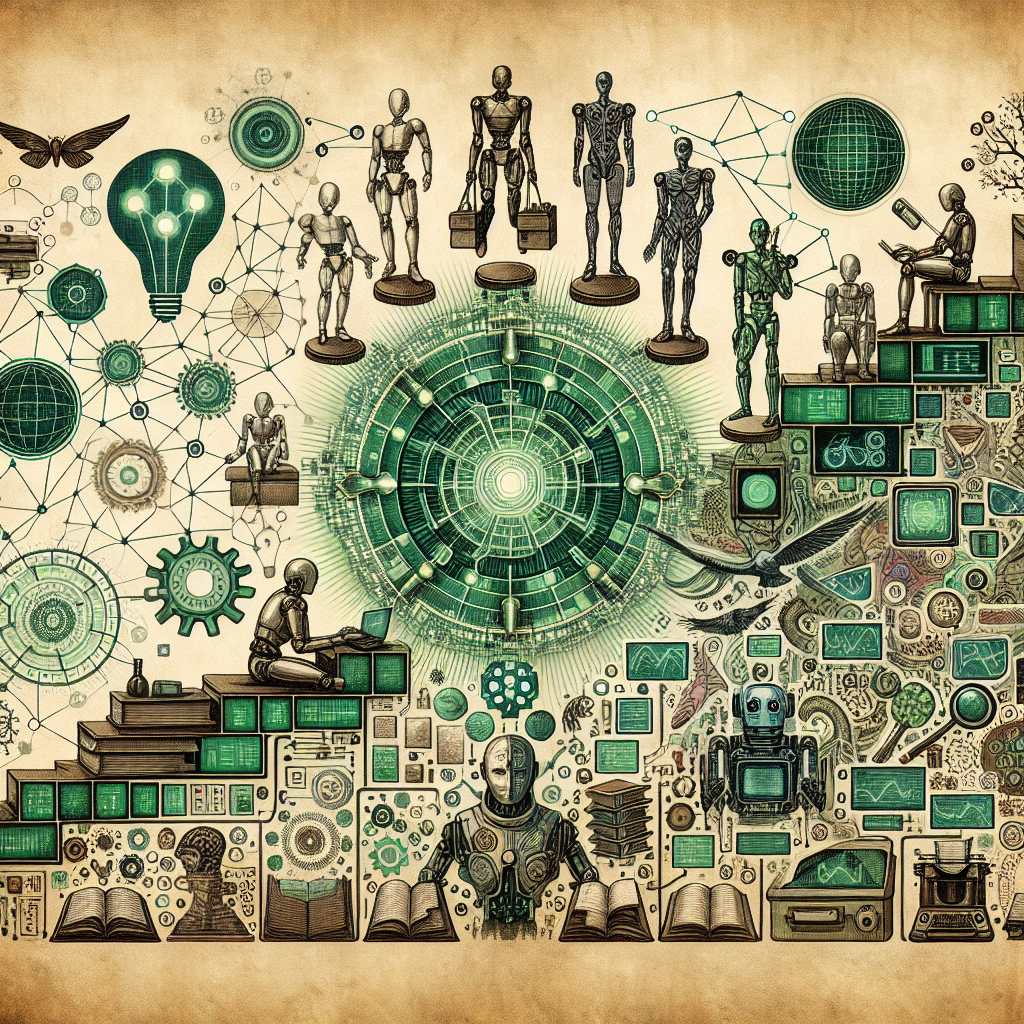
From Science Fiction to Reality: The Evolution of AI Technology
Introduction
The idea of artificial intelligence (AI) has captivated human imagination for centuries, often depicted in science fiction as a futuristic marvel. From the dystopian worlds of Isaac Asimov to the sentient robots in blockbuster films, AI has transitioned from the realm of fiction to a significant aspect of our daily lives.
<h2>The Early Days of AI</h2>
<p>The journey of AI began in the 1950s with pioneers like Alan Turing and John McCarthy. Turing's groundbreaking work set the foundation for computational theory, while McCarthy introduced the term "artificial intelligence" at the Dartmouth Conference in 1956. Early AI sought to mimic human cognitive functions and involved simple rule-based systems.</p>
<h2>From Fiction to Functionality</h2>
<p>As technology advanced, so did the capabilities of AI systems. The late 20th century saw the development of expert systems, which could perform tasks such as medical diagnosis by simulating human expertise. However, these systems were limited to predefined rules and lacked the learning capability seen in modern AI.</p>
<h2>The Renaissance of AI</h2>
<p>The 21st century marked a renaissance period for AI, largely due to improvements in machine learning, neural networks, and the availability of vast amounts of data. Technologies like deep learning began to outperform traditional models, enabling breakthroughs in speech recognition, image processing, and natural language understanding.</p>
<h2>Current Applications of AI</h2>
<p>AI now permeates various sectors, including healthcare, finance, transportation, and entertainment. Applications such as virtual assistants, recommendation algorithms, and autonomous vehicles demonstrate the practical utility of AI technology. Personal assistants like Siri and Alexa have brought AI into homes, making complex tasks more manageable.</p>
<h2>The Future of AI</h2>
<p>Looking ahead, AI is set to become more integrated into our lives. Ethical considerations and regulations will shape its development, ensuring that AI is designed to benefit society. The ongoing discussions about AI's role in job displacement, privacy, and security highlight the need for responsible innovation.</p>
<h3>Conclusion</h3>
<p>The evolution of AI technology from science fiction to reality showcases an incredible transformation. As we stand on the brink of further advancements, the balance between innovation and ethical implications will determine the future trajectory of AI. Embracing this technology responsibly may lead us to a new era of human achievement.</p>