


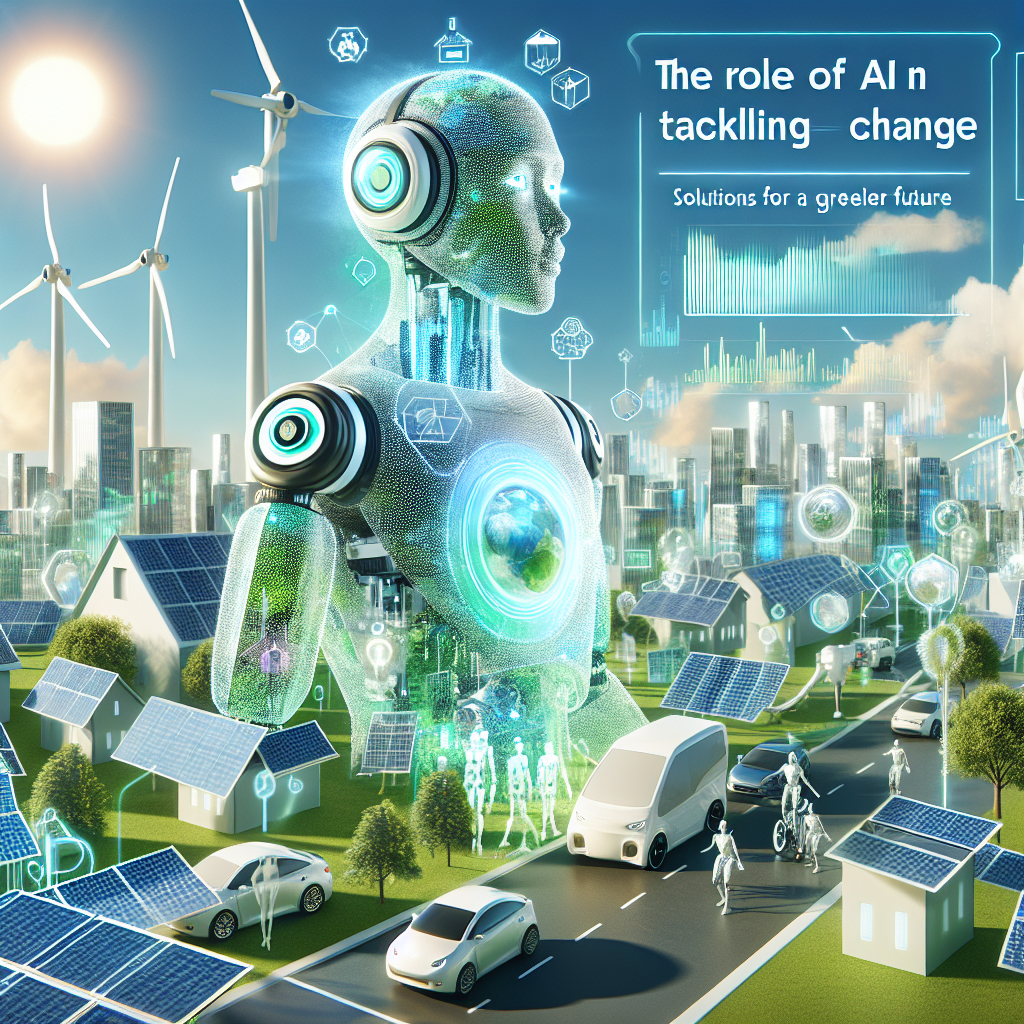
The Role of AI in Tackling Climate Change
Solutions for a Greener Future
Introduction
Climate change is one of the most pressing challenges of our time, threatening ecosystems, economies, and communities worldwide. In this context, artificial intelligence (AI) emerges as a powerful ally, offering innovative solutions to mitigate the impacts of climate change and foster a sustainable future.
Understanding AI’s Potential
AI has the capability to process vast amounts of data, recognize patterns, and optimize processes. By harnessing these abilities, we can develop more effective strategies to combat climate change.
1. Enhancing Renewable Energy Production
AI can optimize the production and distribution of renewable energy. For instance, machine learning algorithms can predict energy demand, improve the efficiency of wind turbines, and enhance solar panel output by analyzing weather patterns.
2. Improving Energy Efficiency
AI technologies can analyze energy usage in buildings and industries, identifying inefficiencies and suggesting improvements. AI-driven smart grids can dynamically balance energy supply and demand, reducing waste and lowering emissions.
3. Climate Monitoring and Prediction
AI can enhance our understanding of climate change by analyzing satellite imagery, climate models, and historical data. These tools help scientists predict environmental changes, understand weather patterns, and assess natural disasters.
4. Optimizing Agriculture
AI applications in precision agriculture can lead to more sustainable farming practices. By analyzing soil conditions and weather forecasts, AI can help farmers make data-driven decisions, reducing resource use while increasing crop yields.
Case Studies
Several organizations and startups are already leveraging AI to combat climate change:
-
- Google: Their DeepMind AI has been used to improve the energy efficiency of data centers by predicting cooling needs.
-
- Sustainable Energy for All: This organization uses AI to analyze energy access and track progress toward global energy goals.
-
- IBM: The Green Horizons initiative employs AI to analyze environmental data and provide insights for policymakers and businesses.
Challenges and Ethical Considerations
While AI offers promising solutions, it also poses challenges, such as energy consumption associated with AI technologies and the need for equitable access to these resources. Ethical considerations in AI deployment must be addressed to ensure fair outcomes for all communities.
Conclusion
AI holds immense potential to play a crucial role in tackling climate change. By integrating AI into various sectors, from energy to agriculture, we can develop innovative solutions that not only mitigate climate impacts but also pave the way for a sustainable future. As we move forward, it’s essential to embrace these technologies while considering ethical implications and ensuring accessibility for all.