

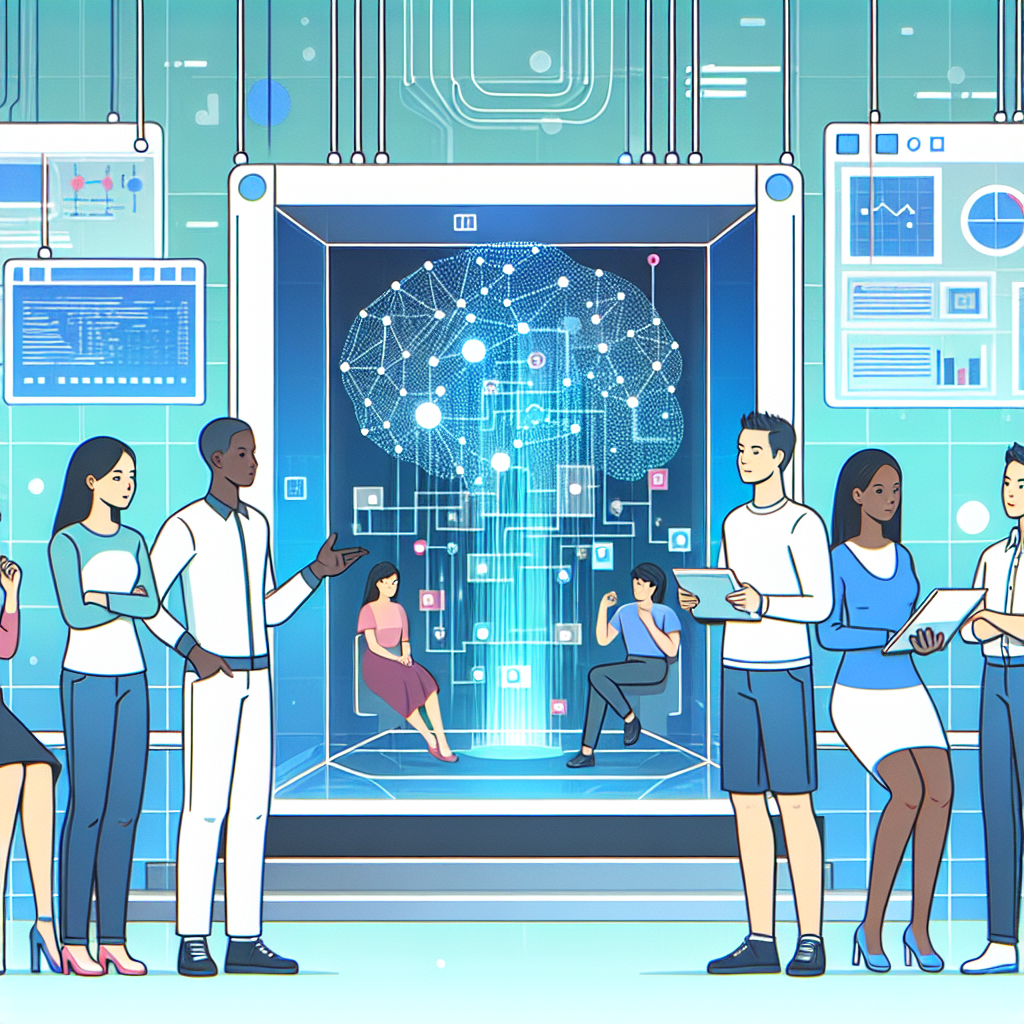
Beyond Automation: How AI is Enhancing Human Decision-Making
In recent years, artificial intelligence (AI) has shifted from mere automation of tasks to becoming a crucial partner in human decision-making. While automation simplifies and accelerates operations, AI’s capabilities go beyond to assist professionals in complex environments, resulting in improved outcomes across various industries.
    <h2>The Evolution of AI in Decision-Making</h2>

    <p>Historically, AI was primarily used for repetitive tasks, such as data entry and manufacturing. However, advancements in machine learning and natural language processing have allowed AI systems to analyze vast amounts of data in real-time, offering insights that support human decision-making. This evolution emphasizes collaboration between AI and humans rather than outright replacement.</p>
<h2>Enhancing Decision Quality</h2>

    <p>AI enhances decision quality by:</p>

    <ul>

        <li><strong>Data Analytics:</strong> AI systems can process and analyze large datasets more efficiently than humans. This capability enables organizations to identify trends, patterns, and anomalies that may not be immediately evident.</li>

        <li><strong>Predictive Modeling:</strong> By leveraging historical data, AI can generate predictions and forecasts that inform strategic decisions, helping businesses anticipate market demands and adapt accordingly.</li>

        <li><strong>Scenario Analysis:</strong> AI tools allow decision-makers to simulate various scenarios, assessing potential outcomes and making informed choices based on diverse variables.</li>

    </ul>
<h2>Empowering Professionals</h2>

    <p>Rather than replacing human intuition and expertise, AI serves to empower professionals in their roles. For instance:</p>

    <ul>

        <li><strong>Healthcare:</strong> AI aids doctors by analyzing medical records and suggesting potential diagnoses, allowing physicians to focus on patient care while also considering comprehensive data-driven insights.</li>

        <li><strong>Finance:</strong> Investment managers use AI algorithms to analyze market conditions, helping them make more informed decisions while reducing the emotional biases that often hinder human judgment.</li>

        <li><strong>Marketing:</strong> AI tools analyze consumer behavior and engagement, recommending personalized marketing strategies that enhance customer interaction and boost sales.</li>

    </ul>
<h2>Challenges and Considerations</h2>

    <p>Despite its benefits, the integration of AI in decision-making poses challenges:</p>

    <ul>

        <li><strong>Ethics:</strong> The reliance on AI algorithms raises ethical questions regarding bias and transparency, stressing the importance of accountability in AI deployment.</li>

        <li><strong>Dependence:</strong> Over-reliance on AI could erode human intuition and experience, highlighting the need for a balanced approach that values both AI and human input.</li>

        <li><strong>Security:</strong> Protecting sensitive data utilized by AI systems is paramount, requiring organizations to implement robust security measures to prevent data breaches.</li>

    </ul>
<h2>Conclusion</h2>

    <p>As AI continues to evolve, its role in enhancing human decision-making becomes increasingly vital. By augmenting human capabilities with advanced analytics and predictive insights, AI not only streamlines processes but also drives better outcomes. The future will demand a collaborative model where human intuition is complemented by the analytical power of AI, paving the way for more informed and effective decisions across all sectors.</p>

</article>