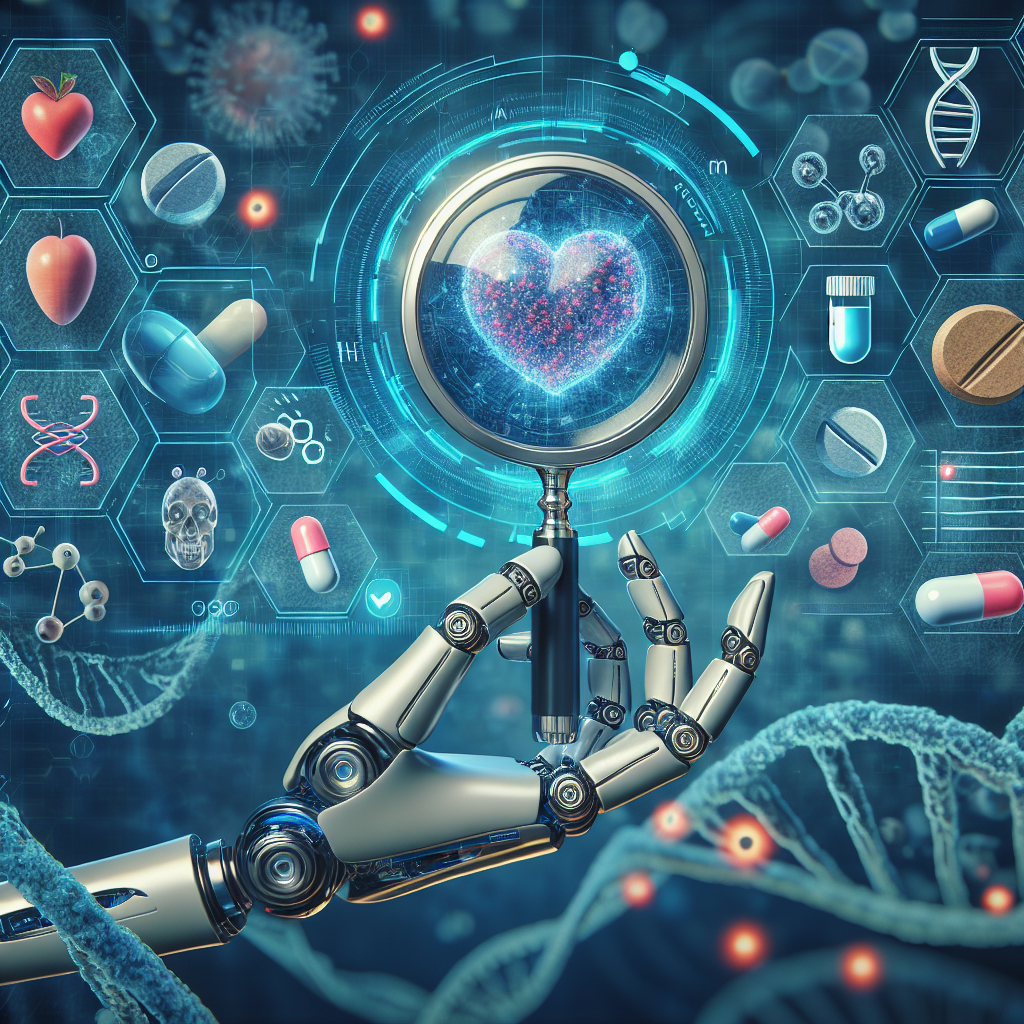
AI in Healthcare: Revolutionizing Diagnoses and Treatments
<p>The integration of Artificial Intelligence (AI) into the healthcare sector is radically transforming the ways in which diagnoses are made and treatments administered. From predictive analytics to personalized medicine, AI is proving to be an invaluable asset in enhancing patient care and outcomes.</p>
<h2>Enhancing Diagnostic Accuracy</h2>
<p>One of the most significant benefits of AI in healthcare is its capacity to improve diagnostic accuracy. Traditional diagnostic methods often rely on a physician's experience and intuition, which can sometimes lead to errors. AI algorithms, however, can analyze vast amounts of data, including patient history, lab results, and imaging studies, to identify patterns and make more accurate diagnoses.</p>
<h3>Case Study: Radiology</h3>
<p>In fields like radiology, AI tools can evaluate medical images more quickly and accurately than human radiologists. For example, AI systems have been successful in detecting early-stage cancers in mammograms, achieving accuracy rates comparable to or even surpassing those of experienced radiologists.</p>
<h2>Personalized Treatment Plans</h2>
<p>AI is also revolutionizing treatment plans by enabling personalized medicine. Machine learning algorithms can analyze genetic information, lifestyle factors, and treatment responses to tailor therapies that are optimized for individual patients. This personalized approach not only improves efficacy but also reduces the risk of adverse effects.</p>
<h3>Example: Oncology</h3>
<p>In oncology, AI assists in developing personalized treatment protocols based on a patient's genetic profile. By predicting how a patient will respond to specific drugs, oncologists can make informed decisions, potentially leading to higher survival rates.</p>
<h2>Streamlining Administrative Processes</h2>
<p>AI is not limited to clinical applications; it is also streamlining administrative processes within healthcare organizations. Automation of scheduling, billing, and patient management allows healthcare providers to reduce costs and enhance operational efficiency.</p>
<h3>Impact on Patient Experience</h3>
<p>Enhanced administrative efficiency translates to improved patient experiences. With AI-powered chatbots and virtual assistants, patients can schedule appointments, access their medical records, and receive timely responses to queries, all of which contribute to higher satisfaction rates.</p>
<h2>Ethical Considerations</h2>
<p>Despite the potential benefits, the integration of AI in healthcare raises important ethical questions. Issues such as data privacy, algorithmic bias, and the potential for job displacement must be carefully considered. Establishing ethical guidelines and robust regulatory frameworks will be crucial as AI continues to evolve in this field.</p>
<h2>Conclusion</h2>
<p>AI in healthcare is undoubtedly revolutionizing the landscape of medical diagnoses and treatments. As technology continues to improve, healthcare providers can expect to leverage AI for faster, more accurate diagnoses and personalized treatment plans, ultimately leading to enhanced patient care. However, it will be essential to address the accompanying challenges to ensure that the benefits of AI are realized responsibly and equitably.</p>
<footer>
<p>© 2023 AI Healthcare Insights</p>
</footer>