

Introduction
Bitcoin: The Gold Standard of Cryptocurrency
- Market Capitalization: Bitcoin consistently holds the largest market cap among cryptocurrencies.
- Security: Its Proof-of-Work consensus mechanism has proven to be highly secure.
Adoption: Major companies continue to accept Bitcoin, further solidifying its status.
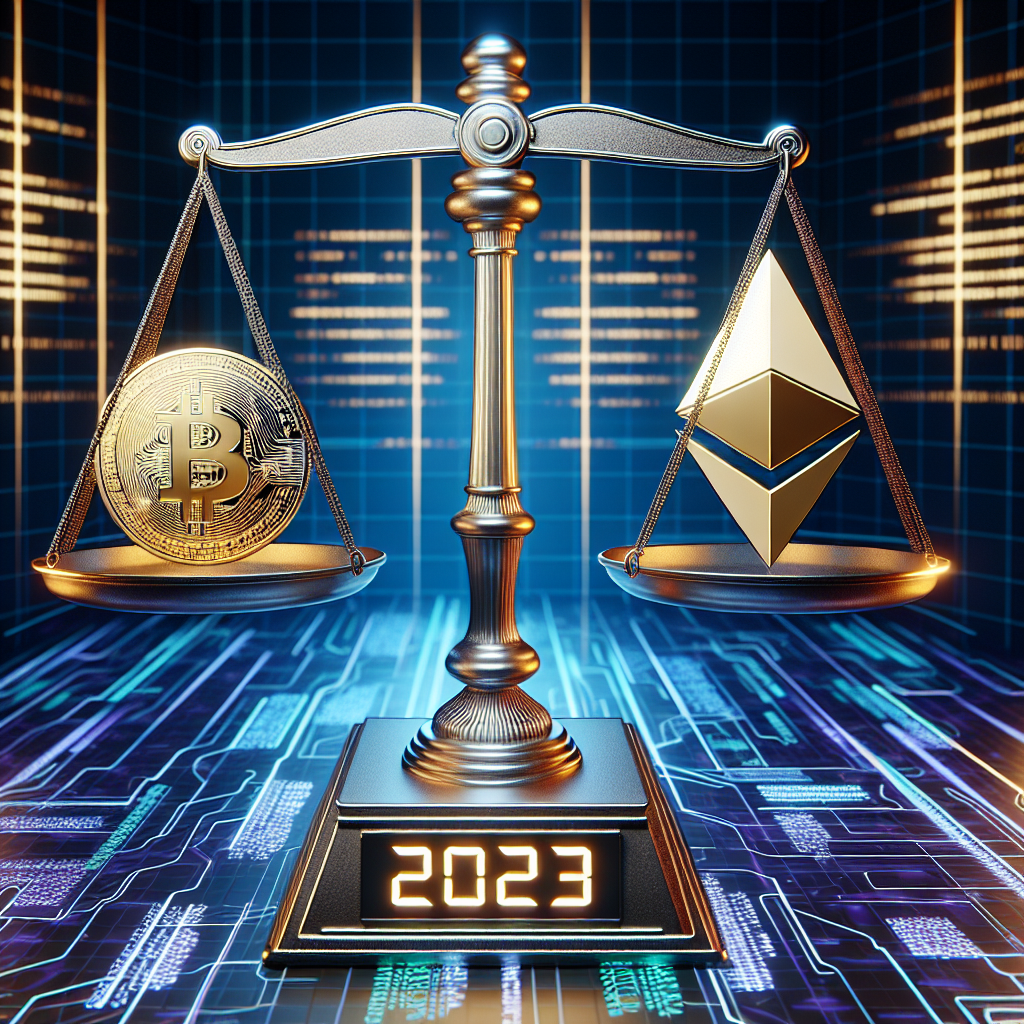
Bitcoin maintained its position as the market leader throughout the year. Often referred to as “digital gold,” Bitcoin benefited from renewed institutional interest and its reputation as a relatively stable store of value during periods of economic uncertainty. Its dominance remained a key indicator of overall market confidence.
Ethereum continued to shine as the backbone of decentralized applications and smart contracts. With ongoing improvements following its transition to proof-of-stake, Ethereum strengthened its ecosystem, powering decentralized finance (DeFi), NFTs, and blockchain-based innovations.
However, 2023 also saw the rise of several challengers. Projects focused on scalability, lower transaction fees, and faster processing speeds gained traction. Cryptocurrencies like Solana and Avalanche attracted developers and users looking for efficient alternatives, though they still trailed behind Bitcoin and Ethereum in overall influence.
Another important trend was the growing interest in regulation and institutional adoption. Governments and financial institutions worldwide began exploring frameworks to integrate cryptocurrencies into traditional systems, signaling long-term growth potential for the industry.
Ethereum: The Smart Contract Pioneer
- Decentralized Applications (dApps): Ethereum’s platform enables developers to build and deploy dApps.
- Flexibility: Its adaptability allows for various applications, including DeFi and NFTs.
- Transition to Proof-of-Stake: Ethereum’s shift to Proof-of-Stake (Ethereum 2.0) addresses scalability and environmental concerns.
Comparative Analysis
| Aspect | Bitcoin | Ethereum |
|---|---|---|
| Year Established | 2009 | 2015 |
| Consensus Mechanism | Proof-of-Work | Proof-of-Stake (after Ethereum 2.0) |
| Primary Use Case | Store of Value | Smart Contracts & dApps |
| Market Dominance | Leading Cryptocurrency | Second Largest |
Future Outlook
Join our website for cool news and cool tips