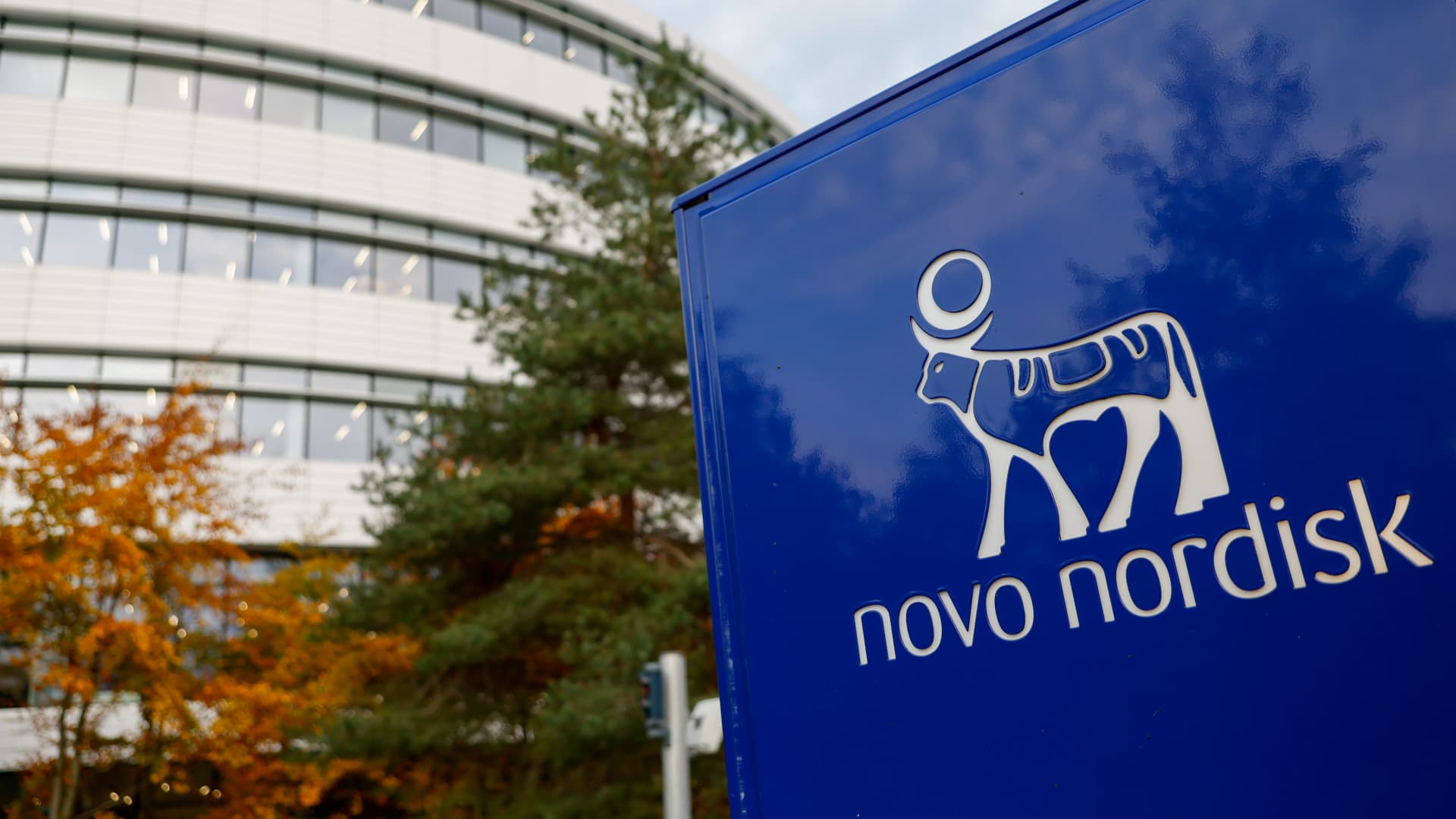
Novo Nordisk stock fell 15% Monday after it said its next-generation weight loss drug didn’t meet its key goal of showing that it wasn’t inferior to Eli Lilly’s rival drug.
The drug, CagriSema, didn’t achieve its primary endpoint of demonstrating non-inferiority on weight loss when compared to Eli Lilly’s rival drug tirzepatide after 84 weeks, Novo said in a statement Monday morning.
Tirzepatide is the active ingredient in Lilly’s mega-blockbuster medicines Mounjaro and Zepbound, which have overtaken Novo Nordisk’s semaglutide, sold as Ozempic and Wegovy, in U.S. prescriptions.
Novo’s Copenhagen-listed shares were last seen down 15% at 256 Danish kroner, hitting their lowest level since June 2021.
Eli Lilly‘s stock rose 3.5% in premarket trading.
Novo Nordisk ADR’s are severely underperforming Eli Lilly shares.
Patients taking a 2.4 mg dose of CagriSema achieved a weight loss of 23% after 84 weeks compared to 25.5% with a 15 mg dose of tirzepatide, Novo said.
Novo is exploring additional trials to test CagriSema, including higher-dose combinations, it said. The company has high hopes for the drug, which combines semaglutide and cagrilintide, another hormone released in the pancreas that affects appetite.
“CagriSema has the potential to be the first GLP-1/amylin-combination product to reach the market for people living with obesity, documenting that cagrilintide adds to the existing benefits of semaglutide and offers clinically meaningful additive weight loss effects superior to what has been observed with GLP-1 biology alone,” said Chief Scientific Officer Martin Holst Lange, adding that further trials would “assess the full weight-loss potential of CagriSema.”
Even so, Monday’s trial result is another blow to the Danish drugmaker as it fell short against a drug already on the market, and comes after the stock fell nearly 50% in 2025.
Earlier this month, Novo predicted that its sales and profit growth would decline by between 5% and 13% in 2026, as the company navigates competition, lower prices in the U.S., and the loss of exclusivity for Wegovy and Ozempic in certain markets.
“People should expect that it goes down before it comes back up,” CEO Mike Doustdar told CNBC at the time.