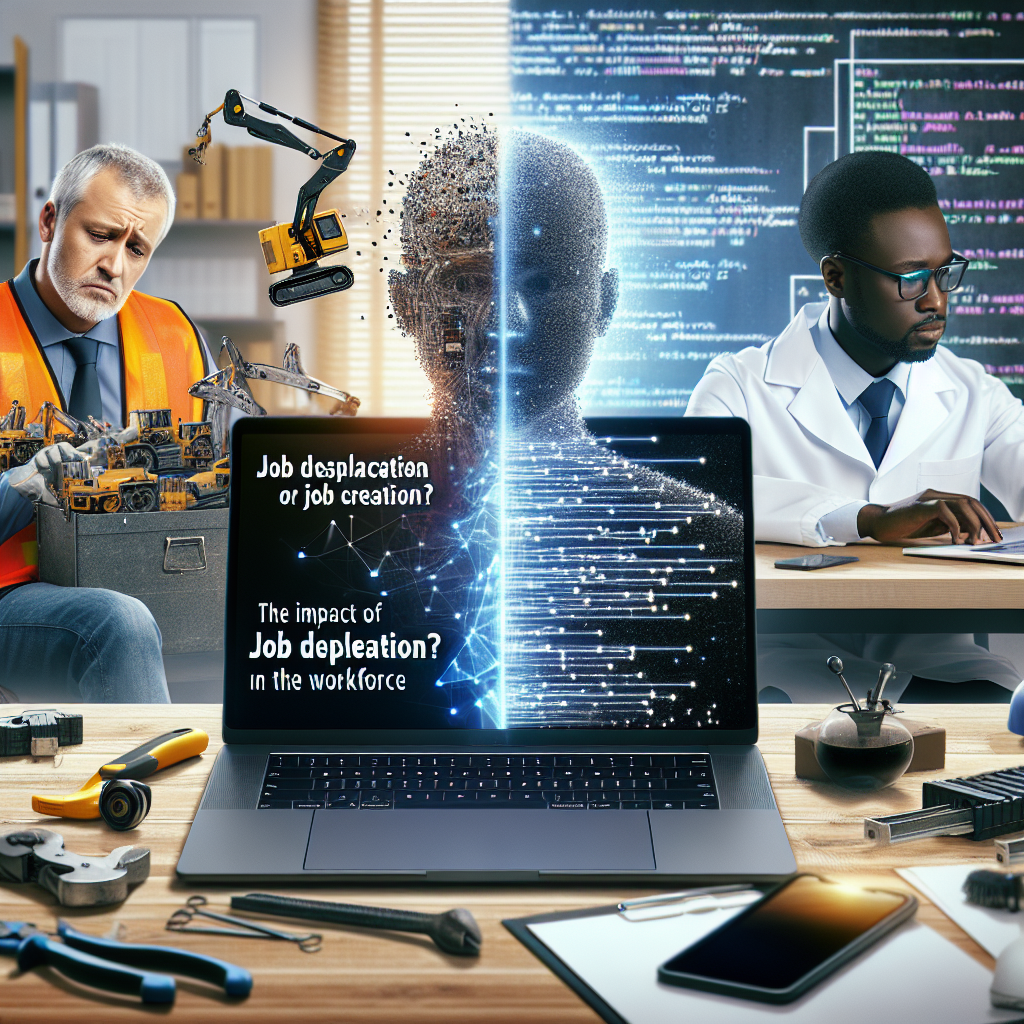
Job Displacement or Job Creation? The Impact of AI on the Workforce
The Rise of AI in the Workplace
Artificial Intelligence (AI) is rapidly transforming various sectors, making tasks more efficient and processes streamlined. From automation in manufacturing to data analysis in finance, AI’s capabilities continue to expand, leading many to question its implications on employment.
Job Displacement: A Real Concern
One of the most discussed impacts of AI is job displacement. As machines become more capable of performing tasks that were traditionally done by humans, certain jobs are at risk of becoming obsolete. Routine and repetitive tasks are particularly vulnerable, affecting industries such as manufacturing, retail, and customer service.
According to a report by McKinsey Global Institute, it is estimated that up to 800 million global workers could be displaced by automation by the year 2030. This potential disruption has created a sense of urgency to address the skills gap in the workforce.
Job Creation: The Counterargument
Despite fears of job loss, many experts argue that AI will also lead to the creation of new jobs and industries. Historical data shows that technological advancements have often resulted in the emergence of roles that were previously nonexistent. For instance,
the rise of the internet has created jobs in web development, digital marketing, and social media management.
AI can improve productivity, allowing businesses to scale and innovate, leading to new opportunities. Fields such as robotics, AI ethics, and machine learning are just a few of the areas anticipated to grow significantly.
Striking a Balance: Reskilling the Workforce
As the workforce evolves, there is a critical need for reskilling and upskilling. Education and training programs will play a vital role in preparing workers for the jobs of tomorrow. Governments, educational institutions, and businesses must collaborate to develop initiatives that equip individuals with the necessary skills to thrive in an AI-driven economy.
Initiatives could include online courses, vocational training, and apprenticeships focused on technology, problem-solving, and critical thinking.
Conclusion
The impact of AI on the workforce is multifaceted, encompassing both job displacement and job creation. While there are legitimate concerns about job losses, embracing AI can lead to innovation and growth, provided that we respond proactively through education and training.
As we navigate this transition, it is essential to foster a mindset of adaptability and lifelong learning, ensuring that the workforce can meet the challenges and opportunities presented by this technological revolution.