


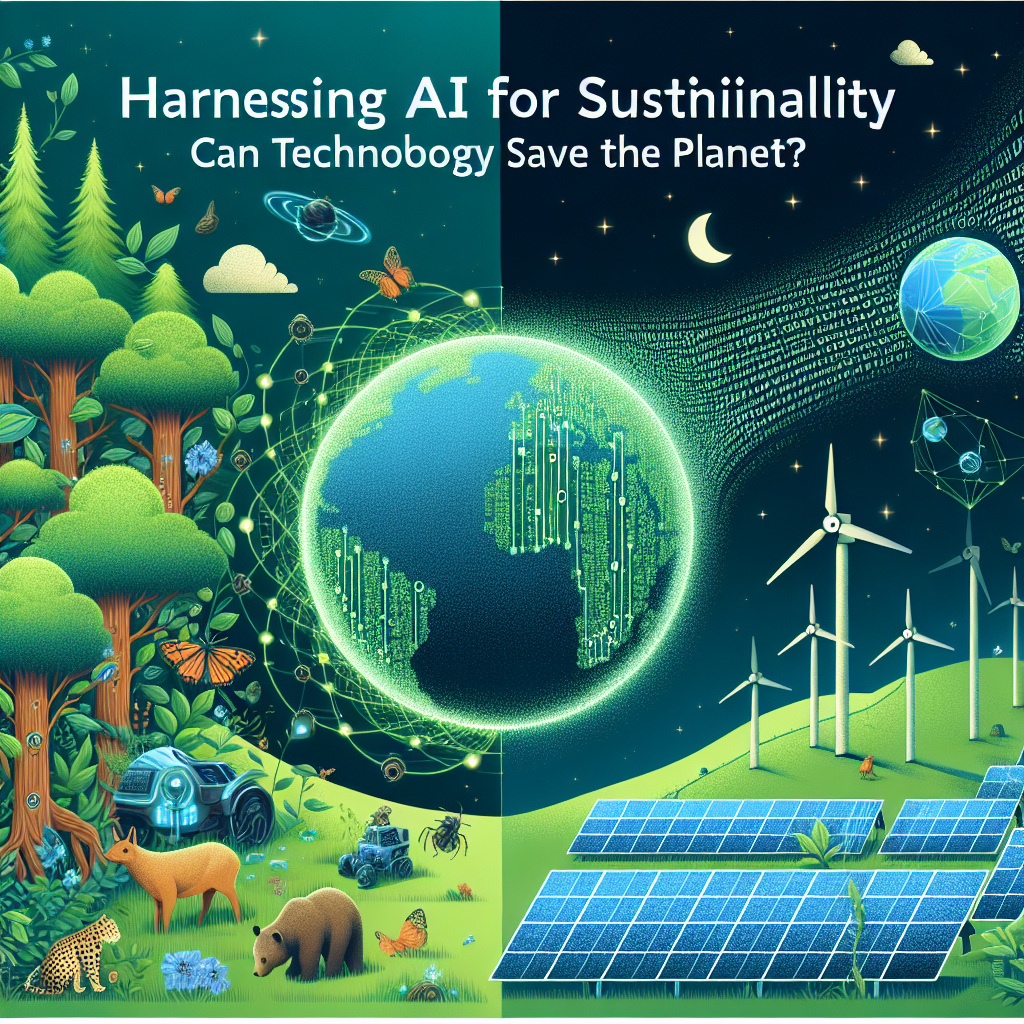
The Role of AI in Sustainability
AI technologies have the potential to revolutionize various sectors by optimizing resources, reducing waste, and enhancing decision-making processes. Here are some critical areas where AI can contribute:
1. Energy Management
AI systems can be employed to improve energy efficiency in industries and homes. Smart grids powered by AI can predict energy demand, allowing for more efficient distribution and reduced reliance on fossil fuels. Moreover, AI can optimize energy consumption patterns, significantly reducing carbon footprints.
2. Precision Agriculture
Farmers are increasingly using AI-driven technologies to monitor crop health, predict yields, and optimize resource use. Through sensors and machine learning algorithms, AI can analyze extensive data sets to recommend precise amounts of water, fertilizers, and pesticides, thereby conserving resources and minimizing environmental impact.
3. Waste Management
AI algorithms can enhance waste management practices by predicting waste generation patterns and optimizing collection routes. They can also assist in recycling processes by better sorting materials, thus reducing landfill waste and promoting circular economy practices.
4. Climate Modeling
AI can analyze vast quantities of climate data, enabling scientists to model climate scenarios and predict environmental changes more accurately. This information is vital for policymakers to make informed decisions and implement effective strategies to combat climate change.
Challenges and Considerations
Despite the potential benefits, several challenges must be addressed when harnessing AI for sustainability:
- Data Privacy: The use of extensive data can raise privacy concerns. Ensuring ethical data handling is crucial.
- Energy Consumption of AI: AI models, especially large ones, require significant computational power, which can lead to increased energy consumption. Developing more energy-efficient algorithms is vital.
- Accessibility: Not all regions or communities have equal access to AI technologies, raising concerns about equity and fairness.
The Future: Collaboration is Key
To maximize the benefits of AI for sustainability, collaboration among governments, businesses, and academia is essential. By combining resources and expertise, the potential of AI can be unlocked to address environmental issues more effectively.
Conclusion
While AI is not a panacea for the climate crisis, it holds significant promise for driving sustainability initiatives. Through effective implementation and collaboration, AI can help create a more sustainable future, contributing to the necessary shift towards environmental stewardship. With continued innovation and a commitment to ethical practices, technology can indeed play a pivotal role in saving the planet.
Additional relevant updates