


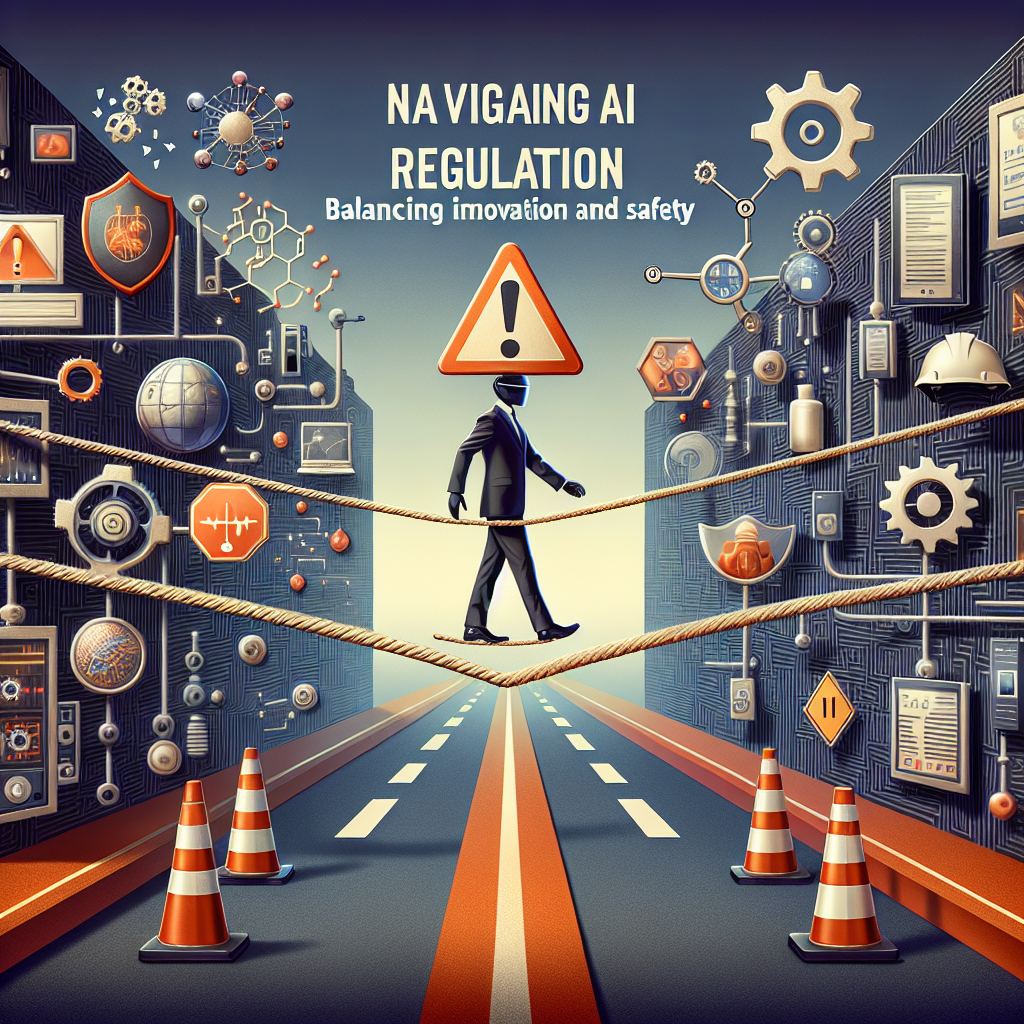
As artificial intelligence (AI) technologies advance at an unprecedented pace, the need for adequate regulation has become increasingly urgent. This article explores the critical challenge of balancing innovation with safety in the field of AI.
The Rise of AI
AI has transcended the realm of niche applications and is now embedded in various sectors, including healthcare, finance, transportation, and more. The benefits are immense:
- Enhanced efficiency and productivity
- Improved decision-making processes
- Cost savings and resource optimization
The Need for Regulation
Despite its potential, AI also presents grave risks that necessitate careful regulation:
- Privacy concerns surrounding data usage
- Bias and discrimination in AI algorithms
- Security threats from malicious AI applications
- Unemployment due to automation
Challenges in Regulating AI
Regulating AI is fraught with challenges, including:
- Rapid Technological Advancement: Regulations often lag behind the speed of AI innovation, making it difficult to create effective guidelines.
- Global Disparities: Different countries have varying approaches to regulation, complicating international collaboration and enforcement.
- Technical Complexity: The intricate nature of AI systems makes it challenging to establish clear standards and metrics for compliance.
Striking a Balance: Innovation vs. Safety
To navigate the landscape of AI regulation effectively, a balanced approach is essential. Key considerations should include:
- Engagement with Stakeholders: Policymakers must engage with AI developers, ethicists, and the public to formulate inclusive regulations that reflect diverse perspectives.
- Adaptive Frameworks: Regulations should be flexible and adaptive, allowing for updates as technologies evolve and new challenges arise.
- Collaboration and Transparency: An emphasis on collaboration among governments, tech companies, and academia can foster innovation while ensuring safety.
Examples of AI Regulation Efforts
Several regions have begun to implement regulatory frameworks aimed at managing AI technologies:
- European Union’s AI Act: A comprehensive proposal aimed at regulating high-risk AI systems to ensure safety and transparency.
- National Institute of Standards and Technology (NIST): Working on a framework for AI risk management in the United States.
The Future of AI Regulation
Looking ahead, the future of AI regulation will likely involve ongoing dialogue among stakeholders to ensure that regulations evolve in tandem with technology. With a collaborative and flexible approach, it is possible to harness the transformative potential of AI while safeguarding public interests.
For additional information,keep on visiting our website